Source Outdoor Interactive LED Display Screen for Stage, Advertising, and Shopping Guide
Compare 30 verified Outdoor Interactive LED Display Screen options featuring varied pixel pitches, cabinet sizes, and brightness levels. Buyers can evaluate specifications for stage performance, advertising, and shopping guide applications to find the right solution.
Key considerations
Products List


High-Quality P5 LED Display Screens for Indoor and Outdoor Advertising
$769.00 - $1399.00
MOQ: 1 Pieces


Full Color Indoor Outdoor Media Front Service LED Display Screen
$500.00 - $2800.00
MOQ: 1 Square Meters


Outdoor Front Service Advertising LED Panel Display Screen for Shopping Mall
$500.00 - $2800.00
MOQ: 1 Square Meters


High Brightness P3 Outdoor Advertising Digital LED Display Screens
$400.00 - $600.00
MOQ: 1 Square Meters

High Brightness P3.91 Outdoor Commercial Advertising LED Display Screen
$410.00 - $589.00
MOQ: 1 Square Meters

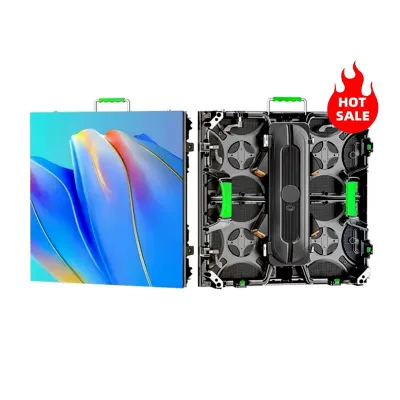


Full Color Indoor or Outdoor Special Shaped Customized Creative LED Display Screen
$1666.00 - $1999.00
MOQ: 1 Square Meters


Comprehensive Sourcing Guide
Strategic Sourcing Guide for Outdoor Interactive LED Display Screens
Procuring outdoor interactive LED display screens requires a rigorous approach that balances technical performance with environmental resilience. The market offers a diverse array of configurations, ranging from high-resolution indoor-outdoor hybrids to ruggedized units designed for extreme weather. Buyers must navigate a complex landscape of pixel pitches, power consumption metrics, and certification requirements to ensure the selected solution meets specific operational needs. This guide synthesizes observed market data and technical standards to provide a framework for evaluating potential suppliers and products without relying on unverified claims or specific vendor recommendations.
Technical Specifications and Pixel Architecture
The foundation of any outdoor LED display lies in its pixel architecture and physical construction. When sourcing these units, the pixel pitch is the primary determinant of viewing distance and image clarity. Market observations indicate a significant variance in available pitches, with specific models identified as P2.604, P5, and P10.42. The P2.604 configuration typically utilizes an SMD1415 LED type with a pixel matrix of 192x192 per panel, offering high detail suitable for closer viewing ranges. In contrast, the P5 variant often features a 1R, 1G, 1B pixel configuration with a pixel pitch of 5mm, while the P10.42 model presents a larger pitch suitable for long-distance viewing applications.
Physical dimensions are equally critical for installation planning. Cabinet and module sizes vary significantly across different product lines. For instance, some units adhere to a standard 500x500mm cabinet dimension with a module size of 250x250x16mm, while others utilize a 960x960mm cabinet standard with 320x160mm modules. A third category may follow a 1000x1000mm standard. The choice of panel material is predominantly die-casting aluminum, which provides the necessary structural integrity for outdoor mounting. Weight is a key logistical factor; specific cabinet models are observed to weigh approximately 8kg, influencing the load-bearing requirements of the supporting structure.
Performance metrics such as brightness and refresh rate are essential for outdoor visibility. Units are frequently rated with a brightness of 4500 nits to ensure legibility under direct sunlight. The refresh rate is another critical parameter, with observed values reaching 3840 Hz, which minimizes flickering during video capture. The driving type is typically 1/24, and the color grayscale capability ranges from 14 to 16 bits, ensuring smooth color transitions. Power consumption varies by model, with typical values around 200W/m² and maximum values up to 600W/m², while some specific configurations list an average consumption of 220W/m².
Compliance and Certification Verification
Navigating the regulatory landscape is a non-negotiable aspect of sourcing outdoor LED displays. Products in this category must adhere to strict safety and environmental standards. Observed certification data highlights the presence of CCC (China Compulsory Certification), CE (Conformité Européenne), and RoHS (Restriction of Hazardous Substances) marks. These certifications indicate that the product meets specific safety, electromagnetic compatibility, and environmental requirements. However, buyers must verify that these certifications are current and applicable to the specific region of installation, as regulatory bodies may have distinct requirements for electrical equipment.
The standard operating environment for these displays is often cited as "Outdoor," necessitating robust ingress protection. While specific IP ratings are not universally standardized in the provided data, the term "IPTube" appears in the context of chip color and protection, suggesting a focus on environmental sealing. Buyers should explicitly request the IP rating (e.g., IP65 for dust tightness and water jet resistance) from the supplier to confirm the unit's ability to withstand rain, humidity, and dust. Additionally, the scanning mode, observed as 1/8 scan in certain models, impacts the uniformity and stability of the display, which must be verified against the intended application's motion requirements.
Cost Drivers and Pricing Dynamics
Understanding the cost structure of outdoor LED displays is vital for budgeting. The observed price range in the market spans from approximately $141.38 to $2,999 USD. This wide variance is driven by multiple factors, including pixel pitch, brightness, cabinet size, and the inclusion of interactive features. Lower-priced units often correspond to larger pixel pitches like P10.42, which are suitable for large-scale advertising where fine detail is less critical. Conversely, high-resolution units like the P2.604 or P1.86 models command higher prices due to the density of LEDs and the complexity of the driver electronics.
Packaging and logistics also contribute significantly to the total cost of ownership. Different models utilize distinct packing methods, such as flight cases, wooden boxes, or wooden cases. Flight cases are typically more expensive but offer superior protection during transit, which is crucial for fragile electronic components. The minimum order quantity (MOQ) is another cost driver, with observed ranges between 1 and 10 units. Buyers should be aware that ordering below the MOQ may result in higher per-unit costs or extended lead times. Furthermore, the origin of the product, identified as China, influences shipping costs and import duties, which must be factored into the final procurement budget.
Typical Applications and Use Cases
The versatility of outdoor LED displays allows them to serve a wide array of applications. Market data identifies key use cases including stage performance, advertising, shopping guides, and general outdoor information dissemination. For stage performances, high refresh rates and full-color capabilities are paramount to ensure the display looks seamless on camera and to the naked eye. Advertising applications often prioritize brightness and large cabinet sizes to capture attention from a distance, making the P10.42 or similar large-pitch models ideal.
Shopping guide applications require a balance of readability and interactivity. The display must be clear enough for passersby to read text and images while potentially supporting touch or motion sensors for interaction. The P5 model, with its moderate pixel pitch, is well-suited for these scenarios where viewers are within a few meters of the screen. The "Interactive" aspect of the keyword implies the need for integration with touch technology or sensor arrays, which requires careful evaluation of the system's operating platform. Some observed systems run on Windows XP, a legacy platform that may require modernization or specific driver support for contemporary interactive software. Buyers must ensure the selected hardware supports the necessary input methods for their specific interactive requirements.
Supplier Evaluation and Quality Control
Evaluating suppliers requires a focus on their ability to deliver consistent quality and technical support. A critical factor is the customization capability, which is listed as available in the market. This allows buyers to tailor the display to specific dimensions, mounting requirements, or software integrations. However, customization should be approached with caution, as it can introduce lead time delays and potential compatibility issues. Buyers should verify the supplier's track record in delivering customized outdoor solutions and their ability to maintain the structural integrity of the panels during the modification process.
Quality control measures must be robust, particularly for outdoor units exposed to the elements. The connection method is observed as "Hardwired," which implies a fixed, secure connection that reduces the risk of signal loss compared to wireless alternatives. However, this also means that maintenance and repair require physical access to the connection points. Front access maintenance is a preferred feature, as observed in certain models, allowing technicians to service the display from the front without needing to dismantle the entire structure. This significantly reduces downtime and maintenance costs.
Buyers should also scrutinize the pixel density and uniformity of the display. While specific pixel density figures are not fully detailed in the provided data, the pixel configuration (1R, 1G, 1B) and the use of SMD LEDs (SMD1415, SMD1515) are standard indicators of quality. The gray scale per color level, observed to be ≥16384, ensures a wide range of color reproduction. Suppliers should provide test results or sample units to verify these claims before committing to a large order.
Long-Term Procurement Considerations
Sourcing outdoor LED displays is a long-term investment that requires planning for maintenance and lifecycle management. The system operating platform is a key consideration; while some units are listed with Windows XP, modern interactive applications often require more current operating systems. Buyers should assess whether the hardware can be upgraded or if the software stack is compatible with future updates. The pixel pitch and resolution also dictate the lifespan of the display in terms of technological obsolescence. High-resolution models like P2.604 may remain relevant longer for applications requiring detailed imagery, whereas larger pitch models may need replacement sooner as content standards evolve.
Power consumption is another long-term cost factor. With typical values around 200W/m² and maximums up to 600W/m², energy efficiency is crucial for reducing operational expenses. Buyers should inquire about the availability of energy-saving modes or smart power management features that can adjust brightness based on ambient light conditions. The durability of the die-casting aluminum cabinets and the quality of the waterproofing are also critical for longevity. Regular cleaning and inspection of the panels and connections are necessary to prevent dust accumulation and moisture ingress, which can degrade performance over time.
Summary of Key Product Attributes
To facilitate quick comparison, the following table summarizes the key technical attributes observed in the market for outdoor interactive LED displays. This data serves as a reference point for buyers to match their specific requirements with available product configurations.
| Attribute | Observed Value / Range | Notes |
|---|---|---|
| Pixel Pitch | P2.604, P5, P10.42 | Determines viewing distance and resolution. |
| LED Type | SMD1415, SMD1515 | Indicates chip size and quality. |
| Brightness | 4500 Nits | Essential for outdoor visibility. |
| Refresh Rate | 3840 Hz | Reduces flicker for video and camera capture. |
| Cabinet Size | 500x500mm, 960x960mm, 1000x1000mm | Affects installation and structural load. |
| Module Size | 250x250mm, 320x160mm | Determines panel flexibility. |
| Material | Die-Casting Aluminum | Provides durability and heat dissipation. |
| Certifications | CCC, CE, RoHS | Mandatory for safety and environmental compliance. |
| Power Consumption | 200W/m² (Typical), 600W/m² (Max) | Impacts operational costs. |
| Maintenance | Front Access | Preferred for ease of service. |
| Origin | China | Influences shipping and lead times. |
| Customization | Available | Allows for tailored solutions. |
In conclusion, sourcing outdoor interactive LED display screens demands a meticulous evaluation of technical specifications, compliance status, and long-term operational costs. By focusing on verified attributes such as pixel pitch, brightness, and certification, buyers can make informed decisions that align with their project goals. The availability of customization and the diversity of product configurations offer flexibility, but careful supplier vetting and quality control remain essential to ensure a successful deployment.
FAQs
What certifications do outdoor interactive led display screens typically have?
These screens typically carry CCC, CE, and RoHS certifications to ensure safety and environmental compliance. Buyers should verify that these marks are current and applicable to their specific installation region before finalizing any procurement contract.
Which pixel pitch options are available for outdoor interactive led display screens?
Available pixel pitch options include P2.604, P5, and P10.42 depending on the viewing distance required. The P2.604 model offers high detail for closer ranges, while the P10.42 is better suited for long-distance advertising applications.
How much does an Outdoor Interactive LED Display Screen cost per unit?
The observed price range for these units spans from approximately 141.38 to 2999 USD. This variance is driven by factors such as pixel pitch, brightness levels, cabinet size, and the inclusion of specific interactive features.
Can outdoor interactive led display screens be customized for specific needs?
Yes, customization is available to tailor dimensions, mounting requirements, or software integrations to specific operational needs. Buyers should note that customization may introduce lead time delays and requires verification of structural integrity during modification.
What is the typical brightness level for outdoor interactive led display screens?
Units are frequently rated with a brightness of 4500 nits to ensure legibility under direct sunlight. This high brightness is essential for outdoor visibility and prevents the screen from appearing washed out during daytime operations.
Which material is used for the cabinet of outdoor interactive led display screens?
The panel material is predominantly die-casting aluminum to provide necessary structural integrity for outdoor mounting. This material choice ensures the units can withstand environmental stress while maintaining a manageable weight of approximately 8kg per cabinet.
What is the refresh rate for outdoor interactive led display screens?
The refresh rate is observed to reach 3840 Hz to minimize flickering during video capture. This high refresh rate is critical for applications like stage performance where seamless video transmission to cameras is required.