Source Oxford Cloth for Bags, Furniture, and Home Textile
Compare 30 listings of Oxford Cloth featuring waterproof, anti-mildew, and abrasion-resistant properties. Buyers can evaluate specifications like width, thickness, and customization options for applications in bags, furniture, and home textile industries; compare the available evidence and request quotations based on your requirements.
Key considerations
Products List

$1.65 - $1.80
MOQ: 1000 Meters


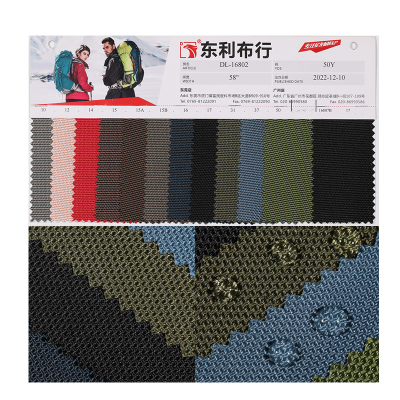


Comprehensive Sourcing Guide
Oxford Cloth Sourcing Guide
Oxford Cloth serves as a versatile synthetic textile widely utilized across diverse industrial and consumer sectors. Procurement teams must navigate a complex landscape of material compositions, weave densities, and surface treatments to select the appropriate grade for their specific end-use. The market offers variations ranging from lightweight linings to heavy-duty coated fabrics, each requiring distinct verification protocols. Buyers should prioritize understanding the fundamental differences between nylon and polyester bases, as these choices directly impact durability, water resistance, and cost efficiency.
Successful sourcing begins with aligning technical requirements with supplier capabilities. The observed market signals indicate a broad spectrum of product models, from standard plain weaves to specialized ripstop and jacquard patterns. Procurement specialists must establish clear specifications early in the engagement process to avoid mismatches in performance characteristics. By focusing on core attributes such as yarn count, coating type, and width, buyers can streamline the evaluation of potential vendors and ensure that the selected fabric meets both functional demands and aesthetic expectations.
Product Scope and Observed Listing Signals
The current market landscape for Oxford Cloth reveals a wide array of product configurations tailored to specific industrial needs. Listings frequently highlight features such as anti-mildew, waterproof, and abrasion-resistant properties, which are critical for applications in luggage, outdoor gear, and automotive interiors. Buyers should observe that many suppliers offer customizable colors and patterns, including plain, coated, and textured finishes. This flexibility allows for brand-specific customization but requires careful communication to ensure that the final product matches the intended design specifications and quality standards.
Observed listing data also points to significant variations in minimum order quantities and packaging methods. Some suppliers list low MOQs suitable for prototyping or small-batch production, while others require bulk commitments that align with large-scale manufacturing runs. Packaging is typically described as PVC film or rolls, which influences storage and handling logistics. Understanding these commercial signals helps buyers assess supplier scalability and flexibility, ensuring that the chosen partner can accommodate both initial sample orders and subsequent volume production without compromising on quality or delivery timelines.
Technical Specifications to Verify
Verifying technical specifications is paramount to ensuring that the Oxford Cloth meets performance expectations. Key attributes to confirm include the material composition, such as 100% polyester or nylon, and the yarn count, which determines the fabric's density and strength. Common specifications observed include 300T 50D/72F weaves and heavier 1680D variants, each suited for different load-bearing requirements. Buyers must also verify the width, typically 54/55 inches or 60 inches, to ensure compatibility with cutting and sewing processes. Misalignment in these dimensions can lead to material waste and production inefficiencies.
Surface treatments and coating types significantly influence the fabric's functionality and durability. PU coating is a common feature, providing water resistance and enhancing the material's lifespan. Buyers should inquire about the coating thickness and uniformity, as these factors affect breathability and flexibility. Additionally, weight per square meter, often ranging from medium to heavy weights, should be confirmed to match the intended application. Whether for garment linings, furniture upholstery, or industrial tents, precise verification of these technical parameters ensures that the final product performs reliably under expected conditions.
Compliance and Safety Documentation
Compliance with international safety and environmental standards is essential for global supply chains. Buyers should request documentation verifying adherence to relevant regulations, such as REACH for chemical safety, which restricts the use of hazardous substances in textiles. While specific certification statuses may vary by supplier, understanding the baseline requirements helps in assessing risk and ensuring market access. Documentation should cover not only the final fabric but also the dyes and coatings used, as these components often contain chemicals that require strict regulatory oversight.
Beyond chemical compliance, buyers must consider broader environmental and quality management standards. ISO 9001 certification indicates a supplier's commitment to consistent quality management processes, which can reduce variability in production. Although not all suppliers may hold every certification, requesting proof of compliance demonstrates due diligence. Buyers should also verify that the materials are free from harmful substances that could impact end-users, particularly in applications involving direct skin contact or children's products. This proactive approach mitigates legal risks and enhances brand reputation.
Cost Drivers and Commercial Terms
Understanding the factors that influence pricing is crucial for effective budget management. The cost of Oxford Cloth is driven by material composition, yarn count, coating complexity, and order volume. Heavier fabrics with higher yarn counts, such as 1680D nylon, typically command higher prices due to increased material usage and processing time. Additionally, custom colors and specialized patterns may incur setup fees or higher unit costs. Buyers should analyze these variables to negotiate favorable terms and anticipate potential price fluctuations based on raw material markets.
Commercial terms, including minimum order quantities and payment conditions, play a significant role in the total cost of ownership. Suppliers may offer tiered pricing structures that reward larger commitments, but buyers must balance this with inventory holding costs. Lead times and shipping methods also impact overall expenses, so it is important to clarify these details early in the negotiation process. By understanding the interplay between technical specifications and commercial terms, buyers can optimize their procurement strategy to achieve the best value without compromising on quality or delivery schedules.
Supplier Qualification and Quality Control
Supplier qualification involves a thorough assessment of manufacturing capabilities and quality control systems. Buyers should verify the supplier's production capacity, equipment modernity, and experience with similar fabric types. Factories located in key textile hubs, such as Hebei or Guangdong, often have established supply chains and skilled labor forces. However, geographic location alone is not a guarantee of quality, so on-site audits or third-party inspections are recommended to evaluate actual production practices and adherence to specifications.
Quality control protocols must be clearly defined and enforced throughout the production process. Buyers should request detailed quality assurance plans that include in-process inspections and final random sampling. Key metrics to monitor include color consistency, coating adhesion, and dimensional stability. Establishing clear acceptance criteria and rejection thresholds helps prevent disputes and ensures that only conforming products are shipped. Regular communication and feedback loops with the supplier can further enhance quality outcomes and foster a collaborative partnership focused on continuous improvement.
Long-Term Procurement Checks
Long-term procurement success relies on continuous monitoring and relationship management. Buyers should establish regular review cycles to assess supplier performance against key metrics such as on-time delivery, defect rates, and responsiveness to issues. Maintaining open lines of communication allows for timely resolution of problems and facilitates adjustments to specifications as market trends evolve. Building a strong partnership with reliable suppliers can lead to better pricing, priority production slots, and access to new innovations in fabric technology.
Additionally, buyers should stay informed about changes in regulatory requirements and market dynamics that may impact sourcing strategies. Periodic re-evaluation of supplier qualifications ensures that partners continue to meet evolving quality and compliance standards. Diversifying the supplier base can also mitigate risks associated with single-source dependencies. By implementing robust long-term procurement checks, buyers can sustain a resilient supply chain that supports business growth and adapts to changing customer demands effectively.
FAQs
What is Oxford Cloth typically used for?
Oxford Cloth is a woven synthetic fabric widely used for bags, luggage, tents, garment lining, home textiles like bedding and curtains, and industrial applications. Heavier coated variants suit car seats, furniture, and decorative uses, while lighter polyester oxford works well for linings, uniforms, and fashion accessories such as hats, purses, and totes.
How is coated Oxford Cloth different from uncoated Oxford Cloth?
Coated Oxford Cloth has a PU coating applied to the woven base, adding waterproofing, water resistance, and tear resistance, which makes it suitable for bags, tents, and outdoor gear. Uncoated oxford remains breathable and softer, so it is often chosen for lining, garments, and home textile applications where water protection is not required.
What widths and thicknesses are available for Oxford Cloth?
Common listed widths include 54/55 inch and 60 inch, with some coated products supplied at 1.4 meter standards in thicknesses such as 0.3mm or 0.1mm. Fabric weight varies widely, for example around 290-330gsm for heavier 1680D nylon oxford, so buyers should confirm width and thickness against their intended application before ordering.
Can Oxford Cloth be customized in color and pattern?
Yes, color customization is commonly available, with many listings stating colors can be customized, often with a minimum of 1000 meters per color. Beyond color, Oxford Cloth can be woven or finished in plain, ripstop, twill, plaid, jacquard, and other styles, so buyers should confirm the achievable pattern, dyeing method, and sampling process with each supplier.
What is the typical minimum order quantity for Oxford Cloth?
Minimum order quantities vary by product type. Coated PU and PVC oxford fabrics commonly list 1000 meters, or 1000 meters per color for custom dyeing, while some in-stock items are sold from a single piece or roll. Buyers needing small quantities should look for in-stock Oxford Cloth, and bulk programs should confirm per-color MOQ rules in advance.
How should Oxford Cloth be packed for shipping?
Common packing methods include rolling fabric with PVC film wrapping or packing in rolls or bags, depending on the product type. Coated oxford is often wrapped in PVC film to protect the coating surface, and some listings note single package sizes and gross weights such as around 3.0 kg per package. Confirm packing preferences before shipment to avoid damage.
Which features should buyers check when sourcing Oxford Cloth for bags?
For bags, prioritize abrasion resistance, tear resistance, and waterproofing, which coated 1680D nylon or polyester oxford provides. Also check yarn count such as 1680D*1680D, coating type like PU, weight in gsm, and width. Features such as anti-mildew and anti-static properties may matter for specific uses, so request samples to verify hand feel and durability.
Where is Oxford Cloth commonly produced and how does origin affect sourcing?
Listed production origins include Guangdong and Hebei in China, with some polyester oxford sourced from Wujiang. These regions have established weaving and coating capacity across different price and quality tiers. Origin can influence cost, lead time, and logistics, so buyers should compare suppliers across regions and verify sample quality before committing to volume orders.