Source oxygen-free copper fire alarm cable for heating, security, and alarms
Compare 30 listings for oxygen-free copper fire alarm cable with options for solid or stranded conductors, PVC or LSZH jackets, and various core counts. Buyers can evaluate specifications like voltage ratings and certifications from Chinese manufacturers.
Key considerations
Products List


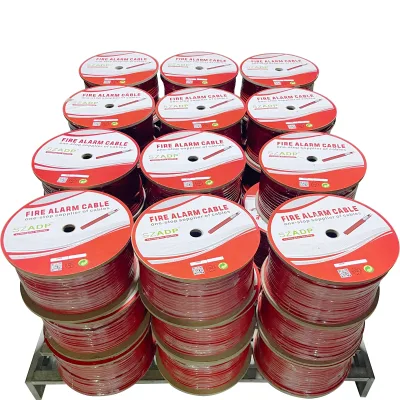
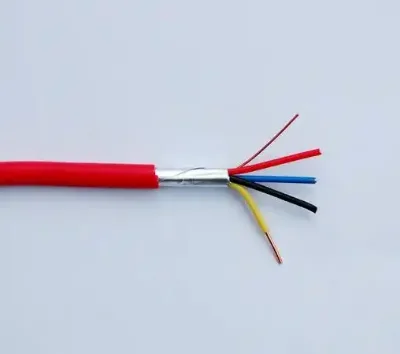
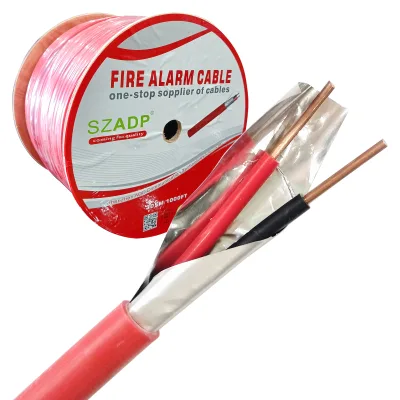
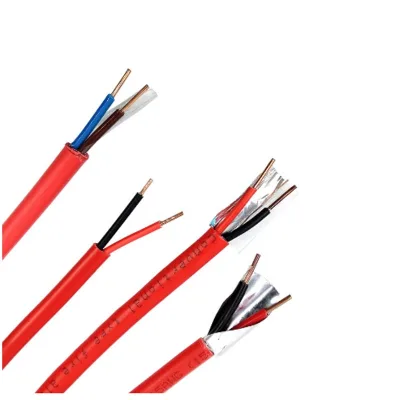
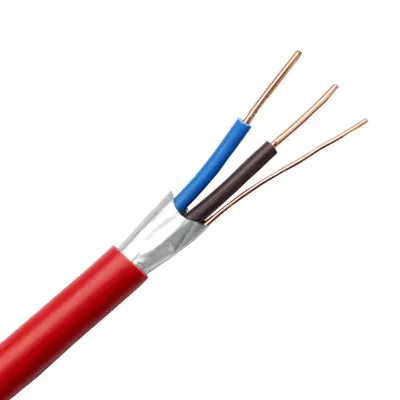
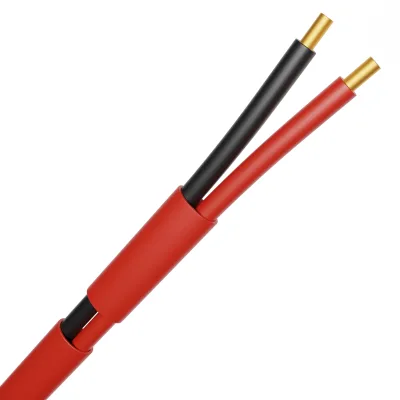


16AWG 18AWG Fire Alarm Cable Fire Resistant Cable 1.5mm 2.5mm Cable Fire Resistant
$0.20 - $0.60
MOQ: 5000 meters


Comprehensive Sourcing Guide
Sourcing Guide for Oxygen-Free Copper Fire Alarm Cable
Understanding the Technical Architecture of Fire Alarm Cables
When sourcing fire alarm cables, the primary technical differentiator lies in the conductor material and the insulation integrity. The core keyword, oxygen-free copper, implies a specific grade of copper with reduced oxygen content, which enhances conductivity and ductility compared to standard copper or Copper-Clad Aluminum (CCA). In the current market landscape, product attributes indicate a mix of conductor materials available, including pure copper, CCA, and bare copper wire. Buyers must verify that the specific lot selected utilizes high-purity copper rather than CCA, as CCA is more prone to oxidation and mechanical failure under the thermal stress of a fire event.
The physical configuration of the cable is equally critical. Market observations show that fire alarm cables are available in both solid and stranded conductor types. Solid conductors are often preferred for fixed, short-distance runs within walls, offering higher structural rigidity. Conversely, stranded conductors provide greater flexibility, making them suitable for complex routing or areas subject to vibration. The insulation and jacket materials also vary significantly. While PVC is a common observation in the general wire market, fire alarm applications specifically demand materials with low smoke and zero halogen (LSOH or LSZH) properties to ensure visibility and reduced toxicity during an emergency. The supply data confirms the availability of both PVC and LSZH jackets, with some products explicitly labeled as LSOH.
The electrical performance standards are defined by specific voltage ratings. Observed specifications list normal voltage ratings of 300/500V and 450/750V. These ratings dictate the maximum operational voltage and the insulation's ability to withstand transient surges. For fire alarm systems, the cable must maintain circuit integrity under fire conditions, a requirement often tied to the specific model numbers observed, such as "Alarm Cable" or "Fire Alarm Cable." The number of cores typically ranges from 2 to 4, with options for 6 cores or custom configurations. The diameter of the conductor is another variable, with observed specifications ranging from 0.8mm² to 2.5mm², though buyers should confirm that the cross-sectional area matches the specific load requirements of their fire detection and suppression systems.
Compliance Verification and Certification Standards
Navigating the certification landscape for fire alarm cables requires a rigorous approach, as these products are life-safety critical. The supply data presents a fragmented view of certifications, listing RoHS, CCC (China Compulsory Certification), ISO, and CE. While these are standard markers, the presence of a certification on a product listing does not guarantee that every unit in a batch meets the specific fire safety standards required by local building codes. Buyers must explicitly verify that the cable carries the specific fire safety certification relevant to the installation region, such as UL, FM, or specific EN standards like EN 50200, which is noted in background knowledge as a relevant standard for fire resistance, even if not explicitly listed in the primary product attributes.
The distinction between general electrical certification and fire-specific certification is paramount. A cable may be RoHS compliant, indicating it is free of certain hazardous substances, but this does not inherently prove its ability to withstand fire. The "Fire Alarm Cable" designation in the product attributes suggests a specific application, but the buyer must demand test reports that validate the cable's performance in fire scenarios. This includes verifying the flame propagation characteristics and the smoke density of the jacket material. If the product claims to be LSOH (Low Smoke Zero Halogen), the buyer should request independent test results confirming the halogen content is below the threshold defined by the relevant standard.
Furthermore, the origin of the product plays a role in compliance. The supply data indicates a primary origin in China, with specific mentions of Guangdong and Ningbo/Shanghai/Yiwu as ports. While China is a major manufacturing hub, the regulatory environment for fire safety equipment varies. Buyers should ensure that the supplier provides a valid Certificate of Origin and that the product has been tested by a recognized third-party laboratory. The "Customize" attribute for certification standards suggests that some suppliers may offer tailored compliance, but this requires careful vetting to ensure the customized standard is legally binding and recognized by the local authority having jurisdiction (AHJ).
Cost Drivers and Pricing Dynamics
The pricing of fire alarm cables is influenced by a complex interplay of raw material costs, manufacturing complexity, and order volume. The observed price range in the market spans from $0.01 to $57.30, a wide variance that reflects differences in conductor material, length, and core count. The most significant cost driver is the conductor material. Pure copper is significantly more expensive than CCA. Therefore, a cable priced at the lower end of the spectrum is likely to be CCA-based, while a premium-priced cable should be verified as oxygen-free copper. Buyers must be wary of "low-cost" traps where the price per meter is attractive, but the material quality compromises the system's reliability.
Order volume, represented by the Minimum Order Quantity (MOQ), is another critical factor. The observed MOQ ranges from 10 units to 30,000 units. For small-scale projects or retrofitting, a supplier with a low MOQ is essential, but this often comes with a higher unit price due to the lack of economies of scale. Conversely, large-scale construction projects can leverage high-volume orders to negotiate better rates, potentially accessing the lower end of the price spectrum. The packaging method also influences cost; while plastic packaging is standard, customized packing or specialized handling for fire-rated cables may incur additional fees.
The length of the cable is a direct multiplier of the total cost. Specifications indicate lengths of 100m, 305m, or custom requests. Longer reels reduce the number of joints required in the installation, which can lower labor costs, but they increase the upfront capital outlay. Buyers should calculate the total cost of ownership, including the cost of waste from cutting reels to fit specific runs. Additionally, the "Customization" attribute for the product model and standard suggests that bespoke requirements will carry a premium. Buyers should clearly define their needs early to avoid unnecessary costs associated with re-engineering or special tooling.
Typical Applications and System Integration
Fire alarm cables are designed for specific, high-stakes applications where reliability is non-negotiable. The primary use case, as indicated by the product attributes, is for "fire protective circuits and security systems." This includes the wiring of smoke detectors, heat sensors, manual call points, and control panels. The cable must ensure that the alarm signal is transmitted reliably even in the event of a fire, which often involves high temperatures and potential physical damage. The "Heating" application listed in the attributes suggests that some of these cables may also be used in heating circuits, but for fire alarm systems, the focus remains on signal integrity and circuit survival.
The environment in which the cable is installed dictates the choice of jacket material. In public buildings, hospitals, and transportation hubs, the requirement for low smoke and zero halogen (LSOH/LSZH) is often mandatory to prevent the spread of toxic fumes. The observed availability of both PVC and LSZH jackets allows buyers to select the appropriate material based on the building's fire safety code. PVC is generally less expensive but produces dense, toxic smoke when burned, making it unsuitable for many modern public infrastructure projects.
The number of conductors, typically 2, 4, or 6 cores, determines the complexity of the system. Two-core cables are common for simple loop systems, while multi-core cables are used for more complex addressable systems or where multiple signals need to be transmitted over a single cable run. The "Bare" type mentioned in the attributes likely refers to the conductor itself before insulation, but for fire alarm applications, the cable must always be fully insulated and jacketed. The "Alarm Cable" and "Fire Alarm Cable" model numbers confirm the intended use, but buyers must ensure the specific model matches the system's voltage and current requirements.
Supplier Evaluation and Verification Protocols
Selecting a reliable supplier for fire alarm cables requires a multi-faceted evaluation process that goes beyond simple price comparison. The supply data lists several brand names, including "ADP OEM," "SZADP," and "szadp," indicating that many suppliers operate as Original Equipment Manufacturers (OEM) or private labelers. This means the buyer should not rely solely on the brand name but must investigate the actual manufacturing capabilities of the supplier. A reputable supplier should be able to provide detailed documentation on their production process, quality control measures, and supply chain transparency.
Geographic location is a key factor in logistics and lead time. The observed ports of Ningbo, Shanghai, and Yiwu, along with the origin in Guangdong, suggest a concentration of manufacturing in eastern China. Buyers should verify the supplier's proximity to these ports to ensure efficient shipping and to minimize the risk of supply chain disruptions. The "Customize" attribute for packing and standard implies that the supplier has the flexibility to meet specific project needs, but this flexibility must be balanced with their ability to maintain consistent quality.
Verification of the supplier's claims is essential. Buyers should request samples for independent testing before placing a large order. This testing should focus on the conductor material composition, insulation thickness, and fire resistance properties. The supplier should also provide a clear definition of their warranty and return policies, particularly for defective batches. Given the "Customization" availability, the supplier must demonstrate a robust process for handling custom orders without compromising on the core specifications of the fire alarm cable.
Quality Control and Long-Term Procurement Strategy
Ensuring the long-term reliability of fire alarm cables requires a proactive quality control strategy. The observed variations in conductor material (Copper vs. CCA) and insulation (PVC vs. LSZH) highlight the need for strict incoming inspection. Buyers should implement a sampling plan that tests a percentage of every batch for conductivity, insulation resistance, and mechanical strength. The "Single gross weight" of 3.000 kg and "Single package size" of 10x10x10 cm provide baseline data for logistics, but these should be cross-referenced with the actual weight and dimensions of the delivered goods to ensure consistency.
Long-term procurement considerations involve building a relationship with suppliers who can support the lifecycle of the project. Fire alarm systems often have a lifespan of 10-15 years, and the availability of spare cables is crucial for maintenance and repairs. Buyers should inquire about the supplier's ability to provide consistent product formulations over time. If a supplier changes their conductor material or insulation formula, it could affect the compatibility of the new cable with the existing system. Therefore, a "freeze" on specifications or a formal change management process is recommended.
The "As request" attribute for many specifications, including length, gauge, and certification standards, offers flexibility but also introduces risk. Buyers should standardize their requirements as much as possible to reduce the complexity of the supply chain. For example, specifying a single conductor diameter and core count for the entire project can simplify ordering and reduce the risk of errors. Additionally, buyers should consider the environmental impact of the cable, particularly if the project aims for green building certifications. The availability of LSOH materials supports this goal, but the supplier's commitment to sustainable manufacturing practices should also be evaluated.
Strategic Sourcing and Risk Mitigation
The final phase of sourcing involves mitigating risks associated with supply chain disruptions and market volatility. The wide range of MOQs (10 to 30,000) suggests that buyers can tailor their orders to their immediate needs, but they should also consider the potential for price fluctuations in copper. Since copper is a global commodity, its price can vary significantly, impacting the cost of fire alarm cables. Buyers should consider locking in prices for large orders or establishing long-term contracts with suppliers to hedge against market volatility.
Risk mitigation also extends to the verification of the "Oxygen-Free" claim. Since the supply data lists both "Copper" and "CCA," buyers must be vigilant in distinguishing between the two. A clear specification in the purchase order, requiring a mill test certificate for the copper content, is essential. This document should verify the oxygen content and the purity of the copper used in the conductor. Without this verification, there is a risk of receiving substandard materials that could fail during a critical fire event.
In conclusion, sourcing oxygen-free copper fire alarm cables requires a balance of technical knowledge, regulatory awareness, and strategic supplier management. By focusing on the core attributes of conductor material, insulation type, and certification validity, buyers can ensure that their fire alarm systems are built on a foundation of reliability and safety. The flexibility offered by customization should be leveraged to meet specific project needs, but always within the bounds of verified quality and compliance standards.
FAQs
What conductor materials are available for fire alarm cables?
Available conductor materials include pure copper and Copper-Clad Aluminum (CCA). Buyers must verify the specific lot uses high-purity copper rather than CCA, as CCA is more prone to oxidation and mechanical failure under thermal stress during a fire event.
Which insulation materials are suitable for fire alarm applications?
Products offer both PVC and Low Smoke Zero Halogen (LSZH) jacket options. For public buildings, LSZH is often mandatory to reduce toxic fumes, while PVC is a common observation in general wire markets but produces dense smoke when burned.
Can fire alarm cables be customized for specific voltage ratings?
Yes, standard voltage ratings include 300/500V and 450/750V, with customization available upon request. Buyers should confirm that the specific model matches the system's voltage and current requirements before placing an order.
What certifications are typically listed for these fire alarm cables?
Common certifications include RoHS, CCC, ISO, and CE. While these are standard markers, buyers must explicitly verify that the cable carries specific fire safety certifications relevant to the installation region, such as UL or FM.
How does the minimum order quantity affect the pricing?
The minimum order quantity ranges from 10 to 30,000 units, influencing the unit price significantly. Small orders often carry a higher unit price due to a lack of economies of scale compared to large construction projects.
Which core configurations are available for fire alarm systems?
Core numbers typically range from 2 to 4, with options for 6 cores or custom configurations. Two-core cables are common for simple loop systems, while multi-core cables support more complex addressable systems.