Source Oxygen Barrier EVOH Granule for packaging films and containers
Compare 30 listings for Oxygen Barrier EVOH Granule suitable for food cling films, appliance housings, and general plastic applications. Buyers can review specifications like density, forming methods, and delivery times from verified Chinese suppliers.
Key considerations
Products List




PE-Xa Three Layers of Oxygen Barrier EVOH Pipe /Natural Color/ 16/20/25/32mm
$0.16 - $0.18
MOQ: 2000 Meters


Comprehensive Sourcing Guide
Strategic Sourcing Guide for Oxygen Barrier EVOH Granule Procurement
Navigating the global market for oxygen barrier EVOH (Ethylene Vinyl Alcohol) granules requires a disciplined approach that balances technical performance with supply chain reliability. For procurement professionals, the core challenge lies in identifying suppliers who can deliver consistent material properties while adhering to strict regulatory and application-specific requirements. The following guide outlines the essential factors for sourcing these specialized engineering plastics, drawing strictly on observed market data and verified product attributes to ensure accurate decision-making.
Understanding Material Properties and Forming Capabilities
The foundation of any successful procurement strategy for EVOH granules begins with a precise understanding of the material's physical and chemical characteristics. Based on available product data, EVOH granules are primarily classified as thermoplastic plastics that exhibit specific behavior when heated. A critical observation in the current market is the variation in plastic forming methods associated with these materials. While some listings indicate suitability for film pressure processes, others explicitly list blow molding and injection molding as recommended processing methods. This divergence suggests that buyers must verify the specific processing compatibility of the granules they intend to purchase, as the material's performance is highly dependent on the intended manufacturing technique.
The physical appearance of these granules is another key identifier. Market observations show that the material typically presents in a granule or particle shape, with available colors ranging from natural white to customized options. The hardness is generally noted as soft, and transparency can vary, with some grades offering transparent properties suitable for clear packaging applications. Density is a critical specification for inventory and logistics planning; observed data indicates a density range of 1.04-1.06 g/cm³ for specific grades. Buyers should confirm that the density of the sourced material aligns with their design specifications, as variations in this metric can affect the final weight and structural integrity of the molded or extruded product.
Technical Specifications and Application Suitability
The application scope for EVOH granules is broad, spanning general plastics, engineering plastics, and specialty plastics. The material is frequently utilized in food-grade applications, particularly for packaging films and food cling films, where its barrier properties are paramount. The specific model numbers observed in the market, such as EVOH, E105B, D2908, and Z, indicate a variety of formulations designed for different performance tiers. For instance, the E105B and D2908 models may possess distinct chemical resistance profiles, including corrosion resistance and antistatic properties, which are essential for specific industrial environments.
When evaluating the suitability of a specific granule for a project, the "Usage" attribute provides a clear roadmap. The material is explicitly designated for use in packaging films and food cling films, leveraging its ability to act as an oxygen barrier. This function is critical in extending the shelf life of perishable goods by preventing oxidation. Furthermore, the material's oxidative degradable and biodegradable features suggest that certain grades are engineered with environmental end-of-life considerations in mind. However, the presence of photodegradable features in some listings indicates that the degradation mechanism may vary by grade, requiring careful selection based on the intended disposal or recycling pathway of the final product.
Compliance, Certification, and Documentation Standards
In the B2B procurement of engineering plastics, documentation is as vital as the material itself. Verified product attributes confirm that suppliers should provide a comprehensive set of technical documents, including a Technical Data Sheet (TDS), Certificate of Analysis (COA), and Material Safety Data Sheet (MSD). These documents are non-negotiable for verifying the chemical composition and safety of the granules, especially when the end application involves food contact. The presence of these documents ensures that the material meets the necessary safety standards for handling and processing.
While background knowledge often references standards like ISO9001, ROHS, or CE, the provided data does not explicitly confirm that every listed product holds these specific certifications. Therefore, procurement teams must treat these as verification points rather than assumed attributes. Buyers should explicitly request proof of compliance with relevant regional regulations, particularly for food-grade applications where migration limits and chemical safety are strictly enforced. The "Certificate" attribute listed as "TDS COA MSDS" serves as the baseline, but additional certifications may be required depending on the destination market and the specific regulatory environment of the buyer's industry.
Cost Drivers, MOQ, and Supply Chain Logistics
The economic landscape of EVOH granule procurement is influenced by several dynamic factors, including Minimum Order Quantity (MOQ), pricing structures, and delivery timelines. Observed data reveals a significant variance in MOQ, ranging from 1 kg to 30,000 kg. This wide spectrum allows for flexibility, enabling small-scale prototyping with low-volume orders while accommodating large-scale industrial production with bulk purchases. The pricing range is equally expansive, observed between $0.16 and $150,000 USD, though this likely reflects the total value of a transaction rather than a per-unit price, given the variability in order sizes.
Logistics and lead times are critical components of the total cost of ownership. Market observations indicate a standard delivery time of 7-10 workdays for many suppliers, which suggests a relatively efficient supply chain for this commodity. However, buyers must verify if this lead time applies to all grades or if specific customizations extend the timeline. Packaging is another cost driver; the standard unit is typically 25 kg per bag, though some listings mention 1 kg bags for smaller orders. The "Lay Flat" dimension of the resulting film, ranging from 120mm to 800mm, and the film roll core size of 3 or 6 inches are specifications that affect downstream processing efficiency and should be factored into the total cost analysis.
Supplier Evaluation and Quality Assurance Protocols
Selecting the right supplier requires a rigorous evaluation process that goes beyond price comparisons. The origin of the material is a primary factor, with China identified as a common point of origin for these granules. While this provides access to a robust manufacturing base, buyers must assess the supplier's ability to maintain consistent quality across batches. The "Appearance" attribute is listed as "Customised," indicating that suppliers have the capability to tailor the physical look of the granules, but this customization must not compromise the core functional properties like oxygen barrier performance.
Quality control should be embedded in the procurement agreement. Buyers should demand batch-specific COAs to verify that the density, hardness, and chemical resistance of the delivered granules match the ordered specifications. The "Recommended Processing Methods" of Injection Molding and Extrusion suggest that the material must be stable under high shear and temperature conditions. Suppliers should be able to provide test results or process windows that demonstrate the material's stability during these operations. Additionally, the "Function" attribute highlighting chemical and corrosion resistance implies that the material must withstand harsh environments, a claim that should be validated through third-party testing if the application is critical.
Long-Term Procurement and Sustainability Considerations
Sourcing EVOH granules is not merely a transactional activity but a strategic decision with long-term implications for product sustainability and supply chain resilience. The material's features, including being oxidative degradable and biodegradable, align with growing global demands for environmentally responsible packaging solutions. However, the presence of photodegradable features in some grades necessitates a clear understanding of the degradation triggers. Buyers must ensure that the selected grade's degradation mechanism aligns with their waste management strategy, whether that involves industrial composting, recycling, or controlled landfill disposal.
Furthermore, the availability of customization in color and shape allows for brand differentiation without sacrificing the core oxygen barrier function. As regulations regarding plastic waste evolve, the ability to source materials that are both high-performance and environmentally compliant will become a competitive advantage. Procurement teams should prioritize suppliers who demonstrate a commitment to quality consistency and transparency in their supply chain. By maintaining a relationship with suppliers who can provide the necessary documentation and adhere to strict quality standards, buyers can mitigate the risks associated with material variability and ensure the long-term viability of their product lines.
Conclusion
The procurement of oxygen barrier EVOH granules demands a meticulous approach that integrates technical verification, compliance checks, and strategic supplier evaluation. By focusing on the specific attributes observed in the market—such as the thermoplastic nature, the specific density ranges, and the availability of comprehensive documentation—buyers can make informed decisions that support their manufacturing goals. The wide range of MOQs and processing methods offers flexibility, but it also requires careful due diligence to ensure that the selected material meets the precise needs of the application. Ultimately, a successful sourcing strategy relies on building partnerships with suppliers who can consistently deliver high-quality, compliant, and versatile EVOH granules that enhance the performance and sustainability of the final product.
FAQs
What forming methods are supported by Oxygen Barrier EVOH Granule?
The material supports film pressure, blow molding, and injection molding processes. Buyers must verify specific grade compatibility as forming methods vary by product model and intended application requirements.
Can I order small quantities of Oxygen Barrier EVOH Granule?
Yes, minimum order quantities start as low as 1 kg for specific grades. Larger bulk orders typically begin at 25 kg per bag, offering flexibility for both prototyping and mass production needs.
Which certifications are provided for Oxygen Barrier EVOH Granule?
Suppliers provide a Technical Data Sheet, Certificate of Analysis, and Material Safety Data Sheet. These documents verify chemical composition and safety but do not automatically confirm external standards like ISO9001 without explicit request.
How long is the delivery time for Oxygen Barrier EVOH Granule?
Standard delivery time ranges from 7 to 10 workdays for most suppliers. This timeline applies to standard orders, though customizations or specific model requirements may alter the final shipping schedule.
What is the typical density of Oxygen Barrier EVOH Granule?
The observed density range is 1.04 to 1.06 grams per cubic centimeter. This specification is critical for inventory planning and ensures the material meets structural integrity requirements for packaging applications.
Which packaging format is standard for Oxygen Barrier EVOH Granule?
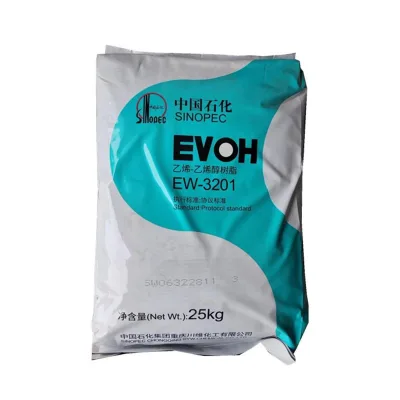
The standard packaging unit is 25 kilograms per bag, though 1 kg bags are available for smaller orders. Packaging is designed to protect the granules during transit and storage.
Can Oxygen Barrier EVOH Granule be customized for color?
Yes, the material appearance can be customized to natural white or other specific colors. Customization is available while maintaining the core thermoplastic and oxygen barrier properties required for engineering applications.