Source Oxygen-Free Copper Automotive Wire for Cars, Trains, and Buses
Find 30 listings for oxygen-free copper automotive wire suitable for vehicles, railways, and industrial power systems. Buyers can compare specifications like diameter, coating, and condition from verified Chinese manufacturers.
Key considerations
Products List


Oxygen-Free High-Speed Data Telecom Multi-Core Copper Wire Bare Copper Wire
$12000.00 - $12222.00
MOQ: 1000 Tons

Oxygen-Free Copper Stranded Wire for Precision Electronics Conductor
$12000.00 - $12222.00
MOQ: 1000 Tons

High Conductivity Oxygen Free Bare Copper Wire for Cables Bare Copper Conductor
$12000.00 - $12222.00
MOQ: 1000 Tons


Aessx Stranded Copper Automotive Wire for Low Voltage Automotive Wire Harness
$0.02 - $0.10
MOQ: 5000 Meters

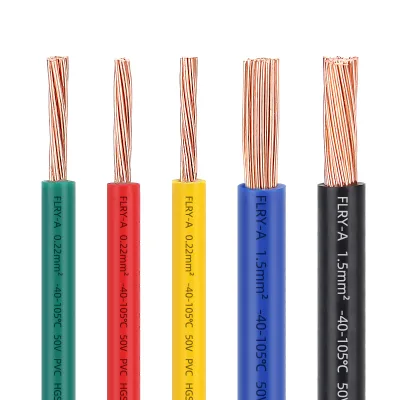


Comprehensive Sourcing Guide
Strategic Sourcing Guide for Oxygen-Free Copper Automotive Wire
Understanding Material Composition and Alloy Classifications
When sourcing oxygen-free copper automotive wire, the primary distinction lies in the material composition and the specific alloy classification. While the core keyword implies high-purity copper, the supplied product data reveals a complex landscape where "Non-alloy" and "Alloy" designations coexist. For automotive applications, the conductor material is consistently identified as Copper, with specific mentions of "Red Copper" and "Bare Copper Wire." However, buyers must verify the exact copper content, as observed data indicates a range of Cu Content from 59.5% to 96%. This variance is critical; true oxygen-free copper typically requires a purity level significantly higher than 96%, often exceeding 99.9%.
The supplied facts list "Alloy" as a material property alongside "Non-alloy," suggesting that the market offers both pure copper variants and copper-based alloys. For high-performance automotive wiring, where conductivity and thermal stability are paramount, the "Non-alloy" designation is generally preferred. The "Condition" of the wire is also a vital technical parameter, with observed states including "Soft Annealed," "Annealed," "Hard Drawn," and various temper levels such as 1/8h, 1/4h, 1/2h, 3/4h, H, and Eh. The "Products Status" further clarifies that wires are available in "Soft," "Semihard," and "Hard" conditions. Buyers must align these mechanical properties with the specific routing and flexing requirements of the vehicle's electrical architecture.
Furthermore, the "Shape" of the conductor is listed as both "Coil" and "Round," with the specific "Material Shape" noted as "Round Wire." The "Conductor Type" is specified as "Solid," though other listings mention "Stranded Copper Wire." For automotive applications, stranded conductors are often preferred for their flexibility in tight engine bays, while solid conductors may be used for specific high-current busbar applications. The "Diameter" is listed as "Required" or within a range of 0.05mm to 40mm, and the "Width" is similarly "as Required." This indicates that the wire is highly customizable, and procurement must be driven by precise engineering drawings rather than off-the-shelf standard sizes alone.
Technical Specifications and Manufacturing Processes
The manufacturing process defines the physical and electrical integrity of the wire. The supplied data highlights "Rolling and Drawing" as the primary technology used to produce the wire. This process is essential for achieving the desired mechanical strength and dimensional accuracy. The "Surface" finish is described as "Bright," which is a standard requirement for bare copper to ensure good solderability and visual inspection readiness. However, for automotive environments, surface treatments are often necessary to prevent oxidation and corrosion.
The "Coating Way" is a critical specification, with options including "Hot Dipped" and "Electroplating." The observed "prod_model" includes "Nickel Plated Copper Wire," indicating that plating is a common modification. While the "Insulation Material" is listed as "Bare" for some entries, other data points specify "PVC" and "Crosslinking" as sheath materials. For automotive wire, crosslinking (often XLPE) is superior to standard PVC due to its higher thermal resistance and durability against engine heat. The "Voltage" rating is noted as "High Voltage Cable," and the "Current" type is "DC Cable," reflecting the specific electrical demands of modern automotive systems, including electric vehicles (EVs) and hybrid powertrains.
The "Standard" for the wire is listed as "ASTM" in the high-confidence facts, with specific product standards ranging from 0.07mm to 3mm or 0.05mm to 40mm. While general ASTM standards like B1, B2, and B3 are mentioned in the low-confidence background, the procurement strategy should focus on verifying the exact ASTM designation required for the specific application. The "prod_standard" is also noted as "As required," reinforcing the need for buyers to define their own technical specifications based on the vehicle manufacturer's requirements. The "Range of Application" extends to "Telecommunication, Construction, Industrial, Power Station, Computer, Overhead, Car, Underground," confirming the versatility of the wire but necessitating a filter for automotive-grade quality.
Compliance, Certification, and Regulatory Standards
Navigating the regulatory landscape is essential for automotive procurement. The supplied product data lists several certifications, including "ISO9001," "RoHS," "SGS," and "Reach." These are non-negotiable for suppliers targeting the global automotive market. ISO9001 ensures that the manufacturer has a robust quality management system in place. RoHS (Restriction of Hazardous Substances) compliance is mandatory to ensure the wire does not contain restricted levels of lead, mercury, cadmium, or other hazardous materials, which is critical for environmental regulations in the EU and other regions.
The "Reach" certification indicates compliance with the Registration, Evaluation, Authorisation and Restriction of Chemicals regulation, further ensuring the safety of the materials used in the wire's insulation and coating. The presence of "SGS" suggests third-party verification of the product's quality and safety. However, buyers must be cautious; while these certifications are listed as "High-confidence facts," they may apply to specific product lines rather than the entire supplier catalog. The "Certification" field also appears multiple times with variations, such as "RoHS,ISO9001" or "RoHS,ISOConductor Material:Copper," which requires careful verification of the scope of each certificate.
In addition to these general certifications, automotive wire often requires adherence to specific industry standards such as UL (Underwriters Laboratories) or SAE (Society of Automotive Engineers) standards, though these are not explicitly detailed in the supplied high-confidence facts. The "prod_standard" is listed as "As required," which implies that the supplier may not have a single universal standard but rather adapts to customer needs. Buyers should request evidence of compliance with specific automotive standards relevant to their region and vehicle type. The "Location" of the supplier is noted as "China" and specifically "Jiangsu, China," which is a major manufacturing hub. While this provides access to a vast supply chain, it also necessitates rigorous due diligence regarding the supplier's ability to meet international export standards and logistics requirements.
Cost Drivers and Pricing Dynamics
The pricing structure for oxygen-free copper automotive wire is influenced by several dynamic factors. The observed listed price range in USD is extremely wide, spanning from 0.01 to 12,222. This vast range likely reflects differences in wire gauge, length, plating type, and packaging. The "Price Term" includes Fob, CIF, CNF, and EXW, indicating that the final cost is heavily dependent on the Incoterms selected. Buyers must account for shipping, insurance, and customs duties when comparing prices across different terms.
The "MOQ" (Minimum Order Quantity) ranges from 1 to 10,000, offering flexibility for both prototyping and mass production. However, the "Sample" availability is noted as "Available," which is a crucial cost-saving measure for buyers to validate quality before committing to large orders. The "prod_packing" varies from "Standard Seaworhy Packing" to "Plastic Reel and Iron Frame" and "Plastic Bobbin, Iron Bobbin, Iron Wood Bobbin." The choice of packaging can impact the overall cost, especially for heavy or long-length orders where shipping volume is a factor.
The "Cu Content" of 59.5-96% is a significant cost driver. Higher purity copper commands a premium price, while alloys with lower copper content may be cheaper but less suitable for high-conductivity applications. The "Coating Way" also affects cost; electroplating and hot-dipping add processing steps and material costs. Buyers should request detailed breakdowns of the cost per unit, separating the raw material cost from the processing and packaging costs. The "prod_model" variations, such as "Bare Copper Wire" versus "Nickel Plated Copper Wire," will also result in different price points. It is advisable to establish a clear specification matrix to ensure that cost comparisons are made between equivalent products.
Typical Applications and Performance Requirements
The "Range of Application" for the supplied copper wire is extensive, covering "Cement/Wirewound/Sensitive/Film/Fusible Resistor," "Electronic Components Lead," and "Transmission and Distribution, Railway, etc." For automotive use, the specific applications include "Car," "Overhead," and "Underground" wiring, as well as "Power Station" and "Industrial" settings. The "Products Status" of "Annealed, Hard Drawn" suggests suitability for various mechanical stresses, from flexible harnesses to rigid connections.
The "Application" list also includes "Telecommunication, Construction, Computer," which highlights the wire's versatility. However, for automotive wire, the focus should be on its ability to withstand vibration, temperature fluctuations, and exposure to fluids. The "Sheath Material" of "Crosslinking" is particularly relevant for engine compartments where temperatures can be extreme. The "Voltage" rating of "High Voltage Cable" is increasingly important with the rise of electric vehicles, where high-voltage wiring harnesses are critical for battery management and motor control.
The "Conductor Type" being "Solid" or "Stranded" dictates the application. Stranded wire is preferred for moving parts and complex routing, while solid wire is used for fixed connections. The "Shape" being "Round" is standard, but the "Coil" format suggests that the wire is often supplied in reels for automated winding and assembly processes. Buyers should verify that the wire's mechanical properties, such as tensile strength and elongation, meet the specific requirements of the vehicle's design. The "Condition" of the wire, whether "Soft," "Semihard," or "Hard," must match the bending radius and stress requirements of the installation.
Supplier Evaluation and Quality Control Protocols
Evaluating suppliers for oxygen-free copper automotive wire requires a multi-faceted approach. The "Location" of the supplier is "China," specifically "Jiangsu," which is a known manufacturing center. Buyers should verify the supplier's production capacity and history, as the "Actual product count" of 30 suggests a diverse but potentially limited catalog. The "Certification" of ISO9001, RoHS, SGS, and Reach provides a baseline for quality, but buyers should request recent audit reports to ensure ongoing compliance.
Quality control should focus on the "Surface" finish, "Diameter" consistency, and "Cu Content." The "Process" of "Rolling and Drawing" must be monitored to ensure uniformity. The "Coating Way" should be tested for adhesion and thickness, especially for "Nickel Plated" or "Electroplated" wires. The "prod_packing" must be robust enough to prevent damage during transit, with "Standard Seaworhy Packing" or "Plastic Reel Packaging and Carton Vacuum Packaging" being common options.
Buyers should also assess the supplier's ability to provide "Sample" units for testing. The "Sample" availability is a positive indicator of a supplier's confidence in their product. The "MOQ" range of 1 to 10,000 allows for flexible testing and scaling. However, buyers must be wary of suppliers who claim to meet all standards without providing verifiable documentation. The "Standard" of "ASTM" should be cross-referenced with the specific product specifications. The "prod_standard" being "As required" suggests that the supplier is willing to customize, but this requires clear communication and detailed technical agreements.
Long-Term Procurement and Supply Chain Resilience
Long-term procurement of oxygen-free copper automotive wire involves more than just securing a price; it requires building a resilient supply chain. The "Price Term" options (Fob, CIF, CNF, EXW) offer flexibility in managing logistics and risk. Buyers should consider the "Lead Time" and "Location" of the supplier to ensure timely delivery, especially for just-in-time manufacturing processes. The "prod_origin" being "China" may present logistical challenges, such as shipping delays or geopolitical risks, which should be mitigated through diversified sourcing strategies.
The "Range of Application" and "Application" diversity suggest that the wire can be used in multiple sectors, but buyers should ensure that the supplier prioritizes automotive-grade quality. The "Products Status" and "Condition" variations allow for customization, but buyers must maintain strict control over specifications to avoid quality drift. The "Cu Content" range of 59.5-96% highlights the need for continuous monitoring of material purity to ensure consistent performance.
Finally, the "Certification" landscape is dynamic, with regulations like RoHS and Reach evolving over time. Buyers should establish a long-term relationship with suppliers who are proactive in updating their compliance documentation. The "prod_packing" and "Standard" specifications should be reviewed periodically to ensure they remain relevant to the latest industry standards. By focusing on these long-term considerations, buyers can secure a reliable supply of high-quality oxygen-free copper automotive wire that meets the rigorous demands of the automotive industry.
FAQs
What certifications do oxygen-free copper automotive wire suppliers typically hold?
Suppliers typically hold ISO9001, RoHS, SGS, and Reach certifications. These ensure quality management and compliance with hazardous substance restrictions. Buyers should verify that specific certificates apply to the exact product model being sourced.
How is the copper content specified for automotive wire applications?
The copper content ranges from 59.5% to 96% in observed listings. True oxygen-free copper requires higher purity, so buyers must confirm the exact percentage. This variance significantly impacts conductivity and suitability for high-performance automotive systems.
Which surface treatments are available for copper wire manufacturing?
Available surface treatments include hot dipping and electroplating. Some products are listed as nickel plated, while others are bare or bright. The choice depends on the required corrosion resistance and solderability for the specific automotive environment.
Can buyers request custom dimensions for copper wire orders?
Yes, dimensions are highly customizable with diameters ranging from 0.05mm to 40mm. Width is also listed as required. Buyers must provide precise engineering drawings rather than relying on standard off-the-shelf sizes for automotive integration.
What packaging options are available for shipping copper wire?
Packaging includes plastic reels, iron frames, bobbins, and vacuum-sealed cartons. Standard seaworthy packing is also available. The choice affects shipping volume and protection, so buyers should select options that match their logistics and storage requirements.
How does the wire condition affect its mechanical properties?
Wires are available in soft, semihard, and hard conditions, including annealed or hard-drawn states. Specific temper levels like 1/8h or H are also offered. Selecting the correct condition ensures the wire meets the flexing and tensile strength needs of the vehicle.
Where are the manufacturers of this wire located?
Manufacturers are located in China, specifically in Jiangsu. This region is a major manufacturing hub for copper products. Buyers should consider logistics and export compliance when sourcing from this specific geographic location.