Source Paddy Rice Seed Cleaning and Processing Plant for Wheat, Corn, and Beans
Find 26 Paddy Rice Seed Cleaning and Processing Plant options from China. Compare capacities ranging from 1 to 20 tons per hour, electric or diesel power sources, and ISO-certified models to match your grain cleaning needs.
Key considerations
Products List


$10000.00 - $20000.00
MOQ: 1 Sets


Comprehensive Sourcing Guide
Paddy Rice Seed Cleaning and Processing Plant Sourcing Guide
Selecting the right Paddy Rice Seed Cleaning and Processing Plant requires a careful balance between throughput capacity, seed integrity, and long-term operational reliability. These systems are engineered to remove impurities, separate damaged seeds, and grade grains based on size, weight, and aerodynamic properties. For procurement teams, the primary challenge lies in matching the machine’s design to the specific crop mix and desired output quality. The market offers a variety of configurations, ranging from compact units suitable for small-scale cooperatives to large-scale industrial lines capable of handling high volumes. Understanding the distinction between basic cleaning functions and comprehensive processing plants is the first step in defining your technical requirements.
The decision to invest in this equipment is driven by the need to improve seed germination rates and market value. Cleaned seeds command higher prices and ensure more uniform crop emergence, which directly impacts agricultural yield. Buyers must consider not just the initial purchase price but also the total cost of ownership, including energy consumption, maintenance frequency, and the availability of spare parts. This guide provides a structured approach to evaluating suppliers, verifying technical specifications, and ensuring that the selected plant aligns with your operational goals and regulatory environment.
Product Scope and Observed Listing Signals
The current market for paddy rice seed cleaning plants shows a wide range of capabilities, with observed listing prices spanning from approximately $100 to $118,000 USD. This broad spectrum reflects the diversity in machine size, automation level, and included features. Lower-priced units typically represent smaller, semi-automatic systems with basic cleaning functions, while higher-end models include advanced sorting technologies, automated controls, and higher throughput capacities. The minimum order quantity (MOQ) is consistently observed at one set, indicating that suppliers are flexible in accommodating both pilot projects and large-scale industrial deployments. Buyers should interpret price variations as indicators of capacity and feature sets rather than just brand prestige.
Observed product attributes highlight significant customization options, which are critical for specific agricultural needs. Many suppliers offer plants with customizable colors, such as green or white, and allow for base designs tailored to client requirements. The power source is predominantly electric motor-driven, with some options for diesel engines, and input electricity can be customized to match local grid standards. Capacity ranges widely, with listings indicating outputs from 1 to 8 tons per hour up to 20 tons per hour, depending on the crop type, such as wheat or maize. These signals suggest that buyers should not rely on generic specifications but must engage suppliers early to define the exact throughput and material handling requirements for their specific facility.
Technical Specifications to Verify
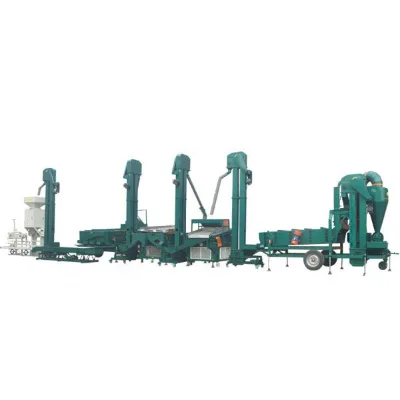
When evaluating technical specifications, the model number and physical dimensions are primary indicators of the plant’s scale and footprint. Common model designations include 5X, 5XZS-10CDS, and 5XZS-20DS, which often correlate with specific capacity tiers. The physical size of these units can be substantial, with some models measuring approximately 6000mm in length, 2200mm in width, and 3300mm in height, weighing around 3200kg. Buyers must verify these dimensions against their facility’s layout to ensure adequate space for installation, maintenance access, and material flow. The horizontal appearance of many units suggests a streamlined design that may facilitate easier integration into existing production lines.
Power requirements and material composition are equally critical for operational planning. The plants are typically constructed from carbon steel, providing durability for heavy-duty agricultural processing. Power inputs vary, with some units operating on standard voltages like 220-460V, while others require customized electrical setups. It is essential to confirm the exact power consumption and voltage requirements with the supplier to avoid costly electrical upgrades at the installation site. Additionally, the function of the plant may extend beyond simple cleaning to include hulling, sorting, and processing, so buyers should verify that the specific model selected includes all necessary stages for their desired output quality.
Compliance and Safety Documentation
Compliance with international quality and safety standards is a key factor in selecting a reliable supplier. Many manufacturers claim adherence to ISO9001-2008, ISO, TUV, SGS, and SONCAP standards. These certifications indicate that the supplier has established quality management systems and that the equipment may meet certain international safety and performance benchmarks. However, buyers should request valid, current certificates and verify their authenticity with the issuing bodies. The presence of these standards suggests a baseline level of manufacturing discipline, but it does not guarantee that every unit will perform identically without proper oversight.
Safety documentation and operational manuals are essential for ensuring the safe use of the equipment. Buyers should require detailed technical manuals that cover installation, operation, maintenance, and troubleshooting procedures. These documents should also include safety warnings and lockout/tagout procedures to protect operators from moving parts and electrical hazards. In regions with strict regulatory environments, such as those requiring CE marking, buyers must explicitly request confirmation of compliance with local machinery directives. Relying solely on supplier claims without documented proof can lead to regulatory penalties and operational risks.
Cost Drivers and Commercial Terms
The total cost of a paddy rice seed cleaning plant is influenced by several commercial terms, including packaging, delivery, and warranty provisions. Packaging is typically done in export-standard wooden boxes or containers by sea, which protects the equipment during transit but adds to the overall logistics cost. Buyers should clarify who is responsible for loading, unloading, and insurance during shipping. The delivery date is often cited as 30 days, but this can vary based on customization levels and production schedules. It is crucial to negotiate clear delivery timelines and penalties for delays to mitigate supply chain disruptions.
Warranty and after-sales service are significant components of the commercial agreement. Most suppliers offer a one-year warranty on the plant, covering defects in materials and workmanship. However, the scope of the warranty should be clearly defined, including what parts are covered and the response time for claims. Some suppliers provide engineer on-site service, which can be invaluable for initial installation and troubleshooting. Buyers should assess the cost and availability of spare parts, as well as the long-term support structure, to ensure that the plant remains operational throughout its lifecycle. Discount options may be available, but these should be evaluated against the overall value proposition.
Supplier Qualification and Quality Control
Supplier qualification involves verifying the manufacturer’s location, production capacity, and quality control processes. Many suppliers are located in Hebei, China, specifically in Shijiazhuang City, which is near Beijing. This region is known for its manufacturing capabilities, but buyers should conduct due diligence to ensure the supplier has a proven track record in producing agricultural machinery. Requesting references from previous clients and visiting the factory, if possible, can provide insights into the supplier’s manufacturing standards and quality control practices. A robust quality control process should include pre-shipment inspections and testing of the equipment under simulated operating conditions.
Quality control extends to the customization and design phase. Since many plants are designed based on client needs, buyers should ensure that the supplier has the engineering expertise to translate their requirements into a functional design. This includes verifying the accuracy of the capacity calculations, the efficiency of the cleaning mechanisms, and the durability of the materials used. Buyers should also inquire about the supplier’s ability to provide ongoing technical support and updates to the plant’s software or control systems. A supplier that invests in R&D and continuous improvement is more likely to deliver a reliable and efficient product.
Long-Term Procurement Checks
Long-term procurement success depends on establishing a strong relationship with the supplier and ensuring continuous support. Buyers should negotiate service level agreements (SLAs) that define response times for technical issues and availability of spare parts. Regular maintenance schedules should be established to prevent unexpected downtime and extend the lifespan of the equipment. It is also important to stay informed about technological advancements in seed cleaning and processing, as newer models may offer improved efficiency and lower operating costs. Periodic reviews of the plant’s performance against initial specifications can help identify areas for improvement or potential upgrades.
Finally, buyers should consider the environmental and sustainability aspects of the plant. Modern seed cleaning plants can incorporate features that reduce dust emissions and energy consumption, contributing to a more sustainable operation. Buyers should inquire about the supplier’s efforts to minimize the environmental impact of their products and whether there are options for energy-efficient motors or recycling systems. By focusing on long-term value rather than just the initial purchase price, buyers can ensure that their investment in a Paddy Rice Seed Cleaning and Processing Plant delivers consistent returns and supports their agricultural goals for years to come.
FAQs
What customization options are available for the plant?
Customization is available based on client needs for plant design. The equipment can be tailored to specific requirements, and colors like green or white are offered to match customer preferences for the final product appearance.
Which certifications does the manufacturer hold for this equipment?
The products hold ISO9001-2008, TUV, SGS, and SONCAP certifications. These standards ensure quality and safety compliance for the Paddy Rice Seed Cleaning and Processing Plant manufactured in China.
How long is the delivery time for the cleaning plant?
The delivery date is typically 30 days after order confirmation. This lead time applies to the standard production and packaging process for the grain seed cleaning plant units.
What is the minimum order quantity for this machinery?
The minimum order quantity is one set for the Paddy Rice Seed Cleaning and Processing Plant. Buyers can purchase a single unit to begin their grain cleaning operations immediately.
Can the plant handle different types of seeds like wheat or corn?
Yes, the application includes wheat, corn, sesame, beans, and vegetable seeds. The machine functions for hulling, cleaning, sorting, and processing various grain types effectively.
What is the warranty period for the seed processing plant?
The warranty period is one year for the equipment. This coverage ensures support for the electric motor and other components during the initial operational phase.
How is the machinery packed for sea shipment?
The product is packed in containers by sea or usually in export standard wooden boxes. This packaging protects the carbon steel structure during international transport from the factory location.