Source Partly-welded Type Electrical Enclosure for Power Plants, Home Use, and Outdoor Use
Compare 30 listings for partly-welded type electrical enclosure designed for power plants, home use, and outdoor applications. Buyers can evaluate customization options, protection grades, and material specifications to find suitable distribution metering boxes and switches.
Key considerations
Products List


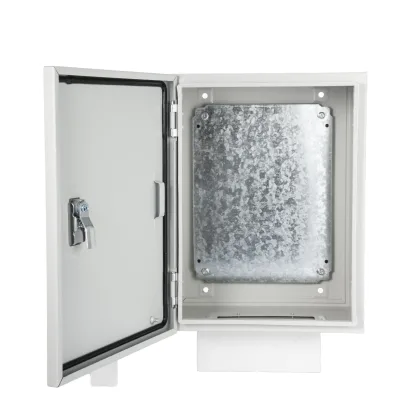
out-Door Modular Electrical Enclosure with Inner Door Stainless Steel
$10.00 - $100.00
MOQ: 1000 Pieces




Comprehensive Sourcing Guide
Partly-Welded Type Electrical Enclosure Sourcing Guide
Procuring partly-welded type electrical enclosures requires a nuanced understanding of manufacturing processes that balance structural integrity with cost-efficiency. These enclosures are typically characterized by a hybrid construction method where certain panels or structural elements are permanently joined through welding, while others may remain bolted or riveted for ease of assembly and maintenance. This configuration is particularly prevalent in industrial settings where durability against environmental stressors is paramount, yet the need for internal access remains high. Buyers must recognize that the "partly-welded" designation implies a specific structural logic that differs from fully welded or fully bolted alternatives, influencing both the mechanical strength and the logistical handling of the unit.
The sourcing landscape for these components is diverse, with manufacturers often offering extensive customization options to meet specific project requirements. Observed market data indicates a wide range of product models, such as the YC-EL013 and ME806020, suggesting that buyers will encounter standardized base designs that are then adapted through laser cutting, bending, stamping, and welding processes. The availability of 2D/3D/CAD/Dwg/Step/Pdf/Igs drawing formats further supports the notion that these enclosures are frequently tailored to fit unique spatial constraints or integration needs within larger power distribution systems. Consequently, the procurement strategy must prioritize suppliers who can seamlessly translate engineering drawings into physical prototypes that adhere to tight tolerances, often specified at +/-0.01mm or special requirements.
Product Scope and Observed Listing Signals
The product scope for partly-welded enclosures spans a variety of applications, ranging from home use and outdoor installations to more demanding environments like power plants and industrial facilities. Listings often highlight features such as IP66 waterproofing, explosion-proof capabilities, and dust-proof insulation, indicating that these units are designed to protect sensitive electrical components from harsh external conditions. The shell material is frequently specified as stainless steel, providing robust resistance to corrosion and physical impact, which is critical for longevity in outdoor or industrial settings. Additionally, the inclusion of features like overload protection and mechanical switches suggests that these enclosures often serve as integrated control points rather than mere storage boxes.
Observed listing signals reveal a significant variation in packaging and origin, with products originating from regions such as Zhejiang and Shandong in China. Packaging methods vary from carton and pallet configurations to wooden or cardboard box packaging, reflecting the need to protect the enclosures during transit, especially given their potentially heavy stainless steel construction. The presence of customization services, including OEM acceptance and design support, indicates that buyers are not limited to off-the-shelf solutions. Instead, they can engage with suppliers to modify dimensions, colors, and internal layouts, ensuring that the final product aligns perfectly with the specific electrical and spatial requirements of the installation site.
Technical Specifications to Verify
When evaluating technical specifications, buyers must closely examine the operational voltage and wiring configurations to ensure compatibility with their existing electrical infrastructure. Many listed products operate on low voltage and support wiring for null line, live line, and various control functions such as start, stop, reset, and limit buttons. The principle of operation is often resistive, and the kind of switch may be a double-pole on-off type, which influences how the enclosure interfaces with downstream devices. Verifying these electrical parameters is crucial to prevent mismatches that could lead to operational failures or safety hazards during commissioning.
Structural and dimensional specifications are equally critical, with observed models ranging from specific part numbers to general types like H-type or U-type. The size of the enclosure, sometimes noted as 3 units or specific dimensions like 400300200mm, must be cross-referenced with the physical space available at the installation site. Furthermore, the surface treatment, such as painting, and the protection grade, indicated by IP ratings, play a vital role in determining the enclosure's suitability for its intended environment. Buyers should verify that the tolerance levels, often cited as +/-0.01mm, are achievable for the specific batch size and that the welding quality meets the required standards for structural integrity.
Compliance and Safety Documentation
Compliance and safety documentation form the backbone of any credible procurement process for electrical enclosures. Buyers must request evidence that the products meet relevant international and local standards, such as IEC 60079, particularly if the enclosure is intended for use in hazardous areas where explosion-proof features are required. While specific certification statuses may not always be explicitly listed in initial product descriptions, it is imperative to verify that the manufacturer has undergone rigorous testing to validate claims of waterproof, dust-proof, and explosion-proof performance. This verification ensures that the enclosure can safely contain any potential electrical faults without posing a risk to personnel or surrounding equipment.
In addition to safety certifications, buyers should inquire about the storage medium and material safety profiles of the enclosures. Some products are described as using moncombustible and nontoxic materials, which is a significant consideration for projects with strict environmental or health regulations. The use of PC panels and copper silver alloy inside the switches further underscores the importance of material verification, as these components directly impact the electrical conductivity and longevity of the device. Ensuring that all materials comply with relevant environmental directives, such as RoHS or REACH, is a necessary step to avoid regulatory hurdles during the importation and installation phases.
Cost Drivers and Commercial Terms
Cost drivers for partly-welded type electrical enclosures are influenced by a combination of material costs, manufacturing complexity, and customization levels. The use of stainless steel and copper silver alloy contributes significantly to the base material cost, while the labor-intensive processes of laser cutting, bending, and welding add to the overall price. Customization options, such as specific dimensions, colors, and internal layouts, further increase costs due to the need for tailored production runs and additional engineering support. Buyers should be aware that while standard models may offer competitive pricing, highly customized solutions will inevitably command a premium due to the specialized resources required.
Commercial terms, including minimum order quantities (MOQ) and payment conditions, vary widely across suppliers. Observed MOQ ranges from as low as 1 unit to as high as 10,000 units, providing flexibility for both small-scale projects and large industrial deployments. Pricing observed in the market ranges from $0.5 to $246 USD, reflecting the diversity in size, material, and feature sets. Buyers should negotiate terms that align with their project timeline and budget, considering factors such as lead times and shipping costs. It is also advisable to clarify whether the quoted price includes packaging, documentation, and any necessary testing reports, as these can impact the total cost of ownership.
Supplier Qualification and Quality Control
Supplier qualification is a critical step in ensuring the reliability and consistency of partly-welded type electrical enclosures. Buyers should assess the manufacturer's production capabilities, including their proficiency with laser cutting, bending, stamping, and welding technologies. The ability to provide 2D/3D/CAD/Dwg/Step/Pdf/Igs drawings indicates a level of technical sophistication that is essential for custom projects. Additionally, verifying the supplier's experience in serving industries such as power plants, commercial buildings, and industrial facilities can provide insight into their ability to meet diverse quality and performance requirements.
Quality control measures should be rigorously evaluated, with a focus on inspection protocols for welding integrity, dimensional accuracy, and surface finish. Buyers should request samples or conduct factory audits to verify that the supplier adheres to the specified tolerances, such as +/-0.01mm, and that the protective coatings, like painting, are applied uniformly and durably. The supplier's commitment to continuous improvement and their response to quality issues are also important indicators of their reliability. Establishing a clear quality assurance framework, including agreed-upon acceptance criteria and rejection procedures, helps mitigate risks associated with defective or non-conforming products.
Long-Term Procurement Checks
Long-term procurement checks involve monitoring the performance and durability of the supplied enclosures over time. Buyers should track metrics such as the lifespan of the switches, often cited as 10 years, and the integrity of the protective features under varying environmental conditions. Regular inspections of the installed enclosures can help identify potential issues, such as corrosion, seal degradation, or electrical faults, allowing for proactive maintenance and repair. This ongoing monitoring ensures that the enclosures continue to perform as expected, minimizing downtime and extending the useful life of the electrical infrastructure.
Furthermore, buyers should maintain open communication with their suppliers to stay informed about any updates in product design, material availability, or regulatory requirements. This proactive approach enables timely adjustments to procurement strategies and ensures that future orders align with the latest industry standards and best practices. By fostering a collaborative relationship with suppliers, buyers can benefit from continuous improvements in product quality and service, ultimately achieving greater value and reliability in their electrical enclosure sourcing efforts.
FAQs
What customization options are available for these enclosures?
Customization is available for these partly-welded type electrical enclosures to meet specific project needs. Buyers can request tailored designs, dimensions, and finishes while maintaining the core protection structure and laser cutting processes used in manufacturing.
Which materials are used for the shell protection grade?
The shell material is stainless steel, providing robust protection for the enclosure. This material ensures durability and supports the IPSize:1 Uint protection grade, making it suitable for both home and outdoor applications in various environments.
How is the product packed for shipping and delivery?
The product is packed in cartons, on pallets, or in customized wooden and cardboard boxes depending on the order. This flexible packaging approach ensures safe transport while accommodating different shipping requirements and protecting the enclosure from damage during transit.
Can the enclosure be used in power plants and industrial settings?
Yes, the application range includes power plants, industrial facilities, and commercial buildings. The design supports functions like overload protection and insulation, making it suitable for diverse environments ranging from home use to heavy industrial lighting and electronics.
What drawing formats are provided for the distribution metering box?
Drawing formats include 2D, 3D, CAD, Dwg, Step, Pdf, and Igs files for easy integration. These formats allow engineers to visualize the partly-welded type electrical enclosure accurately and facilitate precise installation planning without requiring additional conversion steps.
What is the tolerance level for the manufacturing process?
The tolerance is +/-0.01mm or can be adjusted to meet special requirements. This high precision is achieved through laser cutting, bending, stamping, welding, and riveting processes, ensuring the enclosure fits perfectly within its intended electrical distribution system.