Source Party Decoration Balloon Pump for Birthday Parties, Festivals, Exhibitions
Compare 24 Party Decoration Balloon Pump options from verified Chinese manufacturers. Buyers can review specifications like inflation rates, voltage, and MOQs for events including birthday parties, festivals, and commercial exhibitions.
Key considerations
Products List


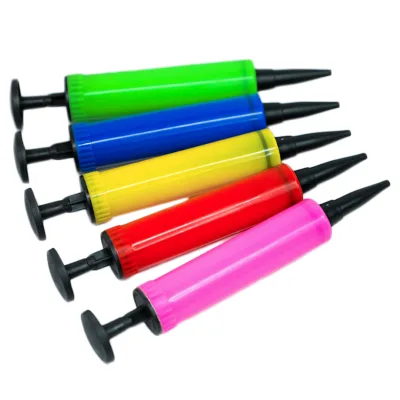
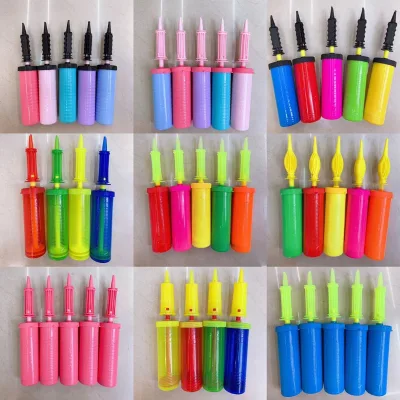
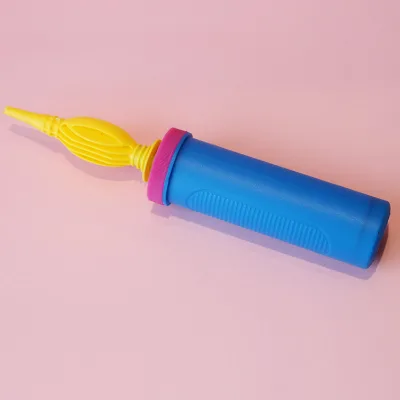
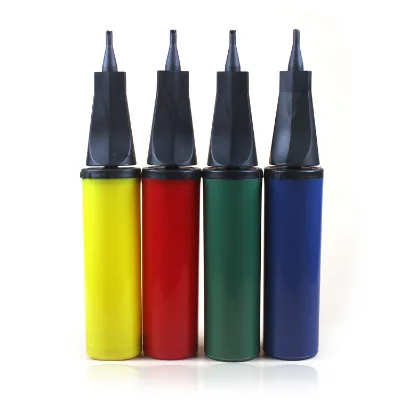
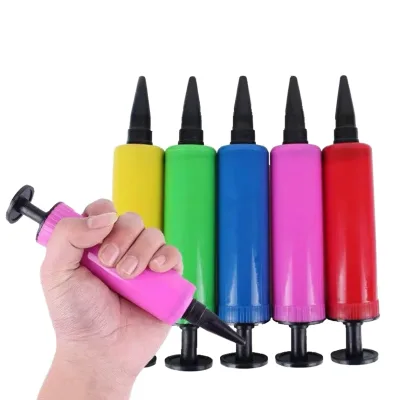
Party Balloon Hand Pump Handheld Air Pump for Kids Party Balloons Supplies
$0.30 - $0.35
MOQ: 100 Pieces


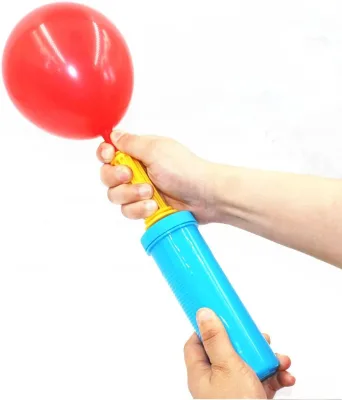
Inflation Tool Balloon Pump High Quality Plastic Balloon Hand Pump Wholesale
$0.32 - $0.44
MOQ: 2000 Pieces



Comprehensive Sourcing Guide
Strategic Sourcing Guide for Party Decoration Balloon Pumps
Understanding Product Categories and Technical Variations
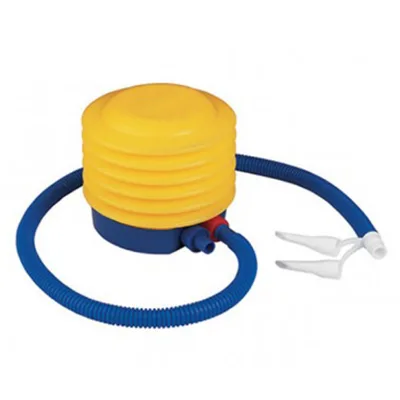
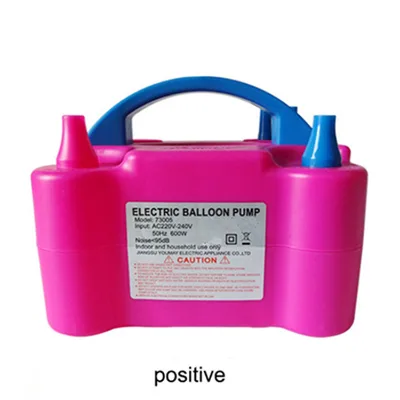
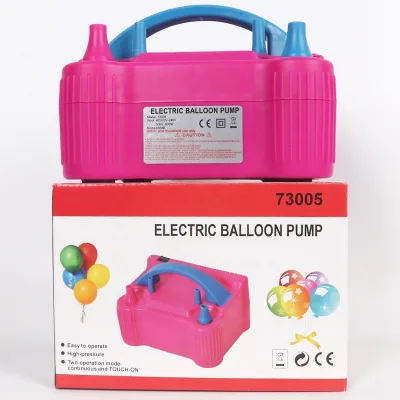
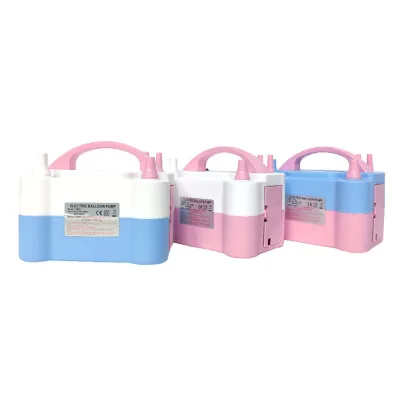
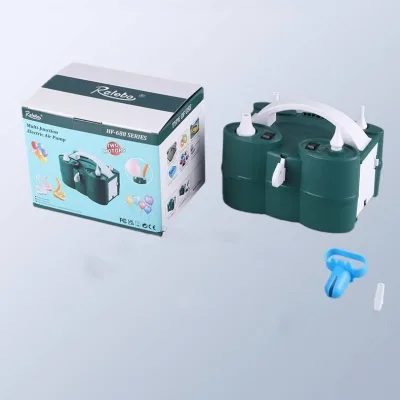
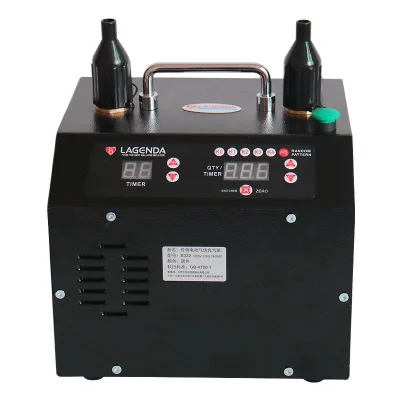
The market for party decoration balloon pumps is segmented primarily by inflation mechanism, power source, and intended application scale. Buyers must distinguish between manual foot pumps and electric inflators, as these categories serve fundamentally different operational needs. Manual pumps, often constructed from polypropylene (PP) or general plastic, are designed for low-volume, intermittent use. These units typically feature a round or compact shape and rely on human effort to generate airflow. In contrast, electric inflators are engineered for high-volume efficiency, utilizing motors powered by alternating current (AC) voltages ranging from 110-120V to 220-240V. These electric models are critical for commercial events, large exhibitions, and birthday parties where rapid inflation of numerous balloons is required.
Technical specifications vary significantly across these categories. Manual foot pumps may have a single volume capacity that appears negligible in standard cubic centimeter listings but are optimized for specific pressure outputs. Electric models, however, list precise dimensions such as 200130160mm and boast high blowing rates, with observed data indicating capacities up to 520 liters per minute. The pressure output for certain electric units is specified around 2 psi, which is sufficient for standard latex balloons. Material composition is another critical differentiator; while some units are described simply as "plastic," others specify polypropylene, a material chosen for its durability and resistance to wear during repeated foot-pumping actions. The shape of the device also influences usability, with round designs being common for foot pumps to ensure stability during operation, while electric units often adopt rectangular or box-like forms to house the motor and electrical components.
Compliance, Certification, and Safety Standards
When sourcing balloon pumps for party decoration, verifying compliance with international safety standards is non-negotiable, particularly for products intended for use around children or in public venues. The supply chain for these items often originates from manufacturing hubs in China, specifically regions like Hubei and Hebei provinces. Buyers must ensure that any supplier provides documentation confirming adherence to recognized safety certifications. In the observed market data, products are frequently listed with CE and EN71 certifications. The CE mark indicates conformity with health, safety, and environmental protection standards for products sold within the European Economic Area, while EN71 is a specific European standard for the safety of toys, which is highly relevant given the end-use of balloon pumps in festive environments.
Beyond certification labels, buyers should verify the electrical safety of electric inflators. Since these devices operate on AC voltages, the internal wiring and insulation must meet rigorous standards to prevent electrical hazards. The presence of a "Custom" brand name or specific model numbers like BFP-103 or BEP-735 does not inherently guarantee safety; rather, the certification documents attached to the specific batch are the primary evidence of compliance. For products marketed as toys or party accessories, the EN71 standard is particularly vital as it covers mechanical safety, flammability, and chemical composition. Buyers should request test reports that explicitly reference these standards rather than accepting generic claims. Additionally, the "Single Item" type designation often implies that the product is sold as a standalone unit, which simplifies the certification process compared to complex multi-component systems, but it does not exempt the product from basic safety requirements.
Cost Drivers and Pricing Structures
The pricing of party decoration balloon pumps is influenced by a complex interplay of factors including material costs, manufacturing complexity, and order volume. The observed price range in the market spans from $0.15 to $503.99, a disparity that reflects the difference between a simple manual foot pump and a high-capacity industrial electric inflator. The lower end of this spectrum typically corresponds to manual units made from basic plastic materials, such as polypropylene, which are inexpensive to mold and assemble. These units often have minimal packaging, sometimes sold individually or in small bulk packs, keeping the unit cost low.
Conversely, the higher price points are driven by the inclusion of electric motors, electrical components, and more robust housing materials. The cost of an electric pump is also affected by its power output and blowing rate; models capable of 520 liters per minute command a premium over slower, manual alternatives. Packaging also plays a significant role in cost determination. Units sold in gift boxes or with customized packing solutions incur higher logistics and material costs compared to those shipped in standard cartons. Furthermore, the Minimum Order Quantity (MOQ) acts as a primary cost driver. While some suppliers offer low MOQs of 24 pieces or even 2 pieces for sampling, bulk pricing is often tied to orders of 100 pieces or more. The "Selling Units" designation as a single item suggests that buyers can purchase small quantities, but the unit price will be significantly higher than bulk rates. Buyers must calculate the total landed cost, including shipping and customs, as the low unit price of a manual pump may be offset by high freight costs if ordered in small quantities.
Typical Applications and Usage Scenarios
The versatility of balloon pumps allows them to be deployed across a wide array of occasions, from intimate gatherings to large-scale commercial events. The primary application is party decoration, where the pump is used to inflate balloons for arches, columns, and centerpieces. The product attributes explicitly list "All festivals" and "Birthday Parties" as key usage scenarios. For manual foot pumps, the application is often limited to smaller events or DIY decoration projects where the volume of balloons is manageable and the physical effort of pumping is acceptable. These are ideal for home parties or small community gatherings.
Electric inflators, however, are indispensable for high-volume applications. Their high blowing rates make them suitable for sports events, commercial activities, and large exhibitions where hundreds or thousands of balloons need to be inflated in a short timeframe. The "Usage" field often includes "Sports Events," "Festival Celebrations," and "Exhibitions," indicating that these devices are built for professional use. The age group designation of "Adult" for some pumps suggests that they are intended for the operators rather than the end-users, emphasizing the need for adult supervision during inflation, especially with electric models. The "Inflation Gas" is consistently listed as air, confirming that these pumps are designed for standard atmospheric inflation rather than helium, which would require specialized equipment. Understanding the specific occasion is crucial for selecting the right pump; a birthday party with 50 balloons may only require a manual pump, while a corporate event requiring a balloon arch might necessitate an electric inflator to ensure efficiency and speed.
Supplier Evaluation and Sourcing Parameters
Evaluating suppliers for party decoration balloon pumps requires a careful review of their operational capabilities and product consistency. The supply chain for these items is heavily concentrated in China, with specific manufacturing regions like Hubei and Hebei emerging as key production hubs. Buyers should verify the "Place of Origin" listed on product pages to ensure alignment with their logistics strategy. While the country of origin is a strong indicator of manufacturing capability, the specific province can influence shipping times and logistics costs.
A critical aspect of supplier evaluation is the Minimum Order Quantity (MOQ). The market data shows a wide range, from as low as 2 pieces to as high as 5000 pieces. Some suppliers offer an MOQ of 100 pieces, while others set the bar at 24 pieces or 50 pieces per design. This variability allows buyers to test the market with small orders or commit to larger volumes for better pricing. However, buyers must be cautious of suppliers who claim low MOQs but have inconsistent quality control. The "Customization" attribute being available suggests that suppliers may offer branding options, but this should be verified through direct communication. Additionally, the "Packing" specifications, such as 50 pieces per carton or 12 pieces per carton, affect the logistics of shipping and storage. Buyers should ensure that the supplier's packing standards align with their warehousing capabilities to prevent damage during transit. The "Single Gross Weight" and "Single Package Size" are also vital for calculating freight costs, as these dimensions directly impact the volumetric weight of the shipment.
Quality Control and Long-Term Procurement Considerations
Maintaining quality in the balloon pump category requires a focus on material integrity and functional performance. The material composition, often listed as PP or general plastic, must be durable enough to withstand repeated use without cracking or leaking. For electric pumps, the longevity of the motor and the reliability of the electrical components are paramount. Buyers should request samples to test the blowing rate and pressure output against the claimed specifications. The observed blowing rate of 520 liters per minute serves as a benchmark for high-performance electric units, and any deviation from this in a sample batch should be investigated.
Long-term procurement considerations involve establishing a relationship with suppliers who can provide consistent quality and reliable lead times. The "Packing" and "Standard" attributes, such as the 22x15x18 cm standard size or customized packing options, should be standardized across orders to simplify logistics. Buyers should also consider the "Single Package Size" of 24x16x6 cm for manual pumps, as this affects the number of units that can be shipped per container. For electric pumps, the dimensions of 200130160mm are critical for container loading efficiency. Additionally, the "Customization" availability allows for branding opportunities, which can be a strategic advantage for buyers looking to build a unique product line. However, customization should not compromise the core functionality or safety of the product. Finally, buyers should monitor the "Certificate" status of each batch, ensuring that CE and EN71 certifications remain valid and that the products continue to meet safety standards over time. This proactive approach to quality control ensures that the procurement process remains efficient and that the end products meet the expectations of the party decoration market.
FAQs
What certifications do party decoration balloon pumps have?
These pumps typically carry CE and EN71 certifications to ensure safety for party environments. The CE mark confirms compliance with European health and safety standards, while EN71 addresses toy safety requirements relevant to festive decorations.
Which material is used for party decoration balloon pumps?
Most units are constructed from polypropylene (PP) or general plastic for durability. This material choice ensures resistance to wear during repeated manual pumping or electric operation while maintaining a lightweight profile for easy handling.
Can I find electric inflators with high blowing rates?
Yes, electric models are available with blowing rates up to 520 liters per minute. These high-capacity units are designed for commercial events and large exhibitions where rapid inflation of numerous balloons is required for efficiency.
What is the typical MOQ for ordering these pumps?
Minimum Order Quantities vary significantly, ranging from 24 pieces to 5000 pieces depending on the supplier. Some vendors offer low MOQs of 100 pieces or 50 pieces per design to accommodate smaller buyers or sampling needs.
Where are party decoration balloon pumps manufactured?
Production is concentrated in China, with specific hubs in Hubei and Hebei provinces. Buyers should verify the place of origin to align with their logistics strategy and understand potential shipping times from these manufacturing regions.
How are these pumps packaged for shipment?
Packaging varies by product type, with options like 50 pieces per carton or 12 pieces per carton. Some items come in gift boxes or customized packing solutions, while others are shipped in standard cartons with 100 pieces per unit.