Source Physical Treatment Manure Separator for Agriculture, Industry, Home
Find 30 listings for Physical Treatment Manure Separator units designed for cow manure processing. Buyers can compare specifications like voltage, pressure, and separation modes from verified Chinese manufacturers offering customization and new condition equipment.
Key considerations
Products List


High Speed Cow Manure Removal Machine Manure Dewatering Solid Liquid Manure Separator
$2900.00 - $2950.00
MOQ: 1 Pieces

2023 Hot Sale Animal Manure Solid Liquid Separator for Livestock Machinery Best Price
$2920.00 - $2945.00
MOQ: 1 Pieces


Stable Discharge Solid Liquid Separator for Manure Treatment
$8000.00 - $10000.00
MOQ: 1 Pieces
Dingzhou Sifeng Environmental Protection Technology Co., Ltd

Dairy Manure Separator for Cow Waste Treatment
$12000.00 - $15000.00
MOQ: 1 Sets
Dingzhou Sifeng Environmental Protection Technology Co., Ltd


Farm Manure Solid Liquid Separator for Livestock Waste Treatment
$8000.00 - $10000.00
MOQ: 1 Pieces
Dingzhou Sifeng Environmental Protection Technology Co., Ltd


High Efficient Solid Liquid Separator for Fast Manure Treatment
$8000.00 - $10000.00
MOQ: 1 Pieces
Dingzhou Sifeng Environmental Protection Technology Co., Ltd


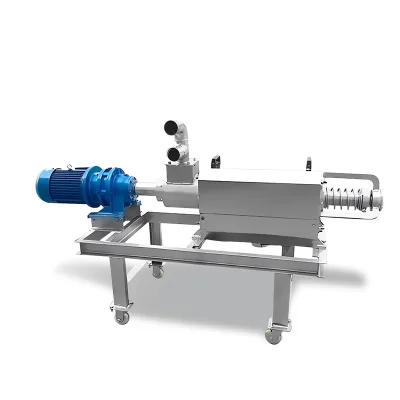


Animal Manure Solid Liquid Separator for Sewage Water Treatment Equipment
$3089.00 - $5596.00
MOQ: 1 Sets

Poultry Manure/Pig Manure /Cow Dung Inclined Sieve Solid Liquid Separator
$3089.00 - $5596.00
MOQ: 1 Sets


Powerful Manure Solid-Liquid Separator for Efficient Waste Separation
$1020.00 - $1305.00
MOQ: 1 Pieces

Efficient Manure Solid-Liquid Separator for Enhanced Agricultural Practices
$1020.00 - $1305.00
MOQ: 1 Pieces


Comprehensive Sourcing Guide
Strategic Sourcing Guide for Physical Treatment Manure Separators
Understanding the Core Technology and Operational Mechanics
When sourcing a Physical Treatment Manure Separator, buyers must first distinguish between the various mechanical principles employed in the industry. The core keyword "physical treatment" indicates a process that relies on mechanical separation rather than chemical additives or biological digestion to separate solids from liquids. Based on the available market data, these units are predominantly designed as separating plants or sludge dewatering machines that utilize specific separation modes. The most prevalent configuration observed in the current supply landscape is the horizontal spiral centrifuge, which operates on the principle of centrifugal force to drive solids outward while allowing liquid to pass through the central discharge.
However, the market also presents alternative designs, such as the sloped screen solid-liquid separator. This type of unit typically employs a filter-type separation mode where the material passes over a vibrating or stationary screen mesh. The raw materials used in the construction of these screens are critical for durability in corrosive agricultural environments. Data indicates a strong preference for Stainless Steel 304 (SS304) or a combination of 304 and 201 grades for the screen mesh and structural components. This material selection ensures resistance to the acidic and abrasive nature of manure, which is the primary object of processing in these applications.
The operational type of these machines is generally continuous, allowing for uninterrupted processing of high volumes of waste. This is essential for large-scale agricultural operations or industrial facilities where downtime results in significant backlog. The installation orientation is typically horizontal, which simplifies integration into existing conveyor systems or floor layouts. The driving force for these units is electric, with voltage requirements varying significantly across different models. Buyers should expect to encounter units operating on 220V, 380V, 440V, or 400V, with some configurations supporting 110V or customized voltage inputs. The phase is predominantly 3-phase, which is standard for industrial motors of this scale.
Technical Specifications and Performance Parameters
Evaluating the technical specifications of a Physical Treatment Manure Separator requires a granular look at the dimensions, capacity, and power requirements. The physical footprint of these machines varies considerably depending on the manufacturer and the specific model. Observed standard dimensions include configurations such as 21007001300mm, 170013001600mm, and larger industrial units measuring 29708282120mm. Some manufacturers offer fully customized standard dimensions to fit specific facility constraints. The weight of these units is substantial, with observed examples weighing up to 1300kg, necessitating robust foundation planning and heavy-lifting equipment for installation.
Productivity is a key metric for buyers assessing the suitability of a separator for their operation. The data shows a range of processing capacities, with some units rated for 25-35 liters per hour, suitable for smaller or pilot-scale operations. In contrast, larger industrial models are designed for processing volumes up to 20 cubic meters per hour. This wide variance means that a buyer must carefully calculate their daily waste generation to select a unit with the appropriate throughput. The motor power is another critical specification, with observed ratings around 15kw for certain models, indicating the energy intensity required to drive the separation mechanism, particularly in high-pressure applications.
Pressure requirements also vary, with some units designed for high-pressure operation and others for medium-pressure environments. This distinction is vital for the downstream processing of the liquid effluent. If the liquid is to be pumped further for irrigation or treatment, the pressure rating of the separator will influence the pump selection. Additionally, the moisture content of the output solids is a performance indicator; observed data suggests a target moisture content of approximately 55% for the separated solids, which is a standard benchmark for effective dewatering. The control systems range from simple button interfaces to advanced PLC (Programmable Logic Controller) systems, with some units offering computerized control for automated operation and monitoring.
Compliance, Certification, and Safety Standards
In the B2B procurement of agricultural and industrial machinery, verifying compliance and certification is a non-negotiable step. The supply chain for physical treatment manure separators includes units that have undergone rigorous quality assurance processes. High-confidence data points to the presence of ISO9001 certification, specifically noted in the context of computerized manufacturing processes. This suggests that the supplier adheres to international standards for quality management systems, ensuring consistency in production and assembly.
Beyond quality management, safety and regulatory compliance are paramount. The market data indicates that many units carry CE certification, which is a mandatory conformity mark for products sold within the European Economic Area. This certification confirms that the machinery meets EU safety, health, and environmental protection requirements. Additionally, some suppliers provide certifications related to Good Manufacturing Practice (GMP) and Quality System (QS), which are particularly relevant for facilities handling organic waste or food-adjacent agricultural products. These certifications assure the buyer that the separation process does not introduce contaminants and that the equipment is designed for hygienic operation.
Buyers must also be aware of the distinction between observed certifications and general industry standards. While ISO 9001 is frequently cited, specific claims regarding other standards like REACH should be treated with caution unless explicitly verified on a per-unit basis. The presence of a machinery test report is another positive indicator; suppliers that provide test results demonstrate transparency regarding the performance of their equipment before shipment. When evaluating a potential supplier, buyers should request copies of these certificates and verify their validity with the issuing bodies. The absence of these certifications does not necessarily disqualify a supplier, but it requires a more rigorous on-site audit or third-party inspection to validate the safety and quality of the equipment.
Cost Drivers and Financial Considerations
The pricing of physical treatment manure separators is influenced by a complex interplay of factors, including material quality, automation level, and production capacity. The observed price range in the market spans from $500 to $15,000 USD. This wide disparity reflects the difference between basic, manual or semi-automated units and fully computerized, high-capacity industrial systems. The lower end of the spectrum likely corresponds to smaller, simpler sloped screen separators with basic motor configurations, while the higher end encompasses large-scale horizontal spiral centrifuges with PLC control and extensive stainless steel construction.
Material costs are a significant driver of the final price. Units constructed entirely from SS304 stainless steel will command a premium over those using a mix of 304 and 201 grades or carbon steel with protective coatings. The thickness and grade of the steel directly impact the longevity and corrosion resistance of the machine, which is critical in the harsh environment of manure processing. Furthermore, the level of automation adds to the cost. A unit with a PLC control system and computerized features will be more expensive than one operated via manual buttons, but it offers greater precision, reduced labor costs, and better process monitoring.
Packaging and logistics also contribute to the total cost of ownership. The observed data indicates various packaging methods, including wooden cases, wooden boxes, plywood packaging, and plywood pallets. These protective measures are essential for preventing damage during ocean shipment, which is the standard mode of transport for these heavy items. Buyers should consider the cost of unpacking and the potential for damage claims if the packaging is insufficient. Additionally, the Minimum Order Quantity (MOQ) is generally low, ranging from 1 to 2 units, which makes these machines accessible for small to medium-sized enterprises without requiring bulk purchasing commitments.
Typical Applications and Industry Use Cases
The versatility of physical treatment manure separators allows them to be deployed across a diverse range of sectors. The primary application is in agriculture, specifically for cow farming operations where large volumes of manure are generated daily. The separation of solids and liquids is crucial for managing waste, reducing odor, and creating valuable byproducts. The separated solids can be used as organic fertilizer, while the liquid effluent can be treated further or used for irrigation. The data explicitly lists "Cow" as a target application, highlighting the focus on livestock waste management.
Beyond agriculture, these units find use in industrial settings where sludge dewatering is required. The classification of these machines as "Sludge Dewatering Machines" confirms their applicability in municipal wastewater treatment plants or industrial processing facilities. The ability to handle high volumes of sludge makes them suitable for facilities that generate significant liquid waste. The usage data also includes "Home," "Hospital," and "Industrial" sectors, suggesting that smaller-scale units may be available for residential composting systems or institutional waste management.
The specific type of separator chosen often depends on the nature of the waste stream. For example, a sloped screen separator might be ideal for farm operations with high fiber content in the manure, while a horizontal spiral centrifuge might be better suited for industrial sludge with finer particles. The "Object" of the process is listed as "Fertilizer," indicating that the end goal is often the production of a marketable organic product. This dual-purpose capability—waste reduction and resource recovery—makes these separators a valuable investment for sustainable farming and industrial operations.
Supplier Evaluation and Quality Assurance Protocols
Selecting a reliable supplier for a Physical Treatment Manure Separator requires a thorough evaluation of their capabilities and track record. Buyers should prioritize suppliers who provide clear documentation of their machinery test results. The availability of test data indicates that the supplier has validated the performance of their equipment under controlled conditions. This is a strong indicator of quality and reliability. Additionally, the presence of certifications such as ISO9001, CE, GMP, and QS should be verified. These certifications are not merely marketing tools but evidence of a supplier's commitment to quality and safety standards.
The origin of the product is another critical factor. The data indicates that these units originate from China, a major hub for industrial machinery manufacturing. While this offers competitive pricing and a wide variety of options, it also necessitates careful due diligence regarding the supplier's reputation and after-sales support. Buyers should inquire about the supplier's experience in exporting to their specific region and their ability to provide technical support, spare parts, and maintenance services.
Quality control should be embedded in the procurement process. Buyers should request detailed specifications regarding the raw materials used, such as the exact grade of stainless steel, and verify the dimensions and weight of the unit against the provided data. The packaging method, whether it is a wooden case or plywood pallet, should be sufficient to protect the machine during long-distance ocean shipment. Finally, the customization options available should be assessed. Many suppliers offer customized dimensions and voltage requirements, which can be a significant advantage for buyers with specific facility constraints.
Long-Term Procurement and Operational Sustainability
Procuring a Physical Treatment Manure Separator is not just a one-time purchase but an investment in long-term operational efficiency. The durability of the machine depends heavily on the quality of materials and the robustness of the design. Units made from SS304 stainless steel offer superior resistance to corrosion, ensuring a longer service life in the demanding environment of manure processing. Buyers should consider the total cost of ownership, including energy consumption, maintenance costs, and the potential for downtime.
The operating type of the machine, whether continuous or batch, impacts the workflow and labor requirements. Continuous type separators allow for uninterrupted processing, which is ideal for large-scale operations. However, they may require more sophisticated control systems and regular maintenance to ensure consistent performance. The control system, whether button-based or PLC-driven, should be user-friendly and capable of integrating with existing facility management systems.
Sustainability is a growing concern in the agricultural and industrial sectors. Physical treatment manure separators contribute to sustainability by reducing waste volume and producing reusable byproducts. The separated solids can be used as fertilizer, reducing the need for chemical fertilizers, while the liquid effluent can be treated and reused. Buyers should evaluate the environmental impact of the machine, including its energy efficiency and the potential for reducing greenhouse gas emissions from waste management. By selecting a high-quality, certified unit from a reputable supplier, buyers can ensure a sustainable and profitable operation for years to come.
FAQs
What certifications do physical treatment manure separators have?
High-confidence data indicates units often carry ISO9001, CE, GMP, and QS certifications. These marks confirm adherence to quality management systems and safety standards for European markets and hygienic operations.
Which separation modes are available for manure processing?
The market offers filter type and horizontal spiral centrifuge separation modes. These mechanical principles rely on physical treatment to separate solids from liquids without chemical additives or biological digestion.
What materials are used to construct these separators?
Manufacturers predominantly use SS304 stainless steel or a combination of 304 and 201 grades. This material selection ensures durability and resistance against the corrosive and abrasive nature of manure waste.
Can the voltage be customized for specific power requirements?
Yes, voltage options include 220V, 380V, 440V, 400V, and 110V, with some models offering fully customized inputs. Most units operate on a 3-phase power supply suitable for industrial motors.
What is the typical processing capacity of these machines?
Processing volumes range from 25-35 liters per hour for smaller units up to 20 cubic meters per hour for industrial models. Buyers must select based on their daily waste generation to ensure adequate throughput.
How are these machines packaged for ocean shipment?
Products are typically shipped in wooden cases, wooden boxes, plywood packaging, or on plywood pallets. These protective measures are essential to prevent damage during long-distance ocean transport.
What is the standard installation orientation for these units?
The installation orientation is typically horizontal, which simplifies integration into existing conveyor systems or floor layouts. This design supports continuous operation for uninterrupted processing of high volumes of waste.