Source Plastic Cutlery Set with Napkin for Events Catering Parties
Compare 30 verified listings for Plastic Cutlery Set with Napkin from China suppliers. Options include disposable knife and fork sets, spoons, and custom sizes in PP or PS materials with FDA and LFGB certifications for various dining needs.
Key considerations
Products List


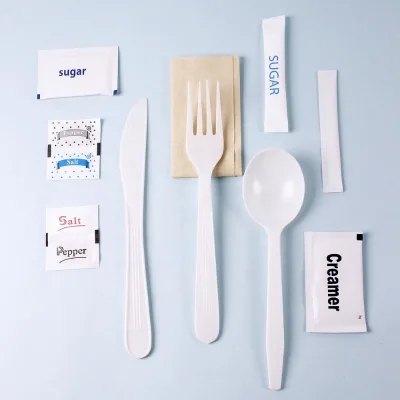
Disposable Fork and Spoon Cutlery Set PLA Material Tpla Cutlery with Napkin
$0.03 - $0.04
MOQ: 20000 Pieces

Custom Disposable Knives and Forks Compostable Cutlery Set with Napkin
$0.07 - $0.08
MOQ: 20000 Pieces






Comprehensive Sourcing Guide
Strategic Sourcing Guide for Plastic Cutlery Sets with Napkins
The global demand for disposable dining solutions has intensified, driven by the convenience of single-use items and the logistical needs of the food service industry. When sourcing a plastic cutlery set with napkins, buyers must navigate a complex landscape of material specifications, regulatory compliance, and supply chain variables. This guide provides a disciplined approach to evaluating suppliers and products, ensuring that procurement decisions are grounded in verifiable facts rather than marketing assertions. The focus remains on identifying reliable partners who can deliver consistent quality while adhering to international safety standards.
Technical Specifications and Material Composition
Understanding the technical attributes of the product is the first step in any sourcing strategy. The market offers a variety of configurations, ranging from simple Western-style sets to more complex disposable cutlery sets that may include spoons and forks. A critical observation in the current market is the prevalence of specific product models such as PP-2930, GB083, and PC-002, which indicate distinct manufacturing lines. The material composition is a primary differentiator; observed data confirms the use of Plastic PP (Polypropylene) and PS (Polystyrene) as the dominant grades. Some listings also reference Plastoic or PET (Polyethylene Terephthalate) for specific components, such as cup accessories.
Buyers should verify the specific grade of the plastic used. The supplied facts highlight "Food Grade" as a mandatory attribute for items intended for direct food contact. The weight of the cutlery is another significant technical parameter, with observed ranges spanning from 2.5g to 5g, and general classifications ranging from medium to heavy duty. This variation directly impacts the perceived durability and user experience. For instance, a set specified as 2.5g may be suitable for light meals, whereas a heavier gauge is required for hot foods or robust dining scenarios. Additionally, the dimensions are often customized, with specific standards like 178mm noted for certain knife or fork models. The style of the cutlery varies from simple designs to colored or multicolor options, allowing for brand alignment or thematic event coordination.
Compliance and Certification Verification
In the realm of food-contact plastics, regulatory compliance is non-negotiable. Sourcing from regions like China, which is a primary origin for these goods, requires rigorous verification of certifications to ensure the products meet the safety requirements of the destination market. The observed certification landscape includes a robust set of standards such as LFGB (German Food Safety), FDA (US Food and Drug Administration), EEC (European Economic Community), CIQ (China Inspection and Quarantine), and CE / EU marks. These certifications are not merely labels; they represent adherence to specific chemical migration limits and physical safety tests.
Furthermore, some suppliers list QS (Quality Safety) and specific material standards like "Material: Food Grade PS" or "Standard: 2.5g or 5g" as part of their compliance documentation. Buyers must treat these as observations that require validation for each specific order. It is essential to request current, valid certificates for the specific batch being purchased, as certification status can vary between production runs. The presence of certifications like LFGB and FDA is particularly critical for markets in Europe and North America, where regulatory scrutiny is high. Without these, the risk of product rejection at customs or legal liability in the event of a safety incident increases significantly.
Cost Drivers and Pricing Dynamics
The pricing of plastic cutlery sets with napkins is influenced by a complex interplay of factors, including material costs, order volume, and customization requirements. The observed price range in the market spans from 0 to 1300 USD, a wide variance that likely reflects differences in order quantities, packaging complexity, and the inclusion of additional items like napkins or cup accessories. The Minimum Order Quantity (MOQ) is a significant cost driver, with observed ranges extending from 2 units to 50,000 units.
Buyers should anticipate that lower unit prices are typically associated with higher MOQs. The packaging specifications also play a role in cost; variations such as 10PCS/Bag, 1000PCS/CTN, or 4200PCS/CTN indicate different levels of bulk efficiency. Customization is a key cost variable. While customization is available for color, size, and style, these requests often incur additional tooling or setup fees. The material choice also impacts the final price; PP and PS are standard, but the specific grade and weight (e.g., 2.5g vs. 5g) will alter the raw material cost. Buyers must balance the desire for customization and premium features against the budget constraints imposed by MOQs and unit pricing.
Typical Applications and Usage Scenarios
The versatility of plastic cutlery sets with napkins makes them suitable for a wide array of applications. The primary use case is the food service industry, including restaurants, catering services, and fast-food chains. The "Western" style and "Disposable" nature of the products align well with high-volume service environments where hygiene and speed are paramount. The availability of "Adult" age-appropriate sizing suggests these sets are designed for general dining rather than children's parties, although the "Fancy" and "Colored" attributes indicate potential use in events, weddings, or promotional campaigns.
Specific product models like the "Disposable Cultery Set" or those with "Cup Accessories: With cover" suggest applications in beverage service or complete meal kits. The "Eco-Friendly" attribute, while present in some listings, requires careful interpretation; in the context of plastic, this often refers to the recyclability of the material or the use of specific biodegradable additives, but buyers should verify the exact nature of this claim. The "Simple" and "Multicolor" styles offer flexibility for branding, allowing businesses to match the cutlery to their corporate identity or event theme. Whether for a large-scale banquet requiring 4200PCS/CTN packaging or a small event needing 10PCS/Bag, the product range supports diverse operational needs.
Supplier Evaluation and Selection Criteria
Selecting the right supplier is critical for maintaining supply chain stability and product quality. When evaluating potential partners, buyers should look for evidence of consistent production capabilities and a track record of meeting the specified standards. The presence of multiple product models (e.g., PP-2930, GB082, PC03, TQ567731) suggests a supplier with a diverse manufacturing portfolio, which can be advantageous for sourcing a complete range of cutlery and accessories.
Key evaluation metrics include the supplier's ability to provide "Customized" solutions for size, color, and packing. A supplier that offers "all size available" or "multiple sizes" demonstrates flexibility, which is valuable for adapting to changing market demands. Buyers should also assess the clarity of the supplier's communication regarding certifications. A reliable supplier will readily provide documentation for LFGB, FDA, and other relevant standards. Additionally, the consistency of packing specifications, such as "Carton" or "Caron" (likely a typo for Carton), indicates attention to detail in logistics preparation. It is advisable to request samples to verify the physical attributes, such as weight and color accuracy, before committing to a large order.
Quality Control and Inspection Protocols
Implementing a robust quality control (QC) protocol is essential to mitigate risks associated with mass production. Given the variability in observed weights (2.5g to 5g) and materials (PP, PS, PET), buyers must establish clear acceptance criteria. Inspection should focus on the physical integrity of the cutlery, ensuring that the "Heavy Duty" or "Medium" classifications are met without defects like warping or sharp edges. The color consistency is another critical QC point, especially for "Multicolor" or "Black/White" sets where brand alignment is important.
Buyers should verify that the "Food Grade" claim is supported by batch-specific test reports. The presence of certifications like CIQ and CE / EU should be cross-referenced with the actual product batch. For orders involving customization, such as specific logos or colors, a pre-production sample approval process is mandatory. The packaging integrity must also be checked to ensure that the specified packing, whether 10PCS/Bag or 1000PCS/CTN, protects the product during transit. Any deviation from the agreed-upon specifications, such as incorrect model numbers or missing certifications, should result in immediate rejection of the shipment.
Long-Term Procurement Considerations
Sourcing plastic cutlery sets with napkins is not a one-time transaction but an ongoing relationship that requires strategic planning. As environmental regulations tighten globally, the "Eco-Friendly" attribute will likely become a more significant differentiator. Buyers should proactively explore suppliers who are investing in sustainable materials or recycling initiatives to future-proof their supply chains. The availability of "Customized" options allows for long-term branding strategies, where the cutlery becomes an extension of the company's identity.
Furthermore, the scalability of the supplier is crucial. With observed MOQs up to 50,000 units, buyers must ensure their suppliers can handle volume spikes without compromising quality or lead times. The diversity of product models and standards suggests that a strong supplier can adapt to new product requirements, such as switching from PS to PP or adjusting weights. Establishing a long-term partnership with a supplier who understands the nuances of food-grade plastics and international compliance will provide a competitive advantage in the market. Buyers should also consider the total cost of ownership, including logistics and potential waste management costs associated with disposable items, to make informed decisions that align with both economic and sustainability goals.
FAQs
What certifications are required for plastic cutlery sets?
Required certifications include LFGB, FDA, EEC, CIQ, and CE / EU for food safety compliance. These standards verify that the plastic materials meet international migration limits and safety tests for direct food contact.
Which materials are used for disposable cutlery sets?
The primary materials used are Food Grade Plastic PP and PS. Some specific components like cup accessories may utilize PET, ensuring durability and safety for various dining scenarios.
Can the product size and color be customized?
Yes, customization is available for size, color, and style. Buyers can request specific dimensions or multicolor options to align with brand identity or event themes while maintaining food-grade standards.
What is the typical weight range for these sets?
Observed weights range from 2.5g to 5g, covering medium to heavy duty classifications. This variation allows selection based on meal type, from light snacks to robust dining requirements.
How are the products typically packed for shipment?
Packing options vary from 10 pieces per bag to 4200 pieces per carton. Bulk packaging like 1000PCS/CTN or 4200PCS/CTN ensures efficient logistics for large-scale food service operations.
What is the origin of these plastic cutlery products?
The products originate from China, a primary manufacturing hub for disposable dining solutions. This location supports a wide range of models and customization capabilities for global buyers.
Are eco-friendly options available in the product line?
Some listings feature eco-friendly attributes, often referring to recyclable materials or specific additives. Buyers should verify the exact nature of these claims against batch-specific test reports for sustainability.