Source Plastic Folding Trolley Cart for Markets, Warehouses, and Homes
Explore 30 listings for the Plastic Folding Trolley Cart, comparing wheeled designs, load capacities up to 35kg, and customizable features. Buyers can evaluate models with single handles, PP material, and various folding sizes to find the right solution for retail or industrial use.
Key considerations
Products List


Factory Direct Wholesale Plastic Grocery Folding Collapsible Trolley Cart
$14.30 - $15.00
MOQ: 830 Pieces


China Foldable Luggage Shopping Trolley Plastic Rolling Box Cart with Multi Functions
$16.90 - $17.50
MOQ: 848 Pieces


Comprehensive Sourcing Guide
Strategic Sourcing Guide for Plastic Folding Trolley Carts
Understanding Product Attributes and Technical Specifications
When sourcing a Plastic Folding Trolley Cart, buyers must first distinguish between the various configurations available in the current market. The core keyword "Plastic Folding Trolley Cart" encompasses a diverse range of products, from flat utility carts to specialized children's shopping trolleys. A critical observation in the current supply landscape is the variation in structural design. Some units are explicitly categorized as "Flat Carts," while others are described as "American Shopping Carts" or "Children Shopping Carts." This distinction is vital for procurement teams, as the intended use case dictates the necessary load-bearing capacity and wheel configuration.
Material composition is a primary technical factor. The dominant material observed in this category is plastic, specifically Polypropylene (PP). PP is favored for its balance of durability, chemical resistance, and lightweight properties, which are essential for a product that must be both foldable and capable of carrying goods. The manufacturing process typically results in a "New" condition product, ensuring that buyers receive fresh inventory rather than refurbished units.
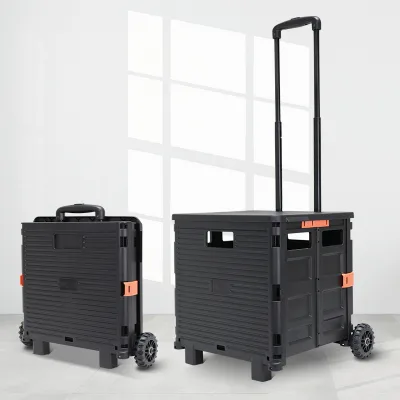
One of the most defining features of this product category is the folding mechanism. Buyers should verify the "Folded" status of the unit. Some models are designed to be "Folded" for compact storage, while others may be listed as "Unfolded" when delivered, requiring the buyer to assemble or fold them upon receipt. The "Easy Folded" attribute is a key performance indicator for user convenience, suggesting that the mechanism allows for rapid transition between transport and storage modes. Furthermore, the "Design" is often noted as "Collapsible," which implies a telescopic or hinged structure that reduces the footprint of the cart significantly.
The physical dimensions and capacity vary widely across different models. For instance, specific model numbers such as SB-FP-2 and HBE-FP-5 indicate distinct dimensional profiles. Buyers must pay close attention to the "Capacity" specifications, which range from 20kg to 35kg in observed listings. The "Max Load Capactiy" is a critical safety parameter; a cart rated for 20kg should not be used for heavy industrial goods, whereas a 35kg capacity unit offers more versatility for retail or light logistics applications. The "Shape" of the cart also varies, with some units resembling "Trolley Cases," which suggests a more enclosed or structured design compared to open wire-frame alternatives.
Compliance, Certification, and Safety Standards
Navigating the compliance landscape for plastic trolley carts requires a careful review of the standards and certifications claimed by suppliers. In the B2B sector, certification is not merely a formality but a prerequisite for market access, particularly in Europe and North America. The supply data indicates that certain models adhere to specific international standards, including CE, ROHS, and TUV. The CE marking is particularly significant as it indicates conformity with health, safety, and environmental protection standards for products sold within the European Economic Area.
The ROHS (Restriction of Hazardous Substances) directive is another critical standard to verify. This standard ensures that the plastic components, particularly the PP material, do not contain restricted hazardous substances such as lead, mercury, or cadmium. This is essential for products that may come into contact with food or are used in environments where environmental safety is paramount. Additionally, the presence of TUV certification suggests that the product has undergone rigorous testing by a third-party organization, providing an extra layer of assurance regarding product safety and quality.
However, buyers must exercise caution when interpreting these claims. While some listings explicitly mention SGS (Société Générale de Surveillance) certification, others may only list generic standards or dimensions as their "standard" (e.g., listing 380x320x600mm as a standard). This discrepancy highlights the need for buyers to request valid, up-to-date certification documents directly from the supplier rather than relying solely on product descriptions. The presence of ISO 27001:2022 in background data refers to information security management and is generally not applicable to the physical manufacturing of trolley carts; therefore, buyers should focus on product-specific certifications like CE and ROHS.
Furthermore, the "Standard" field in product listings sometimes contains dimensional data rather than regulatory standards. For example, a listing might state "420405380mm" under the standard field. This is a data entry inconsistency that buyers must clarify. A compliant supplier should be able to provide a clear distinction between the physical dimensions of the product and the regulatory standards it meets. Buyers should verify that the supplier can provide a Certificate of Conformity (CoC) that matches the specific model number being purchased, ensuring that the CE or ROHS claim applies to the exact configuration ordered.
Cost Drivers and Pricing Dynamics
The pricing structure for plastic folding trolley carts is influenced by several key variables, including material quality, customization levels, and order volume. The observed price range in the market spans from $1 to $120 USD. This wide variance suggests that the cost is not solely determined by the base manufacturing of the cart but is heavily impacted by the level of customization and the specific features included.
Material costs are a primary driver. The use of high-grade Polypropylene (PP) generally commands a higher price than lower-grade plastics due to improved durability and resistance to cracking. Additionally, the complexity of the folding mechanism affects the cost. A "Collapsible" design with a robust locking mechanism requires more precise molding and assembly, which increases the unit price compared to a simple "Flat Cart" with a fixed frame.
Customization is another significant cost factor. The supply data indicates that "Customization" is available, and the "Color" can be customized. Suppliers offering custom colors, logos (such as "Sticker" branding), or specific dimensions will charge a premium. The "Customized" attribute suggests that buyers can request unique configurations, but this often comes with a higher Minimum Order Quantity (MOQ). The observed MOQ range is broad, spanning from 1 to 1500 units. For buyers seeking highly customized solutions, the MOQ may be closer to the higher end of this range, whereas standard, off-the-shelf models may be available in smaller quantities.
Packaging requirements also influence the final cost. Some models are packed in "Wrapped Color Box" with 6 pieces per carton, while others use "Export Carton" or "Bubble Foam Wrap." More protective packaging, such as the color box, adds to the unit cost but may be necessary for retail-ready products. Conversely, simple "Carton Package" solutions are more cost-effective for bulk industrial shipments. Buyers should evaluate whether the packaging cost is justified by their end-market requirements. For instance, a retailer may require the color box for display purposes, while a logistics company may prefer the simpler export carton to save on shipping volume.
Typical Applications and Use Cases
The versatility of plastic folding trolley carts makes them suitable for a wide array of applications across different sectors. The "Type of Shopping Basket" and "Type of Shopping Cart" attributes provide clear indicators of their intended use. The "Wheeled" and "Portable & Wheeled" classifications suggest that these carts are designed for mobility in environments where carrying heavy loads over distances is necessary.
One primary application is in retail and grocery sectors. The "American Shopping Cart" and "Children Shopping Cart" models are specifically designed for supermarkets and department stores. These carts often feature a "Single" handle and are built to accommodate the needs of shoppers, including parents with children. The "Capacity" of 20kg to 35kg aligns well with the typical load of a grocery trip for a family or a small business restocking operation. The "Folded" feature is particularly valuable in these settings, allowing retailers to store carts compactly when not in use, thereby optimizing floor space.
In the logistics and warehousing sector, the "Flat Cart" and "Rolling Crate" models serve a different purpose. These units are often used for internal material handling, moving parts between workstations, or transporting goods within a warehouse. The "Trolley Cases" shape suggests a design that can protect sensitive items during transit. The "Built-in" caster wheels ensure smooth movement on various floor surfaces, which is crucial for warehouse efficiency. The "Unisex" gender classification indicates that these carts are designed for general use by any employee, regardless of physical strength, although the "Max Load Capactiy" should still be respected to prevent injury.
Another significant application is in the event and hospitality industry. The "Portable" nature of these carts makes them ideal for catering services, event setup, and cleanup crews. The ability to fold the cart down to a compact size (e.g., "Folding Size: 42090460mm") allows for easy transport in vehicles and storage in small event spaces. The "Height Adjustable" feature, observed in some models, adds to their versatility, allowing users to customize the cart height for different tasks or user preferences.
Supplier Evaluation and Sourcing Strategy
Evaluating suppliers for plastic folding trolley carts requires a multi-faceted approach that goes beyond price comparison. The supply data indicates that the majority of these products originate from specific regions in China, such as Jiangsu, Suzhou Jiangsu, and Zhangjiagang. While these regions are known for their manufacturing capabilities, buyers should verify the specific factory location and production capacity of the supplier.
A critical aspect of supplier evaluation is the verification of the "Customization" capabilities. Suppliers that offer "Customized" products should have a clear process for handling design changes, including color selection and logo placement. Buyers should request samples of previous customization work to assess the quality of the "Sticker" application or other branding methods. Additionally, the "Quantity" attribute, such as the "Quantity: 4" observed in some listings, may indicate sample availability or specific batch sizes. Buyers should clarify whether these quantities represent the minimum order or a sample set.
The "prod_packing" details are also indicative of a supplier's professionalism. Suppliers who use "Each with Wrapped Color Box" or "Bubble Foam Wrap" demonstrate a commitment to protecting their products during transit. This attention to detail often correlates with a higher overall quality of the manufacturing process. Conversely, suppliers who use generic "Carton Package" without additional protection may be targeting the low-cost market, which could compromise product integrity.
Buyers should also assess the supplier's ability to meet "Lead Time" and "MOQ" requirements. The observed MOQ range of 1 to 1500 suggests flexibility, but buyers must confirm the specific MOQ for their desired customization level. A supplier that can accommodate small orders for prototyping but also scale to large production runs is ideal. Furthermore, the "Condition: New" attribute should be verified to ensure that the supplier does not mix refurbished or used goods with new inventory.
Quality Control and Long-Term Procurement Considerations
Implementing a robust quality control (QC) strategy is essential for ensuring the long-term success of a Plastic Folding Trolley Cart procurement program. Given the mechanical nature of the folding mechanism, buyers should prioritize testing the durability of the "Folded" and "Unfolded" states. Repeated folding and unfolding cycles can lead to wear and tear, so the "Easy Folded" attribute should be validated through stress testing. The "Caster" wheels, described as "Built-in," must be checked for smooth rotation and stability under load.
The "Material" composition, specifically PP, should be verified for its resistance to environmental factors. Plastic can degrade under UV exposure or extreme temperatures, so buyers should inquire about the additives used in the manufacturing process to enhance durability. The "Capacity" ratings of 20kg to 35kg should be tested to ensure that the cart can safely support the stated load without structural failure. This is particularly important for "American Shopping Cart" models that may be subjected to heavy use in retail environments.
Long-term procurement considerations also include the availability of spare parts. If a caster wheel breaks or a folding hinge fails, the ability to replace these components is crucial for extending the lifespan of the cart. Buyers should ask suppliers about their spare parts policy and the availability of replacement wheels or handles. Additionally, the "Standard" certifications like CE and ROHS should be maintained throughout the production run, not just for the initial sample. Buyers should request periodic re-certification or batch testing to ensure ongoing compliance.
Finally, the "Other Name" attributes, such as "Rolling Crate" or "Pack and Roll Trolley Cart," highlight the marketing versatility of these products. Buyers should ensure that the supplier can support these different naming conventions if the product is being rebranded for different markets. This flexibility can be a significant advantage in global procurement, allowing the same product to be marketed under different names to suit various customer preferences. By focusing on these technical, compliance, and operational factors, buyers can secure a reliable supply of high-quality plastic folding trolley carts that meet their specific business needs.
Comparison of Key Product Models
To assist buyers in making informed decisions, the following table summarizes the key attributes of observed product models. This comparison highlights the differences in capacity, dimensions, and features to guide the selection process.
| Model Number | Type of Cart | Max Load Capacity | Dimensions (Approx.) | Folding Feature | Origin |
|---|---|---|---|---|---|
| SB-FP-2 | Flat Cart | 30kg | Not Specified | Folded | Jiangsu, China |
| HBE-FP-5 | Portable & Wheeled | Not Specified | 380x320x600mm | Collapsible | Suzhou Jiangsu |
| HBE-NY-07 | Trolley Cases | 20kg | Not Specified | Not Specified | Not Specified |
| HBE-198 | American Shopping Cart | Not Specified | Not Specified | Unfolded | China |
| HBE-P-4 | Children Shopping Cart | Not Specified | 420405380mm | Folded | Zhangjiagang |
| HBE-FP | Rolling Crate | 35kg | 420405380mm | Folded | Zhangjiagang |
This table illustrates the diversity in the product range. For example, the HBE-FP model offers a high capacity of 35kg and is identified as a "Rolling Crate," making it suitable for heavier loads. In contrast, the HBE-NY-07 is limited to 20kg and is shaped like a "Trolley Case," which may be better for smaller, more delicate items. The "Folding Size" of 42090460mm for the HBE-P-4 model indicates a very compact folded profile, ideal for storage in tight spaces. Buyers should match these specific attributes to their operational requirements to ensure optimal performance.
FAQs
Can plastic folding trolley carts be customized with logos?
Yes, customization is available for these carts, allowing buyers to add specific branding. Suppliers often offer sticker logos and can customize colors to match brand requirements. This service typically requires meeting a minimum order quantity, which varies by supplier and specific design complexity.
What is the maximum load capacity for these carts?
The maximum load capacity varies by model, with observed ranges from 20kg to 35kg. Specific models like the HBE-NY-07 support 20kg, while others are rated for 35kg. Buyers must verify the capacity for the exact model number to ensure safe usage for their intended goods.
Which certifications do these plastic carts typically meet?
Many models meet international standards including CE, ROHS, and TUV certifications. Some listings also reference SGS standards for quality assurance. Buyers should request valid certificates of conformity to confirm these standards apply to the specific model and batch being ordered.
How are these carts packaged for shipping?
Packaging options include wrapped color boxes with six pieces per carton, export cartons, or bubble foam wraps. The specific method depends on the model and supplier, with some using simple carton packages for bulk efficiency. Protective packaging ensures the cart arrives undamaged during transit.
Where are these plastic trolley carts manufactured?
These carts are primarily manufactured in Jiangsu, China, with specific origins noted in Suzhou and Zhangjiagang. The consistent regional sourcing suggests a concentrated supply chain in this area. Buyers should confirm the exact factory location when requesting quotes to verify production capabilities.
What is the minimum order quantity for custom orders?
The minimum order quantity ranges from 1 to 1500 units depending on the level of customization. Standard off-the-shelf models may be available in smaller quantities, while custom colors or logos often require higher volumes. Buyers should clarify the MOQ before finalizing any customized design specifications.
Are these shopping carts foldable for storage?
Yes, the carts feature a collapsible design that allows them to be folded for compact storage. Some models are delivered in a folded state, while others may be unfolded and require assembly. The folding mechanism is designed for easy transition between transport and storage modes.