Source Plastic Geogrid for Road Base, Dam, and Retaining Wall
Compare 30 listings of Plastic Geogrid for Road Base with varying strengths, widths, and applications including dams and steep slopes. Buyers can review specifications like mesh size and tensile strength to find suitable reinforcement solutions for infrastructure projects.
Key considerations
Products List


$0.46 - $0.49
MOQ: 20000 Square Meters


Durable Road Base Geogrid Solutions From Leading China Manufacturer
$0.46 - $0.49
MOQ: 20000 Square Meters


Biaxial Geogrid PP Geogrid 100% PP Plastic Geogrid for Soil Retainer
$0.61 - $1.68
MOQ: 1000 Square Meters


Factory Price Plastic PP Unidirectional Geogrid Bidirectional Geogrid
$0.39 - $1.31
MOQ: 1000 Square Meters
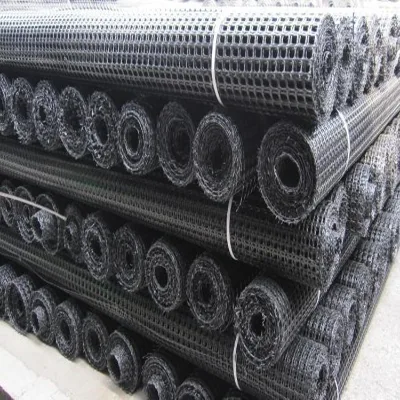


Base Reinforcement Reinforced Fiberglass Geogrid for Asphalt Layers Road Construction
$0.30 - $0.80
MOQ: 1000 Square Meters

Road Channel Dual Axis Plastic Geogrid Ground Reinforcement Geogrid
$0.18 - $0.30
MOQ: 1000 Square Meters
Comprehensive Sourcing Guide
Strategic Sourcing Guide for Plastic Geogrids in Road Base Construction
Selecting the correct geosynthetic reinforcement for road base applications requires a rigorous understanding of material properties, structural specifications, and supplier capabilities. Plastic geogrids serve as a critical component in modern civil engineering, providing tensile strength to granular base layers and preventing lateral movement of aggregate. This guide synthesizes available product data to assist procurement professionals in evaluating suppliers, verifying technical compliance, and managing long-term project risks without relying on unverified market claims.
Technical Specifications and Material Composition
The foundation of a successful procurement strategy lies in precise technical verification. The core material for the plastic geogrids observed in the current market is Polypropylene (PP), a choice driven by its chemical resistance and durability in varying soil conditions. While some product listings reference fiberglass or polyester, the dominant classification for road base reinforcement in this dataset is the Plastic Geogrid, specifically the PP Biaxial Geogrid. Buyers must distinguish between these material types, as the mechanical behavior of PP differs significantly from polyester or fiberglass variants.
A critical specification to verify is the mesh geometry. The standard mesh size observed for these products is 25.4mm by 25.4mm, a dimension that facilitates optimal interlock with aggregate particles. The manufacturing process is typically extrusion-based, utilizing an extruder to create the monolithic structure required for high tensile strength. The resulting product is often described as a "Biaxial plastic protect-support geogrid," indicating that the material offers reinforcement in two perpendicular directions, which is essential for distributing loads across the road base.
Dimensional consistency is another vital parameter. The standard roll width for these geogrids is frequently listed as 3.95 meters, with a broader range available from 1 to 6 meters depending on customization. The standard roll length is typically 50 meters, though some specifications allow for lengths up to 100 meters or fully customized dimensions. The tensile strength is a primary performance metric, with observed ratings ranging from 30-30 kN/m to broader ranges of 15-50 kN/m. Procurement teams must ensure that the specific strength rating aligns with the engineering design requirements of the road base, as under-specifying the strength can lead to premature failure.
Compliance, Certification, and Standard Verification
Navigating the compliance landscape for geosynthetics requires careful scrutiny of certification documents. The dataset indicates that products are often associated with ISO certification, and some listings mention CE and SGS marks. However, buyers should treat these as observations of specific listings rather than universal guarantees for all suppliers. The presence of an ISO certification suggests adherence to quality management systems, but it does not automatically validate the specific mechanical performance of the geogrid.
When evaluating standards, the observed product standard is often cited as "30/30KN" or "30-30kN/m," which refers to the tensile strength in both the machine and cross-machine directions. It is imperative for buyers to request the specific test reports that correspond to these standard numbers. Relying solely on a product label stating "ISO" or "CE" without the accompanying test data is insufficient for engineering approval. The verification process should include checking if the manufacturer can provide third-party laboratory results that confirm the tensile strength, elongation at break, and aperture stability meet the project's design specifications.
Furthermore, the origin of the product is a factor in supply chain transparency. The observed data points to China as the primary manufacturing origin, with specific loading capacities noted as 26,860 square meters per 40-foot high cube container. While this logistical data helps in planning freight, it does not substitute for quality assurance. Buyers must verify that the "Made in China" designation corresponds to a facility that adheres to international quality control protocols, rather than assuming that the origin alone dictates the product's reliability.
Cost Drivers and Procurement Economics
The economics of sourcing plastic geogrids are influenced by several variables, including raw material costs, manufacturing complexity, and order volume. The observed price range for these products spans from $0.10 to $3.48 USD, a wide disparity that likely reflects differences in tensile strength, thickness, and order quantity. The Minimum Order Quantity (MOQ) is a significant cost driver, with observed values ranging from a low of 1 unit to as high as 26,860 units. A standard MOQ of 100 meters is frequently cited, but buyers should negotiate based on their specific project needs to avoid overstocking or incurring unnecessary logistics costs.
Packaging also impacts the total landed cost. The standard packing method involves wrapping each roll in a woven bag with a label, often arranged as 2 rolls of 50 meters per bundle or 3.95 meters by 50 meters per roll. Proper packaging is essential to prevent damage during transit, particularly given the sensitivity of the plastic material to UV exposure and physical abrasion. Buyers should verify that the packaging includes protective measures to maintain the integrity of the geogrid until installation.
Customization is a key factor in pricing. The product data indicates that customization is available for width, length, and even logo branding. While custom orders offer flexibility, they often come with higher unit costs and longer lead times compared to standard stock items. The decision to customize should be weighed against the cost savings of using standard dimensions, such as the 3.95m width and 50m length, which appear to be the most common and cost-effective options in the current market.
Typical Applications and Functional Requirements
Plastic geogrids are engineered for specific reinforcement functions, with road base being the primary application. The observed data lists multiple use cases, including road base, dams, steep slopes, retaining walls, and railway tunnels. The primary function is reinforcement, which involves improving the load-bearing capacity of the subgrade and reducing differential settlement. In road construction, the geogrid creates a mechanically stabilized layer that allows for the use of lower-quality fill materials or reduces the required thickness of the aggregate base.
The functional capabilities extend beyond simple reinforcement. Some product classifications mention "Anti-slip" properties, which can be beneficial in specific slope applications or retaining wall structures where surface stability is critical. The structure of the geogrid, described as a "Triangle Geogrid" in some contexts or a standard biaxial mesh, influences its performance in different soil types. For road bases, the biaxial structure is generally preferred as it provides uniform strength in all directions, accommodating the multidirectional stresses experienced by roadways.
Buyers must ensure that the selected geogrid matches the specific environmental conditions of the project. For instance, applications involving dams or steep slopes may require higher tensile strengths and specific elongation properties to handle hydrostatic pressure or gravitational forces. The versatility of the product, with applications ranging from road railways to canals, underscores the need for a detailed review of the project's engineering drawings to select the appropriate strength class, such as the 30-30 kN/m or 15-50 kN/m variants.
Supplier Evaluation and Quality Control Protocols
Evaluating a supplier for plastic geogrids requires a multi-faceted approach that goes beyond price comparison. The availability of after-sales service and warranty terms are critical indicators of supplier confidence. The dataset notes a 10-year warranty and the availability of after-sales service for certain products. While these are positive signals, buyers should verify the specific terms of the warranty, including what conditions void the coverage and the process for claiming repairs or replacements.
Quality control should be embedded in the procurement process. Buyers should request a Quality Control Plan from the supplier that outlines the inspection stages, from raw material intake to final roll packaging. The "Surface Treatment" attribute is listed as "No" for the observed products, which is typical for extruded plastic geogrids, but buyers must confirm that the lack of treatment does not compromise UV resistance or chemical stability for the intended application. Additionally, the production technique, identified as "Extruder," should be verified to ensure the facility has the capacity to maintain consistent mesh dimensions and tensile properties.
Supplier reliability is also measured by their ability to meet delivery schedules. The loading capacity of 26,860 square meters per 40-foot high cube container provides a baseline for logistics planning, but actual lead times can vary based on order volume and production scheduling. Buyers should establish clear communication channels to monitor production progress and ensure that the product is ready for shipment within the agreed timeframe. The acceptance of logo customization suggests a level of flexibility in the supplier's operations, which can be a positive sign of their adaptability to client needs.
Long-Term Procurement and Lifecycle Management
Sourcing plastic geogrids is not merely a transactional activity but a strategic decision that impacts the lifecycle of the infrastructure. The 10-year warranty period suggests a long-term commitment to product durability, but the actual service life depends on installation quality and environmental exposure. Buyers should consider the long-term maintenance implications of the chosen geogrid. For example, the use of PP material offers excellent chemical resistance, which is crucial for road bases that may be exposed to de-icing salts or other chemicals.
Procurement strategies should also account for the potential need for future repairs or expansions. The availability of customization allows for the procurement of specific widths and lengths that match future project phases, reducing the need for multiple orders. The standard roll size of 3.95 meters by 50 meters is a practical dimension that balances transport efficiency with on-site handling. However, for large-scale projects, the ability to order larger quantities, such as the 26,860 square meter loading capacity, can streamline logistics and reduce per-unit costs.
Finally, buyers should maintain a relationship with the supplier that extends beyond the initial purchase. The availability of after-sales service and the potential for logo customization indicate a supplier that is willing to engage in a long-term partnership. This relationship is vital for addressing any unforeseen issues that may arise during the project's lifecycle. By focusing on technical compliance, supplier reliability, and long-term value, procurement professionals can ensure that the plastic geogrids selected for road base applications deliver the required performance and durability.
FAQs
What material is used for plastic geogrids in road base applications?
The primary material is Polypropylene (PP), chosen for its chemical resistance and durability. While some listings mention fiberglass or polyester, the dominant classification for road base reinforcement in this dataset is the Plastic Geogrid specifically made from PP.
Which mesh size is standard for these geogrids?
The standard mesh size observed is 25.4mm by 25.4mm, which facilitates optimal interlock with aggregate particles. This dimension is critical for ensuring the geogrid effectively distributes loads across the road base layer.
Can I customize the width and length of the geogrid rolls?
Yes, customization is available for width ranging from 1 to 6 meters and lengths up to 100 meters. Standard dimensions are typically 3.95 meters wide by 50 meters long, but buyers can request specific sizes to match project needs.
What is the typical tensile strength rating for these products?
Observed tensile strength ratings range from 30-30 kN/m to broader ranges of 15-50 kN/m. Buyers must ensure the specific strength rating aligns with engineering design requirements to prevent premature failure in the road base.
How are the geogrid rolls typically packaged for shipping?
Each roll is typically wrapped in a woven bag with a label and arranged as 2 rolls of 50 meters per bundle. Proper packaging is essential to prevent damage during transit and protect the plastic material from UV exposure.
What certifications are associated with these plastic geogrids?
Products are often associated with ISO certification, and some listings mention CE and SGS marks. Buyers should treat these as observations of specific listings and request third-party test reports to verify mechanical performance.
What is the minimum order quantity for these geogrids?
A standard MOQ of 100 meters is frequently cited, though observed values range from 1 to 26,860 units. Buyers should negotiate based on project needs to avoid overstocking or incurring unnecessary logistics costs.
Where are these plastic geogrids primarily manufactured?
The observed data points to China as the primary manufacturing origin for these products. Buyers must verify that the origin corresponds to a facility adhering to international quality control protocols rather than assuming origin dictates reliability.