Source Plastic Power Tool Switch for drills, grinders, and saws
Compare 19 Plastic Power Tool Switch options from verified suppliers. Review specifications including voltage, current ratings, and certifications like CE and RoHS to find the right component for industrial or home appliance applications.
Key considerations
Products List


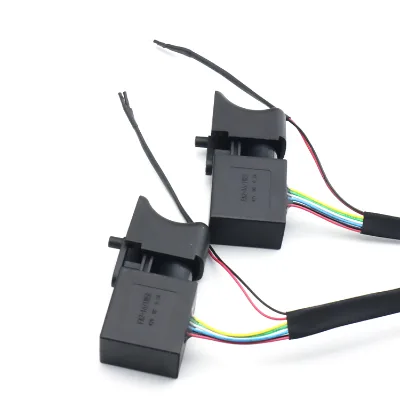




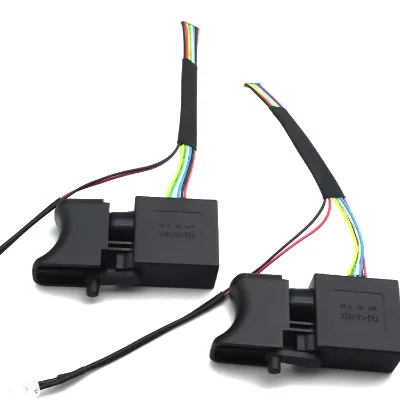


Comprehensive Sourcing Guide
Strategic Sourcing Guide for Plastic Power Tool Switches
Understanding the Technical Landscape of Plastic Power Tool Switches
The procurement of plastic power tool switches requires a granular understanding of the specific technical parameters that define product performance and compatibility. Unlike general-purpose switches, these components are engineered to withstand the high-vibration, high-current, and frequent actuation cycles inherent to power tool operations. The core material composition is predominantly plastic, selected for its dielectric properties, impact resistance, and ability to be molded into complex geometries that integrate seamlessly with tool housings.
When evaluating potential inventory, buyers must scrutinize the electrical ratings provided in the product specifications. The observed data indicates a significant variance in voltage and current handling capabilities across the market. Some units are rated for standard mains voltages, specifically 125V and 250V, while others are designed for lower voltage applications, such as 42V or 240V. Similarly, current ratings fluctuate widely; specifications list values ranging from a low of 0.2A to a high of 12A. This disparity suggests that a single procurement strategy cannot cover all needs. A switch rated for 0.2A is likely intended for low-power auxiliary functions or specific control circuits, whereas a 12A rating is essential for the primary motor control of heavy-duty drills or grinders.
Physical dimensions and packaging are also critical technical variables. The market presents a mix of standard and custom packaging solutions, including cartons, color boxes, and blister cards. Some listings specify a single package size of XX cm, while others provide detailed model numbers like M-8930, LM-8960, or HD11F-200/28 glass plate brass. The presence of "glass plate brass" in a model number description for a plastic switch indicates a hybrid construction where plastic forms the housing but metal components may be integral to the internal mechanism. Buyers must verify if the plastic housing is designed to accommodate these specific internal metallurgical requirements. Furthermore, the "folded" or "unfolded" state of the product in its listing can indicate whether the switch is a compact, integrated unit or a component requiring assembly, which directly impacts the manufacturing workflow of the tool builder.
Compliance and Certification Verification Protocols
In the B2B sector, compliance is not merely a regulatory formality but a fundamental risk management strategy. The supplied data highlights a consistent presence of CE and RoHS certifications across various product listings. The CE mark indicates conformity with health, safety, and environmental protection standards for products sold within the European Economic Area, while RoHS (Restriction of Hazardous Substances) ensures the absence of specific hazardous materials in the electronic components.
However, the reliability of these certifications must be treated as an observation rather than an absolute guarantee for every listed item. The data shows that while some products explicitly list "CE, RoHS," others only mention "CE" or "RoHS" in low-confidence background sections. Buyers must demand verifiable documentation for each batch. The presence of a "CNXE" or "hanxia" brand name does not automatically confer certification status; these are identifiers of the manufacturer or distributor, not the regulatory body.
Additionally, the data references standards such as UL94, which pertains to the flammability rating of plastic materials. While listed in the background context, the absence of a definitive UL94 rating in the high-confidence facts means buyers cannot assume all plastic switches meet specific flame-retardant criteria. It is imperative to request the specific UL94 classification (e.g., V-0, V-1, V-2) for the plastic material used, as this determines the switch's ability to self-extinguish in the event of an electrical fault. Similarly, IP ratings are mentioned, with "IP11" appearing in the data. This rating indicates protection against solid objects larger than 50mm and vertically dripping water. For power tools, which often operate in dusty or wet environments, a higher IP rating is typically required. Buyers should verify if the specific model number, such as KRD-4 or KRD-5, meets the IP requirements for their intended application, rather than assuming the IP11 rating applies universally to the category.
Cost Drivers and Economic Factors in Procurement
The pricing structure for plastic power tool switches is influenced by a complex interplay of material costs, electrical ratings, and customization levels. The observed price range in the market spans from $0.11 to $3.50 USD. This wide variance is not arbitrary; it correlates directly with the technical specifications and the level of customization required. The lower end of the price spectrum likely corresponds to basic, non-customized switches with standard voltage and current ratings, such as those rated for 0.2A or 0.66A. Conversely, the higher price points are associated with switches capable of handling 12A currents, those with specific model numbers like the DeWalt 230 or Black & Decker 180, and units that offer customization.
Customization is a significant cost driver. The data explicitly states that "Customization: Available" and "Customized" is a product attribute. This implies that buyers can request modifications to the switch's physical dimensions, color, or internal electrical configuration. While this flexibility is valuable for OEMs needing to match specific tool designs, it inevitably increases the unit cost and may introduce minimum order quantity (MOQ) constraints. The observed MOQ range of 1 to 1000 units suggests that while some suppliers offer low-volume trial orders, larger production runs are necessary to achieve the lower price points.
Geographic origin also plays a role in cost dynamics. The majority of the listed products originate from China, with specific mentions of Shenzhen and Ningbo. These regions are established manufacturing hubs for electrical components, offering economies of scale that keep base costs low. However, the "Place of Origin: China, zhejiang" entry for certain models indicates that regional differences within China can affect pricing and logistics. Buyers should factor in shipping costs and potential tariffs, which can erode the apparent savings of a $0.11 unit price when the total landed cost is calculated. Furthermore, the "Condition: New" attribute confirms that the market is dominated by fresh inventory, reducing the risk of obsolescence but potentially increasing the cost compared to surplus stock.
Typical Applications and Compatibility Analysis
Plastic power tool switches are designed for a diverse array of applications, ranging from industrial machinery to consumer-grade home appliances. The data identifies "Tool Switch" and "For BS drill" as specific use cases, highlighting the component's role in the operation of power drills. The "Application" field also lists "Industrial, Home Appliance, Electric Industry," suggesting that these switches are versatile enough to be integrated into a wide spectrum of electrical devices.
The compatibility of a switch with a specific tool depends heavily on the brand and model alignment. The data includes references to major brands such as MAKITA, DeWalt, and Black & Decker. While these brand names appear as attributes, they often indicate compatibility rather than official endorsement. For instance, a switch with the model number "Dewalt 230" or "Black&Decker 180" is likely designed to fit the mounting points and electrical interfaces of tools from those respective manufacturers. However, buyers must exercise caution; a switch labeled with a brand name may be a generic replacement part rather than an original equipment manufacturer (OEM) component.
The "Purpose: For BS drill" entry provides a specific use case that underscores the importance of matching the switch to the tool's mechanical design. BS drills, or similar rotary tools, require switches that can handle the specific torque and vibration profiles of the application. The "Material: Plastic" construction is suitable for these environments due to its insulation properties, but the structural integrity must be verified to ensure it does not crack under the stress of continuous operation. Additionally, the "Whether The Smart: No" attribute clarifies that these are traditional mechanical switches, not smart or IoT-enabled devices. This distinction is crucial for buyers planning to integrate these switches into modern, connected tool ecosystems, as they will require external modules for smart functionality.
Supplier Evaluation and Sourcing Strategy
Selecting a reliable supplier for plastic power tool switches requires a rigorous evaluation process that goes beyond the basic product listing. The data reveals a fragmented market with multiple brand names, including "MAKITA," "DeWalt," "hanxia," and "CNXE." This diversity indicates that many suppliers are trading in generic or compatible parts rather than exclusively OEM products. Buyers should prioritize suppliers who can provide clear documentation regarding the origin of the components and the specific manufacturing standards they adhere to.
The "Place of Origin" data points to Shenzhen, Ningbo, and Zhejiang in China as key manufacturing centers. While these regions are known for their supply chain efficiency, buyers should verify the specific factory capabilities. A supplier located in Shenzhen may have different quality control protocols compared to one in Ningbo. The "prod_packing" attribute, which lists options like "Carton," "Carton Box/Color Box/Blister Card Packing," and "Inner Box," offers a clue about the supplier's attention to detail. Suppliers offering multiple packaging options are often more flexible and capable of meeting specific logistics requirements, such as retail-ready packaging or bulk shipping containers.
Furthermore, the "Condition: New" attribute is a baseline expectation, but buyers should confirm the storage conditions of the inventory to prevent degradation of the plastic components. The "Single package size: XX cm" entry suggests that dimensions are a critical factor in logistics planning. Buyers should request precise dimensional data to optimize container loading and reduce shipping costs. Finally, the "Selling Units: Single item" attribute indicates that some suppliers are willing to sell in small quantities, which is beneficial for prototyping but may not be cost-effective for mass production. A robust sourcing strategy involves balancing the need for flexibility with the economies of scale offered by larger MOQs.
Quality Control and Long-Term Procurement Considerations
Ensuring the long-term reliability of plastic power tool switches requires a proactive approach to quality control. The "IP level: IP11" rating found in the data is a starting point, but for industrial applications, higher ingress protection ratings are often necessary. Buyers should establish a quality assurance protocol that includes testing for dust and water resistance beyond the stated IP11 rating, especially if the tools are intended for harsh environments. The "Max. Current" and "Max. Voltage" ratings must be validated through independent testing to ensure they match the claimed specifications. A switch rated for 12A must be tested under load to verify it does not overheat or fail prematurely.
Long-term procurement considerations also involve the stability of the supply chain. The "prod_model" variations, such as M-8930, LM-8960, and KRD-4, suggest a wide range of SKUs. Buyers should assess the supplier's ability to maintain consistent quality across these different models. The "Customization: Available" attribute is a double-edged sword; while it allows for tailored solutions, it introduces variability that can complicate quality control. Establishing a clear specification sheet for customized orders is essential to prevent deviations from the agreed-upon standards.
Finally, the "Standard: 27.8*15.7" entry, while appearing to be a dimension, may also refer to a specific industry standard or packaging size. Buyers should verify if this standard is recognized in their target market and if it aligns with their internal quality benchmarks. By focusing on these technical and logistical details, buyers can mitigate risks and ensure a steady supply of high-quality plastic power tool switches that meet the demanding requirements of modern power tool manufacturing.
FAQs
What certifications are available for plastic power tool switches?
Many listings explicitly provide CE and RoHS certifications for these components. Buyers must verify documentation for each batch as some items only list CE or RoHS in background sections. Not every product automatically satisfies all listed standards without specific verification.
Which voltage ratings are commonly observed in this product category?
Observed voltage ratings include 125V, 220V, 240V, and 250V for mains applications. Some specialized units are rated for lower voltages like 42V. The specific rating depends on the model number and intended application within the tool.
Can buyers request customization for these power tool switches?
Yes, customization is available for many listed products in this category. Buyers can request modifications to dimensions, colors, or internal configurations to match specific tool designs. This flexibility often impacts the unit cost and minimum order quantities.
What is the typical price range for plastic power tool switches?
The observed price range spans from 0.11 to 3.5 USD per unit. Lower prices typically correspond to basic, non-customized switches with standard ratings, while higher prices reflect custom features or higher current capacities like 12A.
Which brands are associated with these switch products in the listings?
Listings frequently mention brand names such as MAKITA, DeWalt, and Black & Decker. These often indicate compatibility rather than official OEM endorsement. Generic brands like hanxia and CNXE also appear in the product attributes.
What is the minimum order quantity for these components?
The observed minimum order quantity ranges from 1 to 1000 units. Suppliers offering low-volume trials allow for prototyping, but larger production runs are necessary to achieve the lower price points associated with bulk purchasing.