Source Plastic Seeding Nursery Tray for Home Gardening Agriculture
Find 30 Plastic Seeding Nursery Tray options with customizable cell counts and rectangular or square shapes. Buyers can compare MOQs, dimensions, and production methods from verified Chinese manufacturers for seedling cultivation needs.
Key considerations
Products List


Good Quality Seedling Tray Reusable 288 Cells Plastic Nursery Seed Tray
$0.02 - $0.03
MOQ: 200000 Pieces


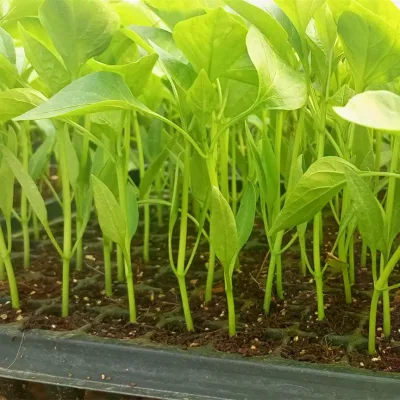


Plastic Seed Tray Hydroponic Seedling Nursery Starter Trays Micro Greens
$0.49 - $0.68
MOQ: 1000 Pieces


Comprehensive Sourcing Guide
Strategic Sourcing Guide for Plastic Seeding Nursery Trays
Understanding Product Specifications and Material Composition
When sourcing plastic seeding nursery trays, buyers must first establish a clear understanding of the technical specifications that define product functionality. The core material composition is a primary determinant of durability and suitability for agricultural applications. Based on available market data, the predominant material used for these trays is Polystyrene (PS), often categorized under broader plastic classifications such as PET or PS. This material choice is critical because it influences the tray's rigidity, weight, and resistance to degradation during the seedling phase. The material structure is consistently identified as PS, which offers a balance between cost-effectiveness and the necessary structural integrity for holding soil and water.
The physical dimensions and shape of the tray vary significantly depending on the intended use case. While some products are designed with a rectangular or square profile to maximize space efficiency in greenhouses, others may feature specific standard dimensions such as 2856cm or 600300*35mm. These variations are not arbitrary; they correspond to specific cultivation systems and shelving configurations. The thickness of the tray walls is another vital specification, typically ranging from 0.4mm to 1.5mm. Thicker walls generally provide greater durability for long-term reuse, whereas thinner profiles might be optimized for single-use or disposable applications, a feature explicitly noted in some product listings.
The configuration of the planting cells is perhaps the most distinct technical attribute. The number of holes or cells per tray is highly customizable, with observed ranges including 21, 32, 50, 72, 105, 128, and up to 200 cells. Some specialized models offer a fixed count, such as 300 holes per plate, while others allow for custom cell configurations to suit specific seed sizes. The aperture size, which determines the drainage and root aeration, is also a key variable, with specific examples citing an aperture of 3mm. Additionally, permeability rates, such as 95%, are critical metrics for ensuring that the seedlings receive adequate oxygen and water without becoming waterlogged. Buyers should verify these specific numerical values against their own agronomic requirements rather than assuming a standard configuration applies universally.
Compliance, Certification, and Manufacturing Standards
In the B2B procurement of agricultural equipment, verifying compliance with manufacturing standards and safety certifications is essential, even for seemingly simple items like plastic trays. While the supplied data indicates that products originate from major manufacturing hubs in China, specifically Shandong and Tianjin, the absence of explicit certification labels in the raw data necessitates a rigorous verification process by the buyer. Buyers must request documentation confirming that the PS material used is food-grade or agricultural-grade, ensuring it does not leach harmful substances into the soil or water that could affect plant health or subsequent crop safety.
The production method is consistently identified as mechanical, which implies the use of injection molding or similar automated processes. This method allows for high precision in creating the cell structures and ensures consistency across large batches. However, the finishing process varies; some trays are listed as "not coated," while others feature a "glazed" finish. The presence of embossing as a printing handling method suggests that branding or instructional markings may be integrated directly into the mold. Buyers should confirm whether the glazing or coating processes involve chemicals that might off-gas or degrade under UV exposure in greenhouse environments.
Regarding standards, specific product dimensions are noted, such as the 2856cm standard or the 600300*35mm specification. These dimensions often align with industry norms for nursery shelving, but they are not universal. Buyers must verify that the chosen tray dimensions match their existing infrastructure. Furthermore, the "custom cells" standard indicates that suppliers can modify the internal geometry of the tray. This flexibility is a significant advantage for specialized agricultural applications but requires clear communication of tolerance levels and dimensional accuracy to ensure the trays fit standard trays or racks.
Cost Drivers and Pricing Dynamics
The pricing of plastic seeding nursery trays is influenced by a complex interplay of factors, including material costs, customization levels, and order volume. The observed price range in the market spans from $0.02 to $2.10 USD per unit. This wide variance is not merely a reflection of brand differences but is heavily driven by the specific configuration of the product. A basic, single-use tray with a standard cell count and minimal thickness will sit at the lower end of this spectrum, while a custom-designed, double-layered, or glazed tray with a high cell count and thicker walls will command a premium price.
Order volume is a critical cost driver. The Minimum Order Quantity (MOQ) ranges from 100 to 200,000 units. This significant disparity suggests that suppliers offer tiered pricing structures. Small buyers may face higher per-unit costs due to the setup costs of injection molding, whereas large-scale agricultural operations can leverage economies of scale to reduce costs significantly. The "Selling Units" are often listed as single items, but the actual transaction usually occurs in bulk. Buyers should be aware that the MOQ is not just a threshold for ordering but a lever for negotiating price.
Customization is another major factor affecting cost. The availability of customization for cell numbers, dimensions, and colors (such as the observed black color option) adds to the production complexity. While the base material cost is relatively stable, the tooling costs for custom molds can be substantial. If a buyer requires a unique cell layout or specific dimensions like 60030035mm, they may need to absorb initial mold costs, which can be amortized over the production run. Additionally, the "Disposable" feature noted in some listings suggests a trade-off between initial cost and long-term value; disposable trays may have a lower upfront cost but a higher total cost of ownership if frequent replacement is required.
Typical Applications and Usage Scenarios
Plastic seeding nursery trays are versatile tools designed for a wide array of agricultural and horticultural applications. The primary use case is seedling cultivation, where the trays provide a controlled environment for germination and early growth. The "Industrial Use" category is explicitly listed as Agriculture, confirming their role in commercial farming, greenhouses, and nurseries. The "Application Scene" is frequently identified as Home Gardening, indicating that these products are also suitable for small-scale growers and hobbyists who require efficient space utilization.
The specific design features of the trays dictate their suitability for different crops. For instance, trays with a high number of cells (e.g., 200 or 300) are ideal for small-seeded crops like vegetables, herbs, and flowers, where space efficiency is paramount. Conversely, trays with fewer, larger cells (e.g., 21 or 32) are better suited for larger seeds or plants that require more root space during the initial stages. The "Use Type" is often classified as "Floor Type," suggesting that these trays are designed to be placed directly on the ground or on low shelving units, facilitating easy access for watering and transplanting.
The "Applicable" category lists Flowers and Plants, highlighting the broad applicability of these trays across different plant types. The "Double Layer" feature observed in some models suggests an advanced application where trays can be stacked to maximize vertical space, a common requirement in high-density nursery operations. The "Nft Channel/Planting Trough" reference indicates that some of these trays may be integrated into Nutrient Film Technique (NFT) hydroponic systems, further expanding their utility beyond traditional soil-based cultivation. Buyers should match the tray's cell size, depth, and drainage characteristics to the specific growth requirements of their target crops.
Supplier Evaluation and Manufacturing Capabilities
Selecting the right supplier for plastic seeding nursery trays requires a thorough evaluation of their manufacturing capabilities and business practices. A key differentiator among suppliers is the ownership of their own mold factory and production line. This vertical integration is a significant advantage, as it allows for greater control over the production process, faster turnaround times for custom orders, and potentially lower costs due to the elimination of intermediary markups. Suppliers that highlight this capability, such as those mentioning their own R&D and production lines, are generally more reliable for large-scale or customized projects.
The "Place of Origin" is a critical factor in supplier selection, with major manufacturing clusters identified in Shandong and Tianjin, China. These regions have established supply chains for plastic injection molding, offering a wide range of options for buyers. However, buyers should not rely solely on geographic location. Instead, they should verify the supplier's ability to meet specific quality standards and their capacity to handle custom orders. The "Custom Order: Accept" attribute confirms that many suppliers are flexible, but the extent of this flexibility varies. Some suppliers may only offer minor adjustments, while others can produce fully custom trays with unique cell layouts and dimensions.
The "Brand Name" and "Product Name" variations, such as "Rice Seeding Tray" or "Seed Tray Planting For Agricultural," indicate that suppliers often rebrand generic products for specific markets. Buyers should look beyond the brand name and focus on the technical specifications and the supplier's track record. The "Feature" of being "Disposable" or having a "Glazed" finish suggests that suppliers may have different product lines for different market segments. Evaluating a supplier's ability to provide samples, their response time to inquiries, and their willingness to discuss technical details like aperture size and permeability rates is essential for building a successful partnership.
Quality Control and Long-Term Procurement Considerations
Ensuring consistent quality in plastic seeding nursery trays is paramount for maintaining crop health and operational efficiency. Quality control should begin with the verification of material integrity. Buyers must ensure that the PS material used is free from contaminants and that the injection molding process produces trays with uniform wall thickness and cell dimensions. The "Thickness" range of 0.4-1.5mm is a critical specification; trays falling outside this range may be too fragile or unnecessarily heavy. Regular sampling and testing of the material's tensile strength and impact resistance are recommended to prevent breakage during handling or transport.
The "Finishing" process, whether "Not Coated" or "Glazed," also impacts quality. A glazed finish may improve the tray's resistance to moisture and chemicals, extending its lifespan. However, buyers should verify that the glazing process does not introduce defects such as bubbles or uneven surfaces that could harbor bacteria or algae. The "Hole Number" and "Aperture" consistency are also vital; uneven hole sizes can lead to inconsistent drainage and root development. Suppliers should provide quality assurance reports that confirm the accuracy of these specifications.
For long-term procurement, buyers should consider the total cost of ownership rather than just the unit price. While disposable trays may be cheaper initially, reusable trays with a "Double Layer" design or thicker walls may offer better value over time. The "Carton Packing" and "Carton Box" options indicate that packaging is a standard practice, but buyers should verify that the packaging is robust enough to prevent damage during shipping. Additionally, the "Customization" availability allows buyers to adapt their procurement strategy to changing needs, such as switching from single-use to reusable trays or adjusting cell sizes for new crop varieties. Establishing a long-term relationship with a supplier who has their own mold factory and R&D capabilities can provide stability and flexibility for future sourcing needs.
FAQs
What materials are used for plastic seeding nursery trays?
The primary materials are Polystyrene (PS) and PET plastic. These materials provide the necessary rigidity and durability for holding soil and water during the seedling phase while maintaining cost-effectiveness for agricultural applications.
How many cells or holes can be customized in these trays?
Buyers can choose from various hole counts including 21, 32, 50, 72, 105, 128, and 200 cells. Some specialized models offer up to 300 holes per plate, and custom cell configurations are available to suit specific seed sizes.
Can I find trays with specific dimensions like 600 by 300 mm?
Yes, standard dimensions such as 600 by 300 by 35 mm and 28 by 56 cm are available. Custom dimensions are also supported, allowing buyers to match their existing greenhouse shelving or cultivation system requirements precisely.
What is the typical thickness range for these plastic trays?
The wall thickness typically ranges from 0.4 mm to 1.5 mm. Thicker walls generally offer greater durability for long-term reuse, while thinner profiles may be optimized for single-use or disposable applications depending on the buyer's needs.
Which production methods are used to manufacture these trays?
The production method is mechanical, often involving injection molding to ensure high precision. This process allows for consistent cell structures and can include finishing options like glazing or embossing for branding and instructional markings.
What is the minimum order quantity for purchasing these trays?
The minimum order quantity ranges from 100 to 200,000 units depending on the supplier and customization level. Higher volumes typically allow for better per-unit pricing, while smaller orders may incur higher setup costs.