Source Pneumatic Hose PVC Coiling Tube for Industry, Agriculture, Medicine
Compare 26 listings for Pneumatic Hose PVC Coiling Tube suitable for chemical, agriculture, and industrial applications. Buyers can review specifications including material, temperature range, and customization options from verified Chinese manufacturers.
Key considerations
Products List


Pneumatic Plastic Polyurethane Air Coil Spiral Hose PU Pipe Spring Tube
$20.00 - $25.00
MOQ: 100 Pieces


Comprehensive Sourcing Guide
Pneumatic Hose PVC Coiling Tube Sourcing Guide
Product Scope and Observed Listing Signals
The market for pneumatic coiling tubes presents a diverse array of materials and configurations, primarily distinguished by the base polymer used in construction. Current listings indicate a strong presence of Polyurethane (PU) variants, which are often marketed for their superior flexibility and durability in industrial settings. These PU coiling tubes are frequently described with specific hardness ratings, such as 95A-98A, suggesting a balance between rigidity and ease of handling. Buyers should note that while the core keyword includes PVC, the observed product data heavily features PU models, indicating that suppliers may offer both materials under similar naming conventions or that PU is the dominant offering in this specific catalog segment. Understanding this material distinction is critical, as PU generally offers better resistance to abrasion and kinking compared to standard PVC, making it a preferred choice for high-cycle pneumatic applications.
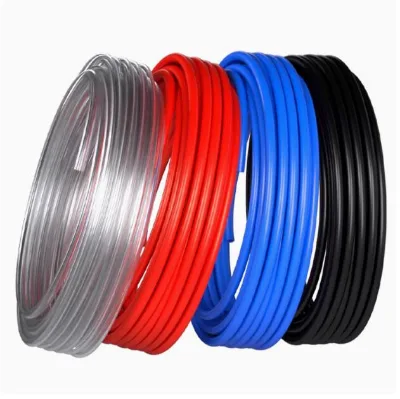
In addition to material differences, the observed listings reveal significant variation in customization options and physical specifications. Some products are explicitly labeled as "Customized" or "Non-Customized," highlighting the importance of verifying whether the supplier can accommodate specific length, diameter, or color requirements. The color palette for these tubes is extensive, ranging from standard black and white to vibrant options like blue, red, yellow, green, and orange, which can be leveraged for color-coding pneumatic lines in complex machinery. Furthermore, the observed product models, such as PUC0806-10M and PVC09*05 10M, suggest that sizing conventions vary between suppliers, with some using metric notation and others using imperial or hybrid codes. Procurement teams must carefully cross-reference these model numbers with actual inner and outer diameter measurements to ensure compatibility with existing fittings and connectors.
Technical Specifications to Verify
When evaluating the technical suitability of a coiling tube, the working pressure and temperature ranges are paramount for ensuring system integrity. The observed data indicates that certain PU tubes operate within a fluid temperature range of -20°C to 80°C, while other variants, potentially made from different polymers like PA or PVC, may withstand temperatures from -40°C to 100°C. Buyers must verify that the selected tube can withstand the peak temperatures generated by compressed air systems, particularly if the air is not adequately cooled before entering the hose. Additionally, the working pressure specifications vary, with some tubes rated for 0.15 MPa to 0.5 MPa. It is essential to confirm that the tube’s pressure rating exceeds the maximum operating pressure of the air compressor and any potential pressure spikes, as exceeding these limits can lead to catastrophic failure and safety hazards.
Fluid compatibility and mechanical properties also play a crucial role in the selection process. The observed listings specify that some tubes are designed to admit air only, while others are rated for air, water, oil, and normal solvents. This distinction is vital for applications where the pneumatic system might be exposed to lubricants or cleaning agents that could degrade the hose material. Mechanical attributes such as tensile strength, water absorption, and contraction percentage provide further insight into the tube’s durability. For instance, some products list tensile strengths ranging from 3.9 MPa to 130 MPa, and water absorption rates as low as 0.01% or as high as 3.5%. Buyers should request detailed technical datasheets to verify these values, ensuring that the hose will maintain its structural integrity and dimensional stability under the specific mechanical stresses and environmental conditions of the intended application.
Compliance and Safety Documentation
Certification status is a primary indicator of a supplier’s commitment to quality and regulatory compliance. The observed product listings frequently cite CE and ISO certifications, with some entries also mentioning API standards. The presence of ISO 9001 certification suggests that the manufacturer adheres to established quality management principles, which can be a reassuring factor for procurement teams seeking consistent product quality. However, buyers should verify the validity of these certifications by requesting copies of the certificates and checking their expiration dates. It is also important to determine whether the certifications apply to the specific product line or the entire manufacturing facility, as this can impact the reliability of the compliance claims.
Beyond general certifications, specific safety and material compliance documents may be required depending on the application industry. For applications in food, medicine, or agriculture, it is crucial to verify that the hose material is free from harmful substances and meets relevant regulatory standards for contact with consumables or sensitive environments. While the observed listings mention applications in these sectors, they do not explicitly state compliance with FDA or EU food contact regulations. Buyers should proactively request Material Safety Data Sheets (MSDS) and specific compliance statements to ensure that the hose does not introduce contaminants into the system. Additionally, verifying that the product origin, such as Hebei, China, aligns with the supplier’s declared manufacturing capabilities can help mitigate risks associated with counterfeit or substandard products.
Cost Drivers and Commercial Terms
The pricing for pneumatic coiling tubes is influenced by several factors, including material type, customization level, and order volume. The observed price range spans from $0.04 to $74, reflecting the diversity of products available, from simple single-meter tubes to complex, customized assemblies. Minimum Order Quantities (MOQs) also vary significantly, ranging from 1 unit to 1000 units, which impacts the total cost of ownership for small-scale buyers versus large industrial purchasers. Buyers should analyze the price per unit at different volume tiers to identify the most cost-effective ordering strategy. It is also important to consider whether the quoted price includes packaging, shipping, and any applicable taxes, as these can significantly affect the final landed cost.
Delivery times and payment terms are critical components of the commercial agreement. The observed listings indicate a delivery time of within one week for some products, which is advantageous for urgent procurement needs. However, buyers should confirm whether this lead time applies to stock items or if it extends for customized orders. Payment terms, such as advance payment, letter of credit, or open account, should be negotiated based on the buyer’s risk tolerance and the supplier’s reputation. Additionally, the packaging method, whether standard carton, inner box, or palletized, can impact shipping costs and product protection during transit. Buyers should specify their preferred packing style to ensure that the tubes arrive in optimal condition, minimizing the risk of damage and associated replacement costs.
Supplier Qualification and Quality Control
Supplier qualification involves a thorough assessment of the manufacturer’s capabilities, production processes, and quality control measures. Buyers should verify the supplier’s production capacity and lead time consistency to ensure they can meet demand fluctuations. Requesting samples is a critical step in the qualification process, allowing buyers to physically inspect the hose for quality, flexibility, and dimensional accuracy. The observed listings mention various packing methods, such as carton boxes and pallets, which can be used to assess the supplier’s attention to detail in handling and shipping. Buyers should also inquire about the supplier’s testing procedures, including pressure testing and temperature cycling, to ensure that the products meet the specified technical parameters.
Quality control should extend beyond the initial sample approval to include ongoing monitoring of production batches. Buyers should establish clear acceptance criteria and inspection protocols, such as AQL (Acceptable Quality Level) sampling plans, to detect defects early in the production process. Communication with the supplier regarding any quality issues should be documented and addressed promptly to prevent recurrence. Additionally, buyers should consider conducting periodic audits of the supplier’s facility, either in person or through third-party inspection services, to verify that quality control practices are consistently applied. Building a strong relationship with the supplier based on transparency and mutual trust can lead to better cooperation and improved product quality over time.
Long-Term Procurement Checks
Long-term procurement success depends on continuous monitoring of supplier performance and market trends. Buyers should regularly review supplier metrics, such as on-time delivery rates, defect rates, and responsiveness to inquiries, to identify potential issues before they escalate. Maintaining a diversified supplier base can mitigate the risk of supply chain disruptions and provide leverage in negotiations. It is also important to stay informed about advancements in hose technology and materials, as new products may offer improved performance or cost savings. Buyers should periodically reassess their technical requirements and compare them against the latest available products to ensure they are utilizing the most suitable solutions for their applications.
Finally, buyers should establish a feedback loop with their end-users or internal engineering teams to gather insights on the performance of the procured hoses in real-world conditions. This feedback can inform future purchasing decisions and help identify areas for improvement in product selection or supplier management. Regularly updating the supplier qualification criteria and quality control protocols ensures that the procurement process remains aligned with evolving business needs and industry standards. By maintaining a proactive and data-driven approach to supplier management, buyers can optimize their total cost of ownership and ensure the reliability of their pneumatic systems over the long term.
FAQs
What certifications do the Pneumatic Hose PVC Coiling Tube products have?
The products hold CE, ISO, and API certifications. These standards ensure compliance with international safety and quality requirements for industrial applications involving air, water, and oil fluids.
Can I request custom packaging for the Pneumatic Hose PVC Coiling Tube?
Customization is available for packaging styles according to your specific needs. Suppliers offer options ranging from inner boxes and outer cartons to palletized shipments for bulk orders.
What is the delivery time for the Pneumatic Hose PVC Coiling Tube?
Delivery is typically completed within one week for standard orders. This fast lead time supports urgent industrial needs while maintaining quality standards like ISO9001 for production processes.
Which materials are used for the Pneumatic Hose PVC Coiling Tube?
Materials include PU, PVC, and PA thermosetting plastics. These durable polymers provide flexibility and resistance to various fluids, ensuring performance across chemical, agriculture, and food industry applications.
What is the working temperature range for the Pneumatic Hose PVC Coiling Tube?
The tubes operate effectively between -40 and 100 degrees Celsius. This wide range allows usage in normal temperature environments as well as extreme conditions requiring high thermal stability.
How is the hardness of the Pneumatic Hose PVC Coiling Tube measured?
Hardness varies by model, ranging from 95A to 98A for PU types and 60-64D for others. This variation ensures the hose meets specific mechanical requirements for different industrial pressures.