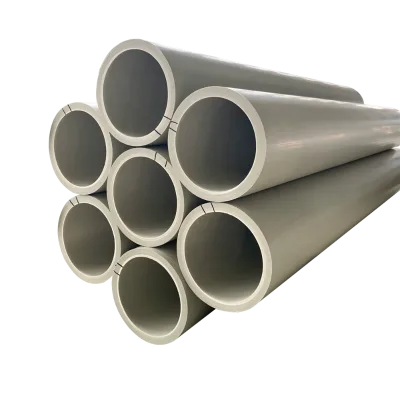
Source Water Supply PPH Pipe for plumbing, irrigation, and industrial use
Compare 30 verified listings for Water Supply PPH Pipe from Chinese manufacturers. Buyers can evaluate specifications like tensile strength, material type, and customization options to find suitable suppliers for plumbing, irrigation, and industrial applications; compare the available evidence and request quotations based on your requirements.
Key considerations
Products List

Environmental Protection High Pressure PPR Pipe Plastic Water Supply Pipe
$0.12 - $0.18
MOQ: 100 Meters


Wholesale Hot and Cold Water Pipe 1/2 3/4 Inch PPR Water Supply PPR Pipe
$0.12 - $0.15
MOQ: 1000 Meters


High Quality PPR Hot Water Pipe PPR Household Water Pipe Green Water Supplytubes
$0.86 - $2.58
MOQ: 1000 Meters




Comprehensive Sourcing Guide
Water Supply PPH Pipe Sourcing Guide
Procuring water supply PPH pipes requires a nuanced understanding of material properties and manufacturing standards to ensure long-term system integrity. Polypropylene homopolymer (PPH) offers distinct advantages over standard polypropylene random copolymer (PPR) in specific thermal and chemical environments, making it a critical selection for industrial and specialized residential applications. Buyers must distinguish between general-purpose plastic piping and high-performance PPH variants, as the latter provides superior resistance to higher temperatures and aggressive chemical agents. This guide outlines the essential verification steps for sourcing these components, focusing on material authenticity, dimensional accuracy, and supplier reliability.
The market for plastic water pipes is diverse, with listings often conflating different polymer types such as PE, PP, and composite materials. Sourcing PPH pipes specifically demands careful scrutiny of product descriptions to confirm the homopolymer designation, as generic "PP" labels may refer to copolymers with lower thermal stability. Buyers should prioritize suppliers who explicitly state the material grade and provide technical data sheets that align with international or regional standards for potable water systems. Understanding the specific application context, whether for hot water circulation or chemical transport, is vital for selecting the correct pipe rating and ensuring the chosen material will not degrade under operational stress.
Product Scope and Observed Listing Signals
Market listings for plastic water pipes reveal a wide spectrum of product attributes, including varying diameters, connection methods, and packaging formats. Observed data indicates that pipe models range from small diameters like 16mm up to large industrial sizes such as 800mm or even 1600mm, depending on the specific polymer type and intended use. Buyers should note that while PPH is a specific variant, many suppliers list general PP or PE pipes with similar dimensional ranges. It is crucial to verify that the listed "PP" material actually refers to homopolymer when high-temperature resistance is required, as standard copolymer pipes may fail under conditions where PPH excels.
Packaging and physical characteristics also vary significantly across suppliers, with options including woven bags, cartons, rolls, and bulk shipments. Some listings highlight specific features such as smooth inner and outer walls to reduce friction loss, or customizable lengths such as 3 and 4 meters for ease of installation. Connection modes are predominantly hot melt, which requires specific tools and trained personnel for proper joint formation. Buyers must assess whether the supplier offers customization for color and length, as these factors can impact inventory management and installation efficiency on large-scale projects.
Technical Specifications to Verify
Technical verification begins with confirming the tensile strength and thermal properties of the pipe material. While some listings cite tensile strengths in the range of 3.6MPa to 50MPa, these values can vary based on the specific polymer formulation and testing standards. For PPH pipes, buyers should request data sheets that confirm the material's ability to withstand operating temperatures and pressures without deformation. The contraction percentage, often listed as less than 0.4%, is a critical factor in maintaining dimensional stability during temperature fluctuations, ensuring that joints remain secure and leaks are prevented over the system's lifespan.
Water absorption rates are another key technical parameter, with high-quality plastic pipes typically exhibiting absorption rates below 0.01%. This low absorption rate ensures that the material does not degrade or lose structural integrity when exposed to moisture over extended periods. Buyers should also verify the pipe shape options, as some suppliers offer both straight tubes and coil tubes, which can influence installation methods and material waste. Confirming the executive standard operative norm, such as Chinese standards or other regional equivalents, helps ensure that the pipe meets local regulatory requirements for water supply systems.
Compliance and Safety Documentation
Compliance with safety and quality standards is non-negotiable for water supply pipes, particularly those intended for potable water applications. Buyers must ensure that suppliers provide valid certification documents, such as ISO9001 for quality management systems, which indicates a consistent manufacturing process. Some listings may mention additional certifications like ISOGOST, which could be relevant for specific regional markets. It is essential to verify that the certifications are current and applicable to the specific product line being purchased, as generic certifications may not cover all pipe variants or sizes.
Documentation should also include proof of compliance with relevant drinking water standards, ensuring that the materials do not leach harmful substances into the water supply. Buyers should request material safety data sheets (MSDS) and health certificates that confirm the environmental safety of the pipes. In cases where imported raw materials are used, as noted in some listings, buyers should seek verification of the source and quality of these inputs. This due diligence helps mitigate risks associated with material contamination and ensures that the final product meets all health and safety regulations.
Cost Drivers and Commercial Terms
The cost of water supply pipes is influenced by several factors, including raw material prices, manufacturing complexity, and order volume. Observed price ranges vary widely, from low-cost items to premium specialized pipes, reflecting differences in material quality and performance capabilities. Buyers should be aware that lower prices may correlate with lower tensile strength or inferior thermal resistance, so cost should not be the sole determinant in supplier selection. Understanding the cost drivers helps buyers negotiate better terms and avoid unexpected expenses related to material failures or non-compliance.
Commercial terms such as minimum order quantities (MOQ) and payment conditions are critical components of the procurement process. Listings indicate MOQs ranging from 1 unit to 20,000 units, with common payment terms including 30% T/T in advance and the balance before shipping. Buyers should negotiate terms that align with their cash flow and project timelines, ensuring that payment milestones are tied to delivery and quality verification. Clear communication regarding packaging and shipping logistics can also prevent additional costs, as improper packaging may lead to damage during transit.
Supplier Qualification and Quality Control
Supplier qualification involves assessing the manufacturer's production capabilities, quality control processes, and track record. Buyers should prioritize suppliers who demonstrate a commitment to quality through rigorous testing and inspection protocols. The origin of the pipes, often listed as Hebei Shijiazhuang or Qinhuangdao City in China, can provide insights into the supplier's industrial ecosystem and supply chain efficiency. However, geographic location should not be the sole criterion; instead, buyers should focus on the supplier's ability to provide consistent product quality and timely delivery.
Quality control measures should include regular testing of tensile strength, water absorption, and dimensional accuracy. Buyers should request sample batches for independent testing before committing to large orders, ensuring that the pipes meet the specified technical requirements. Suppliers who offer customization options, such as specific colors or lengths, should also demonstrate the ability to maintain quality across varied product configurations. Establishing a clear quality assurance framework with the supplier helps prevent defects and ensures that the installed system performs as expected over its operational life.
Long-Term Procurement Checks
Long-term procurement success depends on establishing a robust relationship with suppliers who can support ongoing project needs. Buyers should conduct periodic audits of supplier performance, focusing on delivery reliability, product consistency, and responsiveness to issues. Maintaining a diversified supplier base can mitigate risks associated with supply chain disruptions, ensuring that projects remain on schedule even if one supplier encounters difficulties. Regular communication and feedback loops help identify potential problems early and foster a collaborative environment focused on continuous improvement.
Additionally, buyers should stay informed about changes in industry standards and material technologies that may impact future procurement decisions. As regulations evolve, suppliers must adapt their products to remain compliant, and buyers should verify that their suppliers are proactive in this regard. Investing in training for installation personnel on proper hot melt connection techniques can also extend the lifespan of the piping system, reducing maintenance costs and enhancing overall system reliability. By focusing on these long-term checks, buyers can ensure sustainable and efficient procurement of water supply pipes.
FAQs
What materials are used for water supply pph pipes?
Water supply pph pipes are primarily manufactured from polypropylene (PP) and polyethylene (PE) plastics. Some composite variants utilize high-density polyethylene with aluminum layers for enhanced structural integrity. These materials ensure environmental health and durability for residential and industrial plumbing applications.
How are water supply pph pipes connected?
These pipes typically utilize hot melt connection methods to ensure leak-proof joints. This technique fuses the pipe and fitting materials seamlessly, creating a strong bond that withstands internal pressure. The smooth inner and outer walls facilitate efficient water flow while maintaining structural stability during installation.
What specifications are available for water supply pph pipes?
Available specifications range from 16mm to 1600mm in diameter, with common models covering 20-160mm. Standard lengths are generally 3 or 4 meters, though custom lengths can be arranged. These dimensions accommodate various plumbing needs, from small residential fixtures to large industrial water distribution systems.
Can water supply pph pipes be customized?
Yes, customization is available for color, length, and specific application requirements. Manufacturers offer custom-made options to meet unique project demands. This flexibility allows buyers to select appropriate pipe characteristics, such as coil or straight tube formats, ensuring the product fits specific installation constraints effectively.
What certifications do water supply pph pipes have?
Manufacturers often hold ISO9001 certification to ensure quality management standards. Some products may also comply with Chinese standards or ISOGOST norms. These certifications verify that the pipes meet rigorous safety and performance criteria, providing buyers with confidence in the material's reliability for water supply systems.
What is the typical MOQ for water supply pph pipes?
The minimum order quantity varies by supplier, ranging from 1 unit to 20,000 units. Some specific product lines may require a minimum of 1000 meters. Buyers should verify the exact MOQ with the supplier, as it depends on the pipe specification, material type, and production capacity.
How are water supply pph pipes packed for shipping?
Packing methods include woven bags, cartons, plastic bags, and PP bags. Some products are shipped in rolls or bulk formats depending on the pipe type. This varied packaging ensures protection during transit, preventing damage to the smooth inner and outer walls while facilitating efficient handling and storage.