Source Polished Niobium Sheet for Medical, Electronics, and Aviation
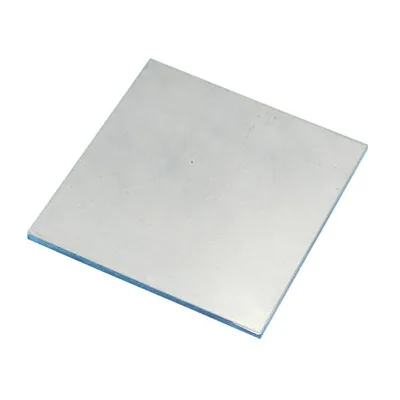
Compare 30 listings of Polished Niobium Sheet from verified Chinese suppliers. Options include Nb1 and Nb2 grades with ASTM standards, available in square or rectangular shapes for medical, industrial, and electronics applications.
Key considerations
Products List


Xinkang Niobium Foil 99.95% Nb1 Nb2 Polishing Surface Niobium Foil Sheet
$100.00 - $120.00
MOQ: 1 Pieces


Professional Manufacturer 99.95% Round Niobium Disc Niobium Sheet Price
$25.00 - $1000.00
MOQ: 1 Pieces


Comprehensive Sourcing Guide
Strategic Sourcing Guide for Polished Niobium Sheet
Understanding Technical Specifications and Material Grades
When sourcing Polished Niobium Sheet, the primary objective is to align the material's intrinsic properties with the rigorous demands of high-performance applications. The core material is identified strictly as Niobium, often designated by grades such as Nb1 and Nb2. These grades are critical for buyers to verify, as they dictate the purity and mechanical behavior of the final product. The observed market data indicates a high-confidence purity range exceeding 99.95%, with some listings specifying a range of 99.9% to 99.95%. This level of purity is essential for applications in electronics, medical devices, and industrial processing where chemical stability is paramount.
The physical form of the product is consistently described as a sheet or plate, with available shapes including square and rectangular configurations. The density of the material is a key physical constant, with observed values hovering around 8.57 g/cm³ to 8.6 g/cm³. Buyers must ensure that the supplier's technical data sheet matches these density figures, as deviations can indicate impurities or alloying elements that were not intended. The surface finish is a defining characteristic for "polished" niobium sheet. The specific process noted in the supply chain involves polishing to achieve a bright surface. This is not merely aesthetic; a polished surface reduces surface area reactivity and is often a prerequisite for specific vacuum or superconducting applications.
The manufacturing technology employed for these sheets varies. While some products are derived through standard metallurgical processes, others explicitly utilize Powder Metallurgy. This distinction is vital for buyers assessing the microstructure and grain size of the sheet. Furthermore, the dimensions are highly flexible. The standard specifications allow for customization according to customer needs, with size ranges potentially extending from specific diameters for tubular forms to custom sheet dimensions. However, for sheet products specifically, the "Size" attribute is listed as customizable, meaning buyers should expect to provide precise length and width requirements rather than relying on a fixed standard catalog size.
Compliance, Certification, and Regulatory Standards
Navigating the compliance landscape for niobium sheet requires a meticulous review of international and industry-specific standards. The most frequently cited standard for this material is ASTM B392-03. This standard governs the specifications for niobium and niobium alloys, covering chemical composition, mechanical properties, and testing methods. Buyers must verify that the supplier explicitly states compliance with ASTM B392-03, as this is the primary benchmark for quality assurance in the United States and many international markets. Additionally, the GB (Guobiao) standard is also observed, indicating that some suppliers adhere to Chinese national standards which may be relevant for domestic procurement or specific export contracts.
Certification plays a dual role in this sourcing process: verifying the quality management system of the supplier and confirming the material traceability. The supply chain data highlights ISO certification, specifically ISO9001:2015, as a common attribute. This certification ensures that the supplier operates under a consistent quality management framework. However, buyers should not assume that a general ISO certification automatically covers the specific metallurgical testing required for niobium. The presence of ISO 9001 is a strong indicator of process control, but it must be paired with material-specific test reports.
It is important to distinguish between observed certifications and those that are merely background noise. While some background data mentions ISO 14001 or CE marking, these should not be treated as guaranteed attributes for every niobium sheet listing. Instead, buyers should request proof of ISO9001:2015 and specific material certificates that reference ASTM B392-03. The HS Code for niobium sheet is 8112994000, a critical piece of information for customs clearance and tariff classification. Ensuring the supplier declares this code accurately prevents logistical delays and ensures correct duty assessment.
Cost Drivers and Pricing Dynamics
The pricing structure for Polished Niobium Sheet is influenced by a complex interplay of material purity, processing complexity, and order volume. The observed price range in the market spans from $10 to $1,000 USD. This wide variance is not indicative of a single product type but rather reflects the diversity of order sizes, from small sample units to bulk industrial shipments. The Minimum Order Quantity (MOQ) is a significant cost driver. Data indicates an MOQ range of 1 kg to 10 kg, with some suppliers offering a minimum of 1 kg, while others require 5 kg. For buyers seeking small quantities for prototyping, the per-unit cost will be significantly higher due to the fixed costs of setup and handling.
The surface finish is another major cost factor. Achieving a "polished and bright" surface requires additional processing steps compared to a standard mill finish. This involves mechanical polishing, chemical etching, or electro-polishing, all of which add labor and time to the production cycle. Consequently, polished sheets command a premium over unpolished variants. The customization of dimensions also impacts cost. While the product model allows for customized sizes, non-standard dimensions often require custom tooling or specific cutting runs, which can increase the unit price compared to standard stock sizes.
Lead time is an often-overlooked economic factor. The delivery time for these products typically ranges from 7 to 20 days, depending on the supplier's location and current production load. Suppliers located in Luoyang, Henan, or Hunan, China, report lead times of 7-10 days or 10-20 days. Longer lead times can impact the total cost of ownership if the buyer faces production delays or needs to maintain higher safety stock levels. Buyers should factor in the potential for price fluctuations based on raw niobium market trends, although specific market figures are not provided in the current data. The packaging method, such as foaming in export wooden cases or vacuum packaging, also adds to the final cost, particularly for high-value, small-batch orders where protection is critical.
Typical Applications and Performance Requirements
The versatility of Polished Niobium Sheet makes it a critical component across several high-tech industries. The primary applications identified include the medical, industrial, electronics, and aviation sectors. In the medical field, the material's biocompatibility and corrosion resistance are leveraged for surgical instruments and implantable devices. The "Better Corrosion Resistance" advantage noted in the supply data is particularly relevant here, ensuring the material does not degrade in biological environments.
In the electronics and semiconductor industries, niobium sheet is utilized for its superconductivity properties. This makes it ideal for manufacturing components in particle accelerators, quantum computing hardware, and specialized sensors. The "Superconductivity Material" attribute is a key performance indicator for buyers in this sector. The polished surface is essential here to minimize electron scattering and ensure optimal electrical performance. The aviation sector also relies on niobium for high-temperature applications, where the material's strength-to-weight ratio and resistance to oxidation at elevated temperatures are required.
The chemical industry utilizes niobium sheet for its inertness, making it suitable for linings in reactors and piping systems that handle aggressive acids and alkalis. The "Non-alloy" classification of the material suggests that pure niobium is preferred in these applications to avoid unwanted chemical reactions that alloying elements might introduce. The "Non-secondary" status of the material further confirms that the product is primary, ensuring consistent chemical composition without the variability often associated with recycled materials. Buyers in these sectors must verify that the specific grade (Nb1 or Nb2) meets the stringent purity requirements of their specific process.
Supplier Evaluation and Origin Verification
Selecting the right supplier requires a thorough evaluation of their geographic origin and production capabilities. The observed data points to China as the primary origin, with specific manufacturing hubs identified in Luoyang, Henan, and Hunan. These regions are known for their metallurgical expertise and established supply chains for refractory metals. However, the presence of multiple locations suggests that buyers should not assume uniform quality across all suppliers in the region. It is imperative to verify the specific factory location and its capacity to handle the required order volume.
Supplier evaluation should also focus on their customization capabilities. The data confirms that customization is available, with standards allowing for sizes and specifications to be tailored to customer needs. This flexibility is a strong indicator of a mature supplier capable of handling bespoke orders. Buyers should inquire about the supplier's experience with specific applications, such as medical or aviation, to ensure they have the necessary quality control protocols in place. The ability to supply samples as needed is another positive attribute, allowing buyers to test the material before committing to a larger order.
The packaging strategy is a reflection of the supplier's attention to detail. Observed packaging methods include foamed export wooden cases, standard export plywood cases, and vacuum packaging. For high-purity niobium, vacuum packaging is particularly important to prevent surface oxidation and contamination during transit. Buyers should request photos or specifications of the packaging to ensure it meets the protection requirements of their logistics chain. Additionally, the supplier's ability to provide a Certificate of Analysis (CoA) that matches the ASTM B392-03 standard is a non-negotiable requirement for serious procurement.
Quality Control and Long-Term Procurement Strategy
Quality control for Polished Niobium Sheet must extend beyond the initial inspection. The surface finish, specifically the "polished and bright" attribute, must be consistent across the entire sheet. Buyers should establish clear acceptance criteria for surface roughness and visual defects. The density of 8.57 g/cm³ to 8.6 g/cm³ serves as a baseline for verifying the material's integrity. Any significant deviation from this range could indicate porosity or impurities that compromise the material's performance.
Long-term procurement considerations involve building a relationship with a supplier who can provide consistent quality over time. The lead time of 7 to 20 days suggests that supply chain stability is a key factor. Buyers should assess the supplier's ability to scale production without compromising quality. The availability of samples allows for a phased approach to procurement, starting with small batches to validate the material before moving to larger orders. The "Sample: Supply as Your Need" attribute is a valuable tool for this validation process.
Finally, buyers must consider the total cost of ownership, which includes not just the purchase price but also the costs associated with testing, handling, and potential rework. The high purity and specialized nature of niobium sheet mean that any quality failure can be costly. Therefore, establishing a robust quality assurance protocol that includes third-party testing or in-house verification of the ASTM B392-03 compliance is essential. By focusing on these technical and operational details, buyers can ensure a successful sourcing strategy for Polished Niobium Sheet that meets the demanding requirements of modern high-tech industries.
FAQs
What is the typical purity level of Polished Niobium Sheet?
The typical purity level exceeds 99.95%, with some listings specifying a range of 99.9% to 99.95%. This high purity is essential for applications in electronics, medical devices, and industrial processing where chemical stability is paramount.
Which standards govern the quality of niobium sheet products?
Products are governed by ASTM B392-03 and GB standards. Buyers must verify that the supplier explicitly states compliance with ASTM B392-03, as this is the primary benchmark for quality assurance in the United States and many international markets.
Can buyers customize the size and shape of the niobium sheet?
Yes, customization is available for size and shape, including square and rectangular configurations. The standard specifications allow for dimensions to be tailored to customer needs, meaning buyers should expect to provide precise length and width requirements.
What is the minimum order quantity for purchasing niobium sheet?
The minimum order quantity ranges from 1 kg to 5 kg depending on the supplier. Some suppliers offer a minimum of 1 kg for small sample units, while others require 5 kg, significantly impacting the per-unit cost for small orders.
How long does delivery typically take for niobium sheet orders?
Delivery times typically range from 7 to 20 days depending on the supplier and order specifics. Suppliers in Luoyang or Hunan report lead times of 7-10 days or 10-20 days, which can impact the total cost of ownership.
What packaging methods are used for exporting Polished Niobium Sheet?
Packaging methods include foamed export wooden cases, standard export plywood cases, and vacuum packaging. Vacuum packaging is particularly important for high-purity niobium to prevent surface oxidation and contamination during transit.