Source Polished Natural Amethyst Geode for Home Decor, Meditation, and Gifts
Explore 30 listings for Polished Natural Amethyst Geode suitable for home decor, meditation spaces, and gift collections. Buyers can compare specifications like size, weight, and origin across diverse suppliers to find the ideal crystal image or raw stone.
Key considerations
Products List
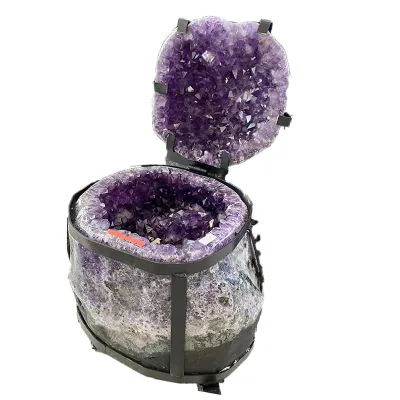
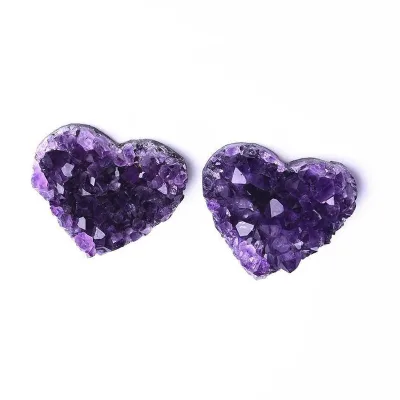
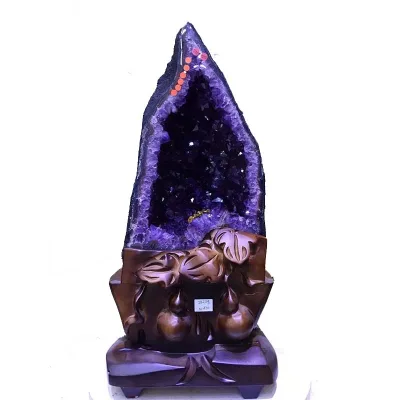
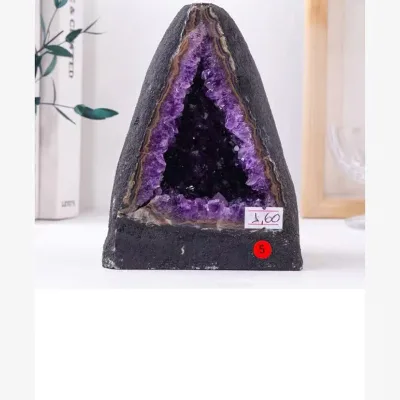
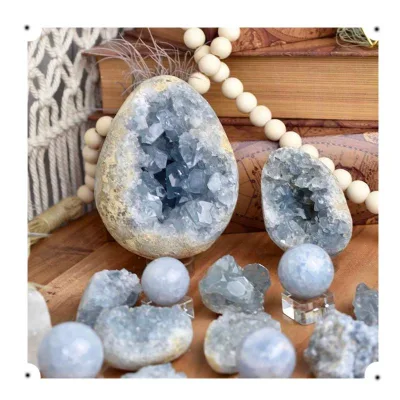
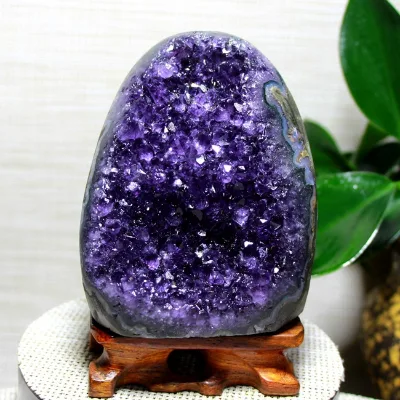
Wholesale Natural Quartz Stone Rough Celestite Geode for Home Decoration
$25.00 - $30.00
MOQ: 2 kilograms
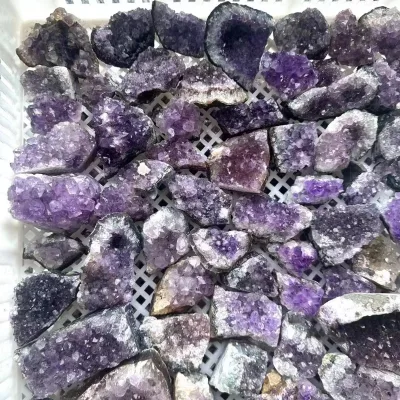


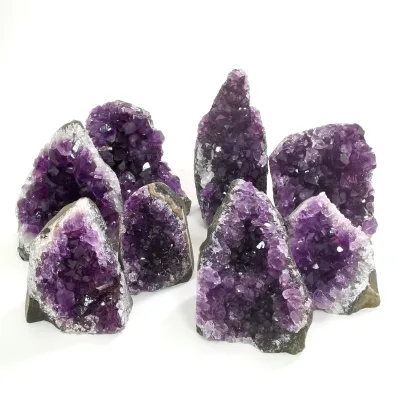
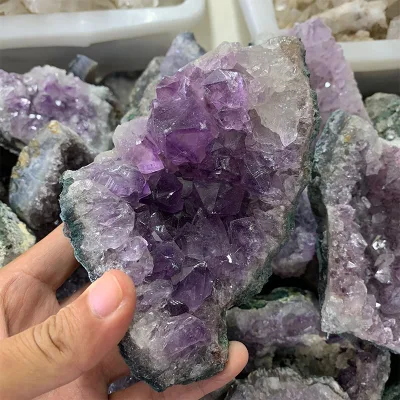
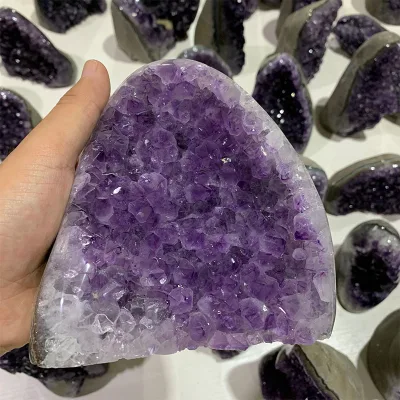
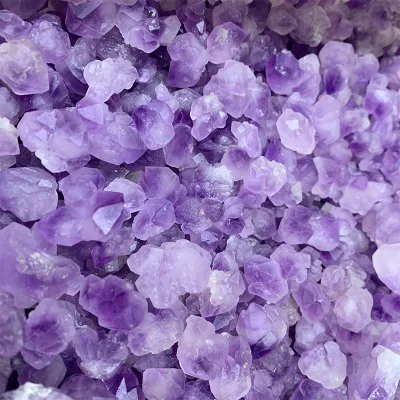
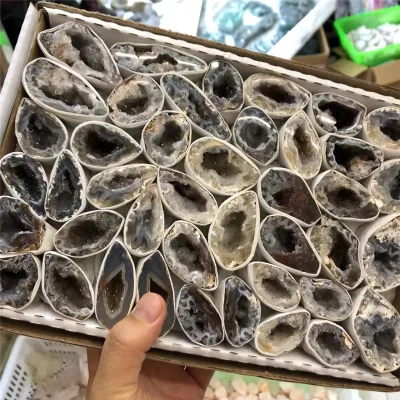
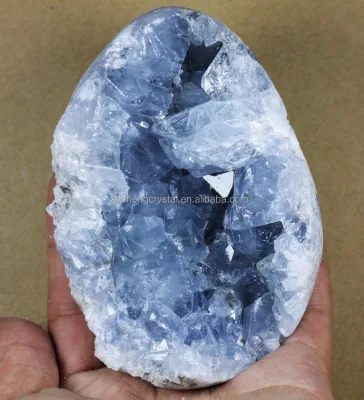
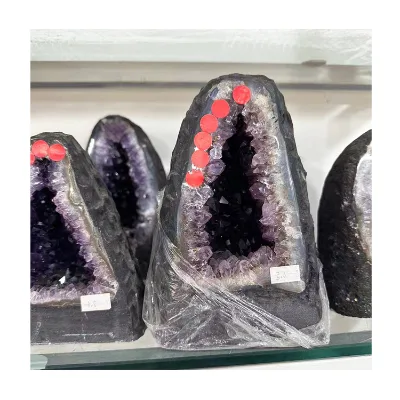
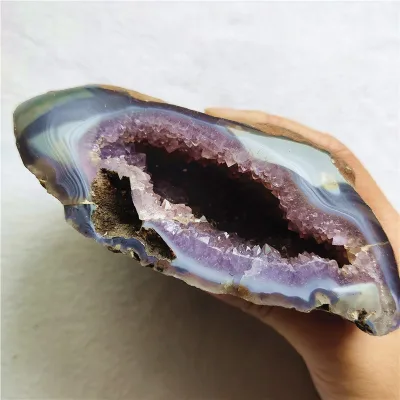
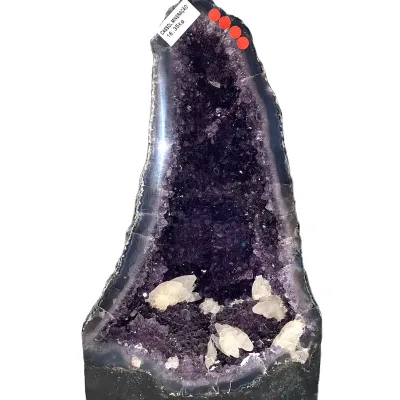
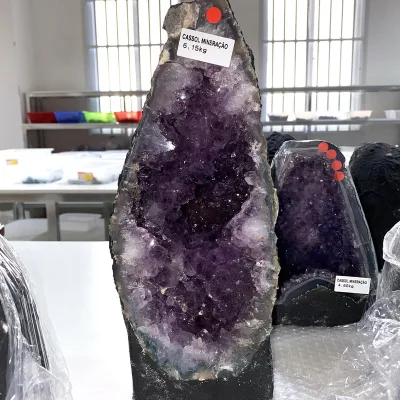


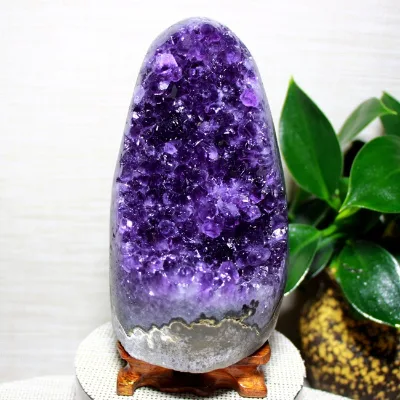
Comprehensive Sourcing Guide
Strategic Sourcing Guide for Polished Natural Amethyst Geodes
Navigating the global market for polished natural amethyst geodes requires a disciplined approach that balances aesthetic appreciation with rigorous commercial due diligence. For procurement professionals, the distinction between a raw geological specimen and a finished commercial product is defined by specific technical attributes, supply chain transparency, and quality assurance protocols. The following guide synthesizes observed market data and essential verification steps to assist buyers in sourcing high-quality amethyst geodes for art, collection, and decorative applications.
Technical Specifications and Product Variants
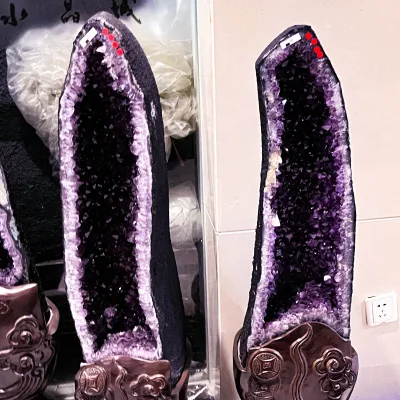
Understanding the technical specifications of amethyst geodes is the first step in defining procurement requirements. The market presents a diverse range of forms, from cathedral-style formations to cluster hearts and irregular free-form stones. Based on current market observations, product attributes vary significantly by origin and processing technique. For instance, some listings identify the product type specifically as "Crystal Image" or "Natural Crystal geode," while others categorize them under "Art & Collectible."
The physical dimensions and weight are critical variables that impact logistics and pricing. Observed data indicates that single package sizes can range from compact units measuring 20x15x13 cm to larger shipments where the height of the geode itself may span from 60 to 160 cm. The weight of individual units is equally variable; some suppliers list single gross weights around 1.3 kg to 1.4 kg for smaller packages, while bulk orders for larger specimens may involve weights ranging from 40 kg to 300 kg per unit or lot.
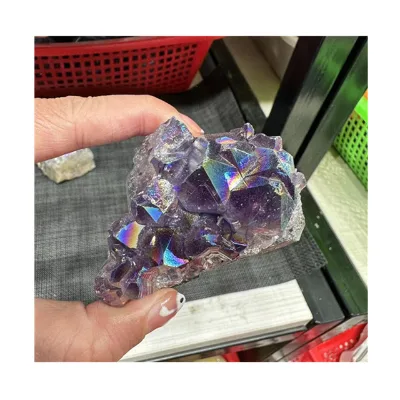
Processing techniques also define the final product. Buyers must distinguish between "Polished" stones, which have been mechanically treated to enhance luster, and "RAW STONE" or "Natural crystal" varieties that retain their geological integrity. The shape is another defining characteristic, with options including "Free Form," "Irregular," or specific geometric clusters like "hearts." Color variations are noted in the market, including standard amethyst hues and specialized treatments such as "aura amethyst heart." When specifying a request for quotation (RFQ), buyers should explicitly state the required technique (polished vs. raw) and the acceptable size range, as natural variance means that "The weight of each natural product is different" and exact dimensions cannot be guaranteed without sampling.
Compliance, Certification, and Origin Verification
Geological products, particularly those sourced from specific regions, require careful attention to origin verification and compliance. The supply chain for amethyst geodes is heavily influenced by the place of origin, with major hubs identified in Jiangsu, China, and Distrito Federal, Brazil. These locations often dictate the specific geological characteristics and the regulatory environment surrounding export.
While specific certification standards were not explicitly detailed in the provided product data, buyers must verify that suppliers adhere to international trade compliance regarding mineral exports. This includes ensuring that the stones are not sourced from conflict zones and that all necessary export permits from the country of origin are in place. For products labeled with specific model numbers such as "XU24041701" or "SM250320," buyers should request documentation that links the model to the specific geological batch to ensure authenticity.
Furthermore, buyers should verify the "Brand Name" associated with the product, such as "Shammah Crystal," to understand the supplier's reputation and consistency. However, reliance on brand names alone is insufficient; the primary verification method must be the physical inspection of the stone against the provided specifications. Buyers should also confirm that the "Packaging Details," such as "carton packing," meet the standards required to prevent damage during transit, as geodes are brittle and prone to chipping if not secured properly.
Cost Drivers and Pricing Structures
The pricing of polished natural amethyst geodes is driven by a complex interplay of factors, including size, weight, origin, and processing level. The observed listed price range in the market spans from $0.30 to $80.00 USD, a wide variance that reflects the difference between small, mass-produced clusters and large, high-quality cathedral geodes.
A primary cost driver is the Minimum Order Quantity (MOQ). Data indicates that MOQs can vary drastically, ranging from as low as 1 kg for smaller items to 10 kg, 2 kg, or even 40 kg for bulk or larger specimens. For example, specific listings show an MOQ of 10 kg for certain cathedral geodes, while others require 40 kg for bulk amethyst geodes. This variation suggests that buyers must align their order volume with the supplier's capacity to avoid prohibitive minimums.
The "Selling Units" also influence cost; some transactions are structured as "Single item" sales, while others are bulk lot purchases. The "Single gross weight" and "Single package size" directly impact shipping costs, which are often a significant portion of the total landed cost for heavy stone products. Buyers should calculate the cost per kilogram rather than per unit to ensure accurate budgeting, especially when dealing with items where the weight can vary significantly within a single batch. Additionally, the "Feature" of the product, such as "Fashion Trend" or "Collection," can command a premium, particularly for items marketed for specific decorative or gift applications.
Typical Applications and Market Segmentation
Polished natural amethyst geodes serve a wide array of applications, primarily falling into the categories of Art & Collectible, Wedding Decoration & Gift, Holiday Decoration & Gift, and Souvenir. The "Style" of the product often aligns with "Meditation" or general interior design trends, making these items popular for home decor and spiritual practices.
The market segmentation is clear:
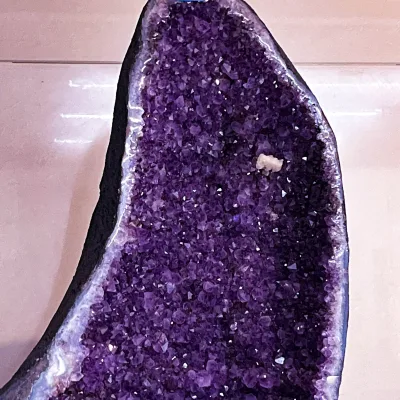
- Art & Collectible: High-value, large specimens like the "Amethyst cathedral geode" or "Amethyst geode" with heights up to 160 cm are targeted at collectors and high-end interior designers.
- Wedding & Holiday Decoration: Smaller clusters, such as "Amethyst cluster hearts" or "Celestite geode," are often used as centerpieces or festive decorations.
- Souvenir and Gift: Items with specific shapes like "hearts" or "free form" stones are marketed as unique souvenirs, often requiring specific packaging details to ensure they arrive intact.
Buyers should match the product's "Application" tag with their specific end-use. For instance, a product listed with the feature "collection" is likely intended for long-term display rather than temporary decoration. Understanding these applications helps in selecting the right "Technique" (polished vs. raw) and "Shape" (irregular vs. specific forms) to meet the aesthetic requirements of the target market.
Supplier Evaluation and Selection Criteria
Evaluating suppliers for natural stone products requires a focus on consistency, transparency, and logistical capability. Since natural products vary, a reliable supplier must demonstrate the ability to manage this variance. Key evaluation criteria include the clarity of the "Model Number" provided, which serves as a unique identifier for the specific batch or style.
Buyers should assess the supplier's ability to provide accurate "Single package size" and "Single gross weight" data, as these figures are critical for freight planning. A supplier that lists precise dimensions and weights for their "Single item" sales is generally more reliable than one providing vague estimates. Additionally, the "Place of Origin" should be verified to ensure the supplier is located in a region known for high-quality amethyst production, such as Brazil or China, and that they have the infrastructure to handle international shipping.
The "Brand Name" can be a secondary indicator of quality, but it should not be the sole deciding factor. Buyers should request samples to verify the "Technique" and "Color" against the product description. For example, if a supplier claims "aura amethyst heart," the sample must match this specific coloration. Furthermore, the "Feature" listed, such as "Fashion Trend," should be backed by a portfolio of previous shipments that demonstrate the supplier's ability to deliver on current market trends.
Quality Control and Inspection Protocols
Quality control for natural geodes is inherently challenging due to the organic nature of the material. The "Size" specification often notes that the weight of each natural product is different, meaning that strict dimensional tolerances are not always applicable. Instead, quality control should focus on the integrity of the stone and the finish.
Buyers must verify the "Technique" applied to the stone. For "Polished" items, the surface should be smooth and free of rough edges that could cause injury or detract from the aesthetic. For "RAW STONE" items, the focus should be on the natural formation and the absence of artificial fillers or glue. The "Shape," whether "Free Form" or "Irregular," should be consistent with the visual representation provided by the supplier.
Inspection protocols should include a visual check for cracks, chips, or discoloration that may not be apparent in product photos. For items with specific "Color" variations like "aura amethyst heart," the coloration should be even and vibrant. Additionally, the "Packaging Details" must be inspected to ensure the stone is protected against impact during transit. A robust quality control process involves comparing the received goods against the "Model Number" and "MOQ" specifications to ensure the correct quantity and quality have been delivered.
Long-Term Procurement Considerations
Sourcing natural amethyst geodes is not a one-time transaction but a long-term relationship that requires ongoing management. The variability in "Single gross weight" and "Size" means that buyers must maintain open communication with suppliers to manage expectations for future orders. Consistency in the "Product Type" and "Material" is essential for maintaining brand integrity, especially for businesses that sell these items as part of a curated collection.
Buyers should also consider the "Application" trends over time. As the market shifts towards "Meditation" styles or specific "Fashion Trend" items, the procurement strategy must adapt to meet changing consumer demands. The "MOQ" requirements may fluctuate based on seasonal demand, so buyers should negotiate flexible terms that allow for scaling up or down without incurring excessive penalties.
Finally, long-term success depends on the supplier's ability to provide consistent "Model Number" tracking and reliable "Place of Origin" documentation. By maintaining a disciplined approach to verification and quality control, buyers can mitigate the risks associated with natural stone procurement and build a sustainable supply chain for polished natural amethyst geodes.
FAQs
How does the shape of the geode affect its application?
The shape determines the application, with free form and irregular stones suitable for art and collectibles. Specific shapes like hearts or cathedral formations target wedding decorations or meditation styles. Buyers should match the observed shape to their intended use case.
What is the minimum order quantity for these crystals?
Minimum order quantities vary significantly by product type, ranging from 1 kg for small clusters to 40 kg for bulk geodes. Some specific listings require 10 kg or 2 kg depending on the model. Buyers must check the specific MOQ for the desired item.
Which origin locations are available for these products?
Products are sourced from Jiangsu, China, and Distrito Federal, Brazil. The origin influences the geological characteristics and export compliance requirements. Buyers should verify the place of origin to ensure it matches their sourcing preferences.
Can I find geodes with specific height specifications?
Yes, some listings offer geodes with heights ranging from 60 to 160 cm. Other products have fixed sizes like 4-8 cm or about 20 cm. The size specification is critical for selecting the right specimen for display or collection purposes.
How are these natural crystals packaged for shipping?
Packaging details typically include carton packing to protect the brittle stones during transit. Single package sizes vary from 20x15x13 cm to larger dimensions depending on the item. Proper packaging is essential to prevent chipping of the polished or raw stones.
What techniques are used to process these amethyst stones?
Processing techniques include polished finishes for enhanced luster and raw stone methods that retain geological integrity. Some items are described as natural crystal without mechanical treatment. Buyers must specify their preference for polished versus raw finishes.
What is the price range for these amethyst geodes?
The observed listed price range spans from 0.3 to 80 USD depending on size and quality. Pricing is influenced by factors like weight, origin, and processing level. Buyers should calculate the cost per kilogram to ensure accurate budgeting for their orders.