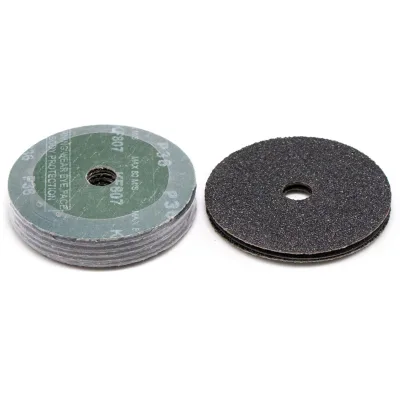
Source Polishing Silicon Carbide Grinding Disc for steel, machine tools, and surface grinding
Explore 30 listings for the Polishing Silicon Carbide Grinding Disc, comparing models like DSSD406 and T27/T29. Buyers can evaluate grain sizes, diameters, and resin adhesive strengths across various industrial applications.
Key considerations
Products List



Diamond Grinding Disc for Carbide Inserts
$1000.00 - $3799.00
MOQ: 1 Pieces
Dongguan KIZI Precision Lapping Mechanical Manufacture Co., Ltd.

Diamond Grinding Disc for Carbide Blades
$1600.00 - $3000.00
MOQ: 1 Pieces
Dongguan KIZI Precision Lapping Mechanical Manufacture Co., Ltd.

Diamond Grinding Disc for Carbide Cutter and Inserts
$399.00 - $2199.00
MOQ: 1 Pieces
Dongguan KIZI Precision Lapping Mechanical Manufacture Co., Ltd.

Durable and High Precision Diamond Grinding Disc for Carbide Inserts
$10000.00 - $20000.00
MOQ: 1 Pieces
Dongguan KIZI Precision Lapping Mechanical Manufacture Co., Ltd.
Comprehensive Sourcing Guide
Strategic Sourcing Guide for Polishing Silicon Carbide Grinding Discs
Understanding Product Specifications and Technical Attributes
When sourcing polishing silicon carbide grinding discs, buyers must first navigate a complex landscape of technical specifications that define the tool's performance and compatibility. The core material for these discs is explicitly identified as Silicon Carbide, a superabrasive known for its hardness and sharpness, making it ideal for aggressive stock removal and fine polishing on hard materials. However, the market data indicates a divergence in abrasive types, with some listings also referencing Natural Abrasives, necessitating a clear distinction between synthetic superabrasive and natural grain products during the inquiry phase.
The physical dimensions and model numbers vary significantly across suppliers, reflecting the diverse needs of industrial applications. Observed specifications include a wide range of diameters, such as 115mm, 125mm, 150mm, 180mm, and larger industrial sizes like 406mm and 432mm. Specific model codes like DSSD406, AXFDS001, and T27/T29 are frequently cited, often correlating with specific backing structures or usage styles. For instance, the T27 and T29 models are standard designations for flap discs, which are critical for surface grinding and blending operations. The grain size is typically categorized as Medium, though buyers should verify if finer or coarser grits are available for specific finishing requirements.
The structural integrity of the disc is equally critical. Many products feature a reinforced fiberglass backing, which provides the necessary durability to withstand high rotational speeds without shattering. The adhesive strength is described as "Hard," utilizing a resin adhesive to bond the abrasive grains to the substrate. This combination ensures that the disc maintains its shape and cutting efficiency under pressure. Furthermore, the substrate treatment often includes water resistance, a vital feature for applications where cooling fluids or humid environments are present. The working style is predominantly Surface Grinding, aligning with the application of machine tools for steel polishing and grinding tasks.
Compliance, Certification, and Quality Standards
In the industrial procurement of abrasive tools, compliance with international standards and quality certifications is non-negotiable. The supplied data highlights ISO 9001 as a recurring certification, indicating that suppliers adhere to specific quality management system requirements. Additionally, SGS certification is mentioned, suggesting that third-party verification of product quality and safety is available for certain batches. Buyers must treat these certifications as evidence of a supplier's commitment to process control rather than a guarantee of specific product performance for every unit.
The standards governing the physical dimensions of these discs are equally important. The observed product standards list specific diameter configurations, including 10015mm, 10016mm, 11522mm, 12522mm, 15022mm, and 18022mm. Larger industrial wheels are also standardized at 4", 4.5", 5", 6", 7", 9", and 10". When evaluating a potential supplier, procurement teams should verify that the product documentation explicitly matches these dimensional standards. Discrepancies in diameter or thickness can lead to compatibility issues with existing machinery, potentially causing safety hazards or operational inefficiencies.
Quality is consistently described as "High Quality" in the product listings, but this is a subjective attribute that requires objective verification. Buyers should request test results or quality assurance reports that validate the abrasive concentration, bond strength, and balance of the discs. The presence of a "Unitized Wheel" specification suggests that some products are designed for specific high-precision applications, which may require different quality benchmarks than standard surface grinding wheels. It is essential to confirm that the supplier can provide documentation proving that their manufacturing processes consistently meet the claimed quality levels.
Cost Drivers and Pricing Dynamics
The pricing for polishing silicon carbide grinding discs is influenced by a variety of factors, including material composition, manufacturing complexity, and order volume. The observed price range in the market spans from $0.01 to $20,000, a vast spectrum that reflects the difference between single-unit retail purchases and bulk industrial procurement. This wide range underscores the importance of defining the exact quantity and specifications before requesting a quote. The Minimum Order Quantity (MOQ) also varies significantly, ranging from 1 to 10,000 units, allowing flexibility for both small-scale projects and large-scale industrial contracts.
Several specific attributes drive the cost of these discs. The use of superabrasives like Silicon Carbide generally commands a higher price point compared to natural abrasives due to the cost of raw materials and the precision required in their production. The inclusion of specialized features, such as water-resistant substrate treatment or reinforced fiberglass backing, adds to the manufacturing cost. Additionally, the complexity of the product model, such as the T27/T29 flap discs with specific flap counts (72, 80, or 90 flaps), influences the final price. Customization options are available, and while these can tailor the product to specific needs, they often incur additional costs and may affect the lead time.
Packaging also plays a role in the overall cost structure. Standard packaging includes 10 pieces per box and 200 pieces per carton, or 5 pieces per box for smaller quantities. Customized packaging is an option, which can be beneficial for logistics and storage but may increase the unit price. Buyers should consider the total cost of ownership, including shipping and handling, rather than focusing solely on the unit price. The origin of the product, primarily from China with specific ports like Qingdao, Tianjin, Ningbo, and Guangzhou, also impacts logistics costs and delivery timelines.
Typical Applications and Operational Context
Polishing silicon carbide grinding discs are versatile tools designed for a wide array of industrial applications, with a primary focus on steel polishing and grinding. The "Surface Grinding" working style indicates that these discs are optimized for removing material from flat or slightly curved surfaces, making them ideal for machine tool operations. The specific application of "Machine Tool" suggests that these discs are used in automated or semi-automated manufacturing environments where consistency and precision are paramount.
The versatility of these discs is further demonstrated by the variety of shapes and sizes available. Cylindrical shapes are noted, which are suitable for specific grinding tasks that require a different contact area than flat discs. The availability of different diameters, from small 2-inch discs to large 9-inch and 10-inch wheels, allows for adaptation to various machine sizes and workpiece dimensions. The "With Connector" attribute implies that these discs are designed to be easily mounted onto standard grinding spindles, facilitating quick changeovers and reducing downtime.
In addition to steel, the abrasive properties of silicon carbide make these discs suitable for other hard materials, though the specific applications should be verified with the supplier. The "Conversion Processing" technique mentioned in the data suggests that some products may be designed for specific material transformations, such as blending or finishing. The "High Quality" designation implies that these discs are intended for professional use where surface finish and dimensional accuracy are critical. Buyers should match the specific disc specifications to their operational requirements to ensure optimal performance and safety.
Supplier Evaluation and Geographic Considerations
When evaluating suppliers for polishing silicon carbide grinding discs, geographic origin and logistical capabilities are key factors. The majority of the observed products originate from China, with specific mentions of Zhengzhou as a production hub. This concentration of manufacturing in China offers access to a robust supply chain and competitive pricing. However, buyers must also consider the logistical implications of sourcing from this region. The available ports for shipment include Qingdao, Tianjin, Ningbo, and Guangzhou, each offering different advantages in terms of shipping routes and transit times to various global destinations.
Supplier reliability is often indicated by their production capabilities and lead times. The data notes a production time of 2-3 days for stock items, which is a significant advantage for buyers requiring urgent replenishment. For customized orders, lead times may vary, and buyers should clarify these timelines during the negotiation phase. The acceptance of OEM (Original Equipment Manufacturer) services indicates that suppliers are willing to produce branded or custom-specified products, which can be beneficial for companies looking to private label their abrasive tools.
Quality control is another critical aspect of supplier evaluation. The presence of ISO 9001 and SGS certifications suggests that suppliers have established quality management systems in place. However, buyers should not rely solely on these certifications. It is advisable to conduct a thorough audit of the supplier's manufacturing facilities, review their quality control procedures, and request samples for testing. The ability to provide detailed product specifications, including grain size, backing material, and adhesive strength, is a strong indicator of a supplier's professionalism and transparency.
Quality Control and Long-Term Procurement Strategies
Implementing a robust quality control strategy is essential for ensuring the consistent performance of polishing silicon carbide grinding discs. Buyers should establish clear acceptance criteria based on the observed specifications, such as diameter tolerances, grain size consistency, and adhesive strength. Regular sampling and testing of incoming goods can help identify any deviations from the agreed-upon standards before they impact production. The "Water Resistance" feature of the substrate should be verified through specific testing protocols to ensure it meets the requirements of the intended application environment.
Long-term procurement considerations involve building a sustainable relationship with suppliers who can consistently deliver high-quality products. The availability of customization options, such as specific diameters, flap counts, and packaging, allows buyers to tailor their supply chain to evolving needs. However, customization should be balanced against the potential for increased lead times and costs. Buyers should also consider the environmental and safety implications of their procurement choices, ensuring that the suppliers adhere to relevant safety standards and environmental regulations.
The wide range of observed MOQs (1 to 10,000 units) offers flexibility for buyers to manage inventory levels effectively. For smaller operations, the ability to order as few as one unit can reduce the risk of overstocking. For larger enterprises, the option to order in bulk can result in significant cost savings. Buyers should develop a procurement strategy that aligns with their production schedules and inventory management capabilities, leveraging the flexibility of the market to optimize their supply chain efficiency.
Comparative Analysis of Product Variants
To assist buyers in making informed decisions, the following table summarizes the key variations observed in the market for polishing silicon carbide grinding discs. This comparison highlights the differences in specifications, packaging, and applications to facilitate a more targeted sourcing strategy.
| Feature Category | Variant A: Standard Flap Discs | Variant B: Unitized Wheels | Variant C: Large Industrial Discs |
|---|---|---|---|
| Primary Model | T27 / T29 | AXFDS001 / Unitized Wheel | DSSD406 / 406mm+ |
| Diameter Range | 4" to 10" | Various | 406mm, 432mm |
| Material | Silicon Carbide | Silicon Carbide | Silicon Carbide |
| Backing | Reinforced Fiberglass | Reinforced Fiberglass | Reinforced Fiberglass |
| Flap Count | 72, 80, 90 flaps | N/A | N/A |
| Packaging | 10 PCS/Box, 200 PCS/Carton | 5 PCS/Box | Carton |
| Application | Surface Grinding, Steel Polishing | Machine Tool, Precision | Heavy Duty Surface Grinding |
| Standard Sizes | 4", 4.5", 5", 6", 7" | 10015mm, 10016mm | 115mm, 125mm, 150mm, 180mm |
| Certification | ISO 9001, SGS | ISO 9001, SGS | ISO 9001, SGS |
This table illustrates that while the core material and backing remain consistent, the specific model and size variations cater to different operational needs. Buyers should carefully match these variants to their specific machinery and application requirements to ensure optimal performance and safety. By understanding these distinctions, procurement teams can make more precise and effective purchasing decisions.
FAQs
What is the primary abrasive material used for these discs?
The primary abrasive material is Silicon Carbide, which is classified as a superabrasive for aggressive stock removal. Some listings also mention natural abrasives, so buyers must verify the specific grain type before ordering to ensure compatibility with their steel polishing tasks.
Which diameter standards are available for these grinding discs?
Available diameter standards include 115mm, 125mm, 150mm, 180mm, 406mm, and 432mm, with imperial sizes ranging from 4 inches to 10 inches. Specific model codes like DSSD406 and T27 correspond to these dimensions, ensuring compatibility with various machine tools.
Can buyers request customization for these grinding discs?
Yes, customization is available for specifications such as diameter, flap count, and packaging. While OEM services are accepted, customized orders may affect lead times compared to stock items which typically ship within 2 to 3 days from Chinese factories.
How is the substrate treated to ensure durability during use?
The substrate treatment includes water resistance to protect against cooling fluids and humid environments. The discs also feature a reinforced fiberglass backing and hard resin adhesive to maintain structural integrity and prevent shattering under high rotational speeds.
What certifications do the suppliers typically hold for quality assurance?
Suppliers typically hold ISO 9001 certification for quality management systems and may provide SGS certificates for third-party verification. These certifications indicate adherence to process controls, though buyers should request specific test results for individual batches to confirm performance.
Which ports are used for shipping these products from China?
Products are shipped from major Chinese ports including Qingdao, Tianjin, Ningbo, and Guangzhou. The specific port depends on the supplier's location, with Zhengzhou noted as a production hub, influencing logistics costs and transit times for international buyers.
What is the typical packaging configuration for bulk orders?
Standard packaging consists of 10 pieces per box and 200 pieces per carton, though some items come in 5-piece boxes. Customized packaging options are available to optimize storage and logistics, but they may incur additional costs compared to standard configurations.