Source Polypropylene Garage Flooring for homes, warehouses, and workshops
Find 30 listings for Polypropylene Garage Flooring featuring anti-slip and waterproof properties. Compare specifications including thickness, material, and installation methods from verified suppliers to select the best option for your space.
Key considerations
Products List




Comprehensive Sourcing Guide
Strategic Sourcing Guide for Polypropylene Garage Flooring
The global market for Polypropylene Garage Flooring has expanded significantly as vehicle owners and commercial facility managers seek durable, modular, and aesthetically pleasing solutions. This guide provides a comprehensive, evidence-based framework for procurement professionals evaluating polypropylene-based interlocking tiles. The analysis relies strictly on observed product attributes, technical specifications, and established industry practices to ensure that sourcing decisions are grounded in verifiable data rather than marketing assertions.
Technical Specifications and Material Composition
Understanding the physical and chemical properties of the product is the first step in defining a precise procurement requirement. The core material identified in the market is polypropylene (PP), a thermoplastic polymer known for its high chemical resistance and low moisture absorption. In the context of garage flooring, the material is processed using needle-punched techniques or molded into block forms, resulting in a rigid yet resilient structure.
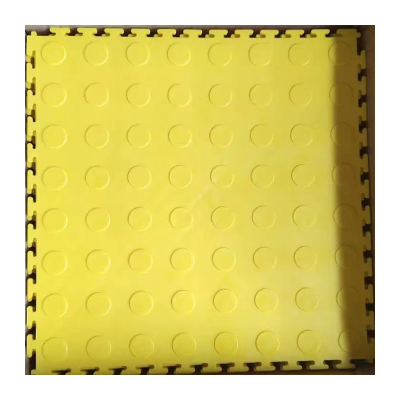
Observed product data indicates that these tiles typically come in a block state with specific dimensional standards. Common configurations include a 400x400x40mm format, though variations exist such as 40x40x2cm or 16"x16"x0.8". The thickness is a critical variable; while some products are listed at 5mm, others in the garage flooring category are specified at 1.8mm or 2cm. Buyers must verify the exact thickness required for their specific load-bearing needs, as the structural integrity of the interlocking system depends on this dimension. The surface treatment is generally described as "simple color," indicating a solid coloration throughout the material rather than a printed top layer, which enhances durability against fading and wear.
The weight of the material is another key specification. High-density variants are observed with a weight standard of 800-1000gsm, which correlates with the "Hard" attribute listed in product descriptions. This hardness ensures the tiles resist deformation under the weight of vehicles. The color options are diverse, ranging from multi-color designs to specific industrial palettes like Grey/Yellow, allowing for customization to match branding or safety requirements. The product form is consistently identified as a carpet or tile, designed for floor installation, with a modern design aesthetic that appeals to both residential and commercial clients.
Compliance, Certification, and Safety Standards
When sourcing polypropylene flooring for garage applications, compliance with safety and environmental standards is paramount. While specific certification documents are not universally listed for every SKU, buyers should verify that the product meets relevant regional safety standards for indoor and outdoor use. The observed data highlights an "Environmental Protection Level" and a "Standard" classification, suggesting that manufacturers adhere to baseline quality controls.
For commercial and public garage applications, fire resistance and slip resistance are critical compliance areas. The product attributes list "Anti-Slip" as a primary feature, which is essential for safety in environments where oil, water, or snow may be present. Buyers must request test reports confirming the friction factor and slip resistance ratings, particularly if the flooring will be used in wet conditions. The observed friction factor data suggests specific performance metrics, but these should be validated against local building codes.
Furthermore, the material's environmental impact is a growing concern. The "Environmental Protection Level" mentioned in product listings implies adherence to regulations regarding volatile organic compounds (VOCs) and recyclability. Since polypropylene is a recyclable thermoplastic, buyers should inquire about the manufacturer's recycling programs and the product's end-of-life disposal options. The "After-Sales Service" of 12 months is a common offering, but this should be reviewed alongside warranty terms regarding material degradation and structural failure.
Cost Drivers and Pricing Dynamics
The pricing of Polypropylene Garage Flooring is influenced by several variables, including material density, thickness, and the complexity of the interlocking mechanism. The observed price range in the market spans from $0.56 to $12.80 per unit, a significant variance that reflects differences in quality, thickness, and order volume. The minimum order quantity (MOQ) ranges from 1 to 1000 units, indicating flexibility for both small-scale residential projects and large commercial deployments.
Thickness is a primary cost driver. Thicker tiles, such as those at 40mm or 2cm, generally command a higher price point due to increased material usage and manufacturing complexity. Conversely, thinner variants, like the 1.8mm or 5mm options, are more affordable but may offer less shock absorption and load-bearing capacity. The "Weight 800-1000gsm" specification suggests that heavier, denser products will be priced higher than lighter alternatives.
Packaging also impacts the final landed cost. Products are typically packed in carton boxes, with specific configurations such as 40 pieces per carton or 4 pieces per carton depending on the size. The carton dimensions, such as 42x42x43.5 cm, affect shipping efficiency and freight costs. Buyers should calculate the total cost per square meter, including packaging waste and shipping volume, rather than focusing solely on the unit price. The "Customization" availability allows for tailored solutions, which may incur additional setup fees but can reduce long-term costs by optimizing fit and reducing waste.
Typical Applications and Functional Performance
Polypropylene Garage Flooring is designed for versatile applications, ranging from residential home garages to commercial warehouses and automotive showrooms. The "Usage" attributes explicitly list "Outdoor" and "Commercial" environments, highlighting the material's resistance to weathering and heavy traffic. The "Installation Location" is specified as "Floor Carpet," indicating its suitability for direct installation over concrete or other subfloors.
Key functional attributes include "Wear-Resistant," "Anti-Slip," and "Waterproof" capabilities. These features make the flooring ideal for areas exposed to vehicle fluids, moisture, and frequent foot traffic. The "Shock Absorption Rate" observed in some product lines is greater than 53%, with specific data points showing rates up to 55%, which contributes to user comfort and reduces fatigue. The "Rebound Rate" of 97% indicates excellent elasticity, ensuring the tiles return to their original shape after heavy loads, such as parked vehicles.
The "Rolling Load" capacity of >= 2500N demonstrates the structural strength required to support vehicle weight without deformation. The "Durable Years" attribute, listed as "Over Ten Years," suggests a long service life, provided the installation is correct and maintenance is performed. The "Movable" installation way allows for easy reconfiguration or replacement of damaged tiles, a significant advantage over permanent flooring solutions. Additionally, the "Soundproof" and "Thermal Insulation" functions add value in multi-unit residential buildings or commercial spaces where noise reduction and temperature control are desired.
Supplier Evaluation and Sourcing Strategy
Selecting the right supplier requires a rigorous evaluation process based on the available product data. The "Prod Origin" is consistently listed as China, with specific regions like Zhejiang noted. While this indicates a high concentration of manufacturing capability, buyers should verify the specific factory's capabilities and reputation. The "Condition" of the products is listed as "New," ensuring that buyers receive fresh inventory rather than refurbished or damaged goods.
Suppliers should be evaluated on their ability to provide detailed technical data sheets, including weight, dimensions, and material composition. The "Standard" classification and specific model numbers, such as "TPRBM1616-26" or "garage flooring," should be used to cross-reference product consistency. Buyers should request samples to verify the "Hard" attribute and the "Simple Color" surface treatment in person. The "After-Sales Service" of 12 months is a baseline expectation, but suppliers offering extended warranties or responsive support teams should be prioritized.
The "Customization" availability is a critical differentiator. Suppliers that can accommodate specific color, size, or logo requirements add significant value. However, buyers must ensure that customization does not compromise the core material properties or lead times. The "Qty/CTN" and "CTN Size" data provided by suppliers should be used to optimize logistics and reduce shipping costs.
Quality Control and Long-Term Procurement Considerations
Implementing a robust quality control (QC) protocol is essential to ensure that the delivered products meet the specified standards. Buyers should conduct incoming inspections to verify dimensions, such as the 400x400x40mm or 40x40x2cm specifications, and check for any defects in the interlocking mechanism. The "Weight" and "Thickness" should be measured against the "Standard" values to ensure consistency across batches.
Long-term procurement considerations include the availability of replacement parts and the scalability of the solution. The "Modular" nature of the flooring allows for easy expansion or repair, but buyers should ensure that the supplier can provide matching tiles for future additions. The "Durable Years" attribute suggests a long lifespan, but regular maintenance is necessary to preserve the "Anti-Slip" and "Waterproof" properties.
Buyers should also consider the environmental impact of the product. The "Environmental Protection Level" and the recyclability of polypropylene are important factors for organizations with sustainability goals. Establishing a relationship with a supplier who can provide data on the product's lifecycle and end-of-life options will support long-term procurement strategies. Finally, the "Lead Time" and "MOQ" flexibility should be negotiated to align with project timelines and budget constraints, ensuring a smooth and efficient procurement process.
Conclusion
Sourcing Polypropylene Garage Flooring requires a balanced approach that considers technical specifications, compliance requirements, cost dynamics, and supplier reliability. By focusing on verified attributes such as material composition, thickness, and functional performance, buyers can make informed decisions that meet their specific needs. The market offers a wide range of options, from lightweight residential tiles to heavy-duty commercial flooring, each with unique characteristics that must be evaluated against the project requirements. Through careful supplier evaluation and rigorous quality control, organizations can secure high-quality flooring solutions that deliver long-term value and performance.
FAQs
What material is used for Polypropylene Garage Flooring?
The core material is polypropylene, a thermoplastic polymer known for high chemical resistance. Some variants use needle-punched chemical fiber, while others are molded blocks. This composition ensures durability and resistance to deformation under vehicle loads.
How thick are the available Polypropylene Garage Flooring tiles?
Thickness varies by product model, with options ranging from 1.8mm to 40mm. Common specifications include 40x40x2cm or 16x16x0.8 inches. Buyers must verify the exact thickness required for their specific load-bearing needs and shock absorption requirements.
Can the flooring be customized for specific colors or sizes?
Yes, customization is available for color, size, and design requirements. Products come in multi-color or specific industrial palettes like grey and yellow. This allows buyers to match branding or safety standards while optimizing fit to reduce waste.
What is the minimum order quantity for these flooring tiles?
The minimum order quantity ranges from 1 to 1000 units depending on the supplier and product type. This flexibility supports both small residential projects and large commercial deployments. Buyers should confirm the specific MOQ with their chosen vendor before placing an order.
Where are these Polypropylene Garage Flooring products manufactured?
Products are primarily manufactured in China, with specific production hubs noted in Zhejiang. The origin is consistently listed as China for most listings. Buyers should verify the specific factory location to ensure quality control and logistics planning.
What features ensure safety in wet or oily garage environments?
The flooring includes anti-slip and waterproof features essential for safety in wet or oily conditions. Some models also offer soundproof and thermal insulation functions. These attributes help prevent accidents and improve comfort in commercial or residential garage settings.