Source Polyurethane Rigid Spray Foam for Insulation, Construction, and Packaging
Find and compare 30 Polyurethane Rigid Spray Foam products from China. Evaluate specifications such as drying methods, certifications, and packaging options to identify suitable suppliers for industrial and commercial applications.
Key considerations
Products List
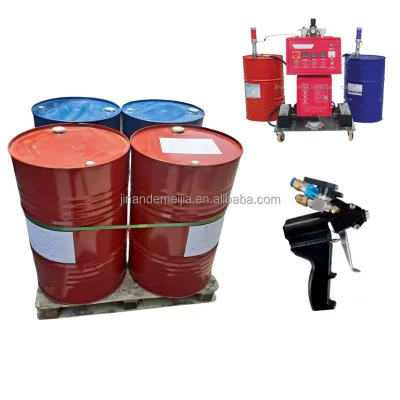


Popular Polyurea and Polyurethane Spray with Good Solidification Effect
$2800.00 - $3000.00
MOQ: 1 Pieces


Durable Spray Polyurethane Rigid Foam for Chemical Plastic Insulation in Buildings
$1900.00 - $3000.00
MOQ: 200 kg


Comprehensive Sourcing Guide
Polyurethane Rigid Spray Foam Sourcing Guide
The procurement of Polyurethane Rigid Spray Foam requires distinguishing between the chemical coating systems and the specialized application machinery that delivers them. Based on observed market listings, the core material is consistently identified as polyurethane, often classified under double-component adhesives or conversion-type formation mechanisms. Buyers must recognize that the product is frequently supplied as a liquid in 200-liter drums, designed for specific substrates such as ceramic, wood, or plastic, and applied via high-pressure airless or low-pressure spray equipment. This distinction is critical because the sourcing strategy for the raw chemical mixture differs significantly from the strategy for the spraying hardware, which includes components like 30-foot hoses and single-phase power sources.
Successful sourcing hinges on understanding the operational context of the foam, which ranges from manual application methods to fully computerized, automatic systems. The observed product data indicates a diverse range of applications, including shoe manufacturing, leather belt production, and agricultural spraying, alongside industrial uses like wood and porcelain equipment coating. Procurement teams must verify whether the supplier provides the complete system, including the mixing principle and pressure control capabilities, or if they are supplying only the raw material for in-house application. The presence of specific models like HIGHTOP or CNMC-A25 suggests that buyers should align their technical requirements with specific machine configurations rather than generic product categories.
Product Scope and Observed Listing Signals
The market for Polyurethane Rigid Spray Foam presents a wide spectrum of product attributes, ranging from basic liquid coatings to complex, automated machinery systems. Listings frequently highlight the "Air Drying" or general "Drying" methods, indicating that the curing process is a key performance variable for the end-user. The physical appearance is consistently noted as liquid, which necessitates careful handling and storage protocols before application. Buyers should scrutinize the "Formation Mechanism" listed as "Conversion Type," as this implies a chemical reaction between components A and B that must be precisely controlled during the mixing phase to ensure the desired rigid foam structure.
Commercial signals in the listings reveal significant variability in packaging and output capacity, which directly impacts logistics and production planning. While some units are packed in standard 200L drums, others utilize wooden cases or palletized packaging, suggesting different handling requirements for bulk shipments. The observed output capacity of 10 kg/min and hose lengths of 30 feet provide a baseline for evaluating the throughput of spray equipment, but these figures are not universal across all suppliers. Procurement teams must verify if the listed specifications apply to the specific model being purchased, as the data shows a mix of high-pressure airless systems and high-performance low-pressure equipment, each suited for different coating densities and surface areas.
Technical Specifications to Verify
Technical verification must begin with the classification of the product, as the data distinguishes between "Finish Coat" applications and general adhesive uses. Buyers should confirm the "Main Raw Material" is indeed polyurethane and check the "Classification" to ensure it matches the intended use, such as double-component adhesives for structural bonding or coatings for surface protection. The "Method" of application is typically listed as "Spray," but the specific type—whether manual, automatic, or computerized—must be validated against the buyer's production line capabilities. The "Principle" of operation, often cited as "High-Pressure Air Type," dictates the equipment's ability to atomize the mixture effectively, which is crucial for achieving a uniform rigid foam layer.
Power requirements and pressure control mechanisms are equally critical technical parameters that vary across the observed product range. The listings indicate both "Single Phase" and "Electric" power sources, requiring buyers to match the equipment to their facility's electrical infrastructure. Furthermore, the "Pressure Control" is described as "Adjustable," a feature that allows operators to fine-tune the spray for different substrate thicknesses and material viscosities. Buyers must also verify the "Standard" dimensions and weights, such as the 150kg standard weight or specific model dimensions like 8007001150mm, to ensure the equipment fits within their designated workspace and meets load-bearing requirements.
Compliance and Safety Documentation
Compliance verification is essential when sourcing polyurethane systems, as the industry is subject to rigorous environmental and safety regulations. The observed certifications include ISO, CE, RoHS, and REACH, which signal adherence to international safety and environmental standards. Buyers should request current certification documents to confirm that the polyurethane components and the spraying equipment meet the specific regulatory requirements of their target market. The presence of "Environmental Protection" as a listed advantage suggests that the formulations may be designed to minimize volatile organic compounds, but this claim must be substantiated by the provided test data and certification records.
Safety documentation must also cover the operational hazards associated with high-pressure spray equipment and chemical mixing. The "Condition" of the equipment is listed as "New," but buyers should verify the safety features integrated into the "High-Pressure Airless Spray Equipment" or "Polyurethane Foam Machine." Documentation should include detailed manuals on pressure limits, emergency shut-off procedures, and personal protective equipment (PPE) requirements for handling the liquid components. Additionally, the "After-sales Service" period of one year or 1 year indicates the supplier's commitment to maintaining safety standards over the equipment's lifecycle, which is vital for preventing accidents in a high-pressure industrial environment.
Cost Drivers and Commercial Terms
Cost drivers in the Polyurethane Rigid Spray Foam market are heavily influenced by the complexity of the equipment and the volume of the order. The observed price range spans from $0.65 to $4,500, reflecting the difference between raw material components and complete, automated machinery systems. Buyers must analyze whether the quoted price includes the spraying equipment, the hoses, and the mixing units, or if these are separate line items. The "MOQ" range of 1 to 15,840 units indicates that pricing structures vary significantly based on order volume, with bulk purchases likely benefiting from economies of scale in both the chemical components and the hardware.
Commercial terms regarding packaging and origin also play a significant role in the total cost of ownership. The "Place of Origin" is consistently listed as China, specifically Shandong, which may influence shipping costs and lead times depending on the buyer's location. Packaging options such as "Wooden Packaging," "Pallet," or "Packed in Wooden Cases" affect freight charges and the risk of damage during transit. Buyers should negotiate clear terms for the "After-sales Service," ensuring that the one-year warranty covers both the mechanical integrity of the spray equipment and the chemical performance of the polyurethane mixture.
Supplier Qualification and Quality Control
Supplier qualification requires a thorough review of their manufacturing capabilities and quality assurance processes. The data indicates that suppliers often hold multiple certifications, including ISO9001:GMP and QS, which are indicative of a structured quality management system. Buyers should verify the authenticity of these certifications and request evidence of recent audits to ensure the supplier maintains consistent production standards. The "Automation" level, ranging from manual to computerized, suggests that suppliers with advanced manufacturing capabilities may offer more precise control over the mixing ratios and application consistency of the polyurethane foam.
Quality control checks must extend beyond the final product to include the raw materials and the production process. The "Raw Material" is listed as "Mixing," implying that the supplier controls the blending of components A and B, which is critical for the foam's structural integrity. Buyers should inquire about the supplier's testing protocols for the "Appearance" and "Drying Method" to ensure the product meets the specified "Finish Coat" requirements. Additionally, the "Standard" specifications, such as the 1.141.141M dimensions or 150kg weight, should be used as benchmarks for incoming quality inspections to verify that the delivered goods match the agreed-upon technical parameters.
Long-Term Procurement Checks
Long-term procurement success depends on establishing a reliable supply chain that can adapt to changing production needs and regulatory landscapes. Buyers should prioritize suppliers who offer robust "After-sales Service" and technical support, as the complexity of polyurethane spray systems often requires ongoing maintenance and troubleshooting. The "1 Year" service period is a baseline, but buyers should negotiate extended support agreements that cover spare parts availability and software updates for computerized systems. This ensures that the equipment remains operational and compliant with evolving safety standards over its full lifecycle.
Continuous monitoring of product performance and supplier reliability is essential for maintaining high-quality output. Buyers should track the consistency of the "Drying Method" and "Formation Mechanism" across different batches to detect any deviations that could affect the final product quality. Regular audits of the supplier's "Certification" status and adherence to "Environmental Protection" claims will help mitigate risks associated with regulatory changes. By maintaining a proactive approach to supplier management, buyers can ensure a steady supply of high-performance Polyurethane Rigid Spray Foam that meets their specific application requirements.
FAQs
What is the main raw material used in this product?
The main raw material is polyurethane, which forms the core component of the rigid spray foam. This material ensures durability and effective insulation properties for various industrial applications including wood and porcelain spraying.
How is the product typically applied during manufacturing?
The product is applied using a spray method, often utilizing high-pressure airless or low-pressure spray equipment. This technique allows for precise coating on substrates like ceramic, wood, and plastic surfaces efficiently.
Which certifications does the product hold for safety?
The product holds multiple certifications including CE, ISO, RoHS, and REACH to ensure compliance with international safety standards. These certifications verify that the materials meet environmental protection and quality requirements for global trade.
Can the product be used for shoe and leather applications?
Yes, the product is suitable for applications in shoe manufacturing, leather belts, and apparel production. Its versatility allows it to function effectively as an adhesive or coating in diverse textile and material processing industries.
What is the standard packaging format for this item?
The standard packaging format includes 200L drums or wooden cases depending on the specific model and order size. This ensures safe transport and storage while maintaining the integrity of the liquid polyurethane components during shipping.
Where is the product manufactured and what is the origin?
The product originates from Shandong, China, where specialized factories produce these polyurethane solutions. This location supports a robust supply chain capable of meeting high-volume demands for industrial spraying equipment and materials.
What is the drying method used for the coating?
The coating utilizes an air drying method to cure the applied polyurethane layer effectively. This process ensures the formation of a stable finish coat without requiring additional heat sources or complex curing environments.