Find Portable Active PA Speaker with DSP for Home Theatre, Stage, and Karaoke
Source 30 verified Portable Active PA Speaker with DSP units tailored for home theatre, stage, and karaoke applications. Buyers can compare specifications including power output, frequency response, and driver configurations to select the ideal audio solution for commercial or personal use.
Key considerations
Products List


Wireless Professional Powered Column Array Speakers Active Speaker with DSP Effector
$167.00 - $182.00
MOQ: 60 Pieces


Wireless PA Speaker Active Speaker Box with Rechargeable Battery and Bass
$78.00 - $104.00
MOQ: 50 Pieces


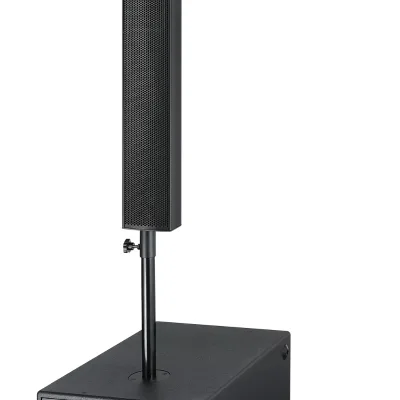


$500.00 - $900.00
MOQ: 2 Pieces


Comprehensive Sourcing Guide
Strategic Sourcing Guide for Portable Active PA Speakers with DSP
The procurement of portable active PA speakers with Digital Signal Processing (DSP) represents a critical decision for B2B buyers in the audio, event, and entertainment sectors. These systems integrate amplification, signal processing, and transducer arrays into a single enclosure, offering significant logistical advantages over traditional passive setups. The core value proposition lies in the ability to deliver high-fidelity sound with reduced setup complexity, making them ideal for dynamic environments ranging from commercial installations to mobile stage performances. This guide synthesizes observed market data and technical specifications to provide a disciplined framework for evaluating potential suppliers and products, ensuring that procurement decisions are grounded in verifiable facts rather than marketing assertions.
Technical Architecture and Signal Processing Capabilities
When sourcing active PA speakers, the integration of DSP is a primary differentiator. DSP allows for precise control over frequency response, crossover points, and limiters, which is essential for protecting drivers and ensuring consistent sound quality across varying environments. In the observed product landscape, specific models demonstrate the application of these technologies. For instance, the Pat-15DSP model explicitly incorporates DSP capabilities, indicating a focus on advanced signal management. The technical architecture of these units often includes distinct driver configurations to manage low and high frequencies effectively.
Buyers must scrutinize the driver quantity and type, as these directly impact the system's ability to reproduce sound accurately. Observed configurations include units with a 15-inch low-frequency driver paired with a 34mm high-frequency driver, a setup designed to balance bass depth with high-frequency clarity. The frequency response specifications provide a quantitative measure of this balance. For the Pat-15DSP, the frequency response is listed as 55Hz-18kHz at +3dB and extends to 45Hz-20kHz at +10dB. This range suggests a system capable of covering the fundamental frequencies required for speech and music, though buyers should verify if the lower limit meets the specific needs of their application, particularly for music genres requiring deep bass.
The amplification topology is another critical technical factor. The products in the current dataset are characterized as "Active," meaning the amplification is built into the cabinet. This eliminates the need for external power amplifiers, reducing cable clutter and potential points of failure. The power handling capabilities vary significantly across models. Some units, such as the Pat-15DSP, are rated for 500W on the bass channel and 200W on the treble channel. In contrast, other models like the Lps-60top are rated at 130W at 8 Ohms, while the Kq-1000 Top offers 180W. These discrepancies highlight the importance of matching power ratings to the intended acoustic environment. A 500W system is suitable for large venues or outdoor events, whereas a 130W unit may be better suited for smaller commercial spaces or portable applications.
Compliance, Certification, and Safety Standards
In the B2B procurement of electronic audio equipment, compliance with international safety and environmental standards is non-negotiable. These certifications serve as a proxy for manufacturing quality and regulatory adherence. The observed product data indicates that certain models carry CE and RoHS certifications. The CE mark signifies conformity with health, safety, and environmental protection standards for products sold within the European Economic Area. RoHS (Restriction of Hazardous Substances) compliance ensures that the manufacturing process minimizes the use of specific hazardous materials, such as lead and mercury, which is increasingly important for global supply chains and corporate sustainability goals.
Buyers must verify that the specific units they intend to purchase carry these certifications. While the presence of CE and RoHS is noted for certain models like the PAT-15, it is not a universal attribute for every product in the category. Procurement teams should request current certification documentation from the supplier before finalizing an order. This verification process protects the buyer from liability issues and ensures that the equipment meets the regulatory requirements of the destination market. Additionally, the origin of the product plays a role in compliance. The data indicates that these products originate from Guangdong, China, a major manufacturing hub. While this location is known for high-volume production, buyers should ensure that the specific factory maintains the quality control necessary to sustain certification standards consistently.
Cost Drivers and Pricing Dynamics
The pricing of portable active PA speakers is influenced by a complex interplay of factors, including driver size, power output, DSP integration, and build quality. The observed market data reveals a substantial price range, with listed prices spanning from $1 to $5,530 USD. This wide variance underscores the diversity of the product category, ranging from entry-level portable units to high-end professional systems. The lower end of the spectrum likely corresponds to simpler configurations with lower power ratings and fewer advanced features, while the upper end reflects systems with robust power handling, advanced DSP, and premium materials.
Minimum Order Quantity (MOQ) is another significant cost driver. The observed MOQ range spans from 1 to 500 units. This flexibility allows buyers to tailor their procurement strategy based on their immediate needs and budget constraints. A buyer requiring a single unit for a pilot project can access the market with an MOQ of 1, while a large-scale deployment might leverage an MOQ of 500 to negotiate better unit economics. However, buyers must be cautious of the "per-unit" cost implications. A lower MOQ often correlates with a higher per-unit price, whereas higher volume orders typically unlock tiered pricing structures.
Material composition also impacts cost. The speaker material is identified as metal in the observed data, which generally offers superior durability and heat dissipation compared to plastic enclosures. This construction choice contributes to the higher price points of professional-grade units. Furthermore, the inclusion of specialized connectors, such as XLR and 1/4" TRS, adds to the manufacturing complexity and cost. Buyers should evaluate whether these premium features are necessary for their specific application or if a more basic configuration would suffice, thereby optimizing the total cost of ownership.
Operational Applications and Usage Scenarios
The versatility of portable active PA speakers with DSP makes them suitable for a wide array of applications. The observed usage categories include Home Theatre Systems, Karaoke, Stage/DJ, Commercial, and Computer/Portable Player setups. This breadth of application requires buyers to carefully match the technical specifications to the intended use case. For instance, a system designed for a Home Theatre System may prioritize different frequency characteristics compared to one intended for Stage/DJ performances.
The Pat-15DSP model, with its high power output and broad frequency response, is well-suited for Stage/DJ applications where high sound pressure levels (SPL) are required. Its maximum sound level of 110dB/1m indicates a capability to project sound over long distances in noisy environments. Conversely, the Lps-60top, with a maximum SPL of 122dB and a frequency response starting at 120Hz, might be better optimized for specific commercial applications or smaller stage setups where the lower frequency extension is less critical.
The operation mode is another consideration. Some units support wire and remote control operation, enhancing user convenience in dynamic environments. The presence of USB disk support in certain models allows for direct playback of audio files without the need for an external mixer or computer, a feature that is particularly valuable for mobile DJs and portable event setups. Buyers should assess whether the specific connectivity options, such as Bluetooth or USB support, align with their workflow requirements. The ability to integrate with existing audio infrastructure is crucial for seamless deployment.
Supplier Evaluation and Quality Control Protocols
Evaluating suppliers in the active PA speaker market requires a rigorous approach to quality control and performance verification. The observed data provides specific technical metrics that can serve as benchmarks for supplier evaluation. Distortion levels, for example, are listed as Line-0.02% and Microphone-0.04% for certain models. These low distortion figures indicate a high level of signal fidelity, which is essential for professional audio applications. Buyers should request detailed test reports or third-party verification of these metrics to ensure consistency across production batches.
Weight and dimensions are critical logistical factors. The net weight of the Pat-15DSP is listed as 20.7kg, while the Lps-60top weighs 4.2kg. These differences significantly impact portability and installation requirements. Buyers must consider the physical constraints of their deployment sites, including load-bearing capacity and transportation logistics. The product size, such as the 713x431x320mm dimensions for the Pat-15DSP, also influences storage and stacking capabilities.
Packaging standards are another area of focus. The observed packaging includes Gift Box, Export Carton, and Pallet options. This variety suggests that suppliers are equipped to handle different shipping requirements, from individual retail units to bulk industrial shipments. Buyers should verify that the packaging is robust enough to protect the equipment during transit, especially given the sensitive nature of speaker drivers and electronic components.
Long-Term Procurement and Lifecycle Management
Sourcing active PA speakers is not merely a transactional activity but a strategic investment in long-term operational capability. The durability of the equipment, indicated by the metal speaker material and robust construction, suggests a longer lifecycle compared to plastic alternatives. However, the maintenance of these systems requires attention to the specific components, such as the drivers and amplification modules. The impedance ratings, such as 8 Ohms for both treble and bass channels in the Pat-15DSP, are critical for ensuring compatibility with other audio equipment and preventing damage due to mismatched loads.
Buyers should also consider the availability of spare parts and technical support. The complexity of DSP and active amplification systems means that repairs may require specialized knowledge. Establishing a relationship with a supplier that offers comprehensive after-sales support is essential for minimizing downtime. Additionally, the standardization of connectors and interfaces, such as the XLR and 1/4" TRS inputs, ensures that the equipment can be integrated into future audio setups without significant modification.
In conclusion, the procurement of portable active PA speakers with DSP demands a meticulous approach that balances technical specifications, compliance requirements, and cost considerations. By leveraging the observed data and adhering to rigorous evaluation protocols, buyers can make informed decisions that align with their operational needs and long-term strategic goals. The diversity of the market, ranging from compact 4.2kg units to heavy-duty 20.7kg systems, offers solutions for a wide spectrum of applications, provided that the selection process is grounded in verified facts and a clear understanding of the intended use case.
FAQs
Can these speakers be customized for specific needs?
Yes, customization is available for these portable active PA speakers. Buyers should verify specific customization options with the supplier before ordering to ensure the final product meets unique requirements.
What is the maximum sound level these units produce?
The maximum sound level reaches 110dB at one meter for the Pat-15DSP model. Other models like the Lps-60top can achieve up to 122dB, depending on the specific configuration and driver setup.
Which certifications do these active speakers hold?
Some models carry CE and RoHS certifications to ensure safety and environmental compliance. Buyers must request current documentation from the supplier to confirm these standards apply to the specific units being purchased.
How much does the Pat-15DSP speaker weigh?
The Pat-15DSP unit weighs 20.7 kilograms per piece. This weight impacts portability and requires consideration for transportation logistics and installation at the intended venue or commercial location.
What is the minimum order quantity for these speakers?
The minimum order quantity ranges from one unit up to 500 units depending on the supplier. Buyers can access single units for pilot projects or negotiate better pricing for larger bulk orders.
Where are these speakers manufactured?
These products originate from Guangdong, China, a major manufacturing hub for audio equipment. Buyers should verify that the specific factory maintains consistent quality control to sustain required certification standards.
Can these speakers support USB disk playback?
Yes, certain models include USB disk support for direct audio file playback. This feature allows mobile DJs and portable event setups to operate without needing an external mixer or computer connection.