Source Portable Air Cooled Diesel Extender for EVs, Emergency Crew, Standby Unit
Find 30 Portable Air Cooled Diesel Extender units designed for electric vehicles, emergency rescue, and off-grid power systems. Buyers can compare specifications like output power, fuel consumption, and noise levels across various models including QC12000xi and QC18000DDi.
Key considerations
Products List


Advanced Diesel Digital Range Extender with Automatic Load Regulation
$4500.00 - $4800.00
MOQ: 1 Pieces


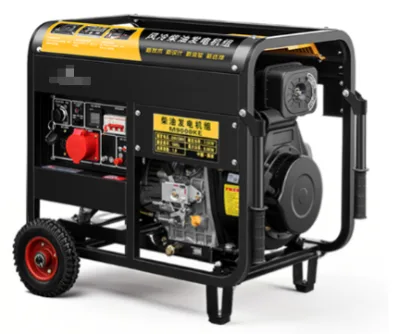


Oil Cooler Designed for Expansion Machine, Expansion Engine, Expander
$600.00 - $2500.00
MOQ: 1 Pieces


Comprehensive Sourcing Guide
Strategic Sourcing Guide for Portable Air Cooled Diesel Extenders
The global demand for reliable, mobile power solutions has elevated the role of portable air-cooled diesel extenders in diverse industrial and emergency sectors. These units serve as critical assets for electric vehicle range extension and off-grid power systems, providing a bridge between intermittent renewable sources and consistent energy needs. For procurement professionals, navigating the market requires a disciplined approach to verifying technical attributes, understanding cost structures, and ensuring supplier reliability. This guide synthesizes observed market data and technical specifications to provide a robust framework for sourcing these specialized generators.
Technical Architecture and Operational Specifications
The core of a portable air-cooled diesel extender lies in its engine configuration and power output capabilities. Based on observed product data, these units frequently utilize four-stroke diesel engines, which offer a balance of fuel efficiency and durability suitable for continuous operation. The cooling method is predominantly air-cooled, a design choice that eliminates the need for complex liquid cooling systems, thereby reducing weight and maintenance requirements. This makes them ideal for portable applications where mobility is a primary constraint.
Engine models such as the QC12000xi and QC570I represent common configurations found in this category. The QC12000xi, for instance, is paired with an intelligent control panel and operates at a rated frequency of 50Hz. The output type is typically AC single phase, catering to standard electrical loads found in construction sites, emergency crews, and mobile operations. The working speed for these engines generally ranges between 2200 and 3600 RPM, allowing for variable load management.
A critical specification to verify is the noise level. Observed data indicates a noise output of approximately 82 decibels at a 7-meter distance. While this is a standard figure for air-cooled units, buyers must confirm if the specific model meets local environmental noise regulations, as some applications may require low-noise automation types or sound-attenuated enclosures. The physical dimensions also vary significantly; while some models measure 802632720mm, others are more compact at 450500495mm. This variance directly impacts the "portable" classification, requiring buyers to match the unit's footprint to their logistical constraints.
Power Output and Fuel Management Dynamics
Understanding the power delivery and fuel efficiency is essential for calculating the total cost of ownership. The maximum output power for these extenders can range widely, with specific models like the QC18000DDi offering up to 9 kW of capacity. This power level is sufficient for running essential emergency equipment, charging electric vehicles, or powering small off-grid facilities. The control mode is often fully automatic segmentation start or electric regulation with load, ensuring that the generator responds dynamically to power demands without manual intervention.
Fuel management is another pivotal area. The lube oil capacity varies, with observed values of 3 liters for larger units and 1.7 liters for smaller variants. The fuel tank capacity is equally variable, with some units holding 11 liters, which translates to an average fuel consumption of approximately 1.8 kg/h. Buyers must calculate the runtime based on their specific load requirements, as the "portable" nature of the unit implies limited fuel storage compared to stationary generators. The starting battery capacity, often 12V/36Ah, is a critical component for the electric starting mechanism, and its condition must be verified during the procurement process to ensure reliable cold starts.
| Specification Category | Observed Range / Value | Verification Requirement |
|---|---|---|
| Engine Type | Four Stroke | Confirm stroke count and fuel type |
| Cooling Method | Air Cooled | Verify absence of liquid cooling components |
| Output Power | Up to 9 kW (varies by model) | Match load requirements to kW rating |
| Noise Level | ~82 dB (at 7m) | Check against local noise ordinances |
| Lube Oil Capacity | 1.7L - 3L | Confirm oil change intervals and volume |
| Fuel Consumption | ~1.8 kg/h | Calculate operational runtime costs |
| Dimensions | 450x500x495mm to 802x632x720mm | Verify transport and storage fit |
Compliance, Standards, and Material Integrity
When sourcing industrial equipment, adherence to standards and material quality is non-negotiable. The supplied data references specific product standards such as QC18000CDi and QC18000DDi, which serve as internal or industry-specific benchmarks for these units. Additionally, material standards like "Aluminum, iron" indicate the construction materials used for the engine block or casing. Buyers should verify that the aluminum and iron components meet international corrosion and structural integrity standards, particularly for units intended for "Car Type" or "Land Use" applications.
The insulation class is another critical compliance factor. Observed units often feature Class F insulation, which denotes the thermal resistance of the winding materials. This rating ensures the generator can withstand higher operating temperatures without degradation, a vital feature for air-cooled engines that rely on ambient air for heat dissipation. Furthermore, the voltage regulation is typically handled by an Automatic Voltage Regulator (AVR), ensuring stable output for sensitive electronic equipment. Procurement teams must request test reports confirming that the AVR maintains voltage stability within acceptable tolerances under varying load conditions.
Application Scenarios and Operational Context
The versatility of portable air-cooled diesel extenders allows them to serve multiple distinct sectors. The primary application areas identified include electric vehicle range extension and off-grid power systems. In the context of electric vehicles, these units act as a backup power source, extending the operational range of electric fleets in remote locations. For off-grid systems, they provide a reliable baseline power supply where grid connection is unavailable or unreliable.
The "Conditions of Use" data highlights two distinct categories: "Land Use" and "Car Type." Land use applications typically involve stationary or semi-stationary setups for construction, emergency crews, or standby units. In contrast, "Car Type" units are designed for integration into mobile platforms, such as emergency rescue vehicles. The installation method further distinguishes these applications; while some units are designed for fixed installation, others are explicitly portable. Buyers must ensure the selected unit matches the intended deployment method, as a fixed-installation unit may lack the necessary mounting points or vibration dampening for mobile use.
Supplier Evaluation and Geographic Considerations
Geographic origin plays a significant role in the supply chain dynamics of these generators. A substantial portion of the market data points to Jiangsu, China, as a primary manufacturing hub. This region is known for its dense network of engine and generator manufacturers. However, buyers should not rely solely on geographic reputation. Instead, they must evaluate suppliers based on their ability to provide consistent customization, as "Customization: Available" is a key attribute in this market.
When evaluating a supplier, procurement teams should verify their production capacity and quality management systems. The presence of an intelligent control panel suggests a level of technological sophistication that requires skilled engineering and assembly. Buyers should request evidence of the supplier's ability to handle the specific customization requests, such as different voltage outputs or control panel interfaces. Additionally, the "Product Name" often varies, with terms like "Diesel Range Extender" or "Basic Diesel Generator" being used interchangeably. Clear communication of the exact product requirements is necessary to avoid confusion between different product lines.
Quality Control and Long-Term Procurement Strategy
Quality control in the manufacturing of diesel extenders involves rigorous testing of the engine, cooling system, and electrical components. The "Pressure&Splashing" lubrication method is a standard design feature that must be inspected to ensure proper oil distribution. During the procurement process, buyers should insist on pre-shipment inspections that verify the net weight, which is observed at 138kg for certain models, and the packing method, typically plywood, which offers robust protection during transit.
Long-term procurement considerations extend beyond the initial purchase price. The maintenance requirements for air-cooled engines are generally lower than liquid-cooled systems, but the frequency of oil changes and filter replacements must be factored into the operational budget. The "Average Fuel Consumption" of 1.8 kg/h is a key metric for estimating long-term operating costs. Buyers should also consider the availability of spare parts, particularly for the starting battery and control panel components.
To mitigate risks, buyers should establish a clear specification sheet that includes all critical parameters: engine model, output power, noise level, and dimensions. This document serves as the basis for all supplier negotiations and quality acceptance criteria. By focusing on these verified attributes rather than marketing claims, procurement teams can ensure they acquire units that meet their specific operational needs. The "Self-Starting" feature and "Fully Automatic Segmentation Start" capabilities are significant value-adds that reduce manual intervention, but they must be validated through functional testing before final acceptance.
In conclusion, sourcing portable air-cooled diesel extenders requires a meticulous approach that balances technical specifications with practical application needs. By focusing on the verified data regarding engine models, power output, and material standards, buyers can make informed decisions that ensure reliability and efficiency. The market offers a range of options from compact units to larger industrial generators, and the key to successful procurement lies in matching the specific unit characteristics to the intended use case, whether it be for emergency rescue, electric vehicle support, or off-grid power generation.
FAQs
What is the maximum output power for these units?
The maximum output power reaches 9 kW for specific models like the QC18000DDi. This capacity supports emergency rescue and electric vehicle applications, though other models may vary in their rated output capabilities.
How does the cooling system function in these generators?
These units utilize an air-cooled system to dissipate heat without liquid components. This design reduces weight and maintenance, making the portable diesel extenders suitable for land use and mobile operations where mobility is key.
Which engine models are commonly used in this category?
Common engine models include the QC12000xi and QC570I, which are four-stroke diesel engines. These engines operate at a rated frequency of 50Hz and support electric starting with a 12V battery for reliable ignition.
Can the units be customized for specific applications?
Yes, customization is available to meet specific operational needs. Buyers can request adjustments for different installation methods, such as portable or fixed setups, to suit electric vehicle range extension or off-grid power system requirements.
What is the noise level at a distance of 7 meters?
The noise level is approximately 82 decibels at a 7-meter distance. While this is standard for air-cooled units, some models offer low noise automation types, so buyers should verify specific noise ratings against local regulations.
How much lube oil capacity do these generators hold?
Lube oil capacity varies by model, ranging from 1.7 liters to 3 liters. Larger units typically hold 3 liters, while smaller variants may require 1.7 liters, necessitating regular checks to ensure proper pressure and splashing lubrication.
Where are these diesel extenders primarily manufactured?
The primary manufacturing origin is Jiangsu, China, a hub for engine and generator production. Buyers should verify supplier reliability and customization capabilities, as the region offers a dense network of manufacturers for these portable units.