Source Portable Aluminum Alloy Tube Cutter for HVAC, Plumbing, and Machinery
Compare 30 listings for the Portable Aluminum Alloy Tube Cutter, featuring manual and digital models from Zhejiang, China. Buyers can evaluate specifications like CE certification, high-speed steel blades, and packing options for HVAC, plumbing, and machinery applications.
Key considerations
Products List


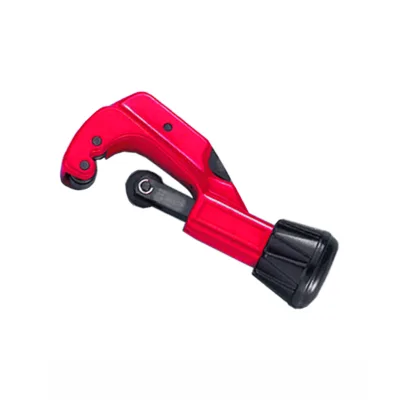
High-Quality Aluminum Alloy Portable Pipe Cutter for Refrigeration Tools
$5.00 - $15.00
MOQ: 100 Pieces


Portable Tube Cutter for Stainless Steel Pipe, Fast Clean Cold Cutting
$1850.00 - $2000.00
MOQ: 1 Sets



Comprehensive Sourcing Guide
Strategic Sourcing Guide for Portable Aluminum Alloy Tube Cutters
Understanding the Product Category and Core Specifications
When sourcing a Portable Aluminum Alloy Tube Cutter, buyers must first distinguish between general cutting tools and specialized machinery. The market offers a diverse array of models, ranging from manual hand tools to automated digital benders. For the specific keyword of a Portable Aluminum Alloy Tube Cutter, the primary focus is on handheld or benchtop devices designed for precision cutting of pipes and tubes in machinery and hardware applications. Based on observed product attributes, these tools are frequently categorized under "Pipe Cutter" or "Tube Cutter Hand Tools," with specific model identifiers such as CT-1015, CT-128, and CT-32 appearing in supplier catalogs.
The construction of these tools is a critical differentiator. The "Aluminum Alloy Body" mentioned in product descriptions indicates a design priority for lightweight portability without sacrificing structural integrity. This material choice contrasts with heavier steel-bodied cutters, making them ideal for field service or mobile workshops. The cutting mechanism often utilizes High-Speed Steel (HSS) blades, which are essential for maintaining sharpness during the turning process required to slice through various tube materials. The automation level for these specific portable units is predominantly manual, requiring operator input for the cutting action, though some advanced models in the broader category may feature digital controls for bending operations.
Buyers should verify the specific model number against their technical requirements. For instance, the CT-1015 is explicitly noted as an "Aluminum Alloy Body Tube Cutter," while the CT-128 and CT-32 are identified as hand tools. The standard length for some of these units is observed to be 130mm, a dimension that influences the leverage and reach of the tool. Understanding these specific model distinctions is vital before initiating a procurement process, as the "Type" of machine can vary from a simple cutter to a "Digital Pipe Bender" or a "Manual Fold-Bend Machine," depending on the intended application.
Compliance, Certification, and Safety Standards
In the B2B procurement of industrial hand tools, verifying compliance with international safety and quality standards is non-negotiable. The supply chain for these tools is heavily concentrated in China, with specific manufacturing hubs identified in Zhejiang, Ningbo, and general Zhejiang regions. Suppliers in these locations often cite certifications such as CE (Conformité Européenne) and UL (Underwriters Laboratories) as indicators of product safety and electrical compliance, particularly if the tool involves any powered components or is marketed for export to Western markets.
When evaluating a potential supplier, buyers must request documentation proving that the specific aluminum alloy tube cutter model holds the claimed certifications. The presence of "CE UL" on a product listing suggests adherence to both European and North American safety benchmarks, but this must be validated through official certificates rather than assumed from marketing text. The "Condition" of the product is typically listed as "New," and the "Quality" is often described as "Professional Level" or "Good," but these are subjective attributes that require physical verification or third-party testing.
Furthermore, the "Standard" for the product length, such as the 130mm specification observed, should be treated as a baseline for dimensional accuracy. Buyers should ensure that the manufacturing process adheres to consistent quality control measures to maintain this standard across batches. The "Certification" status is a key factor in determining eligibility for procurement in regulated industries. If a supplier claims "CE" certification, the buyer should verify the scope of this certification to ensure it covers the specific model and application, such as "Machinery & Hardware" or "Refrigerator Parts."
Cost Drivers and Pricing Structure Analysis
The pricing structure for portable aluminum alloy tube cutters is influenced by several dynamic factors, including material costs, manufacturing complexity, and order volume. The observed price range in the market spans from $0.20 to $48,000, a vast disparity that reflects the difference between simple manual hand tools and complex, automated machinery. For a standard portable aluminum alloy cutter, the price point is likely to be at the lower to mid-range of this spectrum, reflecting the manual nature of the operation and the cost of aluminum and high-speed steel.
The Minimum Order Quantity (MOQ) is another significant cost driver. The observed MOQ range is between 1 and 1000 units. Suppliers offering an MOQ of 1 are typically targeting small businesses or individual contractors, while those requiring 1000 units are geared toward large-scale distributors or manufacturers. Buyers should be aware that higher order volumes often correlate with better unit pricing, but the initial investment risk increases with larger MOQs. The "Price" attribute is often described as "Better" in listings, suggesting competitive market positioning, but this is a relative term that depends on the specific supplier's cost structure.
Packaging also plays a role in the final landed cost. Products are commonly shipped in "White Box" packaging or "Standard Export Packing," which affects the unit price due to the cost of materials and labor. Some listings mention "Box" packaging, while others specify "Each with White Box." Buyers should clarify if the packaging includes protective inserts to prevent damage during transit, as this can reduce the risk of returns and associated costs. Additionally, the "Brand" is often listed as "Neutral Brand," indicating that the product may be unbranded or private-labeled, which can influence the price point compared to branded equivalents.
Typical Applications and Operational Versatility
Portable aluminum alloy tube cutters are designed for a wide range of industrial applications, making them versatile assets for various sectors. The primary application areas identified include "Machinery & Hardware" and "Refrigerator Parts." In the machinery sector, these tools are essential for fabricating and repairing hydraulic lines, pneumatic systems, and structural components where precise tube cutting is required. The "Refrigerator Parts" application highlights the tool's utility in the HVAC and refrigeration industries, where copper and aluminum tubing must be cut cleanly to ensure proper fitting and sealing.
The "Usage" category is broadly defined as "Industry," suggesting that these tools are suitable for heavy-duty environments. The "Style" of the tool is often described as "Universal Tool," implying adaptability to different tube diameters and materials. The "Cutting Process" is typically a "Turning Tools" operation, where the cutter rotates around the tube to create a clean, square cut. This process is critical for preventing burrs that could compromise the integrity of the joint or cause leaks in pressurized systems.
For buyers in the "All of The World" export market, the versatility of these tools is a key selling point. The "Adhesive" and "Waterproof" attributes found in some product listings may refer to accessories or related components rather than the cutter itself, but they indicate a broader ecosystem of compatible products. The "Temperature-Resistance" is noted as "Normal Temperature," which is standard for most manual cutting tools, but buyers should verify if the tool can withstand specific environmental conditions if used in extreme climates. The "Folded" state is listed as "Unfolded," suggesting that the tool is ready for immediate use without assembly, enhancing its portability and efficiency in the field.
Supplier Evaluation and Sourcing Strategy
Evaluating suppliers for portable aluminum alloy tube cutters requires a rigorous approach to ensure reliability and product consistency. The primary manufacturing locations are concentrated in Zhejiang, China, with specific cities like Ningbo emerging as key hubs. When selecting a supplier, buyers should prioritize those with a proven track record in exporting to their target markets. The "Export to" attribute indicates that many suppliers are capable of global distribution, but the buyer must verify the supplier's logistics capabilities and experience with specific trade routes.
The "Online Support" availability is a crucial factor in the supplier evaluation process. Suppliers offering "Yes" for online support demonstrate a commitment to post-sales service, which is essential for troubleshooting technical issues or addressing quality concerns. Buyers should also assess the supplier's responsiveness and the quality of their communication channels. The "Condition" of the product being "New" and the "Quality" being "Professional Level" are positive indicators, but these should be backed by references or past performance data.
Supplier transparency regarding the "Material" and "Process" is also vital. The use of "High-Speed Steel" for cutting blades and "Aluminum Alloy" for the body should be confirmed through material certificates or mill test reports. The "Standard" of "CE UL" should be validated with current certification documents. Buyers should avoid suppliers who cannot provide clear documentation on these aspects, as this may indicate a lack of quality control or potential compliance risks. The "Brand" being "Neutral" does not necessarily imply low quality, but it does mean the buyer must rely heavily on the supplier's reputation and the product's technical specifications.
Quality Control and Long-Term Procurement Considerations
Implementing a robust quality control (QC) strategy is essential for maintaining the integrity of the procurement process. Given the "Professional Level" quality grade, buyers should establish clear acceptance criteria for the "Good" quality attribute. This includes verifying the dimensional accuracy of the 130mm length standard and ensuring the cutting blades are made of genuine High-Speed Steel. The "Packing" method, whether "White Box" or "Standard Export Packing," should be inspected to ensure it provides adequate protection against damage during shipping.
Long-term procurement considerations involve building a sustainable relationship with suppliers who can consistently meet demand. The "Automation" level being "Manual" suggests that the tool's performance relies heavily on the operator's skill, so buyers should consider training requirements and the potential for ergonomic improvements. The "Color" being "Customized" offers an opportunity for branding, but buyers should verify the lead time and minimum order requirements for custom colors.
The "Lead Time" and "MOQ" are critical factors for inventory management. With an MOQ range of 1 to 1000, buyers can start with small orders to test the product quality before committing to larger volumes. However, the "Price" advantage of bulk orders must be weighed against the risk of overstocking. Buyers should also consider the "Export to" capabilities of the supplier to ensure they can handle future growth and expand into new markets. Finally, the "Online Support" feature should be leveraged for ongoing maintenance and troubleshooting, ensuring the longevity of the tools in the field. By adhering to these quality control measures and strategic considerations, buyers can secure a reliable supply of high-performance portable aluminum alloy tube cutters.
FAQs
What is the standard length for portable aluminum alloy tube cutters?
The standard length for these tools is 130mm. This dimension influences the leverage and reach of the tool during operation, ensuring precise cutting for various tube materials in machinery applications.
Which certifications do portable aluminum alloy tube cutters typically hold?
These cutters often hold CE and UL certifications. Buyers must verify these documents to ensure compliance with European and North American safety benchmarks, especially for export to regulated markets.
Can I customize the color of the Portable Aluminum Alloy Tube Cutter?
Yes, the color can be customized for branding purposes. Buyers should verify the lead time and minimum order requirements for custom colors before initiating a procurement process with the supplier.
How is the Portable Aluminum Alloy Tube Cutter packaged for shipping?
Products are commonly shipped in white boxes or standard export packing. This packaging protects the tool during transit, though buyers should confirm if protective inserts are included to prevent damage.
What material is used for the cutting blades of these tools?
The cutting blades are made of High-Speed Steel. This material is essential for maintaining sharpness during the turning process required to slice through various tube materials efficiently.
Where are portable aluminum alloy tube cutters manufactured?
These tools are manufactured in Zhejiang, China, with specific hubs in Ningbo. Suppliers in these locations are capable of global distribution and often cite compliance with international safety standards.