Source Portable Aluminum Hand Tool Set for Camping, Auto Repair, and Home Use
Compare 30 listings for a Portable Aluminum Hand Tool Set designed for outdoor camping, automotive repair, and general household applications. Buyers can evaluate specifications, packaging types, and quality grades across multiple suppliers to find the right equipment.
Key considerations
Products List


Professional General Household Hand Tool Kit Tool Box Set Hand Tool Set
$8.52 - $10.65
MOQ: 100 Pieces


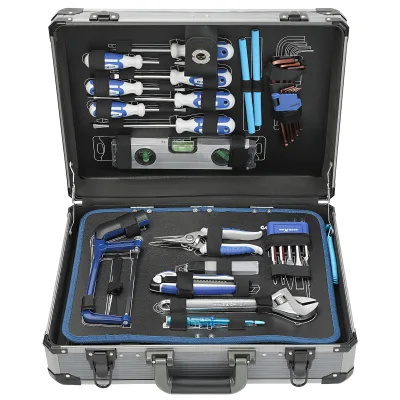
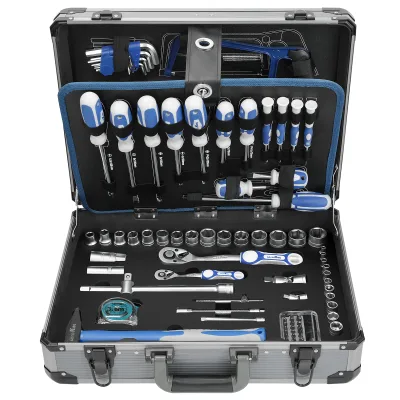


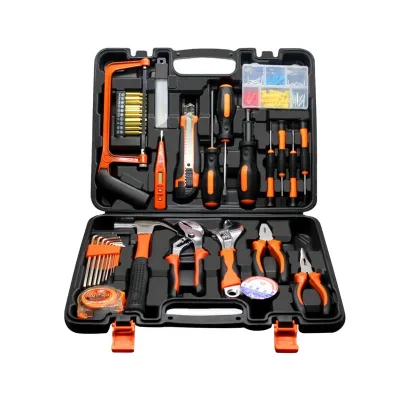


85PCS Tools Set Multifunctional Household Hand Repair Tool Kit Set for Home
$35.00 - $40.00
MOQ: 10 Pieces


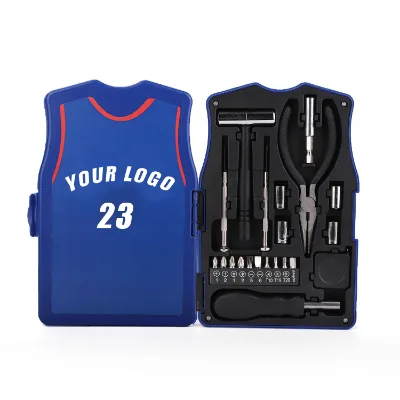
Comprehensive Sourcing Guide
Strategic Sourcing Guide for Portable Aluminum Hand Tool Sets
Understanding Product Definitions and Core Attributes
When initiating a procurement strategy for a Portable Aluminum Hand Tool Set, buyers must first distinguish between the raw material composition and the functional design of the unit. The core keyword implies a specific construction where aluminum serves as the primary structural component for the housing or case, offering a balance between weight reduction and durability. Based on available market data, aluminum is a verified material attribute for specific emergency and outdoor tool configurations. However, the internal tool composition often varies significantly; while the case may be aluminum, the tools themselves frequently utilize Chrome-Vanadium (CR-V) steel, particularly for high-stress applications like automotive repair or professional-level DIY tasks.
It is critical to observe that "portable" in this context does not have a single universal definition. Market listings reveal a wide variance in physical dimensions, ranging from compact emergency kits measuring approximately 16.8 x 11 x 5 cm to larger professional sets exceeding 44.5 x 34 x 14.5 cm. The "Folded" attribute is also a significant differentiator, with some units designed to be compacted for storage, while others are sold in an "Unfolded" state, indicating a rigid, permanent structure. Buyers should not assume all aluminum sets are collapsible; verification of the specific "Folded" or "Unfolded" status is essential for logistics planning. Furthermore, the "Quality Grade" varies from "DIY Level" to "Professional Level," a distinction that directly impacts the expected lifespan and torque capacity of the tools within the set.
Technical Specifications and Dimensional Standards
The technical evaluation of a Portable Aluminum Hand Tool Set requires a granular analysis of specifications that go beyond the general category name. Dimensions are the most variable metric in this sector. Observed data indicates that standard packaging sizes can range from small, personal-sized units like 24 x 12.5 x 4.5 cm to larger industrial cases measuring 50 x 30 x 20 cm. When sourcing, buyers must request the "Single package size" and "Single gross weight" to accurately calculate freight costs. For instance, a specific heavy-duty set may have a gross weight of 14.0 kg, which significantly alters shipping requirements compared to a lightweight 187-piece set.
The internal configuration is equally critical. Specifications often list the number of pieces, which can range from small emergency kits to extensive 187-piece combinations. The "Type" of set is often a composite of categories, including Power Tool Combination Kits, Hand Tool Kits, Garden Tool Kits, and Automotive Repair Sets. A single product listing might claim to be a "Mulit-purpose" set while also being categorized specifically for "Car repair" or "Outdoor Camping Hiking Travelling." Buyers must verify if the aluminum case is designed to hold a specific socket and wrench set, such as a 142-piece CR-V configuration, or if it is a general-purpose storage solution. The "prod_standard" field often contains specific model numbers like ZX-258E or Zhixin-81550963, which serve as unique identifiers for the tool arrangement and compatibility.
Material Composition and Quality Grading
The material composition of the tool set is a primary driver of performance and cost. While the external casing is specified as aluminum in the target keyword, the internal tools are typically made from high-grade steel. Chrome-Vanadium (CR-V) is a standard material for professional-grade tools, offering high tensile strength and resistance to wear. The "Feature" attribute often highlights "Heat-Treated Cr-V Steel," a process essential for ensuring the tools can withstand high torque without deforming. However, not all sets in the aluminum category utilize this steel; some may be classified as "DIY Level," suggesting a lower grade of steel or different alloy composition suitable only for light-duty tasks.
The "Handle Material" is another critical specification. While the case is aluminum, the handles of the individual tools are frequently made of plastic. This creates a composite product where the durability of the case does not necessarily correlate with the durability of the handles. Buyers must verify the "Quality Grade" to ensure the set meets the intended application. A "Professional Level" set with CR-V steel and heat-treated features is suitable for automotive and mechanical repair, whereas a "DIY Level" set with plastic handles may be insufficient for heavy industrial use. The "Color" of the set, often observed as Orange/Black or Black, is an aesthetic choice but can also indicate specific branding or safety coding in industrial environments.
Compliance, Certification, and Origin Verification
In the global supply chain for hand tools, origin and manufacturing standards play a pivotal role in risk management. The majority of aluminum hand tool sets originate from China, with specific manufacturing hubs identified in Zhejiang province. This regional concentration suggests a mature supply chain but also necessitates rigorous due diligence regarding the specific factory's capabilities. The "place of origin" and "prod_origin" fields must be cross-referenced to ensure the supplier is located in the claimed region, as this affects shipping lead times and potential tariffs.
Compliance and certification are areas where buyers must exercise caution. While some suppliers list "Customized Support" such as OEM, ODM, and OBM, indicating flexibility in branding and manufacturing, this does not automatically imply that the products meet international safety or quality certifications. Buyers should not assume that a product listing includes specific certifications unless explicitly stated in the product data. The "warranty" period, observed as high as 10 years in some listings, is a commercial term that requires verification of the supplier's financial stability and service infrastructure. Similarly, the "MOQ" (Minimum Order Quantity) can vary drastically from 1 set to 1200 units, influencing the feasibility of small-batch procurement versus large-scale industrial sourcing.
Cost Drivers and Pricing Dynamics
The pricing of portable aluminum hand tool sets is influenced by a complex interplay of material costs, labor, and order volume. The observed price range in the market is extensive, spanning from $0.50 to $1,000 USD. This wide variance is not indicative of a single product category but rather reflects the diversity of the market, from simple emergency kits to comprehensive professional toolboxes. The "Selling Units" are typically listed as "Single item," but the actual cost per unit is heavily dependent on the "number of pieces" included. A set with 187 pieces will naturally command a higher price than a basic 12-piece emergency kit.
Material costs for aluminum and CR-V steel are significant drivers. Sets that utilize "Heat-Treated Cr-V Steel" and feature "Professional Level" quality grades will be priced at the higher end of the spectrum. Conversely, "DIY Level" sets with plastic handles and fewer pieces will be more affordable. The "Package" type also affects cost; options like "Hard Case," "Carton," "Box," or "Blow Mold Case and Export Carton" represent different levels of packaging investment. Buyers must analyze the "Single gross weight" and "Single package size" to understand the logistics cost component, as heavier and larger packages incur higher shipping fees. The "Customization" availability can also add to the cost, as OEM and ODM services require additional tooling and setup fees.
Supplier Evaluation and Procurement Strategy
Evaluating suppliers for aluminum hand tool sets requires a focus on their ability to meet specific technical and logistical requirements. The "Customized Support" attribute, including OEM, ODM, and OBM, indicates that the supplier has the capacity to modify products for branding or specific functional needs. However, buyers must verify the scope of these services. For instance, a supplier may offer OEM support but have a high MOQ, which could be a barrier for smaller buyers. The "Application" of the tool set, such as "Automotive and Mechanical Repair" or "Household Tool Set," should align with the supplier's primary expertise.
When selecting a supplier, buyers should prioritize those with clear "prod_model" and "model number" specifications, as these ensure consistency in future orders. The "Brand Name" is another factor; while some products are branded (e.g., Guanjiang), many are unbranded or generic. Buyers seeking private label opportunities should confirm the supplier's willingness to support OBM (Original Brand Manufacturing). The "Warranty" terms, such as a 10-year guarantee, should be scrutinized for their actual validity and the supplier's track record in honoring them. Finally, the "Lead Time" and "MOQ" must be negotiated to match the buyer's inventory strategy, ensuring that the supply chain remains flexible enough to handle demand fluctuations.
Quality Control and Long-Term Procurement Considerations
Implementing a robust quality control (QC) process is essential for sourcing aluminum hand tool sets, given the variability in material grades and manufacturing standards. Buyers should establish clear acceptance criteria based on the "Quality Grade" and "Material" specifications. For professional applications, verifying the "Heat-Treated Cr-V Steel" content is non-negotiable. QC protocols should include visual inspections for defects in the aluminum casing, checks on the "Handle Material" integrity, and functional testing of the tools to ensure they meet the "prod_standard" requirements.
Long-term procurement considerations involve building a relationship with suppliers who can maintain consistency in the "prod_model" and "prod_origin." As the market for these tools evolves, suppliers may change their material sources or manufacturing processes. Buyers should require advance notice of any changes to the "Material" or "Quality Grade" to mitigate the risk of receiving substandard products. The "Application" of the tools may also shift over time, requiring the procurement team to adapt their specifications accordingly. By maintaining a detailed record of the "Single package size," "Single gross weight," and "Number of pieces," buyers can ensure that their inventory management systems remain accurate and that they can effectively compare different suppliers over time.
Comparative Analysis of Product Configurations
To facilitate decision-making, buyers should compare different configurations of portable aluminum hand tool sets based on their specific needs. The following table summarizes key attributes observed in the market to assist in this evaluation.
| Attribute | Configuration A: Emergency/Outdoor | Configuration B: Professional/Auto Repair | Configuration C: General Household |
|---|---|---|---|
| Primary Material | Aluminum Case | Aluminum Case + CR-V Steel | Aluminum Case + Plastic Handles |
| Quality Grade | DIY Level | Professional Level | DIY Level |
| Typical Size | 16.8 x 11 x 5 cm | 44.5 x 34 x 14.5 cm | 24 x 12.5 x 4.5 cm |
| Key Features | Folded, Portable | Heat-Treated, 187 Pieces | Mulit-purpose, Box Packing |
| Common Application | Camping, Hiking | Car Repair, Mechanical | Household, General Use |
| MOQ Range | 1 Set | 1-1200 Sets | 1 Set |
| Warranty | Variable (up to 10 Years) | Variable (up to 10 Years) | Variable |
This comparison highlights that while the "Aluminum" keyword is common, the internal specifications and intended use cases vary drastically. Buyers must align their procurement strategy with the specific configuration that matches their operational requirements, ensuring that the "Quality Grade" and "Material" specifications are sufficient for the intended application. By rigorously evaluating these factors, buyers can secure a supply chain that delivers value, reliability, and performance for their specific needs.
FAQs
What materials are used for portable aluminum hand tool sets?
The external casing is typically made of aluminum, while internal tools often use Chrome-Vanadium steel. Some sets feature heat-treated CR-V steel for professional durability, whereas DIY level sets may use lower-grade materials with plastic handles.
How large are the standard packages for these tool sets?
Package sizes vary significantly, ranging from compact emergency kits measuring 16.8 by 11 by 5 cm to larger professional sets exceeding 44.5 by 34 by 14.5 cm. Buyers must check specific single package size details to calculate accurate freight costs.
Can I find portable aluminum hand tool sets with OEM support?
Yes, many suppliers offer customized support including OEM, ODM, and OBM services. This allows buyers to modify branding or specifications, though minimum order quantities and lead times may vary depending on the specific factory capabilities.
Which quality grades are available for aluminum tool sets?
Sets are generally categorized as either DIY Level or Professional Level. Professional grade sets typically include heat-treated CR-V steel and are suitable for automotive repair, while DIY level sets are designed for lighter household tasks.
What is the typical price range for these tool sets?
Market prices range widely from 0.50 to 1000 USD depending on the number of pieces and quality. A 187-piece professional set will cost significantly more than a basic 12-piece emergency kit due to material and labor costs.
Where are these portable aluminum tool sets typically manufactured?
The majority of these products originate from China, with specific manufacturing hubs located in Zhejiang province. Buyers should verify the place of origin to ensure accurate shipping estimates and compliance with regional trade regulations.
How many pieces are included in a standard portable set?
The number of pieces varies from small emergency kits to extensive 187-piece combinations. Specific models like the ZX-258E or Zhixin-81550963 have defined configurations that buyers should verify before placing an order.
What is the minimum order quantity for these tool sets?
Minimum order quantities range from 1 set to 1200 units depending on the supplier and customization needs. Small buyers can often source single items, while large industrial orders may require higher volume commitments to secure pricing.