Source Portable Car Handheld Vacuum Cleaner for Home, Office, and Car Use
Find 30 Portable Car Handheld Vacuum Cleaner options featuring brushless motors, HEPA filtration, and cordless designs. Compare suction power, battery capacity, and certifications to select the right unit for home, office, or vehicle cleaning tasks.
Key considerations
Products List


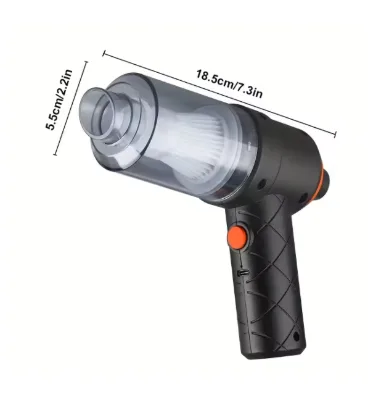


Home Portable Handheld Cordless Vacuum Cleaner Multifunctional Car Vacuum Cleaner
$11.00 - $17.00
MOQ: 1000 Pieces

120W Wireless Auto Portable Car and Home Handheld Cleaning Car Vacuum Cleaner
$9.50 - $10.50
MOQ: 10 Pieces


Comprehensive Sourcing Guide
Portable Car Handheld Vacuum Cleaner Sourcing Guide
Sourcing a Portable Car Handheld Vacuum Cleaner requires a careful balance between compact design, suction efficiency, and power flexibility. These devices are engineered to fit into tight spaces within vehicles while delivering sufficient airflow to remove dust, debris, and crumbs from upholstery and floor mats. Buyers must distinguish between models designed for continuous household use and those optimized for the intermittent, high-mobility demands of automotive cleaning. The market offers a variety of form factors, from ultra-lightweight units that clip onto a seat to more robust handhelds with larger dust cups and specialized attachments. Understanding the specific operational environment is the first step in defining procurement requirements, as the power source and battery capacity will vary significantly based on whether the device is intended for home use, office desks, or heavy-duty truck interiors.
The procurement landscape for these devices is characterized by a wide range of customization options and manufacturing origins, primarily centered in China. Suppliers frequently offer OEM and ODM services, allowing brands to customize colors, packaging, and even internal components to meet specific market positioning. Observed listings indicate a diverse array of color options, including black, silver, white, and various vibrant hues like pink, blue, and gold, catering to different aesthetic preferences. Furthermore, the acceptance of small orders suggests that this category is accessible to both large-scale distributors and smaller niche retailers. Buyers should leverage this flexibility to test market demand with lower initial volumes before committing to larger production runs, ensuring that the selected model aligns with customer expectations for portability and performance.
Product Scope and Observed Listing Signals
The product scope for portable car handheld vacuums spans multiple application domains, including household cleaning, office environments, and specialized automotive use. Listings indicate that these devices are marketed for use in microbuses, mini cars, trucks, and lorries, as well as for general home and office tasks such as cleaning keyboards. This versatility is supported by features like hand-held portability, lightweight construction, and lower noise operation, which enhance user comfort during extended cleaning sessions. The filtration systems vary, with some models featuring washable HEPA filters for superior air quality and others utilizing simple dust cup filters. Buyers should verify the specific filtration mechanism for each model, as this directly impacts maintenance costs and the device’s suitability for users with allergies or those requiring high hygiene standards in their cleaning routine.
Power source configurations are a critical differentiator in this category, with options ranging from battery-powered and USB-rechargeable models to those that plug directly into a car’s 12V socket. Some units are described as having no plug, indicating they rely entirely on internal batteries, while others are designed for car plug power modes. The observed power ratings fluctuate, with some models operating at 100W and others at 120W, which influences suction power measured in Airwatts. Buyers must align the power mode with their target customer’s usage patterns; for instance, cordless models with high battery capacity (e.g., 6000mAh) are ideal for users who need mobility without tethering to a vehicle’s power outlet, whereas plug-in models offer consistent power for heavier debris. Additionally, the inclusion of features like brushless motors suggests a focus on durability and reduced maintenance, which is a valuable selling point for professional or frequent users.
Technical Specifications to Verify
When evaluating technical specifications, the motor type and suction power are paramount for determining cleaning efficacy. Brushless motors are increasingly common in higher-end models, offering longer lifespans and more consistent performance compared to brushed alternatives. Buyers should verify the suction power in Airwatts, as this metric provides a more accurate representation of cleaning ability than wattage alone. For example, some observed models boast suction powers between 81-100 Airwatts, which is suitable for most automotive and light household tasks. It is essential to request test data or third-party verification for these claims, as performance can vary significantly between different motor batches and manufacturing processes. Additionally, the dust capacity, observed at 0.2 liters in some listings, should be assessed against the expected volume of debris in the target application; larger dust cups reduce the frequency of emptying but may increase the overall weight and bulk of the device.
Physical dimensions and packaging details are crucial for logistics and retail display planning. The color box sizes vary, with some models measuring 3277cm and others 22.3166.7cm, indicating a range of form factors from slim, cylindrical designs to more boxy, ergonomic handhelds. Buyers must ensure that the packaging dimensions align with their shipping and storage constraints, as inefficient packing can significantly increase freight costs. The body material is typically plastic, which keeps the unit lightweight but requires verification of durability and resistance to impact. Furthermore, the plug type, such as Type-C for charging, should be standardized across product lines to simplify accessory inventory and user experience. Buyers should also confirm the cord length for any wired models, as observed ranges of 3-5 meters provide varying degrees of mobility within a vehicle or room.
Compliance and Safety Documentation
Compliance with international safety and environmental standards is non-negotiable for exporting portable car handheld vacuums. The observed product certifications include CE, FCC, CB, ROHS, EMC, and KC, which cover electrical safety, electromagnetic compatibility, and hazardous substance restrictions in various markets. Buyers must verify that the specific model they intend to purchase holds the relevant certifications for their target destination, as regulatory requirements differ significantly between regions such as the European Union, North America, and South Korea. For instance, the FCC certification is essential for the US market, while CE marking is mandatory for Europe. It is advisable to request copies of the test reports and certificates from the supplier to ensure they are valid and issued by accredited laboratories, rather than relying solely on the supplier’s assertion of compliance.
In addition to product-specific certifications, management certifications such as BSCI and ISO indicate a supplier’s commitment to ethical labor practices and quality management systems. These certifications can be particularly important for large retailers and brands that have strict supply chain due diligence requirements. Buyers should inquire about the scope and validity of these management certifications, as they reflect the overall reliability and operational maturity of the manufacturing facility. Furthermore, the presence of a warranty, typically observed as one year, and after-sales services like free spare parts, provides a safety net for procurement risks. Buyers should clarify the terms of the warranty, including what components are covered and the process for claiming replacements, to ensure that potential defects do not result in significant customer service burdens or financial losses.
Cost Drivers and Commercial Terms
The cost structure of portable car handheld vacuums is influenced by several key factors, including the motor type, battery capacity, and level of customization. Brushless motors and larger battery capacities, such as 6000mAh, generally command higher prices due to increased material and manufacturing costs. Customization options, such as private molds and specific color schemes, add to the initial tooling and setup expenses, although they can be amortized over larger production volumes. Buyers should negotiate clearly on the cost implications of these features, ensuring that the final unit price reflects the desired specifications without hidden fees. The observed price range of 1.45-107 USD highlights the vast disparity between basic, unbranded units and premium, feature-rich models, emphasizing the need for precise specification alignment during the quoting process.
Commercial terms, including Minimum Order Quantity (MOQ) and payment conditions, play a significant role in the overall procurement strategy. The observed MOQ range of 1-3000 units offers flexibility for buyers of all sizes, from small businesses testing new products to large distributors placing bulk orders. Buyers should leverage this flexibility to negotiate favorable terms, such as reduced MOQs for initial trial orders or volume discounts for larger commitments. Additionally, the acceptance of small orders suggests that suppliers are open to collaborative relationships, which can be beneficial for building long-term partnerships. It is crucial to clarify all commercial terms in the purchase agreement, including shipping responsibilities, return policies, and procedures for handling defective units, to avoid misunderstandings and ensure a smooth transaction process.
Supplier Qualification and Quality Control
Supplier qualification is a critical step in mitigating procurement risks, particularly in a category with a high degree of customization and variability. Buyers should conduct thorough due diligence on potential suppliers, verifying their manufacturing capabilities, quality control processes, and financial stability. The presence of private molds and OEM services indicates that many suppliers have in-house engineering and production facilities, which can be advantageous for ensuring product consistency and protecting intellectual property. However, buyers should also assess the supplier’s ability to maintain quality across different production batches, as variations in motor performance or plastic quality can impact customer satisfaction. Requesting samples and conducting independent testing is essential to validate the supplier’s claims and ensure that the product meets the specified technical requirements.
Quality control measures should be integrated into the procurement process from the outset, with clear specifications and acceptance criteria defined in the purchase agreement. Buyers should establish a robust inspection protocol, including pre-production samples, during-production checks, and pre-shipment inspections, to identify and address potential issues early. The availability of free spare parts and a one-year warranty suggests that suppliers are confident in their product quality, but buyers should still implement their own quality assurance measures to protect their brand reputation. Additionally, buyers should consider the supplier’s responsiveness and communication skills, as these factors are crucial for resolving any issues that may arise during production or after delivery. Building a strong relationship with a reliable supplier can lead to better pricing, improved product quality, and more flexible commercial terms over time.
Long-Term Procurement Checks
Long-term procurement success depends on continuous monitoring of product performance and supplier reliability. Buyers should establish a feedback loop with their end-users to gather insights on product durability, battery life, and cleaning efficiency, which can inform future purchasing decisions and product improvements. Regularly reviewing warranty claims and return rates can help identify systemic issues with specific models or suppliers, allowing for proactive corrective actions. Additionally, buyers should stay informed about changes in regulatory requirements and market trends, such as the increasing demand for eco-friendly materials or advanced filtration systems, to ensure that their product offerings remain competitive and compliant.
Supplier relationship management is equally important for long-term success, requiring regular performance evaluations and open communication. Buyers should conduct periodic audits of their suppliers’ quality control processes and production capabilities to ensure ongoing compliance with agreed-upon standards. Maintaining a diversified supplier base can also mitigate risks associated with supply chain disruptions or quality issues with a single vendor. By fostering collaborative partnerships and maintaining high standards of quality and compliance, buyers can secure a reliable supply of portable car handheld vacuums that meet their customers’ needs and support their brand’s reputation in the market.
FAQs
What certifications do these vacuum cleaners have?
The products hold CE, FCC, CB, ROHS, EMC, KC, and LVD certifications. These standards ensure safety and compliance for international markets, covering electrical safety and environmental restrictions for the handheld units.
Can I order small quantities of these handheld vacuums?
Yes, small orders are accepted for these portable car handheld vacuum cleaners. The minimum order quantity ranges from 1 to 3000 units, allowing flexibility for buyers testing the market or needing immediate stock.
Which motor type powers these cordless vacuum cleaners?
These devices utilize a brushless motor for efficient operation. This core component ensures durability and lower noise levels while providing the necessary suction power for dry cleaning applications in cars and homes.
What is the battery capacity of the HL-107PRO model?
The HL-107PRO model features a 6000mAh battery capacity. This power source supports electric operation, enabling the handheld unit to function effectively for cleaning tasks in vehicles and outdoor environments without a cord.
How is the dust collected in these bagless units?
Dust is collected using a centrifugal cyclone system into a dust cup. This bagless design allows for easy emptying and maintenance, with filtration options including washable filters and HEPA for fine particles.
What colors are available for these portable vacuum cleaners?
Multiple color options are available including black, silver, white, blue, green, gray, purple, red, yellow, gold, orange, colorful, brown, and pink. Buyers can select specific colors to match branding or personal preferences.
Does the manufacturer offer customization for these vacuums?
Customization is available for these portable car handheld vacuum cleaners. The supplier supports private mold services and OEM branding, allowing buyers to tailor the product appearance and specifications to their specific market needs.