Source Portable Calibrator Analog Signal Generator for Lab, Field, and Maintenance
Find 30 Portable Calibrator Analog Signal Generator options from Hubei, China. Compare specifications like 250W power, 100kV withstand voltage, and CE certification to select the right device for your testing needs.
Key considerations
Products List


Portable Power Quality Analyser 3 Phase Harmonics Power Analyzer High Quality
$1199.00 - $1299.00
MOQ: 1 Pieces

Portable Air Pressure Calibration Calibrator - Pressure Gauge Calibrator
$695.00 - $1500.00
MOQ: 1 Pieces

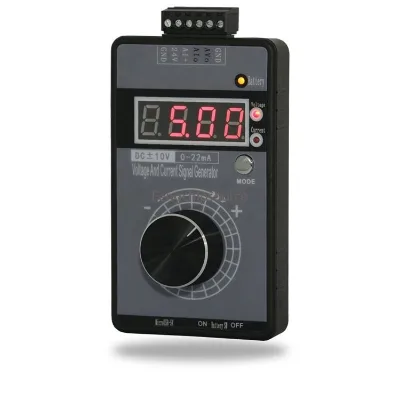
Versatile Lb02 Resistance Current Voltmeter Signal Generator Source Process Calibrator
$70.00 - $73.00
MOQ: 1 Pieces

Lb01 4-20mA/0-10V/Mv Resistance Current Voltmeter Signal Generator Source Calibrator
$72.00 - $75.00
MOQ: 1 Pieces


Reliable Function Calibrator for Industrial Signal Generator Applications Today
$32.00 - $40.00
MOQ: 1 pieces

Hazardous Area Signal Generator with Reliable Function Calibrator Technology
$32.00 - $40.00
MOQ: 1 pieces


Advanced Pulse Signal Generator for Reliable Industrial Calibration Solutions
$32.00 - $40.00
MOQ: 1 pieces




Comprehensive Sourcing Guide
Portable Calibrator Analog Signal Generator Sourcing Guide
Procuring portable calibrator analog signal generators requires a disciplined approach to aligning technical precision with operational durability. These instruments are essential for verifying the accuracy of field instruments such as pressure transmitters, temperature sensors, and flow meters. Buyers must prioritize devices that offer stable analog outputs while maintaining portability for on-site maintenance tasks. The selection process involves evaluating measurement ranges, accuracy classes, and environmental robustness to ensure the tool meets specific industrial requirements.
This guide focuses on evidence-based sourcing strategies for analog signal generators, leveraging observed market data and trusted category knowledge. It addresses critical decision points including technical verification, compliance documentation, and supplier qualification. By adhering to these structured procurement steps, organizations can mitigate risks associated with inaccurate calibration data and ensure long-term reliability in harsh industrial environments.
Product Scope and Observed Listing Signals
The current market for portable calibrators shows a diverse range of capabilities, with observed price points spanning from $6.7 to $6,000 USD. This wide variance reflects differences in channel count, accuracy levels, and additional features such as digital communication protocols or multi-function capabilities. Buyers should note that the minimum order quantity (MOQ) typically ranges from 1 to 10 units, indicating that most suppliers cater to individual unit purchases or small batch orders for maintenance teams. Understanding this pricing spectrum helps in budgeting for high-precision laboratory-grade units versus rugged field-portable models.
Observed product attributes reveal a strong emphasis on customization and versatility. Many available units support OEM, ODM, and software reengineering, allowing organizations to tailor interfaces or output functions to specific legacy systems. Accessories such as high-voltage power supply connecting lines are frequently included, enhancing the device's utility in complex testing scenarios. Additionally, the presence of digital-only displays or LCD screens indicates a shift toward user-friendly interfaces that provide clear, real-time feedback during calibration procedures.
Technical Specifications to Verify
Accuracy is the paramount technical specification for any calibrator, with observed units offering voltage accuracy of ±0.1% and frequency accuracy of ±0.01Hz. Buyers must verify that the device’s measurement ranges align with their field instruments, noting that voltage ranges can extend from 1.0V to 2000V depending on the model. It is crucial to confirm the number of channels available, as some units provide four voltage and four current channels, while others may offer three channels for both voltage and current. This flexibility ensures that the calibrator can handle simultaneous testing of multiple parameters without requiring additional hardware.
Environmental and operational specifications are equally critical for field deployment. Observed operating temperatures typically range from -10°C to +40°C, with humidity constraints often specified as below 80% RH. Buyers should verify the device’s power source, noting that many units operate on AC220V but may also feature battery options with a maximum operating time of up to 10 hours. Additionally, harmonic analysis capabilities, such as support for up to the 63rd harmonic, should be confirmed if the application involves power quality testing or complex electrical system diagnostics.
Compliance and Safety Documentation
Safety certifications are non-negotiable for electrical testing equipment, with CE certification being a common standard observed in the market. Buyers must ensure that the supplier provides valid certification documents that comply with regional safety regulations, particularly if the equipment will be used in Europe or other regions with strict import requirements. The absence of specific safety standards in some listings necessitates direct verification with the supplier to confirm that the device meets relevant international safety norms for portable electronic instruments.
Documentation should also include detailed user manuals and calibration certificates that trace back to national or international standards. Buyers should request evidence of factory calibration for each unit, ensuring that the accuracy claims are backed by measurable test data. Additionally, warranty terms, typically observed as one year, should be clearly defined in the purchase agreement, covering defects in materials and workmanship. This documentation serves as a legal safeguard and ensures that the buyer has recourse in case of premature failure or performance degradation.
Cost Drivers and Commercial Terms
The cost of a portable calibrator is influenced by several factors, including the complexity of its internal circuitry, the quality of its display, and the inclusion of specialized accessories. Units with higher accuracy levels, such as those with ±0.1% voltage accuracy, generally command higher prices compared to standard models. Buyers should also consider the cost of additional channels or multi-function capabilities, which can significantly increase the unit price but offer greater versatility in the field.
Commercial terms such as payment methods, shipping logistics, and after-sales support play a crucial role in the total cost of ownership. Observed packing methods include wooden boxes with foam or cartons, which affect shipping costs and protection during transit. Buyers should negotiate clear terms for after-sales service, including the availability of replacement parts and technical support. Additionally, understanding the lead times for customized orders, especially for OEM or ODM requests, is essential for planning procurement cycles and avoiding production delays.
Supplier Qualification and Quality Control
Supplier qualification begins with verifying the manufacturer’s location and production capabilities. Many observed suppliers are based in Hubei, China, a region known for its industrial manufacturing base. Buyers should assess the supplier’s ability to provide consistent quality by requesting samples or conducting factory audits if possible. The availability of customization support, including software reengineering, indicates a supplier’s technical flexibility and commitment to meeting specific client requirements.
Quality control processes should be transparent and well-documented. Buyers should inquire about the supplier’s internal testing procedures, including how they verify accuracy and durability before shipment. The presence of a dedicated after-sales service team is a positive indicator of the supplier’s commitment to long-term customer satisfaction. Additionally, buyers should check for any past performance issues or customer complaints to gauge the reliability of the supplier’s products and services.
Long-Term Procurement Checks
Long-term procurement success depends on the supplier’s ability to provide consistent product quality and support over time. Buyers should establish a performance review process to evaluate the calibrators’ accuracy and reliability after extended use in the field. Regular calibration checks against known standards can help identify any drift in performance, ensuring that the instruments remain within their specified accuracy limits.
Building a strong relationship with the supplier can facilitate better pricing, priority support, and access to new product developments. Buyers should maintain open communication channels to discuss any technical challenges or future procurement needs. Additionally, staying informed about industry trends and technological advancements in calibrator design can help buyers make informed decisions about upgrading or expanding their calibration equipment inventory.
FAQs
What customization options are available for this device?
Customized support including OEM, ODM, and software reengineering is available for this device. Buyers can request specific modifications to meet unique operational requirements while maintaining core performance standards.
Can the device operate in extreme temperature conditions?
Yes, the device operates within a temperature range of -10 to 40 degrees Celsius. It also functions reliably in environments with humidity below 80% relative humidity for stable performance.
What is the warranty period for this testing machine?
This universal testing machine comes with a standard one-year warranty. After-sales service is provided to ensure long-term reliability and support for industrial applications.
Which certifications does the product hold for safety compliance?
The product holds CE certification to ensure compliance with safety standards. This validates that the device meets necessary regulatory requirements for operation in international markets.
How many voltage and current channels does the unit have?
The unit features four voltage and four current channels for comprehensive data acquisition. This configuration allows for detailed analysis of electrical parameters across multiple phases simultaneously.
What is the maximum harmonic analysis frequency supported?
The device supports harmonic analysis up to the 63rd order. This capability ensures accurate measurement of total harmonic distortion across all phases for power quality assessment.
Can the device be powered by standard AC sources?
Yes, the device operates using an AC220V power source. This standard input allows for easy integration into existing industrial power systems without requiring specialized adapters.