Source Portable Car Refrigerator for Camping, travel, and home use
Compare 30 Portable Car Refrigerator for Camping units from verified suppliers. Evaluate specifications like cooling range, power source, and capacity to find the right compressor car refrigerator for your needs.
Key considerations
Products List


15L 12V Portable Electric Refrigerator Mini Refrigerator for Cars and Camping
$100.00 - $150.00
MOQ: 20 Pieces

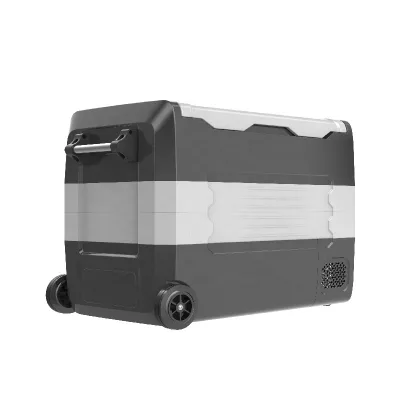


Portable Fridge Car Fridge Mini Cooler Box Camping Refrigerator for Car Truck
$100.00 - $200.00
MOQ: 5 Pieces

Portable 50 L Car Fridge Car Refrigerator for Road Trips and Outdoor Adventures and Camping
$206.00 - $224.00
MOQ: 100 Pieces

Portable Travel Mini Car Refrigerator Car Fridge for Road Trips and Outdoor Adventures
$128.00 - $138.27
MOQ: 100 Pieces


New Portable Electric Cool Box Camping 12V Portable Car Fridges Refrigerator Travel
$43.34 - $48.44
MOQ: 30 Pieces

Portable Fridge Camping Car High Quality Power Outdoor Cooler Box Car Cooler
$26.87 - $30.03
MOQ: 50 Pieces

Factory Price High-Tech Portable Camping Fridge Mini Cooler Outdoor Car Refrigerator
$31.50 - $35.00
MOQ: 300 Pieces

Hot Sale Mini Portable Car Travel Refrigerator Camping Food Drink Storage
$21.00 - $22.00
MOQ: 500 Pieces

Wholesale Outdoor Camping Car Fridge Portable Cooler Freezer Travel Cool Box
$28.50 - $31.00
MOQ: 300 Pieces

Cooler Box Mini Car Refrigerator Camping Fridge 12V Mini Fridge Cooler
$18.90 - $21.12
MOQ: 100 Pieces
Comprehensive Sourcing Guide
Strategic Sourcing Guide for Portable Car Refrigerators for Camping
The global demand for portable cooling solutions has surged, driven by the expansion of overlanding, camping, and outdoor recreational activities. Buyers seeking a Portable Car Refrigerator for Camping must navigate a complex landscape of technical specifications, power requirements, and regulatory compliance. Unlike standard household units, these devices operate under dynamic conditions, requiring robust engineering to withstand vibration, variable power inputs, and extreme ambient temperatures. This guide provides a disciplined framework for evaluating suppliers and products, ensuring that procurement decisions are grounded in verifiable data rather than marketing assertions.
Technical Architecture and Cooling Performance
The core differentiator in this category is the cooling mechanism. The majority of high-performance portable units utilize compressor-based refrigeration rather than thermoelectric (Peltier) technology. Compressor systems offer a distinct advantage by achieving temperatures significantly below ambient, often reaching -18°C to -40°C, which is essential for long-term food preservation and ice production. In contrast, thermoelectric units typically only cool 20°C below the ambient temperature, limiting their utility in hot climates.
When evaluating technical specifications, buyers must scrutinize the refrigerant type and the compressor configuration. The supply data indicates a prevalence of R134A refrigerant, with some models listing R134A/R600A combinations. R134A is a standard hydrofluorocarbon widely used in automotive and portable applications, though environmental regulations may shift preferences toward newer alternatives in specific markets. The cooling range is a critical metric; observed specifications suggest a scope of -18°C to 10°C for standard models, with advanced units capable of a temperature drop of -40°C to 40°C. This wide range ensures versatility for both freezing and chilling applications.
Physical dimensions and capacity are equally vital for logistics and storage. The typical footprint for these units aligns with a box type or cabinet type design, with dimensions frequently observed around 525mm x 355mm x 360mm or 525mm x 355mm x 420mm. Capacity generally exceeds 20 liters, with specific models marketed as 25-liter portable units. The net weight for these appliances typically centers around 12.5kg, a factor that influences portability and vehicle payload limits. Buyers should verify the exact internal volume and external dimensions against their specific vehicle storage constraints, as "box type" and "cabinet type" designs may offer different access configurations—open upward versus open outward—which impact usability in tight spaces.
Power Systems and Electrical Compatibility
One of the most frequent points of failure in portable refrigeration is power incompatibility. These units are designed for dual-environment operation, supporting both DC and AC power sources. The DC input is critical for vehicle operation, with standard ratings covering DC 12V and 24V systems. This dual-voltage capability ensures compatibility with both standard passenger vehicles (12V) and larger commercial trucks or RVs (24V). The rated power consumption is a key efficiency metric; observed data points to a rated power of approximately 45W, with some variance allowed (±20%). This low power draw allows the unit to run off a vehicle's alternator or a battery bank without excessive drain.
For home or stationary use, AC compatibility is required. Specifications indicate support for AC 100-120V and 220-240V, ensuring global usability. The energy consumption is often quantified as 0.3kWh per 24 hours, a figure that helps buyers estimate battery requirements for off-grid camping scenarios. The inclusion of a DC brushless fan further enhances efficiency and reduces noise, with noise levels typically capped at ≤45dB. Buyers must verify the specific voltage requirements of the unit they select, as some models may be rated exclusively for 12V or 24V, while others support a broader range. Additionally, the climatic category (T, St, N, Sn) defines the environmental operating limits, which is crucial for units intended for use in extreme heat or cold.
Compliance, Certification, and Regulatory Standards
Navigating the regulatory landscape is non-negotiable for B2B procurement. The supplied product data highlights specific certifications, most notably CE and RoHS. The CE marking indicates conformity with health, safety, and environmental protection standards for products sold within the European Economic Area. RoHS compliance ensures that the product restricts the use of specific hazardous materials, such as lead and mercury, in its manufacturing. These certifications are not merely marketing badges; they are often prerequisites for importing into major markets.
Beyond CE and RoHS, buyers should verify adherence to international standards. Some product listings reference "International Standard" or specific product standards, though the exact standard number (e.g., IEC or ISO) should be confirmed with the supplier. The origin of the product is also a critical compliance factor; the data confirms a Chinese origin for these units. While China is a major manufacturing hub, buyers must ensure that the specific factory holds valid, current certifications that are recognized in their target market. The presence of a "Climatic Category" rating also suggests adherence to specific environmental testing protocols, which buyers should request documentation for to ensure the unit can withstand the intended operating conditions.
Cost Drivers and Pricing Dynamics
The pricing for portable car refrigerators varies significantly based on capacity, cooling technology, and brand positioning. The observed market range spans from $18.90 to $359.00 USD. This wide disparity reflects differences in build quality, compressor efficiency, and feature sets. Lower-priced units may utilize simpler compressors or have reduced insulation quality, while higher-priced models often feature advanced digital controls, superior insulation materials like ABS, and more robust construction.
The Minimum Order Quantity (MOQ) is another significant cost driver. The observed MOQ range is between 1 and 500 units. This flexibility allows buyers to test the market with small orders or scale up for bulk distribution. However, unit costs typically decrease as order volume increases. Buyers should analyze the total cost of ownership, including shipping, which is influenced by the product's weight (approx. 12.5kg) and dimensions. The packing standard is typically "Export Standard Seaworthy Cartons," sometimes supplemented with pallets or wooden boxes for larger shipments. This packaging requirement adds to the logistics cost but is essential for preventing damage during transit.
Supplier Evaluation and Quality Assurance
Selecting a reliable supplier requires a rigorous vetting process. Buyers should prioritize suppliers who provide transparent technical data sheets that match the observed specifications, such as the 45W rated power and specific voltage ranges. The "Condition" of the product is listed as "New," but buyers must verify the manufacturing date and shelf life of the refrigerant to ensure the unit has not been sitting in inventory for extended periods.
Quality control should focus on the materials and assembly. The use of ABS material for the casing provides durability and impact resistance, which is vital for outdoor use. Buyers should request samples to test the noise levels (targeting ≤45dB) and the actual cooling performance against the stated temperature ranges. It is also essential to verify the "Customization" availability. Many suppliers offer options for branding, color variations (such as Gray and Black), and specific model requirements. However, customization often extends lead times and may increase the MOQ.
Application Scenarios and Operational Considerations
The primary application for these units is dual-use in cars and homes, as indicated by the "Car/Home" application tag. This versatility makes them ideal for overlanding, where a vehicle serves as both transport and a mobile base camp. The ability to switch between DC and AC power allows users to run the unit from a car battery while driving and from a wall outlet at a campsite or home.
For camping applications, the cooling range of -20°C to +20°C (at 32°C ambient temperature) is particularly relevant. This ensures that food remains frozen even in hot summer conditions. The maximum temperature difference of 52°C is a critical performance metric, indicating the unit's ability to maintain a significant delta between the internal temperature and the external environment. Buyers should also consider the "Product Dimensions" relative to their vehicle's trunk or cargo area. A unit with dimensions of 626mm x 487mm x 462mm may be too large for compact cars, whereas the 525mm x 355mm x 360mm model offers better fitment for smaller vehicles.
Long-Term Procurement and Supply Chain Stability
Sourcing for the long term requires attention to supply chain stability and after-sales support. The "prod_packing" details, such as seaworthy cartons and pallets, indicate a focus on international logistics, but buyers should confirm the availability of spare parts, particularly for the compressor and fan components. The "Model" field often lists "Customer Requirement" or specific series like "BCD SERIES," suggesting that suppliers may have proprietary lines or custom manufacturing capabilities.
Buyers should also monitor the "Standard" compliance over time. Regulatory landscapes change, and certifications like CE or RoHS may require updates. A reliable supplier will proactively communicate changes in standards and ensure that future production runs remain compliant. Finally, the "Condition" of the product being "New" implies a warranty expectation. Buyers should negotiate clear warranty terms that cover compressor failures and cooling performance issues, as these are the most common points of failure in portable refrigeration units. By focusing on these technical and operational details, buyers can secure a supply chain that delivers reliable, high-performance portable car refrigerators for camping and beyond.
FAQs
What cooling range does the portable car refrigerator achieve?
The unit achieves a cooling range of -20°C to +20°C at 32°C ambient temperature. Advanced models offer a wider temperature drop scope from -40°C to 40°C, ensuring effective freezing and chilling for various camping needs.
Can the refrigerator operate on both DC and AC power sources?
Yes, the device supports dual power sources for versatile use in cars and homes. It accepts DC 12V/24V for vehicle operation and AC 100-120V or 220-240V for stationary home use, ensuring compatibility with global electrical standards.
Which certifications are required for compliance in international markets?
Products must hold CE and RoHS certifications to meet international safety and environmental standards. These marks confirm the unit restricts hazardous materials and complies with health and safety regulations for the European Economic Area.
How much energy does the compressor refrigerator consume in 24 hours?
The rated energy consumption is approximately 0.3kWh per 24 hours. This efficiency is supported by a rated power of 45W, allowing the unit to run on vehicle batteries or standard power supplies without excessive drain.
What is the typical capacity and weight of these portable units?
The capacity exceeds 20 liters, with specific models marketed as 25-liter units. The net weight typically centers around 12.5kg, making them portable yet robust enough for overlanding and outdoor recreational activities.
Are customization options available for branding and specifications?
Customization is available for branding, color variations, and specific model requirements. Buyers can request changes to the product model or appearance, though this may affect lead times and minimum order quantities depending on the supplier.
What refrigerant is used in the compressor cooling system?
Most units utilize R134A refrigerant, with some models offering R134A or R600A options. This standard hydrofluorocarbon is widely used in automotive applications to ensure reliable cooling performance and compatibility with existing compressor technologies.