Source Portable Fluorescence Immunoassay Analyzer for Labs, Clinics, and Field Testing
Find 30 Portable Fluorescence Immunoassay Analyzer options with varying specifications like touchscreen displays, laser light sources, and data storage capacities. Buyers can compare models such as DNS-F001 and YJ-Q1000 for clinical diagnostics and health monitoring applications.
Key considerations
Products List


Hospital Fluorescence Immunoassay Analyzer Quantitative Immunoassay Analyzer
$299.00 - $699.00
MOQ: 1 Pieces


Versatile Chemiluminescence Immunoassay Analyzer for Research and Clinics
$1999.00 - $14999.00
MOQ: 1 Pieces


High Cost Performance Portable Immunofluorescence Quantitative Analyzer
$900.00 - $950.00
MOQ: 1 Pieces


China Clinic Laboratory Portable Poct Fluorescence Immunoassay Analyzer
$360.00 - $880.00
MOQ: 1 Pieces

Immunoassay Analyzer Diagnostic If-1000 Test Fluorescence Immunoassay Analyzer
$600.00 - $900.00
MOQ: 1 Pieces


Finecare Fs-114 Portable Quantitative Dry Fluorescence Immunoassay Analyzer
$100.00 - $1500.00
MOQ: 1 Pieces


Blood Analyzer Immunoassay System Immunofluorescence Quantitative Analysis
$600.00 - $1000.00
MOQ: 1 Pieces

2 in 1 Handheld Poct Fluorescence Immunofluorescence Analyzer+Biochemical Analyzer
$400.00 - $550.00
MOQ: 1 Pieces


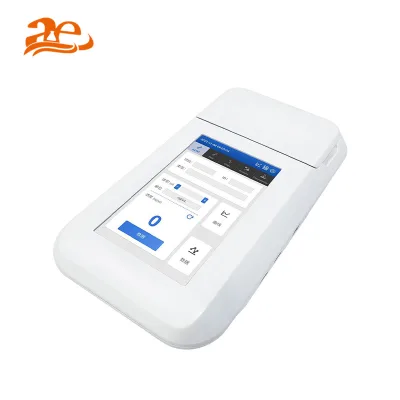

Biobase Dry Fluorescence Immunoassay Analyzer Portable Hormones Analyzer
$300.00 - $800.00
MOQ: 1 Pieces

Advanced Portable Fluorescence Immunoassay Analyzer for Veterinary Use
$550.00 - $800.00
MOQ: 1 Pieces


Quantitative Portable Human Fluorescence Quantitative Immunoassay Poct Analyzer
$500.00 - $962.00
MOQ: 1 Pieces


Reliable Advanced Fully Automatic Chemiluminescence Immunoassay Analyzer
$1260.00 - $2499.00
MOQ: 1 Pieces


Comprehensive Sourcing Guide
Portable Fluorescence Immunoassay Analyzer Sourcing Guide
Sourcing portable fluorescence immunoassay analyzers requires a disciplined approach to balancing analytical performance with operational flexibility. These devices are designed for point-of-care and decentralized testing environments, offering rapid results through advanced optical detection methods. Buyers must navigate a market where specifications vary significantly between models, ranging from basic biochemical analysis to specialized quantitative immunoassays. The core value proposition lies in the ability to perform complex diagnostics outside traditional laboratory settings, making the verification of technical accuracy and system compatibility critical for successful procurement.
This guide focuses on evidence-based evaluation criteria derived from current market listings and trusted category knowledge. It addresses the specific attributes observed in available products, such as the DNS-F001, YJ-Q1000, and YJ-QF310 models, to provide actionable advice for procurement teams. By adhering to strict verification protocols for power requirements, data storage, and interface connectivity, buyers can mitigate risks associated with incompatible infrastructure or insufficient performance capabilities. The following sections detail the essential steps for evaluating these instruments effectively.
Product Scope and Observed Listing Signals
The current market for portable immunoassay analyzers presents a diverse range of instruments classified under biological diagnostics and biochemical apparatuses. Listings indicate a price range from approximately $95 to $14,999 USD, reflecting significant variation in capabilities, from basic POCT (Point-of-Care Testing) devices to more sophisticated fluorescence-based systems. The minimum order quantity (MOQ) is typically low, often between 1 and 2 units, which facilitates pilot testing and small-scale deployment in clinics or field operations. Buyers should interpret this wide price spectrum as an indicator of differing feature sets, particularly regarding measurement speed, data capacity, and system openness.
Observed product names and classifications reveal distinct functional categories within the portable segment. For instance, some units are explicitly labeled as "Poct Immunoassay Analyzer Clinical Analytical Inst" or "Fluorescence Immunoassay Analyzer," while others are categorized broadly as "Biochemistry Analyzer" or "Imaging Diagnostic Equipment." This terminology overlap necessitates careful scrutiny of the actual technical specifications rather than relying solely on product titles. The presence of features like laser light sources and touchscreen displays in fluorescence models suggests a higher tier of analytical precision compared to standard biochemical units, which may lack such advanced optical components.
Technical Specifications to Verify
Power and environmental operating conditions are foundational constraints that must align with the deployment site’s infrastructure. Available data indicates that many portable analyzers operate on AC 220V ±22V at 50/60Hz, with an ambient temperature range of 5°C to 40°C and relative humidity of ≤80%. Buyers must verify that the local power supply matches these voltage and frequency requirements to prevent equipment damage or operational failure. Additionally, atmospheric pressure tolerances, such as 86kpa~106kpa, should be considered for facilities located at high altitudes or in non-standard environmental conditions, ensuring the device maintains accuracy across its intended operational range.
Data handling and connectivity interfaces are critical for integrating these devices into existing laboratory information systems (LIS) or hospital networks. Models like the YJ-Q1000 offer extensive connectivity options, including RS232, LAN, USB, barcode scanners, and built-in printers, supporting a closed system architecture. Data storage capacities vary widely, with some units holding over 10,000 tests while others support up to 100,000 results. Buyers should prioritize devices with robust interface options to ensure seamless data transfer and audit trail compliance. Furthermore, the measurement time, such as ≤8 seconds per stip for fluorescence models, is a key performance indicator for high-throughput environments, directly impacting patient turnaround times.
Physical dimensions and weight are practical considerations for portable units intended for mobile or space-constrained settings. The DNS-F001 model, for example, weighs 2.5kg with dimensions of 253mm321mm173mm, while the YJ-Q1000 is lighter at 2.0kg with a compact footprint of 256mm204mm66mm. These specifications suggest that portability is a primary design goal, allowing for easy transport between clinics or use in emergency response scenarios. Buyers should assess whether the physical form factor supports the intended workflow, ensuring that the device can be easily stored and accessed without compromising stability during operation.
Compliance and Safety Documentation
Certification status is a primary indicator of regulatory compliance and market readiness. Many listed portable analyzers carry ISOCE certification, which suggests adherence to specific international standards for quality management and electromagnetic compatibility. However, buyers must distinguish between general certification claims and region-specific regulatory approvals, such as FDA clearance or CE marking for medical devices in Europe. The presence of ISO13485 or ISO9001 standards in background knowledge indicates a commitment to quality management systems, but these should be verified through official documentation provided by the supplier rather than assumed from general market trends.
Safety and operational standards must be rigorously reviewed to ensure the device meets local healthcare regulations. While specific test results and performance claims are not universally disclosed in general listings, buyers should request detailed technical files that demonstrate compliance with relevant safety directives. This includes verifying that the device’s electrical safety, laser safety (for fluorescence models), and biological safety features meet the requirements of the destination country. Procurement teams should also confirm that the manufacturer provides adequate user manuals and safety guidelines in multiple languages, facilitating proper training and safe operation by clinical staff.
Cost Drivers and Commercial Terms
The total cost of ownership extends beyond the initial purchase price, encompassing consumables, maintenance, and software updates. The observed price range of $95 to $14,999 USD highlights the impact of technological sophistication on cost. Fluorescence immunoassay analyzers with laser light sources and high data storage capacities typically command higher prices due to their advanced analytical capabilities and closed system requirements. Buyers should evaluate the cost per test, considering whether the device operates on a closed system that mandates proprietary reagents, which can affect long-term operational expenses.
Commercial terms such as MOQ, lead times, and warranty provisions significantly influence procurement strategy. With MOQs as low as 1-2 units, buyers have flexibility to test devices before committing to larger orders. However, lead times and warranty terms are not explicitly detailed in general listings and must be negotiated directly with suppliers. Buyers should seek clear agreements on after-sales support, including availability of spare parts, technical assistance, and software updates. Understanding these commercial dynamics allows for more accurate budgeting and risk management, ensuring that the procurement process aligns with organizational financial and operational goals.
Supplier Qualification and Quality Control
Supplier verification is essential to ensure the reliability and authenticity of the products supplied. Buyers should prioritize manufacturers with established production facilities, such as those located in Jiangsu, China, which is a known hub for medical device manufacturing. The origin of the product, whether from Jiangsu or other regions in China, should be confirmed to assess the supply chain’s stability and the manufacturer’s reputation. Due diligence should include reviewing the supplier’s business license, production capabilities, and history of exports to ensure they meet international quality and delivery standards.
Quality control processes must be transparent and verifiable. Buyers should request evidence of quality management systems, such as ISO13485 certification, and inquire about the manufacturer’s internal testing protocols. This includes verifying that each unit undergoes rigorous functional testing before shipment, including checks on power supply, display functionality, printing mechanisms, and data accuracy. Additionally, buyers should assess the supplier’s ability to provide batch-specific documentation, ensuring traceability and consistency across orders. Establishing a strong relationship with a qualified supplier enhances the likelihood of receiving high-quality products and reliable support throughout the device’s lifecycle.
Long-Term Procurement Checks
Ongoing performance monitoring is crucial for maintaining the accuracy and reliability of portable immunoassay analyzers. Buyers should implement regular calibration and maintenance schedules to ensure the devices continue to meet performance specifications over time. This includes verifying the integrity of the laser light source, touchscreen display, and internal thermal printer, which are critical components for accurate data capture and reporting. Regular software updates should also be applied to address any security vulnerabilities or functionality improvements, ensuring the device remains compatible with evolving laboratory information systems.
Data security and privacy compliance must be continuously evaluated, especially as devices become more connected through LAN and USB interfaces. Buyers should ensure that the device’s data storage and transfer mechanisms comply with local data protection regulations, such as HIPAA or GDPR, depending on the deployment location. This includes verifying that data encryption and access control features are active and functioning correctly. By prioritizing long-term operational checks and compliance, buyers can maximize the value of their investment in portable fluorescence immunoassay analyzers, ensuring sustained performance and regulatory adherence.
FAQs
What is the power supply requirement for the analyzer?
The device operates on AC 220±22V at 50/60Hz frequency. This ensures compatibility with standard electrical grids in most regions while maintaining stable performance during operation.
Can the system store a large volume of test data?
Yes, the system can store over 10,000 test results. Some models support up to 100,000 results, ensuring sufficient capacity for extensive clinical testing without immediate data transfer needs.
Which interface options are available for data connectivity?
The analyzer includes USB, RS232, and LAN interfaces for connectivity. Additional options like barcode scanners and built-in printers are available on specific models to enhance workflow efficiency.
What are the environmental operating conditions for the device?
The unit functions within an ambient temperature of 5°C to 40°C and relative humidity of 80% or less. Atmospheric pressure must remain between 86kpa and 106kpa for optimal operation.
How fast is the measurement time per test sample?
Measurement time is 8 seconds or less per stip. This rapid processing speed allows for high-throughput testing in clinical settings while maintaining accuracy and reliability for patient results.
Is customization available for the product specifications?
Customization is available for this product to meet specific buyer requirements. Buyers should contact suppliers directly to discuss tailored solutions regarding features or packaging configurations.
What is the net weight of the portable analyzer unit?
The net weight is 2.5kg for the IVD instrument model. Another variant weighs 2.0kg, making both options suitable for portable applications in various clinical environments.