Source Portable High Precision Line Boring and Welding Machine for Excavators, Cylinders, and Bushings
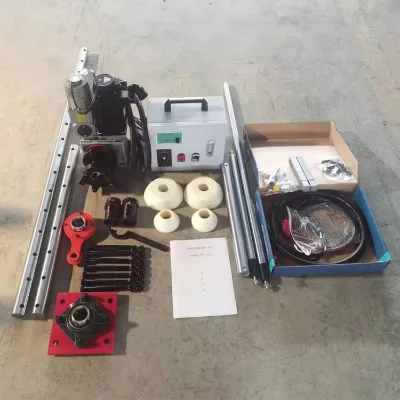
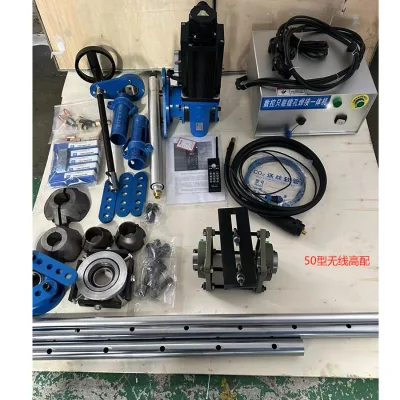
Find and compare 30 Portable High Precision Line Boring and Welding Machine options from Chinese manufacturers. These units support TIG welding, CNC controlling modes, and automatic grades for construction machine repair, cylinder reboring, and bushing hole machining tasks.
Key considerations
Products List


Factory Price Line Boring Machines Portable Boring and Welding Machine
$1400.00 - $4600.00
MOQ: 1 Sets


High Quality China Multi-Function Portable Line Boring and Welding Machine
$999.00 - $2999.00
MOQ: 1 Pieces


Portable Line Boring Machine Line Bore Welder Repairing Excavator with Good Price
$1500.00 - $1750.00
MOQ: 1 Pieces


Comprehensive Sourcing Guide
Portable High Precision Line Boring and Welding Machine Sourcing Guide
Sourcing a Portable High Precision Line Boring and Welding Machine requires a careful balance between mechanical versatility and operational safety. These specialized tools are designed for on-site repair of heavy machinery, allowing technicians to rebore cylinders and weld bushings without dismantling large components. The market offers a variety of models, ranging from double-column horizontal types to compact electric-drive units, each with distinct capabilities. Buyers must navigate a landscape where product names often overlap, such as "Portable Line Boring Machine" or "Bore Welding Machine," to ensure they select equipment that matches their specific repair needs.
The procurement process is influenced by several key variables, including the machine’s coordinate type, controlling mode, and power source. While some listings emphasize CNC control for automated precision, others rely on mechanical transmission for robustness in field conditions. Understanding these distinctions is critical for aligning the tool with your workforce’s skill level and the complexity of the repairs you perform. This guide provides a structured approach to evaluating these machines, focusing on technical verification, compliance, and long-term reliability to help you make an informed purchasing decision.
Product Scope and Observed Listing Signals
The current market for portable line boring and welding machines presents a wide range of options, with observed prices spanning from approximately $500 to $12,200 USD. This significant variance reflects differences in build quality, motor power, and included accessories. Most listings indicate a minimum order quantity (MOQ) of one unit, suggesting that these machines are typically sold as individual capital equipment rather than bulk commodities. Buyers should note that while the price range is broad, the lowest-cost items may lack the high-precision features or robust construction required for heavy-duty industrial applications.
Product attributes vary considerably across suppliers, with some machines advertised as "Automatic" and others as "Semiautomatic." The controlling mode is another key differentiator, with CNC systems offering enhanced precision for complex tasks, while mechanical drives provide simplicity and ease of maintenance. Additionally, the tool type can range from "Fine Knife" for delicate finishing to "Crude Knife" for initial material removal. These observations highlight the importance of scrutinizing individual product specifications rather than relying on general category descriptions, as the actual capabilities of a machine depend heavily on its specific configuration and model number.
Technical Specifications to Verify
When evaluating technical specifications, the coordinate boring machine type is a primary consideration. Listings indicate the availability of both double-column and horizontal types, each suited for different structural geometries. The horizontal type is often preferred for its stability and ease of setup on large, stationary equipment. Buyers should verify the machine’s structure and ensure it aligns with the physical constraints of the machinery they intend to repair. The precision rating is another critical factor, with many suppliers claiming "High Precision" capabilities, which should be validated through detailed machining roundness specifications, such as the observed 0.03mm tolerance in some models.
Power and transmission systems also play a vital role in performance. Some machines utilize a 1.5kw brushless DC main motor, offering efficient and consistent power delivery, while others may offer 2kw or 3kw options for heavier loads. The drive type is typically electric, but the transmission mechanism can vary, with mechanical transmission being a common feature in robust, field-ready units. Additionally, the scope of boring, often ranging from 45mm to 200mm, must match the cylinder sizes you frequently encounter. Verifying the boring bar diameter, which may be 40mm, 50mm, or 60mm, ensures compatibility with your existing tooling and repair requirements.
Compliance and Safety Documentation
Certification is a non-negotiable aspect of sourcing industrial machinery, and many listed products display CE marking, indicating compliance with European health, safety, and environmental protection standards. Some suppliers also provide ISO certifications, such as ISO9001, which attest to the manufacturer’s quality management systems. Buyers should request copies of these certificates to verify their validity and ensure they cover the specific model being purchased. The presence of these certifications is a strong indicator that the manufacturer adheres to recognized international standards for design and production.
Safety documentation should also include detailed operational manuals and maintenance guides. Given that these machines involve high-speed rotating tools and welding components, proper safety protocols are essential. Buyers should ensure that the supplier provides comprehensive instructions on safe operation, including lockout/tagout procedures and personal protective equipment requirements. Additionally, the welding type, often specified as TIG welding torch accessories, should be compatible with your existing welding supplies and safety equipment. Verifying that all electrical components meet local voltage and frequency standards is also crucial to prevent operational hazards.
Cost Drivers and Commercial Terms
The cost of a portable line boring and welding machine is influenced by several factors, including the motor power, precision level, and included accessories. Higher-priced models often feature CNC control, brushless DC motors, and a wider scope of boring, which justify the investment through increased efficiency and versatility. Buyers should consider the total cost of ownership, including maintenance, spare parts, and potential downtime, rather than focusing solely on the initial purchase price. The observed price range suggests that significant savings can be achieved by selecting a model that meets your core requirements without unnecessary features.
Commercial terms, such as packaging and shipping, also impact the overall cost. Most suppliers use standard export wooden packages or wooden boxes to protect the machine during transit, which is essential given the precision nature of the equipment. Buyers should clarify who is responsible for shipping costs and insurance, as these can vary significantly depending on the destination. Additionally, the customization availability mentioned in some listings may offer opportunities to tailor the machine to specific needs, but this could also affect lead times and pricing. Clear communication regarding these terms is essential to avoid unexpected expenses.
Supplier Qualification and Quality Control
Supplier qualification is critical when sourcing specialized industrial equipment. Buyers should verify the supplier’s location, with many manufacturers based in regions like Henan or Xuzhou in China, known for their industrial manufacturing capabilities. However, location alone does not guarantee quality, so it is essential to assess the supplier’s reputation, production capacity, and after-sales support. Requesting references or case studies from previous clients can provide valuable insights into the supplier’s reliability and the performance of their machines in real-world applications.
Quality control measures should be a key part of the evaluation process. Buyers should inquire about the supplier’s testing procedures, including how they verify precision and functionality before shipment. The observed specifications, such as machining roundness and motor output speed, should be backed by documented test results. Additionally, the condition of the machine, typically listed as "New," should be confirmed through detailed photos or videos. Establishing a clear quality assurance protocol, including pre-shipment inspections or third-party verification, can help mitigate the risk of receiving defective or non-compliant equipment.
Long-Term Procurement Checks
Long-term procurement success depends on the availability of spare parts and technical support. Buyers should ensure that the supplier offers a comprehensive inventory of replacement parts, such as boring bars, knives, and welding torches, to minimize downtime during repairs. The compatibility of these parts with the specific model purchased is crucial, as generic parts may not fit or perform as expected. Additionally, the supplier should provide clear guidelines for maintenance and troubleshooting, enabling your team to address minor issues without relying on external service calls.
Regular performance monitoring is also essential for maintaining the machine’s precision and reliability. Buyers should establish a schedule for routine inspections and calibration to ensure that the machine continues to meet specified tolerances over time. Tracking usage metrics, such as the number of cycles or hours of operation, can help predict maintenance needs and prevent unexpected failures. By proactively managing the machine’s lifecycle, you can maximize its value and ensure consistent performance in your repair operations.
FAQs
What certifications do these machines have?
These machines hold CE and ISO certifications. Some listings specifically mention ISO9001 compliance alongside CE marks. This ensures the equipment meets international safety and quality standards for industrial use.
Can the machine be customized for specific needs?
Yes, customization is available for these portable line boring machines. Buyers can request specific standards or configurations to match their operational requirements. This flexibility supports diverse industrial repair applications.
What is the precision level of the boring operation?
The machine offers high precision with a machining roundness of 0.03mm. This accuracy is suitable for reboring automobile cylinders and repairing construction machinery. It ensures tight tolerances for critical mechanical components.
Which motor specifications are available for this unit?
Available main motors include 1.5kw, 2kw, or 3kw brushless DC options. The output speed can reach 125r/Min depending on the configuration. These power ratings support various boring scope requirements from 45 to 200mm.
How is the machine packaged for shipping?
The units are packed in standard export wooden packages or wooden boxes. This robust packaging protects the equipment during transit. It is designed to ensure safe delivery to international destinations from China.
What is the origin location of these machines?
The machines originate from Henan and Xuzhou in China. These regions are known for manufacturing industrial machinery. Buyers can expect products sourced directly from these established manufacturing hubs.
Can the machine be used for welding applications?
Yes, the unit includes TIG welding torch accessories for welding functions. It supports installation and welding tasks alongside boring operations. This dual functionality makes it suitable for comprehensive repair workflows.