Find Portable Industrial Dew Point Meter for HVAC, Gas, and Power
Source 30 verified options for the Portable Industrial Dew Point Meter to compare specifications like measurement range, accuracy, and response time. Buyers can evaluate models featuring digital displays, various power sources, and certifications such as RoHS and CE for diverse industrial needs.
Key considerations
Products List

Portable Industrial Advanced & Intelligent Sf6 Gas Portable Dew Point Meter
$3000.00 - $5000.00
MOQ: 1 Pieces

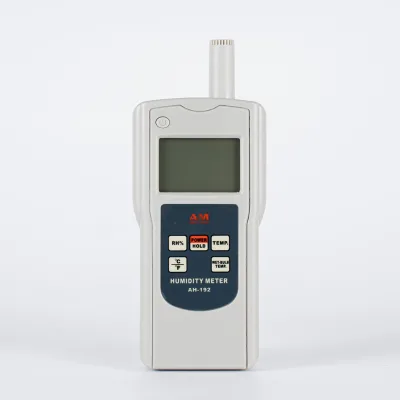


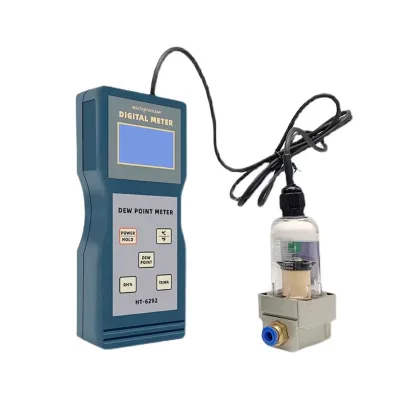
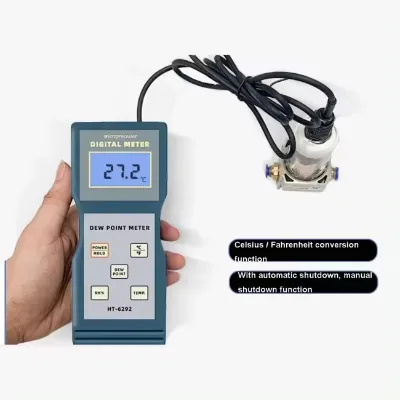


Suto S520 Industrial Portable Dew Point Meter -50 to +50deg C Td Fast Response
$2000.00 - $2500.00
MOQ: 1 sets

Dp70 -80 to 20 Deg High Accuracy Rechargeable Portable Dew Point Meter
$1200.00 - $1500.00
MOQ: 1 Sets


Portable Intelligent Dew Point Meter for Direct Measurement of Atmospheric Dew Point
$1500.00 - $2800.00
MOQ: 1 Pieces

Portable Dew Point Analyzer for Portable Analysis of Trace Water Concentration
$1700.00 - $2990.00
MOQ: 1 Pieces
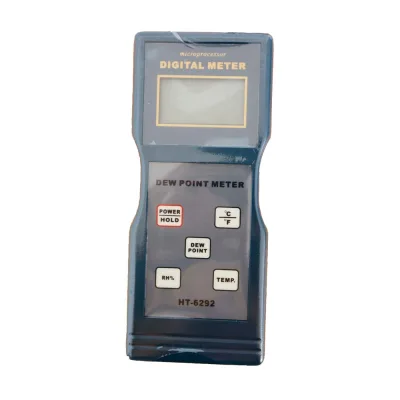
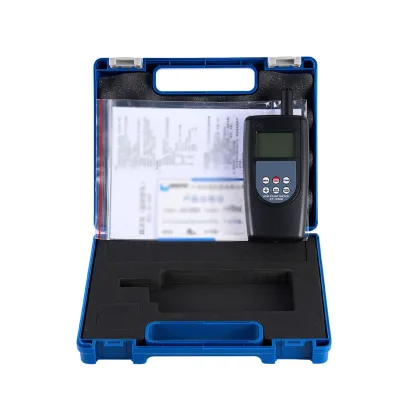
HT-1292D Multifunctional Dew Point Meter Humidity/Temp Wet Bulb Temp Meter 4 in 1
$234.42 - $285.38
MOQ: 1 Minimum

Automatic Portable Dew Point Meter for Dew Point Temperature Testing
$1000.00 - $4500.00
MOQ: 1 Pieces


Comprehensive Sourcing Guide
Strategic Sourcing Guide for Portable Industrial Dew Point Meters
Procuring a Portable Industrial Dew Point Meter requires a disciplined approach that balances technical precision with operational reliability. In the context of industrial gas analysis, moisture content is a critical parameter that can dictate the safety and efficiency of processes ranging from power generation to semiconductor manufacturing. Buyers must navigate a complex landscape of specifications, where the distinction between laboratory-grade precision and field-ready ruggedness is paramount. This guide outlines the essential factors for sourcing these instruments, focusing on verified technical attributes, compliance requirements, and long-term value assessment based on current market data.
Defining Technical Specifications and Measurement Principles
The primary differentiator among portable dew point meters is the underlying measurement principle and the resulting accuracy. The market offers instruments utilizing various technologies, with the film capacitor method being a prevalent choice for its balance of cost and performance. When evaluating potential suppliers, buyers should scrutinize the stated measurement range and resolution. For instance, specific models in the current supply chain demonstrate a dew point range extending from -100°C to 20°C, which is suitable for deep drying applications in industrial gases. Other units may focus on broader environmental ranges, such as -40°C to 40°C for temperature and 10% to 95% relative humidity, catering to HVAC or general atmospheric monitoring.
Resolution and accuracy are equally critical. High-end portable units often boast a resolution of 0.01% or 0.1°C, with allowable errors as tight as ±1°C or ±2°C depending on the specific application requirements. It is essential to distinguish between the instrument's stated accuracy and its zero drift characteristics. Some advanced models specify a zero drift of ≤±1% Full Scale per 7 days, a metric that indicates long-term stability without frequent recalibration. Furthermore, the response time, often cited as T90 ≤15 seconds, determines how quickly the device can react to changes in gas composition, a vital factor for real-time process control.
The display interface also plays a significant role in usability. Modern devices typically feature digital displays, with high-resolution options like 128x64 dot matrix LCD screens providing clear visibility of data points in various lighting conditions. Buyers must verify that the display mode supports the necessary data logging and reading formats required for their specific workflow.
Power Supply Flexibility and Operational Environment
Reliability in the field is heavily dependent on power source versatility. While many industrial instruments rely on a fixed AC 220V or AC 170-265V supply, true portability often necessitates a hybrid approach. The most robust portable units are designed with built-in lithium batteries that can operate independently of mains power, yet still accept AC input for continuous operation or charging. This dual capability ensures that the device remains functional during power outages or in remote locations where grid access is unavailable.
Operating temperature ranges are another non-negotiable specification. Industrial environments can be harsh, with temperatures fluctuating significantly. A standard operating range of -30°C to 50°C is common, allowing the device to function in extreme cold or heat. However, buyers must confirm that the specific model they are considering can withstand the ambient conditions of their intended site. Additionally, the physical protection level, often rated at IP66, indicates a high degree of resistance against dust and water jets, which is essential for outdoor or wet industrial settings.
Compliance, Certification, and Safety Standards
In the realm of industrial instrumentation, compliance with international standards is not merely a formality but a prerequisite for safety and legal operation. Buyers should prioritize suppliers who can provide documented evidence of certifications such as RoHS, CE, and FCC. These certifications ensure that the device meets strict guidelines regarding hazardous substances, electromagnetic compatibility, and electrical safety.
While specific industry standards like ISO 8573 are often referenced in the broader context of compressed air quality, buyers must verify if the purchased meter aligns with the specific clauses relevant to their application. The absence of a specific standard citation in a product listing does not necessarily imply non-compliance, but it does require the buyer to request detailed test reports or third-party validation. Furthermore, the uncertainty of measurement, often cited as ±0.2% in high-precision contexts, should be clearly defined in the product documentation to ensure traceability and confidence in the data provided.
Cost Drivers and Procurement Economics
The pricing of portable industrial dew point meters varies significantly based on the complexity of the measurement technology, the build quality, and the included features. Current market observations indicate a wide price range, typically spanning from $100 to $30,000 USD. This variance is driven by several factors, including the measurement range, the sophistication of the output signals, and the durability of the housing.
Lower-cost units often focus on basic measurement capabilities with limited output options, while high-end models may include advanced features such as 4-20mA analog outputs, Modbus RTU communication, and RS232 or RS485 digital interfaces. These communication protocols are essential for integrating the meter into larger SCADA systems or automated control loops. Buyers must also consider the Minimum Order Quantity (MOQ), which typically ranges from 1 to 5 units, allowing for flexible procurement strategies for both single-unit pilots and bulk deployments.
The packaging and logistics also contribute to the overall cost. Instruments are often shipped in wooden boxes or cases with wrapping film to prevent damage during transit, particularly for delicate electronic components. The origin of the product, frequently cited as Guangdong or Wuhan in China, can influence shipping costs and lead times, though these should be verified on a case-by-case basis.
Supplier Evaluation and Customization Capabilities
When selecting a supplier, buyers should look beyond the product specifications to evaluate the manufacturer's capacity for customization and support. Many suppliers offer OEM (Original Equipment Manufacturer) and ODM (Original Design Manufacturer) services, allowing for tailored solutions that meet specific branding or functional requirements. This level of customization can be crucial for industries with unique integration needs or proprietary standards.
The warranty period is another key indicator of supplier confidence. A standard warranty of one year is common, but buyers should clarify the terms of coverage, including what constitutes a defect versus normal wear and tear. Additionally, the availability of spare parts and the supplier's track record for after-sales support are critical for minimizing downtime.
Quality Control and Long-Term Procurement Considerations
Ensuring the quality of the sourced equipment requires a robust quality control process. Buyers should verify the production standards, such as specific dimensions for the housing (e.g., 605030cm or 770650250mm for larger units), and ensure that the manufacturing process adheres to consistent quality benchmarks. The sampling method, whether pass-through or otherwise, should be validated to ensure it does not introduce contamination or delay in measurement.
For long-term procurement, the stability of the supply chain is paramount. Buyers should assess the supplier's ability to maintain consistent quality over time and their capacity to scale production if demand increases. The presence of a clear model number, such as CYQD-511, AH-192D, or JX-PM1, facilitates easier identification and reordering of specific configurations.
Comparative Analysis of Key Product Attributes
To assist in the decision-making process, the following table summarizes key attributes observed across different product models in the current market. This comparison highlights the diversity in specifications and helps buyers identify the most suitable options for their specific needs.
| Attribute | Model A (High Precision) | Model B (General Purpose) | Model C (Industrial Grade) |
|---|---|---|---|
| Measurement Principle | Film Capacitor | Film Capacitor | Film Capacitor |
| Dew Point Range | -100°C to 20°C | -40°C to 40°C | -100°C to 20°C |
| Resolution | 0.01% / 0.1°C | 0.1°C | 0.1°C |
| Accuracy | ±0.2% Uncertainty | ±1°C | ±2°C |
| Power Supply | AC 220V + Battery | AC 220V | AC 170-265V |
| Response Time | ~1 Minute | T90 ≤15s | T90 ≤15s |
| Output Signal | 4-20mA, Modbus | Analog/Digital | 4-20mA, RS232/485 |
| Protection Level | IP66 | Standard | IP66 |
| Certification | RoHS, CE, FCC | Standard | RoHS, CE, FCC |
| Portability | Portable | Portable | Non-Portable |
This table illustrates that while the core technology remains consistent, the application-specific features vary widely. Buyers must align these attributes with their operational requirements to ensure optimal performance.
Final Recommendations for Procurement Strategy
In conclusion, sourcing a Portable Industrial Dew Point Meter is a multifaceted process that demands careful attention to technical specifications, compliance, and supplier reliability. By focusing on the verified attributes provided in product listings, such as measurement ranges, accuracy, and power options, buyers can make informed decisions that mitigate risk and ensure operational success. It is imperative to avoid assumptions about unverified claims and to request detailed documentation for any critical performance metrics. With a clear understanding of the market landscape and the specific needs of their application, procurement teams can secure high-quality instruments that deliver precise moisture analysis in even the most demanding industrial environments.
FAQs
What is the measurement range for the dew point analyzer?
The measurement range extends from -100 to 20 degrees Celsius for dew point. This specific range suits deep drying applications in industrial gases, while other models cover broader environmental temperatures and humidity levels.
How accurate is the portable dew point meter measurement?
Accuracy varies by model, with some units offering an uncertainty of plus or minus 0.2 percent. Other devices specify an allowable error of plus or minus 1 degree Celsius or plus or minus 2 degrees Celsius depending on the application.
Can the device operate with a built-in battery?
Yes, many units feature a built-in lithium battery for portable operation. These devices also accept AC 220V or AC 170-265V input for continuous power supply or charging during extended field use.
Which certifications are available for these industrial meters?
Available certifications include RoHS, CE, and FCC for electrical safety and electromagnetic compatibility. Buyers should verify specific documentation to ensure compliance with hazardous substance guidelines and international safety standards.
What is the typical response time for the sensor?
The response time is typically T90 less than or equal to 15 seconds for rapid detection. Some general-purpose units may have a test time of about one minute, suitable for less dynamic process monitoring.
How does the device handle output signals for integration?
Output signals often include 4-20mA analog current and Modbus RTU digital communication. Additional interfaces like RS232 or RS485 are available for connecting to SCADA systems or automated control loops.
What is the minimum order quantity for purchasing these meters?
The minimum order quantity typically ranges from one to five units. This flexible MOQ allows buyers to procure single items for pilot testing or small batches for immediate deployment without large inventory commitments.
Can suppliers provide customization for the product branding?
Customization is available through OEM and ODM support services from many manufacturers. Buyers can request tailored solutions for specific branding or functional requirements to meet unique industrial integration needs.