Source Portable Peanut Bar Forming Machine for Candy, Biscuit, Donut
Compare 30 Portable Peanut Bar Forming Machine options from verified Chinese suppliers. These electric units feature automatic grades and production speeds ranging from 30 to 250kg per hour for candy, biscuit, and donut applications.
Key considerations
Products List


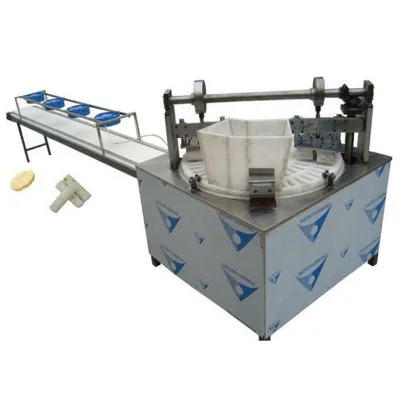


Automatic Peanut Cake Bar Forming Cutting Machine Peanut Candy Bar Making Line
$1500.00 - $10000.00
MOQ: 1 Pieces


Peanuts Bar Candy Machine/Protein Bar Equipment/Energy Bar Making Machine
$15000.00 - $35000.00
MOQ: 1 Sets

Peanuts Bar Candy Machine/Protein Bar Equipment/Energy Bar Making Machine
$15000.00 - $35000.00
MOQ: 1 Sets

Peanuts Bar Making Machine/Nuts Bar Making Machine/Candy Making Machine
$10000.00 - $80000.00
MOQ: 1 Sets


Peanuts Bar Candy Machine/Energy Bar Making Machine/Protein Bar Equipment
$15000.00 - $35000.00
MOQ: 1 Sets

Peanuts Bar Candy Machine/Energy Bar Making Machine/Protein Bar Equipment
$15000.00 - $35000.00
MOQ: 1 Sets


Factory Price Protein Peanut Candy Bar Making Machine Cereal Bar Production Line
$3000.00 - $12000.00
MOQ: 1 Sets


Comprehensive Sourcing Guide
Strategic Sourcing Guide for Portable Peanut Bar Forming Equipment
When evaluating the market for a Portable Peanut Bar Forming Machine, buyers must navigate a landscape defined by specific technical constraints, certification requirements, and operational capabilities. The core keyword "Portable Peanut Bar Forming Machine" implies a need for equipment that balances high-volume output with spatial flexibility. While the term "portable" suggests mobility, the provided product data indicates that many industrial-grade units in this category are substantial pieces of machinery, often requiring permanent installation or heavy-duty transport rather than simple hand-carrying. The following guide synthesizes observed market data to help procurement professionals make informed decisions based on verified attributes rather than marketing claims.
Technical Specifications and Operational Parameters
The technical profile of a peanut bar forming machine is the primary determinant of its suitability for a specific production line. Based on the observed product data, these machines vary significantly in dimensions, weight, and output capacity. Buyers should not assume that all units labeled as "peanut bar" or "cereal bar" machines share identical specifications. For instance, one observed model, designated as P401, carries a substantial weight of 1200kg and measures 48009201200mm. In contrast, other units in the same category, such as the P307, weigh 180kg and have dimensions of 24008601300mm. This disparity highlights the importance of verifying physical constraints before ordering.
Production speed is another critical variable. The data reveals a wide range of output capabilities, with some units operating at 150-250kg/Hr, while others are rated in pieces per minute, such as 30-90 PCS/Min or 40-60 PCS/Min. The choice between a speed measured in weight versus a speed measured in count depends heavily on the density of the peanut bar product being manufactured. Furthermore, the power source is consistently listed as Electric, with a specific voltage requirement of 220V/50Hz observed in several listings. This standard voltage requirement suggests that facilities in regions with different power grids may need to invest in transformers or voltage stabilizers.
The raw material compatibility is also a key technical consideration. The observed data explicitly lists Milk, Wheat, and Flour as raw materials for these lines, indicating that the machinery is designed to handle a mixture of ingredients typical for cereal or peanut bars. The material of construction is frequently noted as 304 Stainless Steel, a standard for food-grade equipment due to its corrosion resistance and ease of cleaning. Buyers must confirm that the specific model they select utilizes this grade of steel for all food-contact surfaces to ensure compliance with food safety regulations.
Compliance, Certification, and Safety Standards
Navigating the regulatory landscape is essential for any B2B procurement involving food processing machinery. The provided facts indicate that certification status varies among suppliers. Some units are listed with ISOCE certification, while others carry CE certification. The presence of these certifications is a strong indicator that the manufacturer has undergone specific testing procedures, though the exact scope of these certifications should be verified against local import regulations.
Safety and operational standards are often embedded in the machine's design. The "Automatic Grade" is listed as Automatic for several models, implying a high level of mechanization that reduces manual intervention. However, the "Customized" attribute shows a split in the market; some units are explicitly "Customized," while others are "Non-Customized." This distinction is vital for compliance, as custom modifications may alter the machine's original certification status. Buyers must ensure that any customizations do not void existing safety certifications.
Additionally, the "Condition" of the machinery is a factor in compliance. The data shows that units are typically sold as "New," which is preferable for meeting hygiene standards. The "Process" type is identified as Thermal Processing for some models, which implies the machine may include heating elements or ovens. This necessitates strict adherence to electrical safety standards and thermal insulation protocols. Buyers should request detailed documentation regarding the "Video Outgoing-Inspection" provided by the supplier, as this serves as a preliminary quality assurance step before the machine leaves the factory.
Cost Drivers and Pricing Dynamics
The pricing structure for peanut bar forming machines is influenced by several factors, including capacity, customization, and material quality. The observed price range in the market is vast, spanning from 899 USD to 1,000,000 USD. This extreme variance suggests that the term "Portable Peanut Bar Forming Machine" covers everything from small-scale, semi-automatic units to fully integrated, high-speed production lines.
The primary cost driver is the production speed and the complexity of the automation. A machine rated at 150-250kg/Hr will likely command a higher price than one rated at 30-90 PCS/Min. Similarly, the inclusion of advanced features such as "High Productivity" or "High Efficiency" as key selling points often correlates with a higher price point. The material composition also plays a role; units constructed with 304 Stainless Steel may be priced higher than those using lower-grade metals, although the latter would be unsuitable for food processing.
Packaging is another cost factor. The data indicates that units are shipped in "Wooden Case," "Wooden Box," or "Standard Export Wooden Case." The choice of packaging affects the shipping cost and the protection of the machinery during transit. For heavy units like the 1200kg P401 model, the cost of the wooden case and the logistics of moving such a heavy item will be significant. Buyers should also consider the Minimum Order Quantity (MOQ), which is observed to be as low as 1 Set for some models, allowing for single-unit purchases without the need for bulk ordering.
Typical Applications and Production Versatility
While the core keyword focuses on peanut bars, the observed applications for these machines are broader. The data lists applications for Candy, Biscuit, Donut, Chips, Popcorn, and Chocolate. This versatility suggests that the forming mechanisms are adaptable to various confectionery and snack products. For a buyer specifically targeting peanut bars, it is crucial to verify that the machine's forming dies and extrusion systems are compatible with the specific texture and density of peanut mixtures.
The "Machinery Function" is explicitly stated as "Making Biscuit" for some models, while others are labeled as "Cereal Bar Production Line" or "Rice Ball Production Line." This indicates that the same base technology can be adapted for different product types. The "Advantage" of "Easy Operation" and "High Performance" is frequently cited, suggesting that these machines are designed for operators with varying levels of technical expertise. The ability to process raw materials like Milk, Wheat, and Flour simultaneously allows for the creation of complex bar structures that combine multiple ingredients.
For a peanut bar application, the machine must be capable of handling the sticky nature of peanut butter and the granular nature of peanuts. The "Thermal Processing" capability mentioned in the data may be used to bind the ingredients or to dry the product before forming. Buyers should inquire about the specific temperature controls and mixing capabilities to ensure the machine can handle the unique properties of peanut-based recipes.
Supplier Evaluation and Quality Assurance
Evaluating a supplier requires a deep dive into their operational capabilities and after-sales support. The "Location" of the manufacturer is a critical factor, with observed origins in Shanghai, Suzhou, and general China. Proximity to the buyer can influence shipping costs and lead times, but more importantly, it affects the ease of communication and the ability to conduct on-site inspections.
The "After-Sales Service Provided" is listed as "Online Service" for some models. While convenient, this may not be sufficient for complex machinery that requires physical maintenance or troubleshooting. Buyers should verify if the supplier offers on-site installation, training, and spare parts availability. The "Key Selling Points" such as "High Productivity" and "Easy Operation" are marketing claims that must be validated through reference checks or video demonstrations.
Quality control is another pillar of supplier evaluation. The "Video Outgoing-Inspection" is a positive indicator, suggesting that the supplier provides visual proof of the machine's condition before shipment. However, buyers should also request third-party inspection reports or test results to verify the machine's performance claims. The "Core Components" are listed as "Motor," which is a critical part of the machine. Buyers should inquire about the brand and warranty of the motor, as a failure in this component could halt production entirely.
Long-Term Procurement and Maintenance Considerations
Investing in a peanut bar forming machine is a long-term commitment that requires careful planning for maintenance and scalability. The "Standard" dimensions and "Specification" models like MTN-CBM-04 or MTN-RBPL-28A suggest that there are standardized configurations available, which can simplify the procurement of spare parts. However, the "Customized" nature of some units means that spare parts may need to be ordered specifically, potentially leading to longer lead times.
The "Weight" and "Dimension" of the machine are critical for facility planning. A 1200kg unit requires a reinforced floor and potentially a forklift or crane for installation. Buyers must ensure their facility can accommodate these physical requirements. The "Production Speed" of 150-250kg/Hr or 30-90 PCS/Min should be matched against the expected market demand to avoid underutilization or bottlenecks.
Finally, the "Condition" of the machine as "New" implies a full warranty period, but the duration and terms of this warranty should be clearly defined in the contract. The "Advantage" of "High Efficiency" and "High Performance" should be monitored over time to ensure the machine maintains its output levels. Regular maintenance schedules, based on the "Motor" and other "Core Components," should be established to prevent unexpected downtime. By focusing on these long-term factors, buyers can ensure a sustainable and profitable investment in peanut bar production equipment.
Comparative Analysis of Key Machine Attributes
To assist in the final selection process, the following table summarizes the key attributes observed in the market data. This comparison highlights the diversity in specifications and helps buyers identify the most suitable options for their specific needs.
| Attribute | Model P401 | Model P307 | Model TPX | Model MTN-CBM-04 | Model MTN-RBPL-28A |
|---|---|---|---|---|---|
| Weight | 1200kg | 180kg | Not Listed | Not Listed | Not Listed |
| Dimensions | 48009201200mm | 24008601300mm | Not Listed | 880012001500mm | Not Listed |
| Production Speed | 150-250kg/Hr | 30-90 PCS/Min | Not Listed | Not Listed | Not Listed |
| Voltage | 220V/50Hz | Not Listed | Not Listed | Not Listed | Not Listed |
| Certification | ISOCE | CE | Not Listed | Not Listed | Not Listed |
| Customization | Customized | Not Listed | Non-Customized | Not Listed | Not Listed |
| Material | Not Listed | Not Listed | Not Listed | 304 Stainless Steel | Not Listed |
| Origin | Shanghai; China | Not Listed | Suzhou | China | Not Listed |
| Packing | Wooden Case | Not Listed | Wooden Box | Standard Export Wooden Case | Not Listed |
This table underscores the necessity of detailed due diligence. The significant differences in weight, dimensions, and speed mean that a "one-size-fits-all" approach is ineffective. Buyers must align their specific production requirements with the precise specifications of the machine they intend to purchase. By rigorously evaluating these attributes, procurement professionals can secure equipment that delivers the desired efficiency and reliability for peanut bar manufacturing.
FAQs
What are the typical dimensions for portable peanut bar forming machines?
Dimensions vary significantly by model, with units like P401 measuring 4800*920*1200mm and P307 measuring 2400*860*1300mm. Buyers must verify specific physical constraints before ordering to ensure facility compatibility.
How fast can these machines produce peanut bars per hour?
Production speeds range from 150-250kg/Hr to 30-90 PCS/Min depending on the specific model selected. The choice between weight and piece-based speed depends heavily on the density of the peanut bar product being manufactured.
Which certifications are commonly found on these food processing machines?
Some units carry ISOCE certification while others hold CE certification to indicate safety compliance. Buyers should verify the exact scope of these certifications against local import regulations before finalizing procurement.
Can these machines be customized for specific production needs?
Customization is available for some models, while others are listed as non-customized. Any custom modifications must be confirmed not to void existing safety certifications or alter the machine's original compliance status.
What raw materials are compatible with these production lines?
These lines are designed to handle Milk, Wheat, and Flour as primary raw materials. This allows for the creation of complex bar structures that combine multiple ingredients typical for cereal or peanut bars.
What is the minimum order quantity for purchasing these machines?
The minimum order quantity is observed to be as low as 1 Set for certain models. This allows buyers to purchase single units without the need for bulk ordering to initiate production.
How are these machines typically packaged for international shipping?
Units are shipped in Wooden Cases, Wooden Boxes, or Standard Export Wooden Cases depending on the model. The choice of packaging affects shipping costs and ensures protection during transit for heavy items.