Source Portable Roll Up Picnic Blanket for Travel, Outdoor, Hotel
Compare 30 Portable Roll Up Picnic Blanket options from verified suppliers. Buyers can evaluate materials, sizes, customization, and pricing for travel, outdoor activities, and hotel use.
Key considerations
Products List


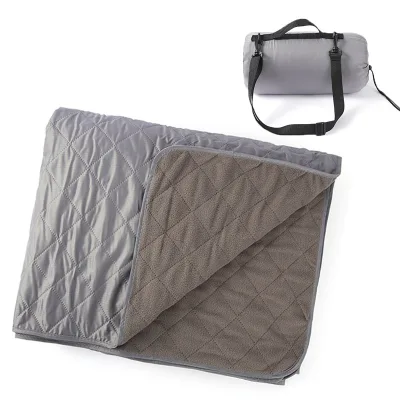


Extra Large Waterproof Picnic Blanket with Easy Carry Handle for Travel
$10.21 - $11.19
MOQ: 10 pieces

Comprehensive Sourcing Guide
Strategic Sourcing Guide for Portable Roll-Up Picnic Blankets
Understanding Product Specifications and Material Composition
When sourcing a portable roll-up picnic blanket, the primary objective is to identify a product that balances portability with durability and comfort. Based on current market observations, the core material composition for these items predominantly features Polyester, often listed as 100% Polyester or blended with Acrylic. The internal padding is a critical differentiator; high-quality options frequently utilize a Sponge layer to provide cushioning, while some variations may incorporate Cotton for the inside material to enhance breathability. The structural integrity of the blanket is often defined by its weight, which typically ranges between 1.4 and 1.8 kilograms for standard models, though custom specifications can alter this metric.
The physical dimensions are equally vital for user experience. Standard sizes observed in the market include configurations such as 15020cm, which suggests a rolled format, or larger dimensions like 150200cm for flat usage. The shape is predominantly Square or Rectangle, designed to accommodate groups of 3 to 4 persons. The hardness of the product is generally categorized as Soft or Medium Soft, ensuring comfort on uneven ground. A key feature for outdoor utility is the waterproof capability, which protects users from damp grass or light rain. The edge process is another technical specification to note, with options including Hemmed, Whip Stitch, Overlocking, and Binding, all of which contribute to the longevity of the item by preventing fraying.
| Specification Category | Common Observation | Customization Potential |
|---|---|---|
| Primary Material | 100% Polyester, Acrylic | Available (Customized) |
| Internal Padding | Sponge, Cotton | Available (Customized) |
| Standard Size | 15020cm, 150200cm | Available (Customized) |
| Weight Range | 1.4-1.8 kg | Available (Customized) |
| Edge Finish | Hemmed, Whip Stitch, Overlocking | Available (Customized) |
| Shape | Square, Rectangle | Available (Customized) |
Compliance, Certification, and Safety Standards
For B2B buyers, verifying the compliance status of a supplier is as important as the product specifications themselves. The market data indicates that certain manufacturers hold certifications such as BSCI (Business Social Compliance Initiative) and Sedex, which are crucial for buyers concerned with ethical labor practices and supply chain transparency. While some background information mentions OEKO-TEX, this specific standard is not confirmed as a high-confidence fact for all listed products; therefore, buyers must explicitly request proof of OEKO-TEX certification if textile safety and chemical restrictions are a priority for their target market.
The production standards vary by model. Some items adhere to specific model numbers like SR88888888 or PIB230802, while others follow a standard of "As sample." This distinction is vital for quality assurance. When evaluating a supplier, procurement teams should verify that the production standard matches the agreed-upon sample exactly. Furthermore, the bearing capacity of the blanket is a functional metric that should be verified, with observed ranges indicating a capacity of 3-10 kg. This ensures the blanket can support the weight of users without tearing or excessive deformation. Buyers should not assume all products meet these capacity figures without testing or requesting specific test reports from the supplier.
Cost Drivers and Pricing Dynamics
The pricing structure for portable roll-up picnic blankets is influenced by several variables, including material quality, customization level, and order volume. The observed price range in the market spans from 1.19 to 13.7 USD, a wide variance that reflects differences in material thickness, padding density, and branding efforts. The minimum order quantity (MOQ) is a significant cost driver. While some suppliers offer an MOQ as low as 10 pieces, others require a commitment of 1000 pieces. This disparity directly impacts the unit cost; higher volume orders typically yield lower per-unit prices, whereas small batch orders often carry a premium due to setup costs.
Additional cost factors include the complexity of the logo application. Options such as Printed, Embroidered, Embossed, or Customized patterns add to the production cost. The style of the blanket, whether Classic or Leisure, also plays a role, as does the specific edge process chosen. For buyers operating on tight margins, understanding the trade-off between a lower MOQ and a higher unit price is essential. Conversely, buyers seeking to establish a long-term supply chain should consider the economies of scale offered by higher MOQs, provided the demand forecast supports such volume. The production lead time, typically around 30 days for bulk orders and 7-15 days for samples, also affects cash flow and inventory planning, indirectly influencing the total cost of ownership.
Typical Applications and Usage Scenarios
The versatility of the portable roll-up picnic blanket makes it suitable for a diverse range of applications. The product is explicitly designed for travel, outdoor activities, and general leisure use. Specific use cases include garden gatherings, beach trips, and hotel amenities. The "All Season" classification suggests that these blankets are engineered to perform in various weather conditions, though some specific models are optimized for Spring, Autumn, or Summer use. The waterproof feature is particularly valuable for outdoor activities where ground moisture is a concern.
Beyond personal leisure, the application extends to commercial and institutional settings. The product is noted as suitable for hotel use, indicating its potential for rental services or hospitality amenities. The "Store Food" usage mentioned in some contexts suggests that the material may be food-safe or easily cleanable, making it suitable for outdoor dining scenarios. The gender-neutral design ensures broad market appeal, while the capacity for 3-4 persons makes it ideal for small family units or groups of friends. Buyers should align their product selection with their target customer's primary use case; for instance, a blanket with heavy sponge padding is better for garden use, while a lighter, more compact version might be preferred for travel.
Supplier Evaluation and Production Capabilities
Evaluating a supplier requires a deep dive into their production capabilities and flexibility. The market data highlights that suppliers offering OEM (Original Equipment Manufacturer) and ODM (Original Design Manufacturer) services are prevalent, allowing buyers to create unique products tailored to their brand identity. The ability to customize the product name, pattern, and logo is a standard expectation. Suppliers in Shanghai, China, are a primary source, with production origins clearly stated.
When assessing a supplier, buyers should verify their sample lead time, which is typically 7-15 days, and their bulk production lead time, often around 30 days. These timelines are critical for inventory management. The packing specifications are another area of evaluation; options range from 1 piece per polybag to 10 pieces per carton, with custom packing available. This flexibility allows buyers to optimize shipping costs and storage efficiency. Additionally, the customization of the edge process and the ability to match specific model standards (e.g., 150*200cm) demonstrate a supplier's technical proficiency. Buyers should request samples to verify that the supplier can deliver the promised hardness, weight, and material composition before committing to a large order.
Quality Control and Long-Term Procurement Considerations
Implementing a robust quality control (QC) strategy is essential for maintaining brand reputation. Given the variability in materials and processes, buyers should establish clear acceptance criteria based on the observed specifications. Key QC checkpoints include verifying the material composition (Polyester vs. Acrylic blends), checking the weight consistency (1.4-1.8 kg range), and inspecting the edge finishes for durability. The waterproof feature should be tested to ensure it meets the expected performance standards. For buyers concerned with ethical sourcing, verifying BSCI or Sedex certifications should be a mandatory step in the supplier qualification process.
Long-term procurement considerations involve building a relationship with a supplier who can adapt to changing market demands. The availability of customization in patterns, logos, and sizes ensures that the product can evolve with consumer trends. Buyers should also consider the sustainability implications of their material choices, although specific eco-certifications like OEKO-TEX require explicit verification. The ability to adjust the MOQ and lead time based on demand fluctuations is a valuable trait for a reliable supplier. By maintaining open communication regarding production standards and testing protocols, buyers can mitigate risks associated with product inconsistency and ensure a steady supply of high-quality portable roll-up picnic blankets.
FAQs
What materials are used for portable roll up picnic blankets?
The primary materials are 100% Polyester and Acrylic blends. Some models feature an inside layer of Cotton and Sponge padding for comfort, ensuring durability and softness for outdoor use.
Can I customize the logo and pattern on these blankets?
Yes, customization is available for logos and patterns. You can choose from Printed, Embroidered, Embossed, or fully Customized designs to match your brand identity or specific style requirements.
What is the typical minimum order quantity for these products?
The minimum order quantity varies significantly by supplier. Some options require 1000 pieces, while others accept orders as low as 10 pieces depending on the specific model and customization level.
How long does production take for bulk orders?
Bulk production typically requires 30 days lead time. Sample orders are faster, usually taking between 7 to 15 days to complete before the main manufacturing process begins.
Which certifications do the manufacturers hold?
Suppliers often hold BSCI and Sedex certifications for ethical labor practices. While OEKO-TEX is mentioned in background data, it is not confirmed for all products and requires explicit verification.
What are the standard dimensions and weight of the blankets?
Standard sizes include 150 by 20 cm or 150 by 200 cm, with custom options available. The weight typically ranges from 1.4 to 1.8 kilograms, though this can be customized.
Are these blankets suitable for all seasons and outdoor activities?
Yes, they are suitable for all seasons including Spring, Summer, and Autumn. They are designed for travel, garden use, and hotel amenities with waterproof features to protect against damp ground.