Source Power Socket Strip for Commercial, Industrial, and Residential Use
Find 30 Power Socket Strip options with varying ratings, plug standards, and customization features. Buyers can compare specifications for commercial, industrial, and residential applications directly from Chinese manufacturers offering CE and RoHS certifications.
Key considerations
Products List
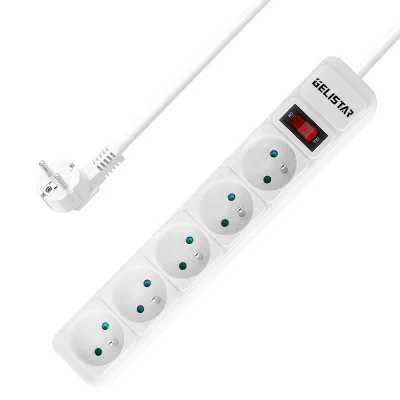


Power Strip Socket Converter Multi-Hole Panel Electric Simple Wireless Strip Socket
$0.48 - $0.50
MOQ: 2000 Pieces

Power Strip Plug British Jack European Standard Us Standard Pin British Socket
$1.90 - $2.00
MOQ: 500 Pieces

4 Way UK Extension Socket Power Strip
$1.60 - $1.65
MOQ: 3000 Pieces
WANSHUN ELECTRICAL & INTELLIGENT MANUFACTURE (GUANGDONG) CO., LTD.


5 Outlet Surge Protector Power Strip
$3.65 - $3.78
MOQ: 1000 Pieces
WANSHUN ELECTRICAL & INTELLIGENT MANUFACTURE (GUANGDONG) CO., LTD.


Comprehensive Sourcing Guide
Strategic Sourcing Guide for Power Socket Strips
Navigating the global market for power socket strips requires a disciplined approach that balances technical compatibility, regulatory compliance, and supply chain reliability. For procurement professionals, the complexity lies not just in selecting a product, but in verifying that the specific configuration meets the operational demands of diverse environments ranging from residential general-purpose use to heavy industrial applications. The following guide outlines the critical factors buyers must evaluate when sourcing these electrical distribution components, grounded in observed market data and standard industry practices.
Technical Specifications and Configuration Analysis
The foundational step in sourcing power socket strips involves a rigorous analysis of technical specifications to ensure compatibility with the target electrical infrastructure. The market presents a wide array of models, each designed for specific regional standards and functional requirements. For instance, product observations indicate distinct model identifiers such as LGT-P302, LGT-P301, and LGT-70 1, alongside region-specific designations like "Israel power strip," "Brazil Power Socket," and "South Africa Power Strip." These labels are not merely marketing terms but indicate adherence to specific plug standards and voltage configurations required by local grids.
Voltage and current ratings are paramount safety parameters. Data indicates that many units operate within a rated voltage range of 100-250V, with specific models supporting 220V/110V or a fixed 250V rating. The rated current is another critical metric, with observed specifications listing a capacity of 16A. Buyers must verify that the selected strip can handle the cumulative load of connected devices without overheating. Furthermore, the physical configuration of the outlets, such as the "6 Digits" hole count, determines the number of simultaneous connections available.
Switch functionality is a significant differentiator in product selection. The market offers variants categorized as "With Switch" or "Without Switch," and some are explicitly described as "Type: Without Switch." This feature impacts user convenience and energy management. Additionally, grounding mechanisms vary; some units feature "Standard Grounding" while others utilize "Self Grounding" technology. The choice between these depends on the safety protocols of the facility and the specific grounding requirements of the connected equipment. Cable length is another variable, with observed specifications ranging from 1.5 meters to 1.8 meters, influencing the flexibility of installation in different spatial layouts.
Compliance, Certification, and Regulatory Standards
In the B2B sector, regulatory compliance is non-negotiable. Power socket strips must meet the safety and environmental standards of the destination market. Observed product data highlights certifications such as CE and RoHS, which are essential for selling into the European Union and other regions with similar regulatory frameworks. The CE mark indicates conformity with health, safety, and environmental protection standards for products sold within the European Economic Area, while RoHS restricts the use of specific hazardous materials in electrical and electronic equipment.
However, buyers must exercise caution regarding the universality of these certifications. While "CE,RoHS" appears as a combined attribute for certain models, other listings show "CE" as a standalone certification. This suggests that certification status can vary by specific model or production batch. It is imperative for procurement teams to request valid, up-to-date certification documents for the exact model number being ordered, rather than relying on general category claims.
Furthermore, the "Plug Standard" is noted as "Other" in some contexts, which necessitates a detailed review of the specific plug type required for the installation site. Whether the application is in a commercial office, an industrial plant, or a hospital, the plug interface must match the local wall outlets perfectly to prevent electrical hazards. Buyers should verify that the product's design aligns with the specific national standards of the country of origin or the country of use, as "Israel power strip" or "Brazil Power Socket" implies a tailored design for those specific regulatory environments.
Cost Drivers and Pricing Dynamics
Understanding the cost structure of power socket strips is essential for budgeting and negotiation. The observed price range in the market spans from $0.04 to $22.00 USD. This wide variance is driven by several factors, including the complexity of the design, the quality of materials used, the presence of additional features like switches, and the level of customization. Basic, non-customized units with simple designs and standard grounding tend to fall at the lower end of the spectrum, while customized solutions with advanced features, specific certifications, and higher durability ratings command higher prices.
Minimum Order Quantity (MOQ) is another significant cost driver. The market observes an MOQ range from 1 to 100,000 units. Small MOQs allow for flexibility in testing and small-scale deployments but often result in a higher unit cost due to setup and handling fees. Conversely, large volume orders can leverage economies of scale to reduce the per-unit price. Buyers should align their order volume with their inventory needs and cash flow constraints to optimize total cost of ownership.
Packaging and shipping terms also influence the final landed cost. Products are observed to be packed in cartons, export cartons, pallets, or plastic bags, with specific dimensions such as 332517cm or 433537cm for certain bulk packages. The shipping method, whether by air or sea, impacts both the timeline and the freight cost. Sea freight is generally more cost-effective for large volumes, while air freight is suitable for urgent, smaller shipments. Buyers must factor these logistics costs into their total procurement budget.
Typical Applications and Usage Scenarios
Power socket strips serve a diverse range of applications, necessitating a tailored selection process based on the end-use environment. The market data identifies applications in commercial, industrial, hospital, and residential/general-purpose sectors. Each of these environments has unique requirements regarding safety, durability, and functionality.
In commercial and industrial settings, the demand is often for high-durability units capable of withstanding heavy usage and harsh conditions. Attributes such as "High Quality," "Durable," and "Low Noise" are particularly relevant here. The "Multi-Function" capability of some models suggests they may support various types of devices or offer additional features like surge protection or USB charging, which are increasingly common in modern office environments.
For hospital and medical facilities, safety and reliability are paramount. The "Standard Grounding" or "Self Grounding" features ensure that sensitive medical equipment is protected from electrical faults. The "New" condition of the products is a baseline requirement, but in medical contexts, the focus should also be on the materials' resistance to cleaning agents and the ease of maintenance.
Residential and general-purpose applications prioritize simplicity and cost-effectiveness. Models described with a "Simple" design style and "Ordinary Socket" function are well-suited for these environments. The availability of customization allows homeowners or facility managers to select specific colors, such as "White," or specific configurations to match their aesthetic or functional needs.
Supplier Evaluation and Operational Capabilities
Selecting the right supplier is as critical as selecting the right product. Buyers should evaluate potential partners based on their production capabilities, customization options, and logistical efficiency. The market indicates that "Customization" is available for many products, allowing buyers to tailor the socket strips to specific branding or functional requirements. However, some listings specify "Non-Customized" options, so clear communication regarding customization needs is essential early in the sourcing process.
The origin of the products is predominantly China, which is a major manufacturing hub for electrical components. Buyers should verify the supplier's ability to maintain consistent quality across large production runs. The "Samples Date" of 7-10 days provides a benchmark for how quickly a supplier can provide prototypes for evaluation. This timeline is crucial for validating product quality before committing to a large order.
Furthermore, the "Condition" of the products is listed as "New," which is a standard expectation but worth confirming to avoid receiving refurbished or damaged goods. Suppliers should also demonstrate transparency regarding their production standards and quality control processes. While specific test results are not provided in the general data, buyers should request detailed quality assurance reports and inspection protocols to ensure the products meet the required specifications.
Quality Control and Long-Term Procurement Considerations
Ensuring long-term value from Power Socket Strip procurement requires a robust quality control strategy. Buyers should implement a multi-stage inspection process that includes pre-production sample verification, in-process quality checks, and final random inspection before shipment. The "High Quality" attribute observed in the market suggests that many suppliers aim for superior standards, but this must be validated through independent testing.
Durability is a key long-term consideration. Products described as "Durable" and featuring "Low Noise" operation are likely to have a longer service life, reducing the frequency of replacements and maintenance costs. The "Design Style" should also be considered in the context of the installation environment; a "Simple" design may be more versatile for changing office layouts, while a "Multi-Function" design offers greater utility in complex setups.
Finally, buyers should consider the supply chain resilience of their suppliers. The ability to meet varying order volumes, from small MOQs to 100,000 units, indicates a supplier's capacity to scale. Shipping terms like "by Air, Sea" offer flexibility in managing inventory levels and responding to market fluctuations. By focusing on these long-term factors, procurement professionals can build a sustainable supply chain that delivers reliable power distribution solutions while minimizing risks and costs.
Comparative Analysis of Product Attributes
To facilitate decision-making, the following table summarizes key observed attributes and their implications for procurement:
| Attribute Category | Observed Values | Procurement Implication |
|---|---|---|
| Voltage Rating | 100-250V, 220V/110V, 250V | Must match local grid standards; verify exact rating per model. |
| Current Rating | 16A | Ensure load capacity exceeds total connected device consumption. |
| Switch Type | With Switch, Without Switch | Choose based on energy management needs and user convenience. |
| Grounding | Standard Grounding, Self Grounding | Critical for safety; select based on facility grounding protocols. |
| Certification | CE, RoHS | Verify validity for target market; check for specific model coverage. |
| Customization | Available, Non-Customized | Confirm if branding or specific features are required. |
| Packing | Carton, Export Cartons, Plastic Bag | Affects shipping efficiency and product protection during transit. |
| Origin | China | Standard manufacturing hub; verify supplier reputation and logistics. |
| Application | Commercial, Industrial, Hospital, Residential | Match product durability and features to the specific environment. |
This comparative overview highlights the diversity of options available and underscores the necessity of precise specification matching. By carefully evaluating these attributes against project requirements, buyers can ensure the selection of power socket strips that deliver optimal performance, safety, and value.
FAQs
What certifications are available for these power socket strips?
Many models carry CE and RoHS certifications, while some listings show only CE. Buyers must verify the specific certification status for the exact model number before ordering to ensure compliance with destination market regulations.
Which voltage ratings do the power socket strips support?
Units operate within a rated voltage range of 100-250V, with specific models supporting 220V/110V or a fixed 250V rating. The rated current is often 16A, so verify the exact specification matches your local grid requirements.
Can I customize the power socket strips for my needs?
Customization is available for many products, allowing for tailored branding or functional requirements. However, some listings specify non-customized options, so confirm customization availability with the supplier before placing your order.
How long does it take to receive samples of the power socket strips?
Sample delivery typically takes 7 to 10 days. This timeline allows for quick evaluation of product quality and specifications before committing to a larger production run or bulk purchase order.
What is the minimum order quantity for these power socket strips?
The market observes an MOQ range from 1 to 100,000 units depending on the supplier and product type. Small MOQs allow for testing, while large volume orders can leverage economies of scale to reduce per-unit costs.
Which packaging types are used for shipping the power socket strips?
Products are packed in cartons, export cartons, pallets, or plastic bags with varying dimensions. Specific bulk packages may measure 33*25*17cm or 43*35*37cm, influencing logistics planning and freight costs.