Source PPS Multifilament Filter Bag for Boilers, Ovens, and Incinerators
Compare 30 listings for PPS Multifilament Filter Bag options tailored for coal-fired boilers, waste incinerators, and coke ovens. Buyers can evaluate materials like PPS fiber and glassfiber, filtration grades, and customization features from verified manufacturers.
Key considerations
Products List


HL Filter Advanced Air Filtration PPS Bag for Optimal Air Quality Performance
$0.50 - $2.00
MOQ: 1 Square Meters


HL Filter High-Performance PPS Air Filter Bag for Enhanced Air Quality
$0.50 - $2.00
MOQ: 1 Square Meters


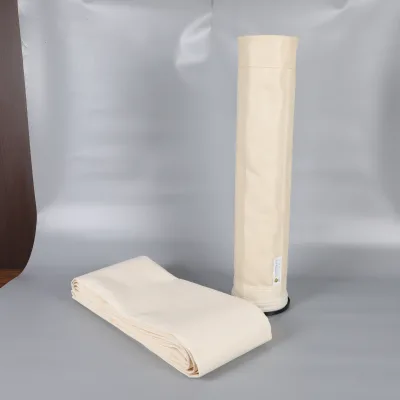


Comprehensive Sourcing Guide
Strategic Sourcing Guide for PPS Multifilament Filter Bags
Procuring high-performance filtration media for industrial dust collection systems requires a nuanced understanding of material science, operational environments, and supplier capabilities. When the core keyword is "PPS Multifilament Filter Bag," buyers are typically targeting Polyphenylene Sulfide (PPS) fibers engineered for robust dust removal in demanding thermal and chemical conditions. This guide synthesizes available product attributes and industry standards to provide a disciplined framework for evaluating potential suppliers and selecting the correct filtration solution. The focus remains on evidence-based criteria, ensuring that procurement decisions are grounded in verified technical specifications rather than marketing assertions.
Technical Specifications and Material Composition
The foundation of a successful procurement strategy lies in the precise definition of technical requirements. PPS multifilament filter bags are distinct from monofilament or woven alternatives due to their needle-punched non-woven construction, which offers a high surface area for dust capture. According to observed product data, the medium material is explicitly identified as PPS fiber, often processed into a needle non-woven structure. This specific configuration is critical for applications involving coal-fired boilers, waste incinerators, and coke ovens, where chemical resistance and thermal stability are paramount.
The physical dimensions of the filter bag are not one-size-fits-all. The product attributes indicate that the length and diameter are customizable, allowing buyers to match the filter to specific housing geometries. The sectional shape is typically a round bag, though the bottom of the bag can be customized, with a round bottom being the standard configuration. The weight of the cloth is a significant performance indicator, with observed ranges falling between 400 and 800 grams per square meter. This gram weight directly influences the filtration efficiency and the pressure drop across the bag.
Filtration grade is another critical variable. While some products in the market are classified as ULPA (Ultra-Low Penetration Air) filters, others are designated as medium filters. Buyers must verify the specific grade required for their process. The environment in which the bag operates is equally important; while some PPS bags are rated for room temperature, the specific PPS fiber variants are engineered for high-temperature environments, with a noted operating temperature of up to 190 degrees. This distinction is vital, as using a room-temperature rated bag in a high-heat application would lead to premature failure.
Compliance, Certification, and Operational Standards
In the B2B industrial sector, compliance is not merely a formality but a prerequisite for operational safety and regulatory adherence. When sourcing PPS filter bags, buyers should verify that suppliers hold recognized certifications. The available data points to ISO certification as a standard requirement for many manufacturers, indicating a commitment to quality management systems. Additionally, CE certification is observed in the product listings, suggesting compliance with European safety and health standards, which is often a baseline requirement for equipment exported to or used within the European market.
The installation method is a practical compliance factor that affects maintenance protocols. The observed data specifies a vertical installation method, often involving vertical lifting mechanisms. This aligns with the "Vertical Lifting" attribute found in specific product profiles. The dust collecting method is predominantly dry, which implies that the system relies on mechanical filtration rather than wet scrubbing. The operation type is noted as manual in some contexts, though this may vary based on the automation level of the dust collector house.
Buyers must also scrutinize the finish treatment applied to the filter cloth. The data lists several treatments, including singeing, PTFE coating, and water and oil repellency. These treatments are not universal; a supplier offering PTFE coating provides a different level of protection against sticky dusts compared to a standard singed surface. The standard for the product is often described as "customized size, material," meaning that the buyer must define the standard rather than expecting a generic off-the-shelf compliance. The origin of the product is noted as China, with specific mentions of Shanghai as a production hub, which can influence logistics and supply chain transparency.
Cost Drivers and Pricing Dynamics
Understanding the cost structure of PPS multifilament filter bags is essential for budgeting and total cost of ownership analysis. The observed price range in the market spans from $0.10 to $199.00 USD. This wide variance is not indicative of quality differences alone but reflects the complexity of the product. Factors influencing the final price include the specific PPS fiber quality, the weight of the cloth (400-800gms), and the extent of customization.
Customization is a primary cost driver. The product attributes explicitly state that customization is available for size, material, and packing. A standard round bag with a generic size will be significantly less expensive than a bag with a custom bottom shape, specific PTFE coating, or unique dimensions tailored to a proprietary dust collector. The minimum order quantity (MOQ) also impacts unit cost, with observed ranges from 1 to 100 units. Higher volumes typically yield better unit economics, but the flexibility to order small quantities (MOQ of 1) is available for testing or low-volume applications.
Packaging methods also contribute to cost. Options range from plastic bags into cartons to tray packaging or cartoon packaging. While seemingly minor, specialized packaging can add to the unit price but is necessary for protecting the filter bags during transit, especially for delicate non-woven structures. The motive force of the system, noted as vacuum in some contexts, may also influence the design requirements and, consequently, the cost of the bag.
Typical Applications and Environmental Suitability
PPS multifilament filter bags are engineered for specific industrial niches where standard materials fail. The primary applications identified include coal-fired boilers, waste incinerators, and coke ovens. These environments present a unique combination of high temperatures, acidic gases, and abrasive dust particles. The PPS material is chosen for its inherent resistance to hydrolysis and oxidation, making it suitable for the harsh conditions found in these facilities.
The usage of these bags is primarily as dust filters and air filters. The filtration environment can vary from room temperature to high-temperature settings. It is crucial to match the bag's rated temperature to the actual process temperature. For instance, a bag rated for 190 degrees is suitable for many coal-fired applications but may be insufficient for processes exceeding this threshold. The dust collector housing type is also a key application factor; the bags are compatible with both blowback dust collectors and pulse dust collectors. This versatility allows for their use in a wide array of industrial dust collection systems.
Supplier Evaluation and Verification
Evaluating a supplier for PPS filter bags requires a multi-faceted approach that goes beyond price comparison. Buyers should verify the supplier's ability to provide the specific customization options observed in the market, such as variable lengths, diameters, and bottom shapes. The ability to customize the product standard is a strong indicator of a flexible and capable manufacturer.
Certification status is a critical verification point. Buyers should request proof of ISO and CE certifications, ensuring that the supplier maintains valid and current documentation. The origin of the product, specifically from regions like China or Shanghai, should be transparently disclosed to assess logistics capabilities and potential import duties. Furthermore, the supplier's track record in handling the specific finish treatments, such as PTFE coating or water and oil repellency, should be assessed. These treatments require specialized equipment and expertise; a supplier lacking this capability may not deliver the promised performance.
Quality Control and Performance Verification
Quality control in the manufacturing of PPS filter bags is non-negotiable. The needle non-woven structure must be consistent to ensure uniform filtration efficiency. Buyers should inquire about the testing protocols used to verify the gram weight, which should fall within the 400-800gms range if specified. The filtration grade, whether ULPA or medium, must be verified through independent testing rather than relying solely on supplier claims.
The finish treatment is another area requiring rigorous quality control. The presence of singeing, PTFE coating, or repellent treatments must be confirmed through visual inspection or chemical analysis. The structural integrity of the bag, particularly at the bottom where customization is common, must be tested to ensure it can withstand the mechanical stresses of the vertical lifting installation method. The product model numbers, such as 008, 009, FC037, and FC1017-72, serve as identifiers for specific configurations. Buyers should ensure that the model number corresponds exactly to the required specifications, as different models may have different material compositions or treatment levels.
Long-Term Procurement Considerations
Sourcing PPS multifilament filter bags is a long-term commitment that impacts operational continuity and maintenance costs. The customization availability allows for future-proofing the procurement strategy, enabling buyers to adapt to changes in their dust collector systems without changing suppliers. The packaging method, whether carton, tray, or plastic bag, should be evaluated for its ability to protect the product during storage and transport, ensuring that the bags arrive in optimal condition.
The lead time and production capacity of the supplier are also critical long-term factors. While specific lead times are not provided in the data, the ability to handle customized orders suggests a flexible production line. Buyers should establish clear communication channels regarding production schedules and delivery timelines to avoid disruptions in their dust collection operations. The compatibility of the bags with both blowback and pulse dust collectors offers a strategic advantage, allowing for system upgrades or modifications without the need to replace the entire filtration media.
In conclusion, sourcing PPS multifilament filter bags requires a detailed understanding of the technical specifications, compliance requirements, and application-specific needs. By focusing on verified attributes such as material composition, filtration grade, and finish treatments, buyers can make informed decisions that ensure optimal performance and longevity of their dust collection systems. The wide range of customization options and the availability of various certifications provide a robust framework for selecting a supplier that meets the rigorous demands of industrial filtration.
FAQs
What materials are used for PPS multifilament filter bags?
The medium material is typically PPS fiber, needle non-woven, or glassfiber. Some listings also specify acrylic as a material option. The cloth weight ranges from 400 to 800 grams per square meter depending on the specific product model.
Can the size and shape of the filter bag be customized?
Yes, customization is available for length, diameter, and bottom shape. The standard sectional shape is a round bag, but the bottom can be customized. Buyers can request specific sizes and materials to match their dust collector housing type.
What is the maximum operating temperature for these bags?
The operating temperature is rated up to 190 degrees Celsius. Some products are designed for room temperature environments, while others handle high-temperature conditions. It is critical to match the bag rating to the specific application environment.
Which certifications do these filter bags typically hold?
Products often carry ISO and CE certifications. These standards indicate compliance with quality management and safety regulations. Buyers should verify specific certification documents when sourcing from manufacturers in China or Shanghai.
How are the filter bags installed in dust collectors?
The installation method is vertical, often utilizing vertical lifting mechanisms. The dust collecting method is dry, and the operation type can be manual. These bags are compatible with both blowback and pulse dust collector housing types.
What finish treatments are applied to the filter cloth?
Finish treatments include singeing, PTFE coating, and water and oil repellency. These treatments enhance performance against sticky dusts and improve durability. The specific treatment applied depends on the product model and customization requirements.
What are the typical applications for PPS filter bags?
These bags are used in coal-fired boilers, waste incinerators, and coke ovens. They function as dust filters and air filters in demanding industrial environments. The PPS fiber provides resistance to chemical and thermal stress in these applications.