Source Precision Hydraulic Seed Planter for Corn Rice Wheat
Compare 30 Precision Hydraulic Seed Planter options from verified Chinese manufacturers. These machines support sowing for corn, rice, wheat, and other crops with varying row configurations and automation levels.
Key considerations
Products List


Precision Planting for Healthy Crop Growth System Vegetable Seed Sower
$100.00 - $120.00
MOQ: 1 Pieces


Corn Precision Seeder with Fertilizer 2-8 Rows Maize Planter Soybean Seeder
$880.00 - $1680.00
MOQ: 2 Pieces
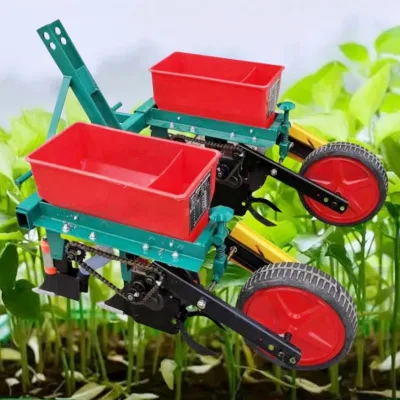


$40.00 - $42.00
MOQ: 50 Pieces


Durable No-Tillage Planter for Precision Seeding in All Soil Conditions
$12200.00 - $12800.00
MOQ: 1 Pieces


Comprehensive Sourcing Guide
Strategic Sourcing Guide for Precision Hydraulic Seed Planters
Understanding the Technical Landscape of Hydraulic Planting Systems
The procurement of precision hydraulic seed planters requires a nuanced understanding of the diverse mechanical configurations available in the global market. Unlike general agricultural machinery, these systems integrate hydraulic power with precise sowing mechanisms to ensure optimal seed placement and depth control. The core functionality of these machines often centers on the "Sowing" operation, specifically utilizing "Joint Operating Machines and No-Tillage Seeder" technologies or "Precision Seeder" mechanisms. Buyers must recognize that the term "precision" in this context frequently correlates with specific mechanization levels, ranging from "Semi-Automatic Planting Machine" to fully "Automatic Planting Machine" configurations.
A critical technical distinction lies in the power source and the resulting operational mode. While some units are designed to be "Manual Labour" operated for small-scale or specific terrain applications, the majority of high-efficiency hydraulic planters are engineered to be "Tractor" powered. This tractor-drawn configuration allows for the transfer of hydraulic power from the vehicle to the planter's row units, enabling consistent performance across large acreages. The application scope is equally broad, with documented suitability for a wide array of crops including "Corn," "Rice," "Wheat," "Tubers," "Fruit," "Trees," "Beans," and "Peanut." This versatility suggests that the hydraulic system must be adaptable to different seed sizes and soil conditions, often facilitated by adjustable "Line Spacing" which can range from "30-45cm Adjustable" or specific configurations like "20cm" spacing.
The physical architecture of these machines varies significantly based on the intended row capacity. Standard configurations observed in the market include models supporting "1-6rows" or broader ranges up to "1-18 rows," depending on the specific model designation such as "DB-SO4" or "DB-S01-5." The "Ditching Mode" is another vital technical parameter, with "Continuous Ditching" being a common feature that ensures a steady flow of soil disturbance and seed deposition. Furthermore, the "Fertilizing Machine Type" is often integrated, with "Full-size Fertilizer" capabilities being a standard attribute in many high-end hydraulic units. This integration allows for simultaneous fertilization and sowing, a process that is critical for "High Efficiency" operations in modern agriculture.
Compliance, Certification, and Regulatory Standards
When sourcing precision hydraulic seed planters, verifying compliance with international and regional standards is paramount for ensuring safety, durability, and market eligibility. The supply chain for these agricultural machines is heavily influenced by certification requirements that validate the manufacturer's quality management systems and product safety. Buyers should prioritize suppliers who can demonstrate adherence to "ISO9001" standards, a condition often noted as "New" in product specifications, indicating a commitment to current quality protocols.
Beyond general quality management, specific product certifications are essential for market entry in various regions. The "CE" mark is a frequently observed certification, signifying conformity with health, safety, and environmental protection standards for products sold within the European Economic Area. In some cases, suppliers may also provide additional certifications such as "GMP" (Good Manufacturing Practice) and "QS" (Quality Safety), which are particularly relevant for machinery involved in food production chains. The presence of these certifications, often listed alongside "ISO9001," serves as a primary indicator of a supplier's reliability and the machine's compliance with rigorous regulatory frameworks.
It is crucial for buyers to understand that certification status is not a universal attribute of all listed products. While some models explicitly list "CE, ISO9001:GMP, QS," others may only carry "CE" or "ISO9001." The absence of a specific certification in a product listing does not necessarily imply non-compliance, but it does require the buyer to request explicit documentation before finalizing a purchase. The "prod_standard" attribute often references row configurations (e.g., "One row" or "1150420680" dimensions) rather than regulatory standards, so buyers must distinguish between physical specifications and compliance certifications.
Cost Drivers and Pricing Variables in Hydraulic Planters
The pricing structure for precision hydraulic seed planters is influenced by a complex interplay of factors, including mechanization level, row capacity, and material composition. The observed price range in the market is extensive, spanning from "1" to "20,000" USD. This wide variance reflects the difference between simple, single-row manual or semi-automatic units and complex, multi-row automatic systems with advanced hydraulic controls.
A primary cost driver is the "Mechanization" level. "Automatic Planting Machine" models typically command a higher price point due to the integration of sophisticated hydraulic systems, sensors, and automated depth control mechanisms. In contrast, "Semi-Automatic" or "Manual Labour" units are generally more affordable, making them suitable for smaller farms or specific niche applications. The "Power Source" also plays a significant role; while "Tractor" powered units are standard for large-scale operations, "Gasoline" powered standalone units may carry different pricing dynamics based on engine specifications and fuel efficiency.
Material composition is another critical factor affecting cost. The "Material" attribute often cites "Iron" as a primary component, but the quality, thickness, and treatment of this metal can vary significantly between manufacturers. Higher-grade steel or specialized alloys that resist corrosion and wear will increase the unit cost but offer better long-term value. Additionally, the "prod_packing" method, whether "Carton Packaging," "Container," or "Wooden Box," adds to the overall landed cost. "Container" shipping is typically reserved for larger, high-value units, while "Carton Packaging" is common for smaller components or lower-cost models.
The "MOQ" (Minimum Order Quantity) also impacts the effective unit price. Suppliers may offer different pricing tiers based on order volume, with MOQs ranging from "1" to "1000" units. Buyers purchasing a single unit for testing or small-scale use may face a higher per-unit cost compared to those placing bulk orders that meet higher MOQ thresholds. The "Customization" availability is another variable; machines with "Custom" standards or specific modifications to the "1-18 rows" standard will inevitably cost more than off-the-shelf models.
Operational Applications and Field Versatility
Precision hydraulic seed planters are designed to operate across a diverse range of agricultural environments, from traditional crop fields to specialized forestry and aquaculture setups. The "Application Field" for these machines is broadly categorized as "Forestry," "Agriculture," "Livestock," and "Aquaculture," indicating their adaptability to various land-use scenarios. Within the "Agriculture" sector, the specific "Application" list includes "Corn," "Rice," "Wheat," "Tubers," "Fruit," "Trees," "Beans," and "Peanut," demonstrating the machine's versatility in handling different seed types and planting requirements.
The "Working Efficiency" of these hydraulic planters is a key performance metric, with some models achieving approximately "5 Mu/Hour." This efficiency is largely dependent on the "Sowing" mechanism, whether it is a "Joint Operating Machine," "No-Tillage Seeder," or "Precision Seeder." No-tillage technology is particularly valuable for soil conservation, reducing erosion and maintaining soil structure while ensuring precise seed placement. The "Ditching Mode," specifically "Continuous Ditching," facilitates this process by creating a consistent furrow for seed deposition without the need for excessive soil disturbance.
For buyers in the "Forestry" sector, the machine's ability to handle "Trees" and "Fruit" crops is essential. The adjustable "Line Spacing" of "30-45cm" or fixed "20cm" spacing allows for customization based on the specific crop requirements. The "Used for" attribute often specifies "Farm," but the underlying technology supports broader applications, including "Agricultural Products Processing." The "Advantage" of these machines is frequently cited as "High Efficiency," which translates to reduced labor costs and increased throughput. However, buyers must verify that the specific model's row capacity, such as "1-6rows" or "1-18 rows," aligns with the scale of their operation.
Supplier Evaluation and Verification Protocols
Evaluating suppliers for precision hydraulic seed planters requires a rigorous approach that goes beyond simple price comparison. Buyers should focus on the supplier's ability to provide transparent technical data and verified certifications. The "prod_origin" is consistently listed as "China," which indicates a significant portion of the global supply originates from this region. While this does not preclude quality, it necessitates a thorough vetting process to ensure that the manufacturing standards meet the buyer's expectations.
Key evaluation criteria include the "Condition" of the product, which is typically listed as "New," and the "prod_packing" method, which should be robust enough to protect the machinery during transit. The "Shipping Time" is another critical factor, with some suppliers offering a "Seven Days" lead time, while others may have longer durations depending on customization requirements. Buyers should also verify the "MOQ" flexibility, as suppliers with an MOQ of "1" may be more suitable for small-scale buyers, whereas those with an MOQ of "50" or higher may require larger commitments.
The "prod_model" designation, such as "DB-SO4," "DB-S01-5," "1YMBZ," or "Corn Planter," serves as a unique identifier for the specific machine configuration. Buyers should ensure that the model number corresponds to the exact specifications required, including row count, power source, and dimensions. The "Overal Dimension" of "235015001000" or other specific measurements must be verified to ensure the machine fits within the buyer's operational constraints, such as transport vehicle dimensions or storage space.
Quality Control and Long-Term Procurement Considerations
Ensuring the long-term reliability of precision hydraulic seed planters requires a proactive quality control strategy. Buyers should request detailed test results and performance data, particularly regarding the "Working Efficiency" and "Sowing" accuracy. The "Line Spacing" adjustability and the "Sowing Row Spacing" of "20cm" or "30-45cm" should be tested under actual field conditions to verify that the hydraulic system maintains consistent performance. The "Material" composition, often "Iron," should be inspected for signs of corrosion or structural weakness, especially in models intended for "Forestry" or "Aquaculture" applications where environmental conditions can be harsh.
Long-term procurement considerations also involve the availability of spare parts and technical support. The "Customization" availability suggests that suppliers may offer tailored solutions, but buyers must ensure that these customizations do not compromise the availability of standard replacement parts. The "prod_packing" method, whether "Carton," "Container," or "Wooden Box," should be evaluated for its ability to protect the machine during shipping and storage. A "Wooden Box" is often preferred for heavy machinery to prevent damage during transit, while "Carton Packaging" may be sufficient for smaller components.
Buyers should also consider the "Standard" compliance of the machine, which may be listed as "Custom" or specific row configurations like "1150420680." Ensuring that the machine meets the relevant industry standards for the target market is essential for avoiding regulatory issues. The "Certification" status, including "ISO9001," "CE," "GMP," and "QS," should be verified through official documentation rather than relying solely on product listings. Finally, the "Used for" application should be matched with the machine's specific capabilities to ensure that the investment yields the expected "High Efficiency" returns over the machine's lifespan.
FAQs
What certifications do precision hydraulic seed planters typically have?
Many models carry ISO9001, CE, GMP, and QS certifications to ensure quality and safety. Buyers should verify specific certifications per listing, as some units only list CE or ISO9001 without additional standards.
How many rows can these planting machines support?
Standard configurations range from one row up to 18 rows depending on the model. Specific units may support 1-6 rows or 1-18 rows, allowing flexibility for different farm scales and crop requirements.
Can these machines be powered by a tractor?
Yes, many precision hydraulic seed planters are designed to be tractor-powered for large-scale operations. Some smaller or specific models may instead rely on gasoline engines or manual labor for flexibility.
What is the typical minimum order quantity for these machines?
Minimum order quantities vary significantly, ranging from 1 unit for testing to 1000 units for bulk orders. Some suppliers set an MOQ of 50, while others allow single-unit purchases for small farms.
Which crops are suitable for these precision planting systems?
These machines are designed for a wide variety of crops including corn, rice, wheat, beans, and peanuts. They also support tubers, fruit, trees, and applications in forestry and aquaculture sectors.
How long is the shipping time for these agricultural machines?
Some suppliers offer a shipping time of seven days for standard orders. Lead times may vary based on customization needs, stock availability, and the specific packaging method used for the unit.