Source Premium Taekwondo Uniform for Training, Competition, and Studios
Find 30 verified listings for Premium Taekwondo Uniform options suitable for training, competition, and studio use. Compare specifications like material, size, and customization to select the best match for your needs.
Key considerations
Products List


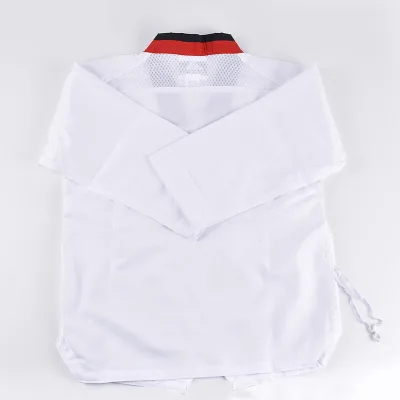
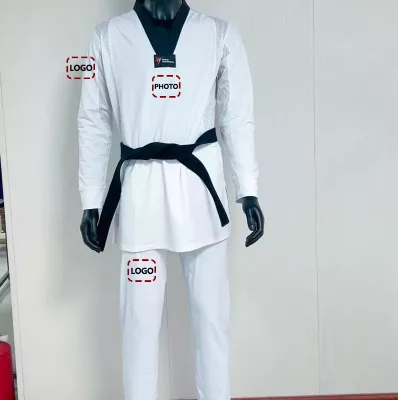


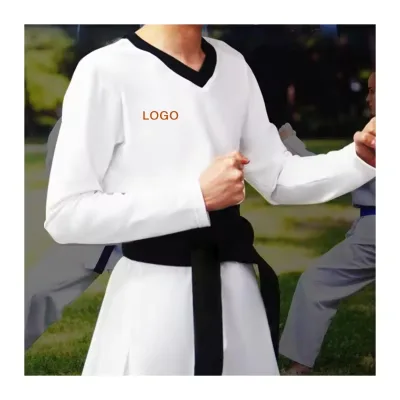
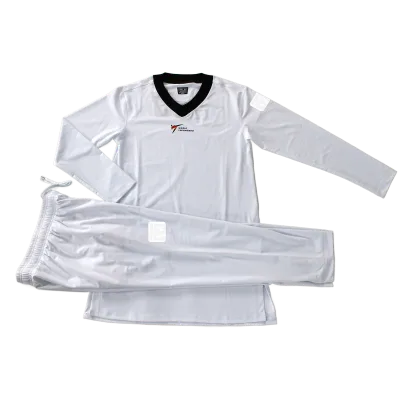
Premium Lightweight Summer Taekwondo Uniform for Training and Competitions
$5.80 - $6.37
MOQ: 100 Pieces


Custom Black Taekwondo Uniform Plus Shoulder Design for Training Competition
$7.61 - $8.33
MOQ: 100 sets

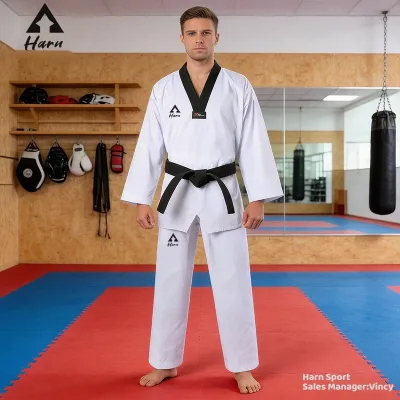
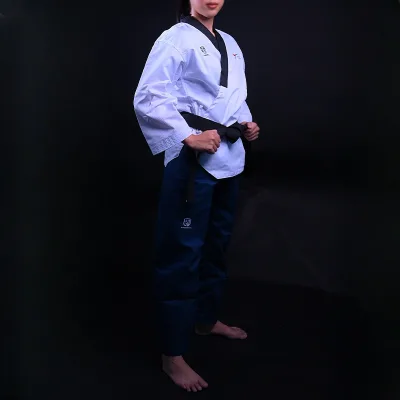
Comprehensive Sourcing Guide
Strategic Sourcing Guide for Premium Taekwondo Uniforms
The global market for martial arts apparel has seen a significant surge in demand, driven by the growing popularity of competitive Taekwondo and the expansion of training facilities worldwide. For procurement professionals and studio owners seeking a Premium Taekwondo Uniform, the selection process requires a nuanced understanding of material science, manufacturing standards, and supply chain logistics. Unlike generic athletic wear, a premium uniform must balance durability with the specific aerodynamic and tactile requirements of high-level competition. This guide synthesizes observed market data and technical specifications to provide a disciplined framework for sourcing these critical garments.
Technical Specifications and Material Composition
The foundation of a premium uniform lies in its material composition and physical specifications. Market observations indicate a divergence in fabric choices, with suppliers offering options ranging from pure cotton to blended synthetics. The primary material attribute observed is Cotton, which is traditionally favored for its breathability and traditional feel. However, modern premium offerings increasingly utilize a Polyester/Cotton blend or Spandex/Nylon combinations to enhance durability and moisture management.
A critical specification for buyers is the weight of the garment. Data indicates a range of weights, with specific listings noting 0.700 Kg and 1kg as common benchmarks. The 0.700 Kg variant is often associated with "Ultralight" features, designed for speed and agility in competition, while the 1kg option may offer a heavier, more structured feel preferred for traditional forms or rigorous training. Buyers must verify the exact weight per set, as this directly impacts the uniform's drape and resistance to tearing during dynamic movements.
Size specifications are equally variable. While some suppliers offer a fixed range of 100-200cm or 110-200cm, others emphasize flexibility with "All size are available" or "Special size request" capabilities. For a premium procurement strategy, the ability to order custom dimensions is a significant advantage, ensuring a perfect fit for athletes of varying statures. The waist line is another technical detail, with "Medium waist" being a noted attribute, though custom tailoring should be the standard for high-end orders.
Compliance, Certification, and Quality Standards
When sourcing premium gear, verifying compliance with industry standards is non-negotiable. While specific certification bodies are not universally mandated for all listings, the product attributes highlight a focus on High Qualiy and adherence to specific packing standards. One observed standard dimension for packaging is 40cm30cm5cm, which suggests a compact, organized shipping method that protects the uniform during transit.
Buyers should not assume that all listed products meet international safety or performance standards without verification. The presence of a Customized Logo and OEM ODM branding options indicates that many suppliers operate as contract manufacturers. This necessitates a rigorous vetting process to ensure that the "High Qualiy" claim is backed by tangible quality control measures. The Service Life of the uniform is a key metric, with observed ranges of 1-4 Year. This variance suggests that material quality and construction methods vary significantly between suppliers. A premium uniform should ideally fall toward the higher end of this service life spectrum, resisting fraying and color fading after repeated washing and intense use.
Cost Drivers and Pricing Dynamics
Understanding the cost structure of premium Taekwondo uniforms is essential for budgeting. The observed listed price range in the market spans from 4 to 28.9 USD. This wide disparity reflects differences in material quality, customization levels, and brand positioning. The lower end of the spectrum likely corresponds to basic cotton blends with standard sizing, while the higher end may include advanced fabric technologies, custom tailoring, and premium branding.
The Minimum Order Quantity (MOQ) is a primary driver of unit cost. Data shows an MOQ range from 1 set to 150 sets, with specific listings citing 30 Sets or 50 sets as common thresholds. Suppliers offering an MOQ of 1 set with negotiable quantities provide flexibility for small studios or individual athletes but often carry a higher per-unit cost. Conversely, bulk orders at the 150-set level typically yield significant economies of scale. Buyers must weigh the initial capital outlay against the long-term value of the uniform. The Selling Units are often listed as "Single item," which can be misleading if the supplier requires bulk purchasing for customizations.
Typical Applications and Usage Scenarios
The intended application of the uniform dictates the required specifications. Market data clearly distinguishes between uniforms designed for Training and those for Competition. Training uniforms prioritize durability and comfort, often utilizing heavier fabrics like the 1kg cotton options to withstand frequent abrasion. In contrast, competition uniforms often lean towards the Ultralight and Breathable attributes, with weights closer to 0.700 Kg, to maximize athlete performance and reduce drag.
The Application is frequently listed as Martial Arts Studios or taekwondo training, indicating that these products are versatile enough for general use. However, the Type is explicitly defined as Taekwondo, ensuring that the cut and fit align with the specific movements of the sport, such as high kicks and rapid footwork. The Style is noted as Unisex, which simplifies inventory management for studios serving mixed-gender groups. The Color options typically include White, Black, Red, and Blue, with White being the most common observation. Buyers should verify if the color fastness meets the rigorous standards required for competition, where uniform appearance is strictly regulated.
Supplier Evaluation and Origin Verification
Selecting the right supplier requires a deep dive into their operational capabilities and geographic origins. The prod_origin and Place of Origin data reveal that the majority of suppliers are located in China, with specific provinces including Liaoning, Shandong, and Henan. These regions are known for their textile manufacturing infrastructure. The Port of dispatch is frequently listed as Qingdao, a major shipping hub that facilitates efficient logistics for international buyers.
When evaluating suppliers, buyers should look for those offering OEM and ODM services, as this indicates a capacity for customization and brand development. The availability of Customized Logo and Custmized Logo options is a standard feature, but the quality of the printing or embroidery must be verified. The Product Name and Model Number (e.g., KRS-WT, LT-012, T-526) serve as unique identifiers for specific product lines. Buyers should request samples to assess the Feature set, which includes claims of being New Ultralight, Durable, Breathable and Comfortable.
Quality Control and Long-Term Procurement
Implementing a robust quality control (QC) protocol is vital for maintaining the integrity of the supply chain. The prod_packing attribute, often listed as Parking Bag or Bags, highlights the importance of protective packaging. A premium supplier should ensure that uniforms are packed in a manner that prevents creasing, soiling, or damage during shipping. The Sample availability is a critical step in the QC process; buyers should always order samples before committing to large orders to verify the Quality claims.
Long-term procurement considerations involve assessing the supplier's ability to maintain consistency. The Service Life of 1-4 years suggests that wear and tear is a significant factor. A premium supplier should offer warranties or guarantees regarding the durability of the stitching and fabric integrity. Additionally, the ability to negotiate quantities, as seen in the 1 set, Qty can negotiate listing, provides flexibility for restocking or expanding inventory without being locked into rigid MOQs.
Comparative Analysis of Key Attributes
To facilitate decision-making, the following table summarizes the key attributes observed in the market, highlighting the variations buyers must navigate.
| Attribute | Observation Range / Options | Procurement Implication |
|---|---|---|
| Material | Cotton, Polyester/Cotton, Spandex/Nylon | Select based on training vs. competition needs; blends offer better durability. |
| Weight | 0.700 Kg, 1kg | Lighter weights suit competition; heavier weights suit rigorous training. |
| Size | 100-200cm, 110-200cm, Custom Request | Custom sizing is preferred for premium fit; verify size charts carefully. |
| MOQ | 1 set, 30 Sets, 50 sets, up to 150 | Lower MOQs increase unit cost; higher MOQs reduce cost but increase inventory risk. |
| Price | $4 - $28.9 USD | Price correlates with material quality and customization; verify value proposition. |
| Origin | China (Liaoning, Shandong, Henan) | Verify port of dispatch (e.g., Qingdao) for logistics planning. |
| Customization | Customized Logo, OEM, ODM | Essential for branding; verify logo application quality on samples. |
| Color | White, Black, Red, Blue | White is standard; ensure color fastness for competition regulations. |
Final Procurement Considerations
Sourcing a Premium Taekwondo Uniform requires a balance between technical specifications, cost efficiency, and supplier reliability. The market offers a diverse array of options, from basic cotton blends to advanced synthetic fabrics, each serving different purposes within the martial arts ecosystem. Buyers must prioritize the Usage context, ensuring that the selected uniform aligns with the specific demands of training or competition.
The variability in MOQ and Price necessitates a strategic approach to inventory management. While the ability to order single units offers flexibility, bulk purchasing is often required to achieve cost-effective pricing for large teams. The Origin and Port of Dispatch data provide a clear logistical framework, with China serving as the primary manufacturing hub.
Ultimately, the success of a procurement strategy depends on rigorous quality control and the verification of all claims. By focusing on High Qualiy standards, verifying Service Life expectations, and leveraging Customized options, buyers can secure uniforms that not only meet the technical demands of Taekwondo but also enhance the professional image of their organizations. The availability of Samples and Negotiable quantities further empowers buyers to make informed decisions, ensuring that the final product delivers on the promise of premium performance and durability.
FAQs
What materials are used for premium taekwondo uniforms?
Premium uniforms typically use Cotton, Polyester/Cotton blends, or Spandex/Nylon. Cotton offers breathability, while blends enhance durability and moisture management for both training and competition scenarios.
How much does a Premium Taekwondo Uniform cost?
The listed price range spans from 4 to 28.9 USD. Costs vary based on material quality, customization levels, and order volume, with lower prices often reflecting basic cotton blends.
Can I order a custom logo on the uniform?
Yes, customized logos are available on most premium options. Suppliers offer OEM and ODM services, allowing you to add your branding to the uniform for studio or team identification.
What is the minimum order quantity for these uniforms?
MOQs range from 1 set to 150 sets depending on the supplier. Some vendors allow single-item orders with negotiable quantities, while others require bulk purchases like 30 or 50 sets.
Where are these uniforms manufactured and shipped from?
Most products originate from China, specifically provinces like Liaoning, Shandong, and Henan. The primary port of dispatch is Qingdao, facilitating efficient logistics for international buyers.
What sizes are available for taekwondo uniforms?
Sizes generally range from 100 to 200cm or 110 to 200cm. Many suppliers also accept special size requests to ensure a perfect fit for athletes of varying statures.
How long does a premium uniform typically last?
The service life ranges from 1 to 4 years depending on usage and material. Higher quality construction and fabric blends generally provide better resistance to wear and fading during intense training.