Source Pressure Treated 3D Fence for Garden, Highway, and Sport Uses
Explore 30 listings of Pressure Treated 3D Fence options tailored for garden, highway, and sport applications. Buyers can compare wire diameters, heights, and surface treatments like galvanized or PVC coated finishes from suppliers in China.
Key considerations
Products List


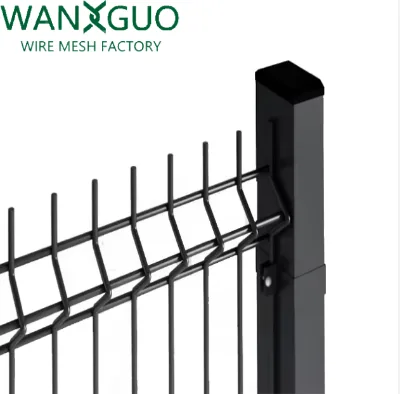

$49.00 - $69.00
MOQ: 100 Pieces


3D Fence with Low Carbon Steel Wire for Strong and Durable Fencing
$1.30 - $2.89
MOQ: 100 Square Meters


Comprehensive Sourcing Guide
Strategic Sourcing Guide for Pressure Treated 3D Fence Solutions
Understanding the Technical Architecture of 3D Fencing Systems
When evaluating a "Pressure Treated 3D Fence," buyers must first recognize that the term often conflates distinct manufacturing processes with specific design geometries. In the context of the current market data, the core product is a welded wire mesh system characterized by a three-dimensional curvature or a specific panel configuration rather than a traditional wooden pressure-treated structure. The technical foundation relies heavily on the wire diameter, which is observed in the supply chain ranging from 3.0mm to 6.0mm, with specific listings citing 3.8mm, 4.0mm, and 4.5mm as standard options. This variance in wire thickness directly impacts the structural rigidity and the ultimate load-bearing capacity of the fence panel.
The mesh geometry is equally critical. The observed data indicates a "Square" hole shape with specific dimensions such as 50200mm or 55200mm, alongside other configurations like 12.776.2mm. These dimensions define the security level and the visibility through the fence. The "3D" aspect often refers to the "3D Curved Garden Fence" style, which utilizes a specific weaving or stamping technique to create a panel that is not flat. This curvature adds structural strength, allowing the fence to withstand impact better than a flat panel of the same wire gauge. The posts supporting these panels vary significantly in design, including I Posts, Peach Posts, Square Posts (specifically 5050*2mm), and Round Posts. The selection of the post type must align with the soil conditions and the required height of the installation, which can range from 1.0m for garden applications up to 7.0m for high-security perimeter fencing.
Compliance Verification and Certification Standards
For B2B procurement, verifying compliance is not merely a formality but a risk mitigation strategy. The supply data indicates that products often carry certifications such as CE, RoHS, and ISOASTM. These certifications suggest that the manufacturing process adheres to specific European and international safety and environmental standards. However, buyers must exercise caution. While "ISOFrame Finishing: PVC Coated" is mentioned, this should be treated as a specific product attribute rather than a universal standard for all listed items. The presence of "Galvanized" surface treatment is a frequent observation, which is a standard anti-corrosion method, but the quality of the galvanization (e.g., hot-dip vs. electro-galvanized) is a variable that requires direct supplier confirmation.
Buyers should not assume that a listed "ISO" certification implies ISO9001 quality management system compliance unless explicitly stated in the supplier's documentation. The provided data notes "ISO9001" only as a low-confidence background fact, meaning it should not be cited as a guaranteed attribute of the product. Instead, procurement teams must request specific test reports or certificates of conformity for the CE and RoHS claims. The "custom made" standard noted in the data suggests that many suppliers operate on a bespoke basis, which can complicate standard compliance checks. In these cases, the buyer must define the required standard in the purchase order and require the supplier to validate that the finished product meets that specific benchmark before shipment.
Cost Drivers and Pricing Dynamics in the Supply Chain
The pricing landscape for 3D fencing systems is highly variable, with observed ranges spanning from $1.30 to $69.00 USD per unit. This massive disparity is not indicative of market volatility alone but reflects significant differences in material specifications, dimensions, and finishing processes. The primary cost drivers include the wire diameter, the height of the panel, and the surface treatment. A panel with a 6.0mm wire diameter and a 7.0m height will naturally command a higher price than a 3.0mm wire, 1.0m high panel. Furthermore, the choice between a standard galvanized finish and a PVC-coated finish (available in Black, Green, Grey, Yellow, or White) introduces a substantial cost differential due to the additional manufacturing steps and material costs involved in the coating process.
The Minimum Order Quantity (MOQ) is another critical factor influencing the unit cost. The observed MOQ range is 1 to 500 units. Buyers ordering small quantities, perhaps for a single garden project, may face a higher per-unit cost but benefit from lower upfront capital expenditure. Conversely, large-scale infrastructure projects can leverage the lower end of the price spectrum by meeting higher MOQ thresholds. The origin of the product, specifically Hebei, China, and Hebei Anping, is a known manufacturing hub for fencing, which generally offers competitive pricing due to economies of scale. However, logistics costs, including the use of steel pallets or metal trays with plastic film for packing, must be factored into the total landed cost. The "Steel Pallet" packing method is noted as a standard, which adds weight and volume to the shipment, potentially increasing freight charges compared to more compact packing methods.
Typical Applications and Performance Requirements
The versatility of 3D fencing systems allows them to serve a wide array of applications, from residential gardens to high-security highways. The data explicitly lists "Garden Fence," "Highway Fence," and "Sport Fence" as primary use cases. For garden applications, the aesthetic is paramount; the "Morden" style and the availability of custom colors like Green or Black allow the fence to blend with landscaping or stand out as a design feature. The "3D Curved Garden Fence" is specifically noted for this dual purpose of security and aesthetics.
In contrast, highway and sport fencing require a focus on durability and safety. The "Security Fence" feature is highlighted, suggesting that these panels are designed to deter unauthorized access. The height specifications are crucial here; a 1.9m or 2.0m panel is suitable for residential boundaries, while 3.0m to 7.0m panels are necessary for industrial or highway perimeters. The "Assemble Type" using clamps or flat bar covers ensures that the panels can be securely attached to the posts without compromising the structural integrity of the mesh. Buyers must ensure that the selected product matches the environmental stressors of the application. For example, a fence in a coastal area would require a robust PVC coating or high-grade galvanization to resist salt corrosion, whereas a dry, inland garden might only require standard galvanized steel.
Supplier Evaluation and Geographic Considerations
When evaluating potential suppliers, the geographic origin provides a significant clue regarding manufacturing capabilities and logistics. The data consistently points to Hebei, China, and specifically Hebei Anping, as the primary production hubs. Anping is globally recognized as the "Hometown of Wire Mesh," implying a mature supply chain with specialized expertise in welding, stamping, and coating processes. However, the presence of multiple product models (e.g., WWMF0016, ZH-v32, ZH-0271, ZH-0265) suggests that different factories may be producing similar items under different model numbers.
Buyers should verify the specific factory capabilities rather than relying solely on the model number. The "Customization" attribute is widely available, indicating that many suppliers are flexible in altering wire diameters, hole sizes, and colors. This flexibility is a double-edged sword; while it allows for tailored solutions, it also increases the risk of specification errors if the communication between buyer and supplier is not precise. The "Standard" attribute is listed as "custom made" in several instances, reinforcing the need for detailed technical drawings in the procurement contract. Buyers should also check the "Surface Treatment" consistency. While "Galvanized" and "Coated" are listed, the specific quality of these treatments (e.g., coating thickness, zinc layer weight) must be verified through third-party inspection to ensure long-term performance.
Quality Control Protocols and Long-Term Procurement Strategy
Ensuring the quality of 3D fencing systems requires a robust quality control (QC) protocol that extends beyond the initial factory inspection. The "Weave Technique" of stamping and the "Technique" of welding are critical points of failure. Buyers should mandate that suppliers provide visual evidence of the weld quality, ensuring that there are no weak points where the wire could separate under tension. The "Hole Size" consistency is another QC checkpoint; deviations from the specified 50200mm or 12.776.2mm dimensions can affect the fit and security of the fence.
For long-term procurement, the focus should shift to lifecycle costs rather than just initial purchase price. The "Color" options, such as Black, Green, Grey, and Yellow, are not merely aesthetic; they are indicators of the coating quality. A high-quality PVC coating will resist UV degradation and chipping, maintaining its appearance and protective properties for years. Buyers should request samples to test the adhesion of the coating and the flexibility of the wire. Additionally, the "prod_packing" method, whether "Steel Pallet" or "Metal Tray + Plastic Film," plays a vital role in preventing damage during transit. Damaged goods upon arrival can lead to significant delays and additional costs.
Comparative Analysis of Key Product Attributes
To facilitate decision-making, buyers can utilize the following comparison of observed attributes across different product models. This table highlights the variability in specifications that must be addressed during the sourcing process.
| Attribute | Model WWMF0016 | Model ZH-v32 | Model ZH-0271 | Model ZH-0265 |
|---|---|---|---|---|
| Wire Diameter | 3.0mm - 5.0mm | 3-6mm | 3.8/4mm | Not Specified |
| Height Range | 1.0m - 7.0m | 1-2.43m | 1.9m | 2m |
| Width | 2.2m - 3.0m | 2.0-3.0m | 2.5m | Not Specified |
| Surface Treatment | Galvanized | Galvanized or PVC | Galvanized or PVC | Not Specified |
| Hole Shape | Square | Square | Square | Not Specified |
| Post Type | Square Post | I Post, Peach, Square, Round | Not Specified | Not Specified |
| Origin | Hebei, China | China | Hebei Anping | Not Specified |
| Packing | Steel Pallet | Metal Tray + Plastic Film | Pallet | Not Specified |
This comparison underscores the necessity of defining precise requirements before engaging with suppliers. The variation in height, for instance, ranges from 1.0m to 7.0m, meaning a buyer cannot assume a standard height for all 3D fences. Similarly, the wire diameter range of 3.0mm to 6.0mm indicates that structural requirements must be clearly communicated to avoid receiving a product that is either too flimsy or unnecessarily expensive.
Final Procurement Considerations
The procurement of Pressure Treated 3D Fence solutions requires a meticulous approach that balances technical specifications, compliance verification, and cost efficiency. The market offers a diverse range of products, from simple garden barriers to complex highway security systems, each with unique attributes. Buyers must navigate the variability in wire diameters, hole sizes, and surface treatments to select the optimal solution for their specific application. By focusing on the verified facts of the supply chain—such as the specific certifications, the origin in Hebei, and the available customization options—procurement teams can mitigate risks and ensure the delivery of high-quality fencing systems. The key to success lies in clear communication, rigorous quality control, and a thorough understanding of the product attributes that define the performance and longevity of the fence.
FAQs
What certifications do Pressure Treated 3D Fence products carry?
Products often carry CE, RoHS, and ISOASTM certifications. Buyers must verify specific test reports as ISO9001 is not a guaranteed attribute for all listed items.
How is the wire diameter specified for these fence panels?
Wire diameter ranges from 3.0mm to 6.0mm with options like 3.8mm or 4.0mm. Specific dimensions such as 5.0mm are available for custom requests.
Which surface treatments are available for the metal fencing?
Surface treatments include Galvanized and PVC Coated finishes. Colors like Black, Green, Grey, Yellow, and White are available with custom options.
Can buyers customize the height and width of the fence?
Yes, customization is available for height ranging from 1.0m to 7.0m and widths like 2.2m or 3.0m. Specific hole sizes like 50*200mm can also be tailored.
What post types support the 3D curved garden fence panels?
Posts include I Post, Peach Post, Square Post, and Round Post designs. Square posts are often specified as 50*50*2mm for structural support.
How is the product packed for shipping from Hebei, China?
Packing methods include Steel Pallets or Metal Trays with Plastic Film. The origin is typically Hebei or Hebei Anping in China.
What is the typical minimum order quantity for these fences?
The minimum order quantity ranges from 1 to 500 units depending on the supplier. Lower MOQs allow for smaller projects while higher volumes reduce unit costs.