Source Pressure Treated Steel Palisade Fence for Garden, Farm, Highway
Explore 30 options for Pressure Treated Steel Palisade Fence designed for garden, farm, and highway applications. Buyers can compare specifications including dimensions, surface treatments, and customization features from verified Chinese manufacturers.
Key considerations
Products List




Comprehensive Sourcing Guide
Strategic Sourcing Guide for Pressure Treated Steel Palisade Fences
The global demand for high-security perimeter solutions has elevated the profile of pressure treated steel palisade fences, particularly within industrial, municipal, and infrastructure sectors. For procurement professionals, navigating the supply chain for these specialized barriers requires a rigorous understanding of material composition, structural specifications, and compliance frameworks. Unlike generic fencing options, palisade systems are engineered to provide a rigid barrier with specific distortion resistance, making them ideal for applications ranging from highway security to stadium perimeters. This guide outlines the critical factors buyers must evaluate when sourcing pressure treated steel palisade fences, ensuring that the final procurement aligns with safety standards and long-term operational needs.
Technical Specifications and Structural Integrity
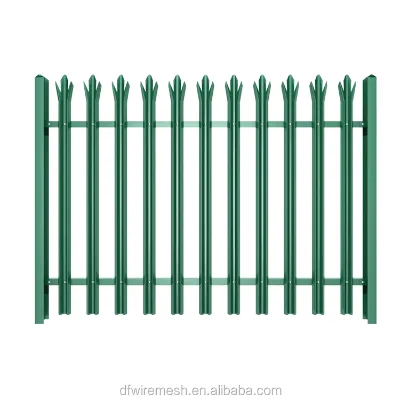
When evaluating a Pressure Treated Steel Palisade Fence, the primary focus must be on the physical dimensions and material properties that define its structural integrity. The core component of these systems is the pale, which typically features a D-section or W-section profile to maximize rigidity while minimizing material usage. Buyers should verify that the pale dimensions fall within the observed range of 60-70mm in width, with thicknesses varying between 1.0mm and 3.5mm depending on the required security level. The height of the fence is a critical variable, generally spanning from 1.5 meters to 3.0 meters, allowing for customization based on the specific threat assessment of the site.
The supporting framework is equally important. The posts, which anchor the system, are often specified with dimensions such as 100x55x3mm, while the rails connecting the pales may be sized at 50x50x5mm. These components must be fabricated from high-grade steel or iron, with some suppliers offering stainless steel variants for corrosive environments. The fixation method is another technical determinant; embedded type post fixation is a common standard for permanent installations, providing superior stability against lateral forces. Furthermore, the hole shape in the pales, whether round or square, and the weave technique, such as stamping, influence the visual aesthetics and the ease of assembly. Buyers must ensure that the specified rail and post dimensions match the load-bearing requirements of the intended application, whether it is a municipal boundary or a high-security facility.
Compliance, Certification, and Material Standards
Compliance with international standards is non-negotiable when sourcing industrial fencing solutions. The supply chain for steel palisade fences is heavily regulated, with manufacturers often adhering to ISO9001 for quality management and ISO14001 for environmental management. Additionally, the CE marking is a frequent requirement, indicating conformity with health, safety, and environmental protection standards for products sold within the European Economic Area. Some suppliers may also offer certifications tailored to specific client requirements, necessitating a thorough review of the supplier's documentation before finalizing an order.
The material composition plays a pivotal role in compliance. While the primary material is often listed as steel or iron, the presence of stainless steel options suggests a higher grade of corrosion resistance. The surface treatment process is a key indicator of quality; hot-dipped galvanization is a standard method to prevent rust, often followed by a powder-coated finish to enhance aesthetic appeal and provide an additional layer of protection. Buyers should verify that the finishing process includes both hot-dipped galvanization and powder coating, as this dual-layer approach offers superior durability against weathering and chemical exposure. It is essential to confirm that the supplier can provide test reports or certificates validating these surface treatments, as these documents are often required for project approval and insurance purposes.
Cost Drivers and Pricing Dynamics
The pricing of pressure treated steel palisade fences is influenced by a complex interplay of factors, including raw material costs, manufacturing complexity, and logistics. The observed price range for these products can vary significantly, typically falling between 1 and 90 USD per unit, though this is highly dependent on the specific configuration and volume. The thickness of the pales and posts is a primary cost driver; thicker gauges (e.g., 3.0mm or 3.5mm) will naturally command a higher price due to increased material usage. Similarly, the choice of surface treatment, such as the combination of galvanization and powder coating, adds to the production cost compared to single-process treatments.
Logistics and packaging also contribute to the final landed cost. Products are often shipped in bulk on wooden or metal pallets, or in specialized iron brackets designed for export. The origin of the product, frequently Hebei, China, impacts shipping costs and lead times. Buyers should be aware that the Minimum Order Quantity (MOQ) can range from 1 to 300 units, which significantly affects the unit price. Larger orders typically benefit from economies of scale, reducing the per-unit cost. However, customization options, such as specific colors or unique dimensions, may increase the MOQ and the overall price. Procurement teams must balance the initial purchase price with the long-term value, considering factors like maintenance costs and the expected lifespan of the fence.
Typical Applications and Functional Requirements
Pressure treated steel palisade fences are versatile solutions designed for a wide array of applications, each with distinct functional requirements. The primary function of these fences is separation, obstruction, and warning, often serving as a deterrent to unauthorized access. They are commonly deployed in residential areas, farm boundaries, and highway corridors. In municipal settings, they are used for public spaces, while in industrial contexts, they secure airports, stadiums, and railway facilities. The specific application dictates the necessary features; for instance, a highway fence requires high impact resistance, whereas a residential fence may prioritize aesthetic appeal and ease of assembly.
The position of the fence also influences its design. Non-motor vehicle fences and pedestrian fences have different load requirements and clearance needs. The degree of distortion is another critical factor; palisade fences are typically classified as rigid barriers, meaning they are designed to resist deformation under pressure rather than absorb it. This makes them ideal for high-security zones where maintaining a physical barrier is paramount. The feature set, including being easily assembled, waterproof, and rot-proof, ensures that the fence remains functional in various environmental conditions. For example, the inclusion of renewable sources in the manufacturing process or eco-friendly attributes may be a requirement for green building certifications in certain jurisdictions.
Supplier Evaluation and Quality Control
Selecting the right supplier is a critical step in the procurement process. Buyers should prioritize suppliers who demonstrate a commitment to quality control and transparency. The origin of the product, often Hebei, China, is a common hub for steel fencing manufacturing, but the specific factory's capabilities vary. Buyers should verify the supplier's adherence to standards such as ISO9001 and their ability to meet client-specific requirements. The presence of certifications like CE and ISO14001 is a strong indicator of a supplier's reliability.
Quality control measures should be implemented throughout the production and shipping process. Buyers must ensure that the supplier conducts rigorous inspections on the material thickness, pale dimensions, and surface treatment quality. The use of specialized iron brackets for export packaging is a sign of a supplier's attention to detail in protecting the product during transit. Additionally, the supplier's ability to provide detailed product data, including model numbers like HT-P-022 or HX-01507, demonstrates a level of professionalism and organization. Buyers should request samples or visit the manufacturing facility if possible to verify the quality of the welding, the consistency of the galvanization, and the overall finish of the product.
Long-Term Procurement Considerations
Sourcing pressure treated steel palisade fences is not merely a transactional activity but a strategic decision that impacts long-term operational security and maintenance costs. The durability of the fence is directly linked to the quality of the materials and the effectiveness of the surface treatments. A fence that is properly galvanized and powder-coated will have a significantly longer lifespan, reducing the need for frequent replacements and repairs. Buyers should consider the total cost of ownership, including installation, maintenance, and potential replacement costs over the life of the project.
Customization is another long-term consideration. The ability to choose specific colors, dimensions, and features allows the fence to adapt to changing security needs or aesthetic requirements. The availability of customization options, such as different pale shapes or post fixation methods, ensures that the fence remains relevant and functional over time. Furthermore, the supplier's ability to provide ongoing support, including spare parts and technical assistance, is crucial for maintaining the integrity of the fence system. Buyers should establish a long-term relationship with a supplier who can provide consistent quality and reliable service, ensuring that the fencing solution remains effective and compliant with evolving standards.
Comparative Analysis of Fence Configurations
To assist buyers in making informed decisions, the following table compares common configurations of pressure treated steel palisade fences based on key attributes observed in the market. This comparison highlights the variations in specifications that may influence procurement choices.
| Attribute | Configuration A (Standard) | Configuration B (High Security) | Configuration C (Custom/Export) |
|---|---|---|---|
| Material | Steel / Iron | Stainless Steel | Steel / Iron |
| Pale Thickness | 1.0mm - 2.5mm | 3.0mm - 3.5mm | 2.0mm - 3.0mm |
| Surface Treatment | Hot Dipped Galvanized | Hot Dipped Galvanized + Powder Coated | Hot Dipped Galvanized + Powder Coated |
| Post Fixation | Embedded Type | Embedded Type | Embedded Type |
| Standard | ISO9001, CE | ISO9001, CE, ISO14001 | Client Requirements |
| Packing | Pallets | Special Iron Bracket | Wooden/Metal Pallet |
| Application | Residential, Farm | Airport, Stadium, Highway | Municipal, Bridge |
| Model Example | HT-P-022 | HT-PFw-07 | HT-P-026 |
This comparison illustrates that while the core material and fixation methods remain consistent, the variations in thickness, surface treatment, and certification levels cater to different security and environmental needs. Buyers should carefully match these configurations to their specific project requirements to ensure optimal performance and cost-effectiveness.
In conclusion, sourcing pressure treated steel palisade fences requires a meticulous approach that balances technical specifications, compliance, cost, and long-term value. By adhering to the guidelines outlined in this guide, procurement professionals can navigate the complexities of the market and secure high-quality fencing solutions that meet the rigorous demands of modern security infrastructure.
FAQs
What certifications do pressure treated steel palisade fences typically have?
Most products carry ISO9001, CE, and ISO14001 certifications. Some manufacturers also provide standards tailored to specific client requirements to ensure compliance with international safety and quality frameworks.
How are the pales and posts dimensioned for structural integrity?
Pales typically measure 60-70mm in width with thicknesses ranging from 1.0mm to 3.5mm. Posts are often sized at 100x55x3mm, while rails connect components at 50x50x5mm for robust support.
Which surface treatments protect the steel from corrosion?
Standard protection involves hot-dipped galvanization, often followed by a powder-coated finish. This dual-layer approach ensures durability against weathering and chemical exposure for long-term outdoor use.
Can I customize the color and dimensions of the fence?
Yes, customization is available for colors and specific dimensions. Buyers can request unique pale shapes, post fixation methods, and tailored specifications to meet distinct security or aesthetic requirements.
What is the typical price range for these steel fences?
Observed prices range from 1 to 90 USD per unit depending on configuration. Costs vary significantly based on pale thickness, surface treatment complexity, and the volume of the order placed.
How are these fences packaged for international export?
Products are shipped in bulk on wooden or metal pallets. Specialized iron brackets are also used for export packaging to ensure the fence remains protected during transit and handling.