Source Professional Aluminum Burr Coffee Grinder for Cafes, Roasteries, Retail
Compare 23 listings for Professional Aluminum Burr Coffee Grinder options suitable for commercial cafes, specialty roasteries, and retail shops. Evaluate specifications like burr diameter, motor power, and capacity to find the right equipment for your business needs.
Key considerations
Products List

83mm Burr Coffee Bean Grinder Aluminum Alloy Professional Coffee Grinder
$700.00 - $730.00
MOQ: 1 Pieces


Professional Automatic Burr Coffee Grinder with Digital Timer Commercial Coffee Grinder
$860.00 - $1050.00
MOQ: 100 Pieces

Multifunction Household Automatic Burr Coffee Grinder Mill Professional Coffee Grinder
$860.00 - $1050.00
MOQ: 100 Pieces


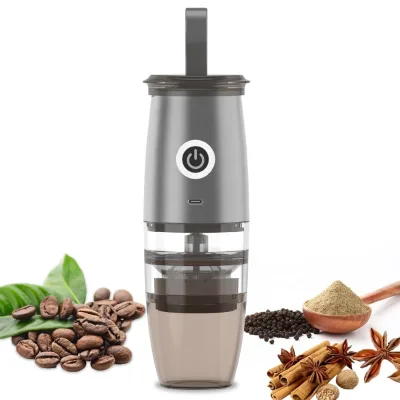


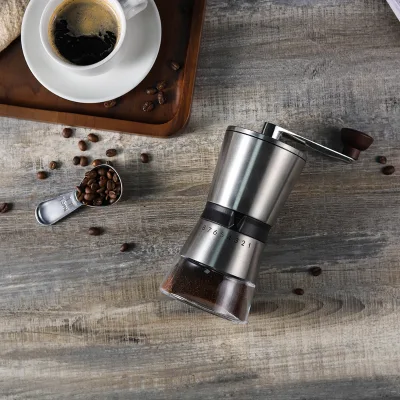
Adjustable Stainless Steel Burr Manual Coffee Grinder - Durable & Precise Grind
$17.00 - $18.99
MOQ: 100 Pieces
Comprehensive Sourcing Guide
Strategic Sourcing Guide for Professional Aluminum Burr Coffee Grinders
Understanding the Technical Landscape of Burr Grinding Systems
When sourcing professional aluminum burr coffee grinders, buyers must first distinguish between the fundamental mechanical architectures available in the current market. The supplied product data indicates a clear bifurcation between blade-based systems and burr-based systems, a distinction that is critical for commercial applications. While the dataset lists "Blade Coffee Grinders" as a specific category, the core keyword focuses on "burr" grinders, specifically those utilizing flat wheel burr technology. The observed product attributes reveal that professional-grade units often feature a "Flat Wheel Burr" configuration, which is distinct from the "Blade" type observed in other listings. This mechanical difference dictates the consistency of the particle size distribution, a primary driver of extraction quality in commercial brewing.
The technical specifications provided for the "Allround A1 Coffee Grinder" highlight the engineering standards expected in this category. This model features an "83mm" burr diameter, a dimension that directly correlates with the throughput capacity and the uniformity of the grind. In professional settings, the burr diameter is not merely a size specification but a performance indicator; larger burrs generally allow for higher throughput with less heat generation. The dataset further specifies a "Mill Powder Speed" of "5g/S" and a "Burr Service Life" of "800kg." These figures represent the operational limits and durability expectations for a unit of this class. Buyers should verify that any aluminum burr grinder they consider meets or exceeds these throughput metrics to ensure it can handle the volume demands of a busy commercial environment without overheating or wearing out prematurely.
Furthermore, the material composition of the housing is a defining characteristic of the "aluminum" category. The provided facts confirm that "Aluminum" is a verified housing material for specific professional models, contrasting with "Stainless Steel" options found in other listings. Aluminum offers a unique balance of thermal conductivity and weight, which can influence the machine's stability and heat dissipation during prolonged grinding sessions. However, the choice of material must be evaluated alongside the motor specifications. The observed motor power ranges from "360W" to "450W" in the commercial sector, with voltage requirements fixed at "220V" and motor frequencies at "50Hz/60Hz." These electrical parameters must align with the local infrastructure of the buyer's facility to prevent operational failures.
Compliance and Certification Verification Protocols
In the B2B procurement of commercial coffee equipment, compliance is not a secondary concern but a foundational requirement. The supplied product facts explicitly list "CE" and "CB" certifications as attributes of the available units. These certifications are non-negotiable for international trade and indicate that the electrical components and mechanical safety features have been assessed against specific regional standards. The presence of "CE" certification suggests conformity with European Union safety, health, and environmental protection requirements, while "CB" certification often facilitates broader international acceptance through the IECEE CB Scheme. Buyers must insist on seeing valid, up-to-date certification documents for any aluminum burr grinder they intend to import, as the absence of these marks can lead to customs delays, liability issues, or regulatory penalties.
Beyond electrical safety, the structural integrity and material safety of the grinder housing are paramount. While the dataset confirms "Aluminum" as a housing material, it does not explicitly list specific alloy standards or food-grade certifications for the metal itself. Buyers should therefore verify that the aluminum used is food-safe and resistant to corrosion, especially in environments where coffee oils and moisture are constant. The "CB" and "CE" marks cover electrical safety, but the material composition requires separate verification. Procurement teams should request material safety data sheets (MSDS) or specific alloy certifications to ensure the housing does not leach harmful substances into the coffee product.
The "421356cm" and "221447cm" dimensions listed in the product standards provide a reference for physical compliance with workspace layouts. These standard dimensions indicate the footprint of the machinery, which is crucial for commercial kitchen planning. However, buyers should not assume that all aluminum burr grinders adhere to these exact measurements. Instead, these figures should serve as a benchmark for verifying that the supplier's product documentation accurately reflects the physical reality of the unit. Discrepancies between the listed standard dimensions and the actual delivered product can indicate quality control issues or misrepresentation.
Cost Drivers and Pricing Structure Analysis
The pricing of professional aluminum burr coffee grinders is influenced by a complex interplay of material costs, manufacturing complexity, and certification overheads. The observed price range in the market spans from "0.8" to "1050" USD, a variance that reflects the spectrum from basic entry-level units to high-end commercial machines. For a professional aluminum burr grinder, the cost is heavily driven by the precision engineering required for the burr mechanism. The "83mm" burr diameter and the "1400rpm" or "1500rpm" motor speeds observed in the data represent significant engineering investments. The cost of the aluminum housing itself is also a factor, as high-grade aluminum alloys that resist warping and corrosion are more expensive than standard castings.
Minimum Order Quantity (MOQ) is another critical cost driver. The data indicates an MOQ of "100PCS" for specific models like the "AllRound A1," while other listings show an MOQ as low as "1." This disparity suggests that pricing structures are often tiered based on volume. Buyers purchasing at the lower end of the MOQ spectrum may face higher unit costs, whereas those committing to the "100PCS" threshold can access more favorable pricing tiers. The "Customization" attribute being "Available" or "Yes" further impacts cost. Custom branding, specific voltage configurations, or unique housing finishes will invariably increase the unit price and may extend the lead time.
Additionally, the "Warranty" period of "12 Months" and the "Service" options for "OEM/ODM" are embedded cost factors. A longer warranty or comprehensive OEM support often correlates with a higher initial purchase price but reduces the total cost of ownership over the machine's lifecycle. Buyers must weigh the upfront cost against the long-term value provided by these service terms. The "prod_packing" specifications, ranging from "Cardboard Box" to "Expandable Polystyrene +5 Layers Outer Box," also influence logistics costs. More robust packaging increases the initial shipping cost but reduces the risk of damage during transit, which is a hidden cost that can significantly impact the final delivered price.
Typical Applications and Operational Scenarios
The operational context for professional aluminum burr grinders is primarily defined by their "Commercial" application status. The data explicitly categorizes these units for commercial use, distinguishing them from residential appliances. The "Allround A1" model, with its "Recommended Weekly Grind" of "6-8kg" and a "Mill Powder Speed" of "5g/S," is designed to handle the volume demands of busy cafes, roasteries, and specialty coffee shops. The "Flat Wheel Burr" technology is particularly suited for espresso preparation, where consistency is critical for extracting the desired flavor profile from coffee beans.
The "Capacity" of "11-15 Cups" observed in some listings suggests that these grinders are optimized for high-volume service environments. In a commercial setting, the ability to grind quickly and consistently is essential for maintaining service speed during peak hours. The "Automatic Filtration" attribute, which varies between "Automatic Filtration" and "Without Automatic Filtration," indicates different operational workflows. Units with automatic filtration may be preferred in high-throughput environments where minimizing manual intervention and cleaning time is a priority. Conversely, units without this feature might be selected for settings where manual control over the filtration process is desired or where the cost of the feature is not justified by the volume.
The "Power-off Protection" attribute also plays a role in operational safety and reliability. While some models feature "Power-off Protection," others are listed as "Without Power-off Protection." In a commercial setting, the presence of this safety feature is highly recommended to protect the motor from damage during power fluctuations or accidental overloads. The "Quick Release" function noted in the specifications further enhances operational efficiency by allowing baristas to quickly remove the hopper or burr assembly for cleaning and maintenance, a necessity in maintaining hygiene standards in a commercial kitchen.
Supplier Evaluation and Manufacturing Capabilities
Evaluating suppliers for professional aluminum burr coffee grinders requires a deep dive into their manufacturing capabilities and service offerings. The "Service" attribute listing "OEM/ODM" indicates that many suppliers are capable of custom manufacturing, which is a significant advantage for buyers looking to brand their own equipment. However, the ability to offer OEM/ODM services does not guarantee quality; buyers must verify the supplier's track record in producing consistent, high-quality units. The "Customization" options, including "Yes" for customization, suggest flexibility, but the buyer must clearly define their requirements to ensure the final product meets their specific needs.
The "prod_origin" being listed as "China" for the observed products provides a geographical context for the supply chain. While this location is a major hub for coffee equipment manufacturing, buyers should conduct thorough due diligence to ensure the supplier adheres to international quality standards. The "Warranty" of "12 Months" is a standard offering, but the terms of this warranty, including what is covered and the process for claims, should be scrutinized. A supplier that offers a robust warranty and responsive after-sales support is generally a more reliable partner than one that offers a minimal warranty with vague terms.
The "MOQ" of "100PCS" for certain models suggests that these suppliers are geared towards larger volume buyers. For buyers with smaller volume requirements, finding a supplier that can accommodate lower MOQs without compromising quality may be challenging. The "prod_packing" details, such as the "Expandable Polystyrene +5 Layers Outer Box," indicate a commitment to protecting the product during shipping, which is a positive sign of a supplier's attention to detail. Buyers should also verify the supplier's ability to handle the "Voltage" requirements of "220V" and "50Hz/60Hz" to ensure compatibility with their local power grid.
Quality Control and Long-Term Procurement Considerations
Quality control in the procurement of aluminum burr coffee grinders extends beyond the initial inspection of the product. The "Burr Service Life" of "800kg" is a critical metric that buyers should use to evaluate the long-term durability of the grinder. This figure represents the amount of coffee beans the burrs can grind before requiring replacement, a key factor in calculating the total cost of ownership. Buyers should request third-party test reports or verified data to confirm that the "800kg" service life claim is accurate and representative of real-world usage conditions.
The "Dimension of Machine" and "prod_standard" dimensions, such as "221447cm" and "46.527.553.5cm," are essential for ensuring the equipment fits within the designated workspace. However, buyers should also consider the "Hopper Capacity" of "500g/1000g" or "11-15 Cups" in the context of their operational workflow. A larger hopper capacity may reduce the frequency of refilling but could also impact the freshness of the coffee if the beans are not used quickly enough. The "Power" rating of "300-599W" and "360W" or "450W" should be matched to the specific power requirements of the facility to avoid electrical overloads or underperformance.
Long-term procurement considerations also include the availability of spare parts and the ease of maintenance. The "Quick Release" function and the "Automatic Filtration" features are design elements that facilitate maintenance, but buyers should verify the availability of replacement burrs, motors, and other critical components. The "Warranty" period of "12 Months" is a starting point, but buyers should negotiate extended warranty options or service contracts that cover the lifespan of the equipment. The "Customization" options should be leveraged to ensure the grinder meets the specific needs of the buyer's operation, such as specific branding or unique functional requirements.
Finalizing the Procurement Strategy
The procurement of professional aluminum burr coffee grinders requires a balanced approach that considers technical specifications, compliance, cost, and supplier reliability. The data provided offers a solid foundation for making informed decisions, but buyers must remain vigilant in verifying all claims and specifications. By focusing on the "Flat Wheel Burr" technology, verifying "CE" and "CB" certifications, and understanding the cost drivers associated with "OEM/ODM" services, buyers can secure high-quality equipment that meets their commercial needs. The "Burr Service Life" and "Power" ratings are critical metrics that should guide the selection process, ensuring that the chosen grinder can withstand the demands of a professional environment. Ultimately, a successful procurement strategy relies on thorough due diligence, clear communication with suppliers, and a commitment to long-term value over short-term savings.
FAQs
What certifications do professional aluminum burr coffee grinders have?
Professional aluminum burr coffee grinders typically hold CE and CB certifications for electrical safety. These marks confirm compliance with international safety standards required for commercial import and operation in various regions.
Which housing materials are available for commercial coffee grinders?
Commercial coffee grinders are available with either aluminum or stainless steel housing materials. Aluminum offers specific thermal properties, while stainless steel provides durability, and buyers should verify the material for each specific model.
Can I customize the specifications of an aluminum burr grinder?
Yes, customization is available for many professional aluminum burr coffee grinders. Buyers can request specific modifications, though this often requires meeting a minimum order quantity of 100 pieces for production runs.
What is the typical power consumption for these commercial grinders?
The power consumption for these commercial grinders ranges from 300 to 599 watts. Specific models may operate at 360 watts or 450 watts, depending on the motor configuration and intended commercial application.
How long is the warranty period for professional coffee grinding equipment?
The standard warranty period for professional coffee grinding equipment is 12 months. This coverage applies to the unit's mechanical and electrical components under normal commercial operating conditions.
What is the minimum order quantity for bulk aluminum burr grinder purchases?
The minimum order quantity for bulk purchases is often 100 pieces for specific models. Some suppliers may accept lower quantities, but the standard threshold for customization and pricing tiers is 100 units.
Which burr diameter is common for high-throughput flat wheel grinders?
A common burr diameter for high-throughput flat wheel grinders is 83 millimeters. This size supports a recommended weekly grind of 6 to 8 kilograms with a mill powder speed of 5 grams per second.