Source Professional Blade Coffee Grinder for Cafes, Retailers, and Offices
Compare 30 Professional Blade Coffee Grinder options featuring adjustable grind speeds, power-off protection, and stainless steel housings. Buyers can evaluate models like the Swf-029 and Allround A1 for commercial applications with hopper capacities ranging from 500g to 1.2kg.
Key considerations
Products List


Professional Coffee Grinder Touch-Screen Espresso Bean Grinder 64mm Burr
$300.00 - $314.00
MOQ: 1 Pieces


Hot Sale Professional Electric Espresso Coffee Grinder with Dosing Setting
$180.00 - $189.00
MOQ: 1 Pieces


Multifunction Automatic Electric Coffee Bean Grinder Machine Professional Coffee Grinder
$860.00 - $1050.00
MOQ: 100 Pieces

Multifunction Household Automatic Burr Coffee Grinder Mill Professional Coffee Grinder
$860.00 - $1050.00
MOQ: 100 Pieces


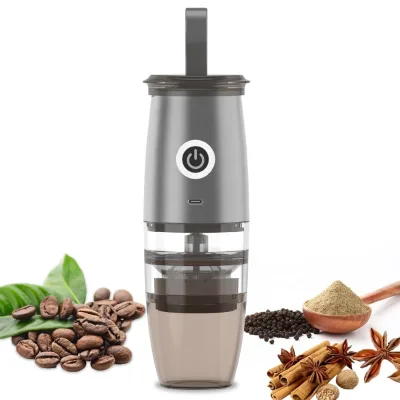


High Quality Commercial professional Coffee Grinders Maker with Grinder
$359.99 - $372.99
MOQ: 440 Pieces

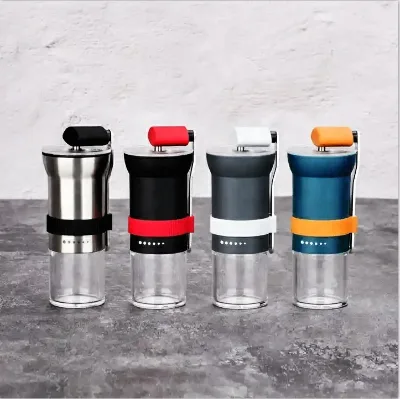


Electric Coffee Grinder with Stainless Steel Blades Automatic Coffee Bean Grinder
$13.78 - $14.36
MOQ: 1000 Pieces


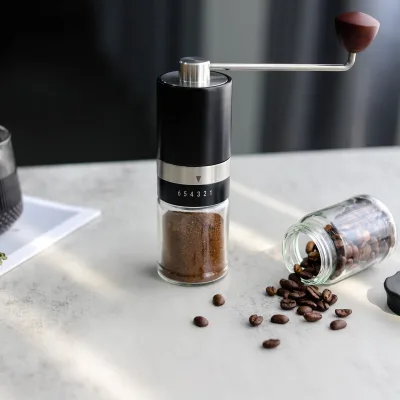
Comprehensive Sourcing Guide
Strategic Sourcing Guide for Professional Blade Coffee Grinders
Understanding the Technical Landscape of Blade Grinding Technology
When evaluating professional blade coffee grinders for commercial deployment, buyers must first distinguish these units from their burr counterparts based on fundamental mechanical principles. The supplied product data identifies a specific category of equipment labeled as "Blade Coffee Grinders," which operates on a high-speed impact mechanism rather than the shearing action of flat or conical burrs. In the observed dataset, the "Degree of Grind" is specified as "Fine Grind," indicating that these units are optimized for producing a consistent powder suitable for specific brewing methods or commercial applications requiring rapid throughput.
The core mechanical attribute of these machines is the "Grind Speed Adjustment," a feature that allows operators to modulate the rotation of the blade to influence particle size distribution. This is distinct from the fixed-speed operation often found in entry-level residential models. The power specifications observed in the market data range from 300W to 599W, falling within the "Electric" power source category. This wattage range suggests a balance between torque for heavy-duty grinding and energy efficiency for continuous commercial use.
A critical observation in the technical specifications is the variation in housing materials. While some units feature "Stainless Steel" housing, which offers superior durability and resistance to corrosion in humid coffee shop environments, others are constructed with "Aluminum." The choice of material impacts the thermal mass of the grinder; stainless steel retains heat differently than aluminum, which can influence the temperature of the coffee grounds during extended grinding sessions. Buyers should verify the specific material composition of the unit they intend to purchase, as this affects longevity and maintenance requirements.
Furthermore, the "Automatic Filtration" attribute presents a binary choice in the observed inventory. Some models include "Automatic Filtration," which is essential for maintaining a clean workspace and ensuring consistent grind quality by preventing the re-grinding of oversized particles. Conversely, other units are listed as "Without Automatic Filtration," requiring manual intervention or external filtration systems. For a professional setting, the presence of automatic filtration is a significant operational advantage that reduces labor time and minimizes the risk of cross-contamination between different coffee batches.
Compliance, Certification, and Safety Standards
In the B2B procurement of commercial kitchen equipment, regulatory compliance is not merely a formality but a prerequisite for market entry and insurance coverage. The product data explicitly lists "CE" certification for several models, including the Swf-029 and Swf-022. The CE mark indicates conformity with health, safety, and environmental protection standards for products sold within the European Economic Area. For buyers operating in or exporting to Europe, this is a non-negotiable requirement.
Additionally, the dataset notes that certain models, such as the LD-900E, carry both "CB" and "CE" certifications. The CB scheme is an international system for the mutual recognition of electrical equipment test reports, which can streamline the certification process for other countries. The presence of dual certification suggests a higher level of adherence to international safety protocols, potentially reducing the need for redundant testing in multiple jurisdictions.
Safety features are equally critical in a commercial environment where equipment is subjected to high-frequency use. The "Power-off Protection" attribute is a vital safety mechanism observed in the product specifications. This feature ensures that the machine automatically shuts down in the event of a power surge or electrical fault, protecting both the internal motor and the user from potential hazards. In a busy coffee shop, where equipment may be left unattended or subjected to fluctuating power grids, this protection is essential for risk mitigation.
Buyers must also verify the electrical standards of the specific units. The data indicates a "Voltage" of 220V and a "Motor" frequency of 50Hz/60Hz. This dual-frequency capability is advantageous for international procurement, as it allows the equipment to function in regions with different grid standards without the need for external transformers. However, buyers must confirm that the specific model they select matches the local grid frequency to prevent motor burnout or inefficient operation.
Cost Drivers and Pricing Dynamics in the Commercial Sector
The pricing landscape for professional blade coffee grinders is highly variable, with the observed market range spanning from $2.30 to $1,050 USD. This wide disparity reflects differences in build quality, brand positioning, and the complexity of the internal mechanisms. The lower end of the spectrum likely corresponds to basic models with minimal features, while the upper end represents units with advanced specifications such as precise speed control, robust housing materials, and comprehensive safety certifications.
Several factors drive the cost of these machines. The "Hopper Capacity" is a primary cost determinant; units with capacities ranging from 500g to 1.2kg are designed for higher volume output, requiring larger motors and more durable components. The "Gross Weight" and "Net Weight" (Nw) of the units also correlate with cost, as heavier machines typically utilize more substantial materials like stainless steel and feature more robust internal assemblies. For instance, a unit with a gross weight of 14kg and a net weight of 15kg suggests a heavy-duty construction that commands a higher price point.
The "Model Number" and "Model" designation (e.g., Swf-029, Swf-600ad, LD-900E) often indicate the tier of the product. Higher model numbers or specific suffixes may denote advanced features such as "Quick Release" mechanisms or enhanced "Burr Service Life," even in blade grinders where the terminology might refer to the blade assembly's durability. The "Burr Service Life" of 800kg, observed in the data, is a significant metric for long-term cost of ownership. A longer service life reduces the frequency of part replacements, thereby lowering the total cost of operation over the machine's lifespan.
Buyers should also consider the "MOQ" (Minimum Order Quantity) as a cost driver. The observed MOQ ranges from 1 to 3,000 units. For small businesses or startups, an MOQ of 1 allows for low-risk entry into the market, whereas bulk purchasing at an MOQ of 100 or 3,000 units can significantly reduce the per-unit cost. The "Customization" attribute, marked as "Available" or "Yes" in the data, introduces another layer of cost. Custom branding, specific color options, or tailored technical specifications will typically incur additional fees but can provide a competitive edge in the market.
Operational Applications and Performance Metrics
The "Application" field in the product data is explicitly listed as "Commercial," confirming that these units are engineered for high-volume environments such as coffee shops, restaurants, and catering services. The "Type" classification as "Blade Coffee Grinders" suggests their primary use case is for grinding coffee beans into a fine powder, which is ideal for espresso preparation or specific brewing methods that require a consistent, fine particle size.
Performance metrics are crucial for evaluating the suitability of these grinders for commercial operations. The "Mill Powder Speed" of 5g/s indicates the rate at which the grinder can process coffee beans. This speed, combined with the "Recommended Weekly Grind" of 6-8kg, provides a benchmark for the machine's throughput capacity. Buyers must ensure that the grinder's speed aligns with their expected daily volume to avoid bottlenecks during peak hours.
The "Rpm" (Revolutions Per Minute) of 1400rpm is another critical performance indicator. High RPMs are necessary for effective blade grinding, as they create the centrifugal force required to pulverize the beans. However, higher RPMs can also generate more heat, which may affect the flavor profile of the coffee. The "Grind Speed Adjustment" feature allows operators to fine-tune the RPM to balance speed and heat generation, ensuring optimal extraction quality.
The "Function" of "Quick Release" observed in the data is particularly valuable in a commercial setting. This feature likely facilitates rapid disassembly for cleaning and maintenance, reducing downtime between service cycles. In a high-volume environment, the ability to quickly clean the grinder is essential for maintaining hygiene standards and preventing flavor contamination between different coffee blends.
Supplier Evaluation and Quality Assurance Protocols
When selecting a supplier for professional blade coffee grinders, buyers must conduct a rigorous evaluation based on the available product attributes. The "prod_origin" is listed as "China," which is a common manufacturing hub for this category of equipment. While this location offers competitive pricing, buyers must verify the supplier's quality control processes to ensure consistency and reliability.
The "prod_packing" specifications, ranging from "Cardboard Box" to "Carton," provide insight into the supplier's attention to detail in logistics and protection. A robust packaging solution is essential for preventing damage during transit, especially for heavy units with dimensions such as L30W21H56cm. Buyers should request detailed packaging diagrams to ensure that the units are adequately protected and that the packaging meets any specific shipping requirements.
Quality assurance should also focus on the "Dimension of Machine" and "Dimension of Packing." The data provides specific measurements, such as 221447cm for the LD-900N and 573928cm for the packing of the LD-900E. These dimensions are critical for space planning in commercial kitchens. Buyers must verify that the machine's footprint fits within their designated workspace and that the packaging dimensions align with their shipping and storage capabilities.
The "Customization" option, marked as "Available" or "Yes," indicates that suppliers are willing to tailor products to specific buyer requirements. This flexibility can be a significant advantage for brands looking to differentiate their offerings. However, buyers should establish clear communication channels to define the scope of customization, including branding, color, and technical specifications, to avoid misunderstandings and ensure the final product meets their expectations.
Long-Term Procurement and Maintenance Considerations
Sourcing professional blade coffee grinders is not a one-time transaction but a long-term partnership that requires careful consideration of maintenance and lifecycle management. The "Burr Service Life" of 800kg is a key metric for estimating the replacement cycle of critical components. Buyers should factor in the cost of replacement parts and the availability of spare components when calculating the total cost of ownership.
The "Automatic Filtration" feature, when present, reduces the need for manual cleaning and maintenance, thereby extending the operational life of the machine. In contrast, units "Without Automatic Filtration" may require more frequent manual intervention, increasing the labor cost and the risk of wear and tear on the internal mechanisms. Buyers should prioritize models with automatic filtration for high-volume applications to minimize downtime and maintenance costs.
The "Voltage" and "Motor" specifications (220V, 50Hz/60Hz) highlight the importance of electrical compatibility. Buyers must ensure that the local power infrastructure can support the machine's requirements to prevent electrical failures. Additionally, the "Power-off Protection" feature provides a safety net against power surges, which can be common in commercial settings with multiple high-power appliances.
Finally, the "MOQ" and "Customization" options offer flexibility for scaling operations. As a business grows, the ability to order larger quantities or customize units for specific locations can provide a strategic advantage. Buyers should negotiate terms that allow for scalability, ensuring that the supplier can meet increasing demand without compromising on quality or delivery timelines. By focusing on these long-term considerations, buyers can build a resilient and efficient procurement strategy for professional blade coffee grinders.
FAQs
What certifications do these grinders have?
Many models carry CE certification, and some include both CB and CE marks. This ensures compliance with European safety standards and facilitates international market entry without redundant testing.
How much power do these electric grinders consume?
The observed power range is 300 to 599 watts. This wattage balances torque for heavy-duty grinding with energy efficiency suitable for continuous commercial use in busy coffee shops.
Which housing materials are available for these units?
Housing options include stainless steel and aluminum. Stainless steel offers superior corrosion resistance for humid environments, while aluminum provides different thermal mass properties affecting grind temperature.
Can I find grinders with automatic filtration?
Some models feature automatic filtration to maintain workspace cleanliness and grind consistency. Other units operate without this feature, requiring manual intervention to prevent cross-contamination between batches.
What is the minimum order quantity for customization?
Customization is available with a minimum order quantity of 100 pieces. This allows buyers to tailor branding or specifications while meeting bulk pricing thresholds for commercial procurement.
How fast can these grinders process coffee beans?
The mill powder speed reaches 5 grams per second. This throughput, combined with a recommended weekly grind of 6 to 8 kg, supports high-volume commercial operations effectively.
What voltage and frequency do these motors support?
The motors operate at 220V and support both 50Hz and 60Hz frequencies. This dual-frequency capability allows the equipment to function in regions with different grid standards without external transformers.