Source Promotional Crystal Ball Pen for Office, School, and Business Gifts
Compare 30 Promotional Crystal Ball Pen options featuring metal and plastic barrels with twist or click mechanisms. Buyers can evaluate customization, logo printing, and packaging details for office, school, and business gift applications.
Key considerations
Products List


Comprehensive Sourcing Guide
Strategic Sourcing Guide for Promotional Crystal Ball Pens
Navigating the global market for promotional crystal ball pens requires a disciplined approach that balances aesthetic appeal with functional reliability. These items serve as high-value touchpoints in corporate branding, yet their procurement involves specific technical nuances regarding materials, ink systems, and manufacturing standards. Buyers must distinguish between generic plastic variants and premium metal constructions, as the term "crystal" in promotional contexts often refers to the clarity of the finish or the specific design of the barrel rather than a literal crystalline material composition. This guide outlines the essential parameters for sourcing these writing instruments effectively, focusing on verified specifications, cost structures, and quality assurance protocols derived from current market data.
Technical Specifications and Material Composition
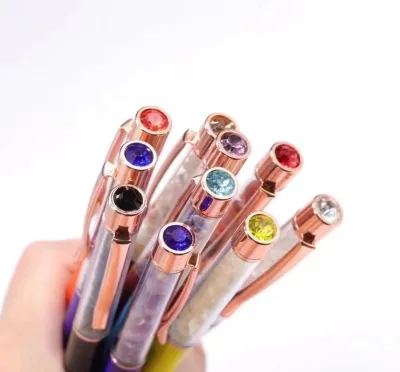
The foundational decision in sourcing promotional pens lies in the material selection and mechanical design. Market observations indicate a clear divergence between metal and plastic constructions. Metal barrels, often cited in specifications as "metal barrel pen" or simply "Metal," provide a premium feel and durability suitable for executive gifts and high-visibility corporate events. In contrast, plastic options offer versatility in color customization and lower unit costs. The "crystal" descriptor frequently aligns with the visual clarity of the ink or the transparency of the barrel in specific models, though the primary structural material remains either metal or plastic.
Mechanical operation is another critical specification. The supply chain offers distinct actuation styles, primarily "Twist" and "Click" mechanisms. Twist styles are traditional and robust, often associated with oil ball pens, while click mechanisms provide a modern, tactile experience suitable for office environments. The point diameter is a vital functional metric; observed data reveals a range from 0.7mm to 1.0mm. A 0.7mm point is generally preferred for smooth writing and fine detail, whereas a 1.0mm point offers bolder lines and is often found in specific promotional models. Buyers must verify the exact point diameter for their specific use case, as this directly impacts the writing experience and perceived quality.
Furthermore, the ink system varies significantly. The market includes "Oil Ball Pen" variants, which are known for their longevity and resistance to smudging, and "Water-Based Ball Pen" options, which may offer different flow characteristics. The ink type is often listed as "Liquid-Ink," and the erasability is typically "Unerasable," ensuring that the promotional message remains permanent. The hardness of the pen body is also a consideration, with observations ranging from "Medium Soft" to "Partial Hard," influencing the tactile feedback during use.
Compliance, Standards, and Dimensional Verification
While specific certification bodies are not universally mandated for all promotional pens, adherence to dimensional and quality standards is essential for inventory planning and product consistency. Standardized dimensions are frequently cited in product listings, with observed measurements such as 14413mm and 1337.5mm. These figures represent the length and diameter of the pen barrel, respectively. Buyers must verify that the supplier's actual product dimensions align with these specifications to ensure compatibility with custom packaging, pen holders, or branded display units.
Quality standards are often described qualitatively in supplier data, with terms like "HIGH QUALITY" appearing as a standard descriptor. However, for rigorous procurement, buyers should request specific material safety data sheets and compliance documentation relevant to the destination market. The origin of the products is predominantly China, with specific manufacturing hubs noted in Ningbo and Zhejiang. These regions are known for their established supply chains in writing instruments, but buyers should confirm the specific factory location to assess logistics and potential trade compliance requirements.
The following table summarizes the key technical parameters observed in the current market to assist in specification verification:
| Parameter | Observed Values | Sourcing Verification Requirement |
|---|---|---|
| Material | Metal, Plastic | Confirm material composition for durability and feel. |
| Point Diameter | 0.7mm, 1.0mm | Verify specific tip size for writing precision. |
| Open Style | Twist, Click | Select mechanism based on user preference and brand image. |
| Dimensions | 14413mm, 1337.5mm | Check against packaging and display constraints. |
| Ink Type | Oil, Water-Based, Liquid | Ensure ink type matches the intended writing surface and longevity. |
| Hardness | Medium Soft, Partial Hard | Assess tactile feedback and structural integrity. |
Cost Drivers and Pricing Structures
The pricing of promotional crystal ball pens is influenced by a complex interplay of material costs, customization levels, and order volume. The observed price range in the market spans from $0.07 to $3.80 USD per unit. This wide variance is primarily driven by the material choice; metal barrels command a higher price point due to raw material costs and manufacturing complexity, while plastic variants remain at the lower end of the spectrum. The "crystal" aesthetic, if achieved through specialized molding or coating, can also elevate the cost.
Minimum Order Quantity (MOQ) is a significant cost driver. Data indicates an MOQ range of 50 to 10,000 units. Lower MOQs, such as 50 or 3000 units, allow for smaller batches but often result in a higher unit cost due to setup fees and reduced economies of scale. Higher volume orders, potentially reaching 10,000 units, typically unlock lower per-unit pricing. Buyers must balance their budget constraints with the need for sufficient inventory to meet promotional campaign timelines.
Additional cost factors include logo printing and packaging. Most suppliers offer "With Logo Printing" as a standard service, but the complexity of the printing method (e.g., screen printing, laser engraving, or pad printing) can affect the final price. Packaging options also vary, ranging from simple "OPP Bag" to more elaborate "Box" or "White Box" configurations. The choice between "Single Color" and "Eight-Color" options for the pen body or ink can further influence the cost structure. Payment terms, such as T/T (Telegraphic Transfer), are standard, and buyers should factor in potential currency exchange fluctuations and payment processing fees when calculating the total landed cost.
Typical Applications and Market Segmentation
Promotional crystal ball pens are versatile tools designed for a wide array of applications, primarily falling into the categories of "Promotional Pen," "Office & School Pen," and "Business Gift." The "Global" market reach of these products suggests their suitability for international corporate events, trade shows, and educational institutions. The "Creative" and "Sports" body types indicate that these pens are often tailored to specific brand identities or industry sectors. For instance, a "Sports" body type might be used for athletic events, while a "Metal" barrel pen is ideal for high-end business gifts.
The customization options available, including "Barrel Color: Customized" and "Logo Printing," make these pens highly adaptable for branding campaigns. The "Suitable for: Universal" attribute suggests that these pens are designed to be functional for a broad audience, reducing the risk of rejection by recipients. The "Promotional Pen Type: Logo Pen" classification reinforces their primary role as a branding vehicle. Buyers should align the pen's aesthetic and functional attributes with their specific campaign goals. For example, a "Water-Based Ball Pen" might be preferred for eco-conscious branding, while an "Oil Ball Pen" ensures longevity in high-traffic office environments.
Supplier Evaluation and Capacity Assessment
Evaluating suppliers requires a focus on production capacity and reliability. The market data indicates a significant production capacity, with some suppliers reporting an output of 50,000 pieces within 35 days. This capacity is crucial for buyers with large-scale promotional needs or tight deadlines. However, buyers must verify this capacity against their specific order volume and lead time requirements. The "Lead Time" is not explicitly defined in the provided data but is implicitly linked to the production capacity and order size.
Supplier location is another critical factor. With origins in Ningbo and Zhejiang, China, buyers should consider the logistics implications of shipping from these regions. These areas are major manufacturing hubs, which often translates to competitive pricing and a wide selection of models. However, buyers should conduct due diligence on the specific supplier's track record, financial stability, and ability to meet quality standards. The "Customization: Available" attribute suggests that most suppliers are willing to work with buyers on bespoke requirements, but the extent of this customization should be clearly defined in the contract.
Quality Control and Long-Term Procurement Considerations
Ensuring consistent quality is paramount in the procurement of promotional pens. The "HIGH QUALITY" standard mentioned in product listings is a qualitative claim that must be validated through rigorous quality control (QC) processes. Buyers should implement a QC protocol that includes visual inspections for defects, functionality tests for the click or twist mechanisms, and writing tests to ensure smooth ink flow. The "Point Diameter" and "Hardness" specifications should be verified against the ordered samples to prevent discrepancies in the final batch.
Long-term procurement considerations involve building a sustainable relationship with suppliers. The "Payment Term: T/T" is a standard practice, but buyers should negotiate terms that protect their interests, such as partial payments upon shipment. The "Disposable: Non-Disposable" attribute indicates that these pens are designed for reuse, which aligns with sustainability goals. Buyers should explore options for eco-friendly materials or recyclable packaging to enhance the brand's corporate social responsibility profile.
Finally, buyers must remain vigilant regarding the "Standard" and "Specification" attributes. While specific models like "XL-15319," "WH2020-3," "A060B1," and "A059B1" are identified in the market, buyers should not assume that all products share the same attributes. Each model may have unique characteristics regarding ink type, barrel material, and dimensions. A thorough review of the product specifications for each model is necessary to ensure that the selected pens meet the exact requirements of the promotional campaign. By maintaining a disciplined approach to specification verification and quality control, buyers can secure high-quality promotional crystal ball pens that effectively enhance their brand presence in the global market.
FAQs
How is the point diameter specified for these pens?
The point diameter is available in 0.7mm and 1.0mm variants depending on the specific model. Buyers must verify the exact tip size required for their writing needs as specifications vary between oil ball and water-based ball pen types.
What materials are used for the pen barrels?
Barrels are constructed from either metal or plastic to suit different price points and durability requirements. Metal options provide a premium feel for executive gifts, while plastic variants offer versatile color customization for general office use.
Which open styles are available for these promotional pens?
The pens feature either a twist or click open style mechanism based on the specific product model. Twist styles are often found in oil ball pens, whereas click mechanisms provide a modern tactile experience suitable for office environments.
Can I customize the logo and barrel color?
Yes, logo printing is available and barrel colors can be customized to match your brand identity. Most suppliers offer single color or eight-color options, allowing for tailored designs that fit specific promotional campaign goals.
What is the minimum order quantity for these items?
The minimum order quantity ranges from 50 to 10,000 units depending on the supplier and product model. Lower MOQs allow for smaller batches but may result in higher unit costs compared to larger volume orders.
Where are these pens manufactured and shipped from?
Products originate from manufacturing hubs in China, specifically Ningbo and Zhejiang regions. These locations are established centers for writing instruments, offering competitive pricing and a wide selection of models for global distribution.
How is the packaging configured for bulk orders?
Packaging options include OPP bags, individual boxes, or master cartons containing fifty to five hundred pieces. The specific configuration depends on the model, with some items shipped in single units per bag and others in bulk inner boxes.