Source Steel Wall Plywood Formwork for Hotel Wall Column
Find 30 Steel Wall Plywood Formwork options from Chinese manufacturers. Buyers can compare specifications like ISO certification, surface treatment, and customization availability for hotel, wall, and column applications.
Key considerations
Products List


$85.00 - $140.00
MOQ: 300 Square Meters


$85.00 - $140.00
MOQ: 300 Square Meters


High Strength Steel Frame Formwork with Plywood for Column and Wall Formwork
$102.00 - $130.00
MOQ: 200 Square Meters


Construction Concrete Wall Customized Steel Plywood Forming Euro-Form Formwork
$19.90 - $69.90
MOQ: 30 Pieces


Steel Frame Column Adjustable Formwork with Plywood for Wall Column Construction
$65.00 - $75.00
MOQ: 500 Square Meters

China Manufacturer Wall Steel Frame Formwork with Plywood for Concrete
$65.00 - $75.00
MOQ: 100 Pieces
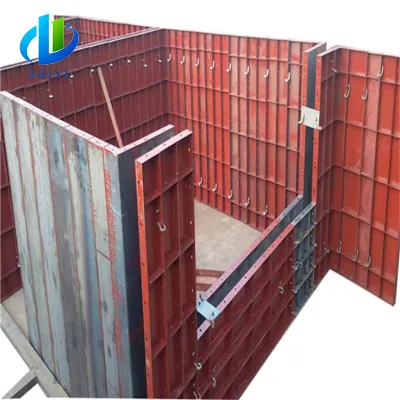


$10.00
MOQ: 200 Pieces
Comprehensive Sourcing Guide
Strategic Sourcing Guide for Steel Wall Plywood Formwork
Understanding Product Composition and Technical Specifications
When sourcing Steel Wall Plywood Formwork, buyers must first distinguish between the structural materials and the specific formwork types available in the market. The core keyword implies a hybrid system where steel provides the structural frame and plywood serves as the facing material, though product listings often vary between all-steel systems and composite steel-wood configurations. Based on observed market data, the material composition frequently lists "Steel" or "Steel Wood," indicating that the final product may be a steel frame formwork system designed to hold plywood panels, or a composite unit where both materials are integral to the assembly.
The technical specifications for these systems are highly variable, driven by the customization capabilities of the suppliers. Observed product models include designations such as D00A, D00AA, ADTO-SF, and generic identifiers like "Vertical Formwork" or "Steel Formwork." These models often correspond to specific dimensions. For instance, standard dimensions observed in the market range from 300mm to 3000mm in length and 300mm to 2400mm in width. Some specific product lines adhere to a standard size of 3000*1200mm, while others offer fully customized sizes to meet unique project requirements. The width of individual components can also range from 100mm to 600mm, allowing for fine-tuned adjustments in wall thickness and structural integrity.
The type of steel used is a critical technical differentiator. High-strength steel grades such as Q235 and Q355 are commonly cited for building structures, ensuring the formwork can withstand the immense pressure of fresh concrete. The system is designed to handle fresh concrete pressures exceeding 60kN/Sqm, a vital metric for high-rise construction where hydrostatic pressure is significant. The formwork types identified in the market include Wall Formwork, Column Formwork, and B-Form systems. The application scope is broad, covering hotels, walls, columns, core tubes, and other structural elements. The design style often references Euro Forms, suggesting a modular approach compatible with European construction standards, which is particularly relevant given the origin of most suppliers.
Compliance, Certification, and Standard Verification
Navigating the compliance landscape is essential for international procurement, as construction materials must meet rigorous safety and quality benchmarks. The supply chain for steel formwork is heavily concentrated in China, with specific origins noted in Jiangsu and Yancheng. This geographic concentration often correlates with specific certification profiles. Buyers should verify that suppliers possess ISO certifications, as this is a high-confidence fact observed across multiple product listings. More specifically, some suppliers provide ISO9001 certification, which validates their quality management systems, while others list CE and ROHS certifications. The presence of CE marking indicates compliance with European health, safety, and environmental protection standards, which is crucial for projects in the EU or those requiring international recognition.
It is important to treat certification claims as observations of specific product listings rather than universal guarantees for all Steel Wall Plywood Formwork. While ISO, CE, and ROHS are frequently listed, buyers must request current, valid certificates for the specific batch or model they intend to purchase. The product standards themselves vary; some listings specify "Standard & Customized" standards, while others adhere to a specific 3000*1200mm dimension standard. The absence of a specific standard number in a listing does not imply non-compliance but rather suggests a custom manufacturing approach. Buyers should explicitly ask for the technical standard documents (e.g., JGJ or GB standards for Chinese manufacturing) that govern the production of the specific formwork model.
Regarding the "Reach" certification mentioned in background data, this should be treated with caution. It appears as a low-confidence background item and should not be asserted as a standard requirement for steel formwork unless explicitly confirmed by the supplier with documentation. Instead, focus on the high-confidence certifications like ISO and CE. The surface treatment processes also play a role in compliance and durability. Common treatments include paint spraying, spray painting, and painting in self-color. These processes are often customized, and the finish must be verified to ensure it meets the environmental and safety regulations of the destination country, particularly regarding volatile organic compounds (VOCs) in paints.
Cost Drivers and Pricing Dynamics
The pricing structure for Steel Wall Plywood Formwork is influenced by a complex interplay of material costs, customization levels, and logistical factors. The observed price range in the market is substantial, spanning from $9.97 to $2,100 USD. This wide variance is not indicative of a single product type but rather reflects the difference between individual components, small accessory sets, and complete formwork systems. A single steel panel or a small customized module may fall at the lower end of this spectrum, while a full system designed for a specific high-rise project, including all necessary clamps, ties, and backing beams, will command a price at the higher end.
The Minimum Order Quantity (MOQ) is another significant cost driver, with observed ranges between 10 and 2,000 units. Suppliers with lower MOQs (around 10 units) may charge a premium per unit due to the setup costs associated with small-batch production and customization. Conversely, buyers ordering at the higher end of the MOQ spectrum (approaching 2,000 units) may benefit from economies of scale, though the total capital outlay will be significantly higher. The customization factor is paramount; while "Customization: Available" is a standard attribute, the degree of customization directly impacts the price. Custom sizes, specific surface treatments, and unique design styles like Euro Forms will increase the unit cost compared to standard off-the-shelf inventory.
Shipping and packaging also contribute to the final landed cost. The observed packing methods include "Steel Pallet," "Bunded, Sea Worthy," and "Standard Package." Sea shipping is the primary mode of transport, and the "Sea Worthy" packaging ensures the formwork survives long-distance transit without damage. However, the weight of steel formwork makes shipping costs a critical variable. Buyers should calculate the total cost of ownership, including freight, insurance, and potential customs duties, rather than focusing solely on the ex-factory price. The "Project Solution Capacity" of the supplier, which includes graphic design and 3D model design, can also influence the price, as these services add value but may be bundled into the product cost or charged separately.
Typical Applications and Performance Expectations
Steel Wall Plywood Formwork is versatile, serving a wide array of construction applications. The primary use cases identified in the market include hotel construction, wall building, column formation, and core tube construction. The system's ability to handle high fresh concrete pressures (above 60kN/Sqm) makes it suitable for high-rise buildings where the weight of the concrete exerts significant force on the formwork. The reusable life of these systems is a key performance metric, with observed data suggesting a lifespan of 5 to 10 years. This reusability is a major economic advantage over timber formwork, which is often single-use or has a much shorter lifespan.
The application scope extends beyond simple walls. The "Column Formwork" and "B-Form" types are specifically designed for vertical elements and complex geometries. The "Vertical Formwork" designation suggests systems optimized for tall, straight structures, while the "Steel frame formwork" implies a modular approach suitable for various structural shapes. The color options, typically blue, red, or customized, are not merely aesthetic; they often serve as identifiers for different parts of the formwork system or to meet specific site safety and branding requirements. The surface treatment, whether painted or in self-color, affects the durability and the finish of the concrete. A smooth, painted surface can result in a high-quality architectural concrete finish, reducing the need for post-construction plastering or rendering.
Buyers should verify the "After-Sale Service" capabilities of the supplier, as these are critical for long-term project success. Services such as online technical support, onsite installation, and remote or on-site instruction are commonly offered. This support is essential for ensuring that the formwork is assembled correctly, which directly impacts the safety and quality of the concrete structure. The "Project Solution Capacity" often includes graphic design and 3D model design, allowing suppliers to provide tailored solutions for complex projects. This capability ensures that the formwork fits the specific architectural drawings, minimizing on-site adjustments and reducing labor costs.
Supplier Evaluation and Quality Control Protocols
Evaluating suppliers for Steel Wall Plywood Formwork requires a rigorous approach to quality control and capability assessment. Given the concentration of suppliers in China, specifically in Jiangsu and Yancheng, buyers should verify the supplier's production capacity and technical expertise. The "Project Solution Capacity" is a strong indicator of a supplier's ability to handle complex projects. Suppliers offering graphic design and 3D model design services demonstrate a higher level of engineering capability, which is crucial for custom formwork systems. Buyers should request case studies or references from previous projects to validate these claims.
Quality control should be a continuous process, starting from the raw materials. The use of high-strength steel (Q235, Q355) must be verified through material test reports. The surface treatment process, whether it involves paint spraying or self-color finishing, must be consistent and durable. Buyers should inspect samples for defects such as uneven paint, rust, or structural weaknesses. The "Standard & Customized" nature of the products means that quality control standards may vary. Therefore, buyers should establish clear acceptance criteria based on the specific project requirements, including dimensional tolerances, surface finish quality, and load-bearing capacity.
The certification status is a primary filter for supplier evaluation. High-confidence certifications like ISO, CE, and ROHS should be verified with original documents. The presence of ISO9001 certification indicates a robust quality management system, but buyers should ensure that the certification covers the specific product line they are purchasing. Additionally, the "After-Sale Service" provisions, such as technical support and installation assistance, should be clearly defined in the contract. A supplier that offers comprehensive support is more likely to deliver a high-quality product and resolve any issues that arise during the project.
Long-Term Procurement and Lifecycle Management
Long-term procurement of Steel Wall Plywood Formwork involves more than just the initial purchase; it requires a strategy for maintenance, storage, and eventual replacement. The observed reusable life of 5 to 10 years suggests that these systems are a significant capital investment. To maximize this lifespan, buyers must implement a strict maintenance protocol. This includes regular cleaning to remove concrete residue, inspection for structural damage, and re-application of surface treatments as needed. The "Steel Pallet" and "Bunded, Sea Worthy" packing methods indicate that the formwork is designed for repeated handling and transport, but proper storage is essential to prevent corrosion and deformation.
The customization aspect of the formwork also has long-term implications. Custom-sized formwork may be less versatile for future projects compared to standard modular systems. Buyers should consider the flexibility of the system when selecting models. If the project is part of a larger portfolio of developments, a standardized system might offer better long-term value by allowing for reuse across different sites. Conversely, for unique architectural projects, custom formwork may be necessary, and the buyer should plan for the eventual decommissioning or repurposing of these specialized units.
Finally, the total cost of ownership should be evaluated over the lifecycle of the project. While the initial price may be higher for high-quality, certified systems, the reduced labor costs, faster construction cycles, and extended reuse life often result in a lower overall cost. The "Technical Support" and "After-Sale Service" provided by the supplier are integral to this lifecycle management. A supplier that offers ongoing technical assistance can help optimize the use of the formwork, extend its life, and ensure safety compliance throughout the project duration. Buyers should build a long-term relationship with suppliers who demonstrate a commitment to quality and support, rather than treating each procurement as a one-off transaction.
FAQs
What certifications are available for Steel Wall Plywood Formwork?
High-confidence certifications include ISO, CE, and ROHS, with some products holding ISO9001. Buyers must verify specific certificates for each batch, as these are observed attributes rather than universal guarantees for all listings.
Which materials are used in Steel Wall Plywood Formwork systems?
Products typically use Steel or a Steel Wood composite. High-strength steel grades like Q235 and Q355 are common for building structures to ensure durability and resistance to fresh concrete pressure exceeding 60kN/Sqm.
How long can Steel Wall Plywood Formwork be reused?
The reusable life is observed to be between 5 and 10 years. This longevity depends on proper maintenance and surface treatments like paint spraying or self-color finishing to prevent rust and ensure structural integrity.
Can Steel Wall Plywood Formwork be customized for specific projects?
Yes, customization is available for sizes, colors, and surface treatments. Products offer standard dimensions like 3000*1200mm or fully customized sizes, with options for blue, red, or specific color requirements to match project needs.
Where are Steel Wall Plywood Formwork manufacturers located?
Manufacturers are primarily located in China, specifically in Jiangsu and Yancheng. Buyers should verify the place of origin for specific orders, as this geographic concentration often correlates with specific certification profiles and production capabilities.
What is the typical price range for Steel Wall Plywood Formwork?
The observed price range spans from 9.97 to 2100 USD. This variance reflects differences between individual components and complete systems, influenced by material costs, customization levels, and Minimum Order Quantity requirements.