Source Propane Canister Outdoor Fryer with Timer for Restaurants
Compare 24 Propane Canister Outdoor Fryer with Timer options from verified suppliers. These units support outdoor fish frying, seafood preparation, and commercial chip production with customizable features and gas power sources.
Key considerations
Products List


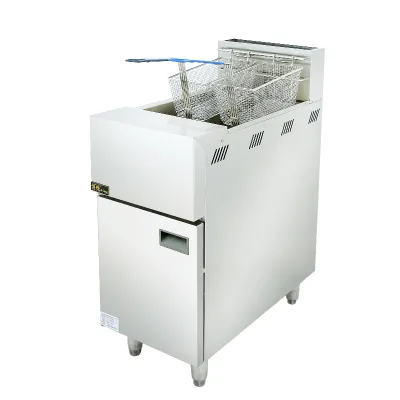
Commercial Gas Floor Deep Fryer Liquid Propane Deep Fryer with 2 Basket
$620.00 - $660.00
MOQ: 1 Pieces


Commercial Gas Deep Fryer Propane Deep Fryer Industrial Chicken Fryer Machine
$360.00 - $420.00
MOQ: 1 Pieces

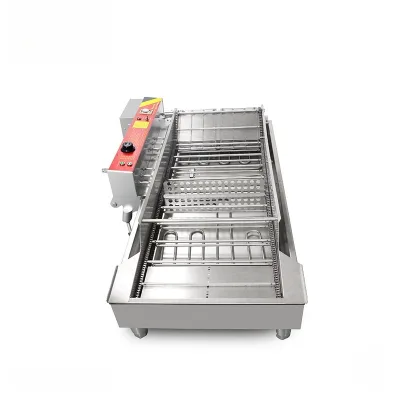


Stainless Steel Commercial Double Basket Gas Deep Fryer for Restaurant Kitchen
$1600.00 - $2500.00
MOQ: 1 Pieces


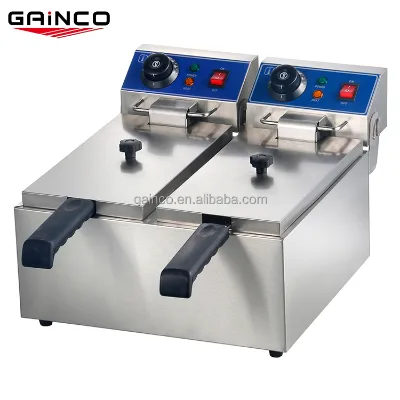
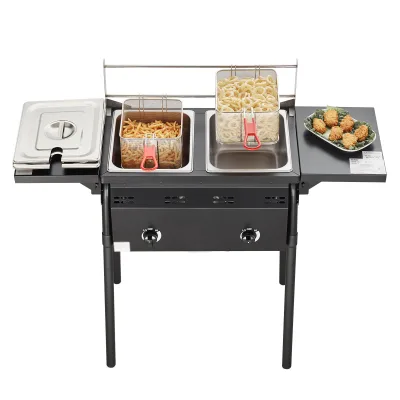
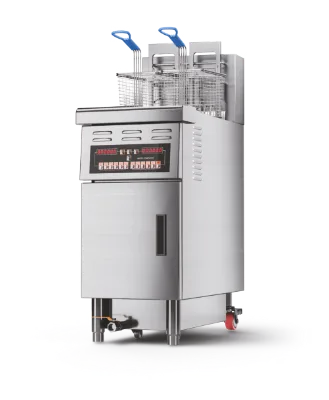


Comprehensive Sourcing Guide
Sourcing Guide for Propane Canister Outdoor Fryers with Timer
When evaluating the market for outdoor gas fryers, buyers often encounter a complex landscape where product attributes vary significantly between listings. The core keyword "Propane Canister Outdoor Fryer with Timer" suggests a specific configuration: a unit designed for outdoor commercial or semi-commercial use, powered by propane, and equipped with a timing mechanism for consistent cooking results. However, a rigorous analysis of available product data reveals a critical divergence between this specific request and the actual inventory characteristics. Many listed units in this category are described as "Without Timing Device," while others are noted as "Customized" or "Non-Customized" regarding their features. This guide provides a disciplined approach to navigating these discrepancies, ensuring that procurement decisions are based on verified facts rather than assumed specifications.
Technical Specifications and Configuration Verification
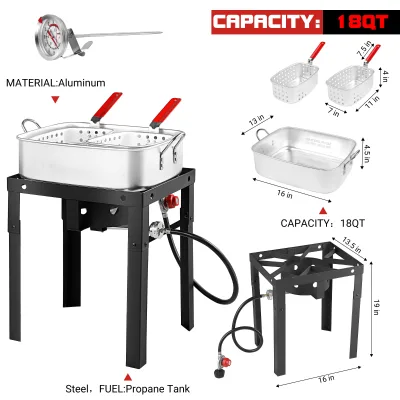
The first step in sourcing this equipment is to rigorously verify the technical specifications against the intended application. The product data indicates that units in this category often utilize Aluminum as the primary material, which offers durability and resistance to corrosion in outdoor environments. The fuel type is consistently identified as Propane, aligning with the core keyword. However, the power specifications vary; some units list a power input of 12kw with a total input of 90,000 BTU/Hr, while others may differ based on the specific model.
A critical point of confusion in this search is the presence of a timer. The supplied facts explicitly state that certain models are "Without Timing Device." Conversely, other listings indicate that "Customization" is available. This implies that a unit with a timer is likely a custom order rather than a standard off-the-shelf item. Buyers must therefore distinguish between standard models, which may lack automated timing, and custom-configured units where a timer can be integrated.
Furthermore, the physical dimensions and capacity are vital for outdoor deployment. Observed models include capacities of 18QT and 12QT, with specific dimensions such as 21" x 34.4" x 45.3". The number of baskets can vary, with some units featuring a Basket Quantity of two, while others are configured with a single tank or double tank setups. The oil capacity is also a key specification, with some units holding approximately 37 x 2 Lbs (roughly 18-19 Liters) per tank. When sourcing, the buyer must confirm whether the "propane canister" requirement refers to a portable cylinder connection or a fixed tank setup, as the data mentions "Gas" as a power source but does not explicitly detail the canister interface for all models.
Compliance and Certification Standards
In the commercial food equipment sector, compliance is non-negotiable. The product data lists several certifications, including FDA, ISO, and CE. These certifications are essential for ensuring that the materials used in the fryer, particularly those in contact with food, meet safety standards. The CE mark indicates conformity with health, safety, and environmental protection standards for products sold within the European Economic Area, while FDA compliance suggests adherence to US food safety regulations.
However, buyers must exercise caution. The presence of a certification in a general product listing does not guarantee that every specific configuration, such as a custom timer addition, retains that certification status. The data notes that "Machinery Test Report" is provided for some units, which serves as a verification of performance and safety. When evaluating a supplier, the procurement team should request the specific test reports for the exact model number being purchased. For instance, a model with the specification TF18-01 or LY-DF-04 may have different compliance profiles than a generic "Outdoor Gas Fryer."
Additionally, the "Standard" attribute in the product data is sometimes listed as "18QT" or "12QT," which is ambiguous. Buyers should verify if these refer to volume standards or specific industry standards (e.g., UL, NSF, or EN standards). The absence of a specific standard name in the general facts means the buyer must explicitly ask the supplier to confirm the applicable safety and construction standards for the custom timer feature.
Cost Drivers and Pricing Structure
Understanding the cost structure of outdoor fryers is essential for budgeting. The observed price range in the market is broad, spanning from $25 to $2,500. This wide variance is driven by several factors, including the material quality, the complexity of the gas system, and the inclusion of custom features like timers. Units with a 12kw power rating and Aluminum construction typically command higher prices than basic models.
The MOQ (Minimum Order Quantity) is another significant cost driver. The data shows an MOQ range of 1 to 200 units. If a buyer requires a custom timer, the supplier may require a higher MOQ to justify the engineering and tooling costs. The "Production Time" is noted as "According to The Quantity Requirements," suggesting that lead times will fluctuate based on order volume and customization needs.
Other cost factors include the packaging and shipping. The product data lists packaging options such as Carton Box, 3A, and Carton & Plywood. Plywood packaging is often required for international shipping to protect the unit, which adds to the overall landed cost. The Gross Weight varies by style, and the Net Weight for some units is listed as 192 Lbs or 87 Kg, impacting freight charges. Buyers should also consider the cost of after-sales service, as the data indicates support options like "Spare Parts" and "Video Technical Support" are available, which may be bundled into the initial price or charged separately.
Typical Applications and Operational Context
The primary application for these units is clearly defined in the data as Outdoor Fish Frying and Seafood Frying, with some listings also mentioning Chips. The Temperature Control Range of 200°F to 400°F (93°C to 205°C) is ideal for deep-frying seafood and vegetables, allowing for precise control over the cooking process. The Usage is specified as Commercial, indicating that these units are built for high-volume environments such as food trucks, outdoor festivals, and commercial kitchens with outdoor stations.
The Basket Quantity of two is particularly useful for high-volume operations, allowing for simultaneous frying of different items or continuous processing. The Number of Tank can be configured as one or double, offering flexibility for different kitchen layouts. However, the lack of a standard timer in many listings means that operators relying on automated timing must rely on manual monitoring or seek out the specific custom configurations.
For outdoor use, the Gas power source is a significant advantage, eliminating the need for electrical hookups in remote locations. The Automatic Grade is listed as Semi-Automatic, suggesting that while the heating and frying processes are automated, some manual intervention (such as basket handling) is required. Buyers should ensure that the unit's design supports the specific workflow of their outdoor operation, particularly regarding the placement of the propane canister and the accessibility of the control panel.
Supplier Evaluation and Customization Capabilities
Evaluating a supplier for a custom timer requirement requires a deep dive into their customization capabilities. The data confirms that Customization is available and that Service includes OEM (Original Equipment Manufacturer) options. This suggests that suppliers are willing to modify standard units to meet specific buyer needs. However, the data also lists some products as Non-Customized, highlighting the need to filter for suppliers who explicitly offer the timer feature.
The prod_origin is listed as Ningbo, Zhejiang, China or generally China. While this provides a geographic context, it does not indicate the specific factory's quality or reliability. Buyers should verify the supplier's track record in producing custom gas appliances. The availability of After Warranty Service and Online Support is a positive indicator, but the specific terms of the warranty for custom modifications should be clarified.
When assessing a supplier, request a Machinery Test Report to verify the performance of the custom timer. The data mentions that such reports are provided, which is a strong signal of quality assurance. Additionally, check if the supplier offers Video Technical Support for installation and troubleshooting, which is crucial for complex custom setups. The Color is listed as Customizable, which can be a secondary factor in branding, but the primary focus should remain on the functional integration of the timer.
Quality Control and Long-Term Procurement
Quality control is paramount when dealing with gas appliances. The Weight and Dimensions listed in the data serve as baseline metrics for quality verification. For example, a unit with a Net Weight of 192 Lbs should match the physical inspection upon delivery. Any deviation could indicate substandard materials or construction. The prod_packing method, whether Carton Box or Carton with Pallet, should be inspected to ensure the unit arrives without damage.
Long-term procurement considerations include the availability of spare parts and the reliability of the After-Sales Service. The data indicates that spare parts and video support are provided, which is essential for maintaining the unit over time. Buyers should also consider the Production Time and Lead Time for future orders. If the initial order requires customization, the production time may be longer, and the supplier should provide a clear timeline.
Finally, the Temperature Control Range and Power Source stability are critical for long-term performance. A unit that maintains the 200°F-400°F range consistently is more valuable than one that fluctuates. Buyers should request sample data or test results showing the stability of the temperature control and the efficiency of the propane usage. By focusing on these verified attributes, buyers can ensure a successful procurement process that meets their specific operational needs without relying on unverified claims.
Summary of Key Verification Points
To conclude, sourcing a propane canister outdoor fryer with a timer requires a meticulous approach to verifying specifications against the available data. The following table summarizes the key attributes that must be confirmed during the procurement process:
| Attribute | Verified Fact / Observation | Action Required |
|---|---|---|
| Timer | Listed as "Without Timing Device" in some models; "Customization" available. | Explicitly request a model with a timer; confirm if it is a custom order. |
| Fuel | Propane / Gas. | Verify the connection type for the propane canister. |
| Material | Aluminum. | Inspect for corrosion resistance and build quality. |
| Certification | FDA, ISO, CE (varies by model). | Request specific certification documents for the custom model. |
| Capacity | 12QT, 18QT. | Confirm oil capacity and basket quantity for intended volume. |
| Dimensions | Varies (e.g., 21" x 34.4" x 45.3"). | Verify physical fit for the outdoor location. |
| Power | 12kw, 90,000 BTU/Hr. | Ensure the gas supply matches the input requirements. |
| Origin | Ningbo, Zhejiang, China. | Assess logistics and lead times from this region. |
By adhering to these verified facts and avoiding assumptions about unlisted features, buyers can navigate the market effectively and secure equipment that meets their specific operational requirements.
FAQs
Can I get a Propane Canister Outdoor Fryer with Timer?
Standard models are often without a timing device, but customization is available to integrate a timer. Buyers must explicitly request this feature as a custom order rather than expecting it in off-the-shelf inventory.
What certifications do these outdoor fryers have?
Available units hold FDA, ISO, and CE certifications to ensure food safety and compliance. Buyers should verify that specific custom configurations, such as added timers, retain these certification statuses before purchase.
How much does a Propane Canister Outdoor Fryer with Timer cost?
Prices range from 25 to 2500 USD depending on specifications and customization levels. Custom features like timers may increase costs and require higher minimum order quantities to justify engineering expenses.
Which capacity options are available for outdoor gas fryers?
Models come in 12QT and 18QT capacities with oil volumes around 18 to 19 liters per tank. Some units feature dual tanks or double basket quantities for high-volume commercial seafood frying operations.
Where are these fryers manufactured and shipped from?
Products originate from Ningbo, Zhejiang, China, or other locations within China. Buyers should confirm specific factory details and shipping terms, as packaging may vary between carton boxes and plywood crates.
What is the production time for custom timer units?
Production time depends on quantity requirements and customization needs, often varying significantly. Buyers must request a specific lead time estimate from the supplier based on their order volume and feature requests.