Source Quick Dry Absorbent Cotton Towel for Hotel, Home, and Travel
Compare 30 listings for Quick Dry Absorbent Cotton Towel options featuring ultra-soft textures and high absorbency. Buyers can evaluate GSM weights, customization availability, and packaging standards from suppliers in Guangdong and Zhejiang.
Key considerations
Products List


$0.50 - $1.00
MOQ: 20000 Bags



Comprehensive Sourcing Guide
Strategic Sourcing Guide for Quick Dry Absorbent Cotton Towels
Understanding Product Specifications and Material Composition
When sourcing a Quick Dry Absorbent Cotton Towel, the primary objective is to identify products that balance natural fiber benefits with performance-enhancing construction. The core material specification for high-quality options in this category is 100% Cotton. This material choice is critical for buyers seeking skin-friendly products that offer superior absorbency compared to synthetic alternatives. The fabric weight is a significant determinant of performance; observed specifications indicate a Gram Weight range of 300-400GSM for heavy-duty applications like bath towels, which ensures durability and plushness. However, for lighter applications such as wash cloths or hand towels, the fabric weight may vary, with some specifications noting values around 53GSM to 70GSM for non-woven or lighter variants.
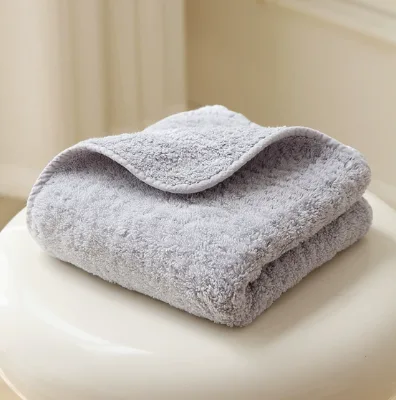
The surface construction plays a vital role in the "quick dry" and "absorbent" claims. High-confidence data points to a Dense and Even Soft Terry Loops structure. This specific weave creates the necessary surface area for water retention while allowing for rapid evaporation. The edge craftsmanship is equally important; products should feature Exquisite Edge Wrapping to prevent fraying and maintain a premium aesthetic. Furthermore, the stitching technique should be a Firm Interlocked Stitching, which secures the loops and edges, ensuring the towel maintains its integrity after repeated washing and use. The product is typically designed as a 1 Ply layer, which contributes to its lightweight nature while maintaining structural strength.
Buyers must distinguish between different product types within this category. The market offers Wash Cloths, Hand Towels, and Bath Towels, each serving distinct functional needs. While the core keyword emphasizes cotton, it is essential to verify if the specific listing refers to a traditional terry cloth or a spunlace non-woven variant, as some data indicates a "Spunlace Non-Woven" technique with a weight of 50GSM for disposable or single-use applications. For reusable quick-dry towels, the 100% cotton composition with terry loops is the standard. The style is generally Plain, though some variations may offer Embroidered patterns or specific designs like Ef, Diamond, or Rice Pattern for decorative purposes. The color is predominantly White, but customization is available to meet specific branding or aesthetic requirements.
Compliance, Certifications, and Safety Standards
In the B2B procurement of textiles, particularly those intended for direct skin contact or use in hospitality and healthcare settings, verifying compliance and certifications is non-negotiable. The supply chain for these products often originates from manufacturing hubs in Guangdong and Zhejiang, China. Buyers should expect suppliers to provide documentation confirming adherence to international quality and safety standards. High-confidence data indicates that reputable manufacturers often possess certifications such as CE, MSDS, FDA, SGS, and ISO 9001 Quality. These certifications validate that the manufacturing process meets specific regulatory requirements for chemical safety, quality management, and product performance.
The absence of harmful chemicals is a key selling point for quick-dry cotton towels. Specifications highlight features such as "No Alcohol" and "No Chemicals," which are crucial for products marketed as eco-friendly or suitable for sensitive skin, including babies and children. While some data mentions passing tests for disposable sanitary products, reusable cotton towels must also demonstrate safety through rigorous testing. Buyers should request test reports that specifically address the absence of formaldehyde, azo dyes, and other hazardous substances. Although OEKO-TEX is a recognized standard in the industry, it is currently classified as low-confidence background information in the provided context; therefore, buyers should not assume a product is OEKO-TEX certified unless the supplier explicitly provides a valid certificate. Instead, the focus should be on the confirmed certifications like ISO 9001 and SGS, which are directly supported by the available data.
For products intended for export, compliance with the destination country's import regulations is essential. The "Standard Specifications or Customized" nature of the product allows for flexibility, but the baseline must meet the "International Standards" for packing and quality. The production origin, whether Guangdong or Hangzhou, Zhejiang, implies adherence to Chinese manufacturing standards, which must be cross-referenced with the buyer's local regulations. Suppliers who accept OEM and ODM custom orders should be able to tailor their compliance documentation to match the specific requirements of the buyer's market, ensuring that the final product is legally compliant and safe for end-users.
Cost Drivers and Pricing Dynamics
The pricing of quick-dry absorbent cotton towels is influenced by a complex interplay of material costs, manufacturing complexity, and order volume. The observed listed price range in the market spans from $0.09 to $10.00 USD. This wide variance is not indicative of quality inconsistency alone but reflects differences in product type, size, weight, and order quantity. A towel priced at $0.09 is likely a small, lightweight wash cloth or a disposable non-woven variant with a lower GSM, whereas a price near $10.00 suggests a premium, heavy-weight bath towel with superior craftsmanship and potentially custom branding.
Order volume is the most significant driver of cost reduction. The Minimum Order Quantity (MOQ) range observed is from 1 to 50,000 units. Buyers purchasing small quantities, such as samples or initial test orders, will face a higher unit cost. Conversely, orders approaching the upper limit of the MOQ range benefit from economies of scale, significantly lowering the per-unit price. The customization of the product also impacts cost. While the product offers "Customization" and "OEM & ODM Custom" acceptance, adding custom logos, specific embroidery, or unique packaging (such as Poly Bag, Carton, or Soft Bag) incurs additional setup and production costs.
The material weight is another critical cost factor. Towels with a Gram Weight of 300-400GSM require more raw cotton and more complex weaving processes than lighter 50GSM or 60GSM variants. Additionally, the "Ultra Soft" and "Skin-Friendly" attributes often require higher-grade cotton or additional finishing processes, which can increase the base price. Buyers must balance their budget against the required performance metrics. For instance, if the application requires a highly absorbent, quick-dry towel for a hotel, investing in the 300-400GSM range is justified by the product's longevity and user experience, whereas a promotional giveaway might justify a lower-cost, lighter option.
Typical Applications and Usage Scenarios
The versatility of quick-dry absorbent cotton towels makes them suitable for a diverse range of applications. The observed usage categories include Gifts, Hotel, Airplane, Home, Sports, Office, and Travel. In the hospitality sector, specifically for hotels and airplanes, the towel must be durable, highly absorbent, and aesthetically pleasing. The "Exquisite Edge Wrapping" and "Firm Interlocked Stitching" are essential for maintaining a premium look after multiple commercial wash cycles. The "Ultra Soft Towel" and "Quick Dry Towel" features are particularly valued in these settings to ensure guest comfort and efficient laundry turnaround times.
For the sports and travel markets, the "Quick Dry" attribute is paramount. Athletes and travelers require towels that can be wrung out and dried rapidly to prevent mildew and reduce bulk. The 100% cotton composition ensures breathability, while the dense terry loop construction provides the necessary absorbency for sweat or water. The "Application" data also highlights use for cleaning faces, tables, and hands, indicating that these towels are suitable for general household cleaning and personal hygiene.
The "Disposable" attribute found in some product listings suggests a separate segment for single-use applications, such as in medical settings or as complimentary items in budget accommodations. These products, often made from spunlace non-woven materials with a weight of 50GSM, are designed for one-time use and are characterized by their "Eco-Friendly" and "Biodegradable" features. However, for the core keyword of "cotton towel," the focus remains on reusable products. The "Wide Applications" for babies, women, and men further emphasize the need for a product that is gentle on the skin, aligning with the "Touch & Feel: Ultra Soft and Skin-Friendly" specification.
Supplier Evaluation and Manufacturing Capabilities
Selecting the right supplier is critical for ensuring consistent quality and reliable delivery. The supply base for these products is concentrated in Guangdong and Hangzhou, Zhejiang Province, China. Buyers should evaluate suppliers based on their production capacity, customization capabilities, and logistical efficiency. The "Short Delivery Time" data indicates that samples can be produced within 1-2 days, and formal orders can be fulfilled in 10-14 days. This agility is a significant advantage for buyers needing to test the market or fulfill urgent orders.
Suppliers should be vetted for their ability to handle "OEM & ODM Custom" requests. This includes the capacity to produce custom logos (such as Ruiying, Meijiji, or generic OEM) and tailor packaging to "International Standards" or specific buyer requirements like Poly Bags, Cartons, or Soft Bags. The "Customized" nature of the product allows for flexibility in size, with open sizes ranging from 2015cm to 2224cm and beyond. A capable supplier will offer a range of standard sizes while accommodating custom dimensions.
When evaluating suppliers, buyers should verify their quality control processes. The presence of certifications like ISO 9001 suggests a structured approach to quality management. However, buyers should also inquire about in-house testing capabilities to ensure that the "Highly Absorbent" and "Quick Dry" claims are met in every batch. The "Firm Interlocked Stitching" and "Exquisite Edge Wrapping" are visual and tactile quality markers that should be inspected during sample approval. Suppliers who can provide detailed photos or videos of the production process and the final product's texture will demonstrate transparency and confidence in their manufacturing standards.
Quality Control and Long-Term Procurement Considerations
Maintaining quality consistency is the cornerstone of long-term procurement success. For quick-dry absorbent cotton towels, the "Touch & Feel" and "Absorbency" are the primary quality metrics. Buyers should establish clear acceptance criteria for these attributes during the sampling phase. The "Dense and Even Soft Terry Loops" should be uniform across the entire surface, with no loose threads or irregularities. The "Edge Craftsmanship" must be secure and neat, preventing unraveling during use.
Long-term procurement strategies should focus on building a relationship with suppliers who can scale production while maintaining quality. The "Standard Specifications or Customized" nature of the product allows for continuous improvement and adaptation to market trends. Buyers should consider the "Layer" count and "Disposable" status carefully; for reusable products, the 1 Ply construction must be robust enough to withstand repeated washing without losing its softness or absorbency. The "Paper Net Content" and "Fabric Weight" specifications should be monitored to ensure that the supplier does not compromise on material density to cut costs.
Sustainability is also becoming a key consideration. While the primary material is 100% Cotton, which is a natural fiber, buyers should inquire about the sourcing of the cotton and the environmental impact of the dyeing and finishing processes. The "Eco-Friendly" and "Biodegradable" features noted in some disposable variants highlight a growing market trend. For reusable cotton towels, buyers should look for suppliers who utilize eco-friendly dyes and water-saving technologies.
Finally, the "Product Packing" must be suitable for the intended logistics chain. Whether using Poly Bags, Cartons, or Soft Bags, the packaging should protect the towels from moisture and damage during transit. The "International Standards" for packing ensure that the product arrives in perfect condition, ready for retail or commercial use. By focusing on these quality control and long-term considerations, buyers can secure a reliable supply of high-performance quick-dry absorbent cotton towels that meet their specific business needs.
| Feature | Standard Specification | Customization Options |
|---|---|---|
| Material | 100% Cotton | Custom blends (if applicable) |
| Weight | 300-400GSM (Bath), 50-70GSM (Light) | Custom GSM per request |
| Size | 2015cm to 2224cm | Custom dimensions available |
| Pattern | Plain, Embroidered | Custom embroidery/logos |
| Packing | Poly Bag, Carton, Soft Bag | Custom packaging design |
| Certifications | ISO 9001, SGS, CE, FDA, MSDS | Specific market compliance |
| Lead Time | Samples: 1-2 Days, Orders: 10-14 Days | Expedited options available |
FAQs
What materials are used for quick dry absorbent cotton towels?
The core material is 100% Cotton, ensuring skin-friendly performance. Some disposable variants use Spunlace Non-Woven techniques with a weight of 50GSM, while reusable options feature a Gram Weight of 300-400GSM for durability.
Can suppliers provide OEM and ODM customization for these towels?
Yes, suppliers accept OEM and ODM custom orders for logos and branding. Customization includes specific patterns like Embroidered or Plain styles, and packaging options such as Poly Bags or Cartons to meet international standards.
What certifications do manufacturers typically hold for safety compliance?
Reputable manufacturers often possess CE, MSDS, FDA, SGS, and ISO 9001 Quality certifications. These validate adherence to chemical safety and quality management standards, ensuring products are free from harmful chemicals like alcohol.
How fast can suppliers deliver samples and formal orders?
Samples can be produced within 1-2 days, while formal orders typically require 10-14 days. This short delivery time allows buyers to test products quickly before committing to larger volume purchases.
Which product types are available in the quick dry towel category?
The available product types include Wash Cloth, Hand Towel, and Bath Towel. These vary in size, with open sizes ranging from 20*15cm to 22*24cm, and are suitable for applications in hotels, homes, and sports.
What is the typical price range for quick dry absorbent cotton towels?
The observed listed price range spans from 0.09 to 10 USD per unit. Lower prices usually correspond to lightweight or disposable variants, while higher prices reflect heavy-duty bath towels with premium craftsmanship.
Where are the primary manufacturing locations for these towels?
Manufacturing hubs are concentrated in Guangdong and Hangzhou, Zhejiang Province, China. These locations support the production of both reusable cotton towels and disposable non-woven sanitary products for global export.