Source Quick Disinfection Far UVC Lamp for Home, Office, and Industrial Use
Find and compare 30 Quick Disinfection Far UVC Lamp options from Chinese manufacturers. Evaluate models like the SL222W series with 222nm wavelength, varying power ratings from 20W to 250W, and CE certification for effective bacterial reduction in diverse settings.
Key considerations
Products List


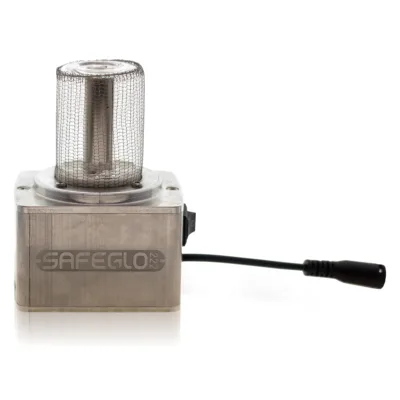


Portable UV-C Light Disinfection Lamp Air Sterilizer Germicidal Ultraviolet Lamp
$48.00 - $72.00
MOQ: 10 Pieces

256nm UVC Germicidal UV Light Disinfection Sterilizer Lamp Ultraviolet Lamp
$11.66 - $12.63
MOQ: 100 Pieces

38W UV Disinfection Light Ozone UVC Ultraviolet Germicidal Sterilizer Lamp
$9.60 - $14.00
MOQ: 10 Pieces


Comprehensive Sourcing Guide
Quick Disinfection Far UVC Lamp Sourcing Guide
Sourcing quick disinfection far UVC lamps requires a nuanced understanding of both the optical physics involved and the specific commercial realities of the UV-C supply chain. Unlike traditional germicidal lamps that rely on 254nm wavelengths, far-UVC technology operates in the 222nm range, offering a distinct advantage for occupied spaces by limiting penetration into human skin and eyes. Buyers must navigate a market where product attributes vary significantly between manufacturers, with some units designed for high-power industrial applications and others optimized for portable, low-voltage home use. The core challenge lies in distinguishing between genuine far-UVC sources and standard UV-C lamps that may be mislabeled, ensuring that the procurement aligns with actual safety and efficacy requirements.
This guide provides a structured approach to evaluating suppliers and products based on observed market data and technical specifications. It focuses on verifying critical parameters such as wavelength accuracy, power consumption, and lifespan, which are essential for determining the total cost of ownership. By adhering to evidence-based verification steps, procurement teams can mitigate risks associated with inconsistent product performance and ensure that the selected lamps meet the intended disinfection goals. The following sections detail the scope, technical requirements, compliance needs, cost structures, supplier qualifications, and long-term maintenance considerations for this specialized lighting category.
Product Scope and Observed Listing Signals
The current market for far-UVC lamps presents a diverse range of products, primarily centered around the 222nm wavelength, which is identified as the key differentiator for safe disinfection in occupied environments. Observed listings indicate a strong presence of models such as the SL222W40, SL222W20, and SL222W150, suggesting that manufacturers offer a spectrum of power outputs to suit different application scales. These products are generally categorized under industrial and home usage, reflecting their versatility in environments ranging from large commercial facilities to smaller residential or office settings. The presence of customization options and OEM/ODM acceptance indicates that many suppliers are equipped to tailor specifications for bulk buyers, allowing for branded solutions or specific form factors.
Price and minimum order quantity (MOQ) signals reveal a wide variance in market positioning, with observed prices ranging from approximately $3.20 to $511 USD and MOQs spanning from 1 to 500 units. This disparity suggests that the market includes both low-cost, entry-level portable units and higher-end, high-power industrial fixtures. Buyers should note that lower-priced items may correspond to lower wattage or simpler designs, such as the 20W portable units, while higher-priced items likely represent more robust, high-output lamps like the 250W or 150W models. Understanding this price-to-performance relationship is crucial for budgeting, as the cost per unit of disinfection efficacy can vary significantly across the product range.
Technical Specifications to Verify
Wavelength accuracy is the most critical technical parameter to verify, as the efficacy and safety of far-UVC disinfection depend entirely on the emission being centered around 222nm. Buyers must request spectral data or certification from the supplier to confirm that the lamp emits primarily in the far-UVC range and does not leak harmful shorter wavelengths below 200nm or longer wavelengths above 240nm. While many listings specify a wavelength of 222nm, this claim must be backed by verifiable test results or manufacturer guarantees. The light source material is typically quartz glass, often housed in high-quality aluminum casings, which helps in heat dissipation and structural integrity, but the purity of the quartz and the specific gas fill within the tube are factors that influence output stability and lifespan.
Power consumption and input voltage requirements vary widely across the observed product range, necessitating careful alignment with the buyer’s electrical infrastructure. Listings show lamps with power ratings from 20W to 250W, with input voltages supporting both AC (110V/220V) and DC (24V) sources. Portable units often operate on DC 24V, making them suitable for battery-powered or vehicle-mounted applications, while higher-power industrial lamps typically require standard AC mains. Buyers should also verify the lamp’s lifespan, which is commonly cited between 3000 and 4000 hours, and consider how this duration impacts replacement costs and operational downtime. Additionally, features such as dimmability are generally absent, with most units relying on manual buttons or remote controls for operation, which simplifies the interface but limits advanced automation capabilities.
Compliance and Safety Documentation
Certification is a non-negotiable aspect of sourcing far-UVC lamps, with CE marking being a common requirement for products destined for European markets and other regions with similar regulatory frameworks. Buyers must ensure that the supplier provides valid CE certificates that specifically cover the UV-C emission safety and electrical compliance of the device. Beyond CE, other regional certifications may be required depending on the destination market, and buyers should inquire about the availability of these documents before placing orders. The absence of proper certification can lead to customs delays, product seizures, or legal liabilities, particularly given the potential health risks associated with improper UV-C exposure.
Safety documentation should also include detailed user manuals and safety warnings that clearly outline the limitations of far-UVC technology. While 222nm light is considered safer for human exposure than 254nm light, it is not entirely risk-free, and manufacturers must provide clear guidelines on maximum exposure times and safe distances. Buyers should verify that the product packaging, often described as export-standard plywood or single-item boxes, includes all necessary safety labels and handling instructions. The inclusion of a warranty, typically one year for these products, is also a key indicator of manufacturer confidence in product durability and performance, providing a layer of protection for the buyer against premature failures.
Cost Drivers and Commercial Terms
The total cost of ownership for far-UVC lamps is influenced by several factors beyond the initial unit price, including power efficiency, lifespan, and packaging requirements. Higher wattage lamps, such as the 250W models, will consume more energy and may require more robust electrical infrastructure, increasing operational costs over time. Conversely, lower wattage units, like the 20W portable lamps, offer energy efficiency but may have lower disinfection coverage areas, potentially requiring more units to achieve the same result. Buyers should calculate the cost per square meter of treated area, using specifications such as the 5㎡ application area for some models, to determine the most cost-effective solution for their specific space.
Commercial terms, including MOQs and payment conditions, play a significant role in the procurement strategy. Suppliers with low MOQs of 1 unit are suitable for trial orders or small-scale deployments, while those requiring 500 units may offer better pricing for large-scale industrial projects. Buyers should negotiate for volume discounts if they anticipate recurring orders, and clarify the lead times for production and shipping, although specific lead time data is not uniformly provided in all listings. The origin of the products, primarily from Guangdong and Zhejiang provinces in China, may also impact shipping costs and delivery times, so buyers should factor in logistics expenses when comparing suppliers from different regions.
Supplier Qualification and Quality Control
Supplier qualification begins with verifying the manufacturer’s capability to produce consistent far-UVC lamps, focusing on their production facilities and quality control processes. Buyers should request information about the supplier’s manufacturing capacity, testing equipment, and quality assurance protocols to ensure that each lamp meets the specified wavelength and power output. The presence of OEM/ODM services suggests that the supplier has the flexibility to customize products, but buyers must ensure that customization does not compromise the core safety and performance standards. It is advisable to ask for sample units to conduct independent testing before committing to large orders, allowing for a direct assessment of product quality and performance.
Quality control should also extend to the packaging and shipping process, as UV-C lamps are sensitive to physical damage and environmental conditions. Buyers should verify that the packaging, whether plywood boxes or single-item cartons, is designed to protect the quartz glass tubes from breakage during transit. The single gross weight of approximately 0.8 kg for some models indicates that packaging must be sturdy enough to handle the product’s weight while providing adequate cushioning. Additionally, buyers should inquire about the supplier’s after-sales support, including the process for handling defective units and the availability of replacement parts, to ensure a smooth procurement experience.
Long-Term Procurement Checks
Long-term procurement success depends on establishing a reliable supply chain that can meet ongoing demand for far-UVC lamps. Buyers should monitor the supplier’s ability to maintain consistent product quality over time, as variations in manufacturing processes can lead to inconsistencies in wavelength output and lamp lifespan. Regular audits or periodic sample testing can help identify any drift in product performance, allowing for early intervention before significant issues arise. Building a strong relationship with the supplier can also facilitate better communication regarding product updates, new models, or changes in regulatory requirements.
Sustainability and end-of-life disposal are increasingly important considerations in the procurement of UV-C lamps. Buyers should inquire about the supplier’s policies on recycling and disposal of used lamps, as UV-C tubes contain materials that require proper handling. Understanding the environmental impact of the product and the supplier’s commitment to sustainable practices can enhance the buyer’s corporate social responsibility profile. Additionally, buyers should stay informed about advancements in far-UVC technology, as new models with improved efficiency, longer lifespans, or enhanced safety features may become available, offering opportunities to upgrade their disinfection infrastructure.
FAQs
What is the wavelength of the SL222W40 Far UV Lamp?
The SL222W40 Far UV Lamp operates at a wavelength of 222nm, which falls within the UV-C spectrum. This specific wavelength is designed for effective disinfection while minimizing harmful exposure. The lamp features a 40W power rating and is suitable for both home and industrial use. It is constructed with high-quality aluminum and quartz glass to ensure durability and efficient light emission during operation.
Can the far UV lamp be customized for specific needs?
Yes, customization is available for these far UV lamps to meet specific operational requirements. The manufacturer accepts OEM and ODM requests, allowing for tailored solutions. Buyers can inquire about specific design modifications or branding options. This flexibility ensures that the lighting solutions can be adapted to various application areas, including offices and homes, while maintaining the core UV-C functionality for bacterial elimination.
What certifications do the UV-C lamps hold?
The UV-C lamps hold CE certification, indicating compliance with European health, safety, and environmental protection standards. This certification is crucial for buyers in regulated markets who require verified product safety. The lamps are manufactured in China, with origins in Guangdong and Zhejiang provinces. Buyers should verify specific documentation for their region, as the CE mark confirms adherence to essential regulatory requirements for electrical and optical equipment.
What is the expected lifespan of the far UV lamp?
The expected lifespan of the far UV lamp ranges from 3000 to 4000 hours of continuous operation. This duration provides a reliable service life for regular disinfection tasks in homes or industrial settings. The working hours are supported by a one-year warranty, offering assurance against premature failure. Buyers should consider this lifespan when planning maintenance schedules and replacement cycles for their UV-C lighting infrastructure.
What is the input voltage requirement for the lamp?
The lamp supports an input voltage of 110V/220V for standard AC operation, ensuring compatibility with various global power grids. Additionally, specific portable models operate on DC 24V, offering flexibility for battery-powered or low-voltage applications. This dual voltage capability allows the lamps to be used in diverse environments, from standard office outlets to portable devices. Buyers should select the appropriate model based on their available power source and usage scenario.
How is the product packed for shipping?
The product is packed in plywood boxes or export-standard packaging to ensure safe transit. The single package size is approximately 7.5x7x11 cm, with a gross weight of 0.8 kg. This compact packaging facilitates efficient storage and handling during logistics. The sturdy materials protect the quartz glass and aluminum components from damage. Buyers can expect secure packaging that meets international shipping standards for fragile electronic and optical devices.