Source Quick-Dry Printed Travel Towel for Fitness Yoga and Travel
Compare 30 listings for quick-dry printed travel towel options made from microfiber or polyester. Buyers can evaluate customization, sizes, and packing styles for fitness, yoga, and promotional events.
Key considerations
Products List


Microfiber Sports Towel: Portable, Quick-Dry & Screen-Printed for Fitness
$1.90 - $99.00
MOQ: 50 Pieces


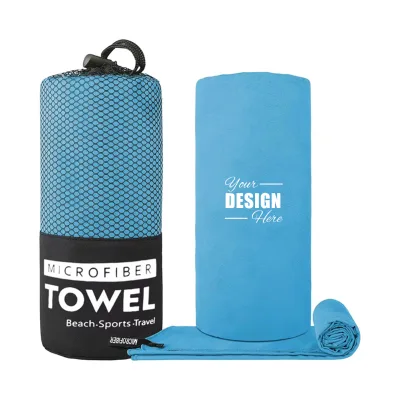

Custom Light Weight Quick Drying Portable Travel Towel Microfiber Drying Towel
$0.15 - $0.24
MOQ: 1000 Pieces

Quick Dry Microfiber Sports Towel for Outdoor Camping Running Hiking Travel
$1.88 - $2.35
MOQ: 200 Pieces


Microfiber Soft Quick Dry Towel Absorbent Outdoor Camping Quick Dry Towel
$0.25 - $0.32
MOQ: 500 Pieces

Custom Printed Microfiber Beach Towels Quick Dry & Lightweight Travel Towel
$1.20 - $4.70
MOQ: 50 pieces


Comprehensive Sourcing Guide
Strategic Sourcing Guide for Quick-Dry Printed Travel Towels
The global demand for specialized textile solutions has elevated the quick-dry printed travel towel from a niche accessory to a staple in promotional, fitness, and hospitality sectors. For procurement professionals, sourcing this category requires a nuanced understanding of material science, manufacturing capabilities, and supply chain logistics. The product landscape is defined by a convergence of rapid moisture-wicking properties and high-fidelity customization options. Buyers must navigate a market where the core value proposition lies in balancing performance metrics with aesthetic flexibility. This guide provides a structured approach to evaluating suppliers, verifying technical specifications, and mitigating risks associated with bulk procurement of these items.
Material Composition and Performance Characteristics
The foundational element of any high-performance travel towel is its material composition. In the current market, the dominant material observed is microfiber, specifically engineered for rapid drying and compact storage. While some listings indicate polyester as a base material, the functional requirement for "quick-drying" performance is most reliably achieved through microfiber construction. This synthetic blend allows for a high surface-area-to-volume ratio, which accelerates evaporation rates significantly compared to traditional cotton.
When evaluating product attributes, buyers should prioritize the "Quick Drying" function as a non-negotiable specification. The manufacturing process often involves a plain weave technique, which contributes to the structural integrity and drying speed. However, the weave density and GSM (grams per square meter) are critical variables. Observations suggest a weight range of 600-1200 GSM for certain high-end variants, indicating a trade-off between plushness and portability. For travel applications, a lower GSM is generally preferred to reduce bulk, whereas hotel or home variants may favor higher GSM for softness.
The texture and feel of the towel are equally important. Descriptors such as "Ultra Soft Towel" and "Soft" are common selling points, but these are subjective unless verified against physical samples. The material must also exhibit "Sand Proof" characteristics, a crucial feature for beach and outdoor travel scenarios. This property prevents the fabric from trapping abrasive particles, ensuring the towel remains comfortable and clean after use in sandy environments. Procurement teams should request physical samples to verify the tactile quality and confirm that the microfiber does not pill or degrade after repeated washing cycles.
Technical Specifications and Customization Capabilities
Customization is the primary driver for the commercial viability of quick-dry printed travel towels. The market offers extensive flexibility in terms of printing methods, with screen printing and silk screen printing being the most prevalent techniques observed. These methods allow for high-volume production of branded items with consistent color fidelity. The "Customization: Available" attribute confirms that suppliers are generally equipped to handle bespoke orders, including logo placement and color matching.
Size specifications vary widely depending on the intended application. Standard dimensions observed include 30110CM, 4060CM, 4080CM, and larger formats like 80130CM or 76152CM. Some suppliers offer multi-piece sets, combining different dimensions to create a complete travel kit. For instance, a two-piece set might include a 4060CM face towel and a 60122CM body towel. Buyers must align these dimensions with their specific use cases; a compact 30100CM towel is ideal for gym bags, while larger dimensions are necessary for beach or yoga applications.
The printing process itself is a critical technical consideration. "Silk Screen Printing" is noted as a specific capability, allowing for durable, vibrant designs. However, the choice of printing method impacts the final cost and lead time. Buyers should verify the ink type used, ensuring it is safe for skin contact and resistant to fading or washing. The "Pattern" attribute can range from "Printed" designs to "Plain Dyed" or "Plain" styles. While plain dyed options offer a minimalist aesthetic, printed towels provide a stronger branding opportunity. The "Logo: Laser" option suggests alternative branding methods, though screen printing remains the standard for large orders.
Application Scenarios and Market Segmentation
The versatility of quick-dry printed travel towels allows them to serve a diverse range of market segments. The "Purpose" attribute frequently lists Fitness and Yoga, highlighting the product's utility in active lifestyles. In these contexts, the towel's ability to absorb sweat and dry rapidly is paramount. Additionally, the "Usage" category extends to Hotel and Home environments, where the towels serve as premium amenities or housekeeping essentials.
Beyond personal use, these towels are heavily utilized in promotional and corporate gifting. The "Application" data reveals a broad spectrum of events, including Family Reunions, "Thank You" Gifts, Promotional Activities, Walk/Run Events, and Alumni Relations. This versatility makes the product an attractive choice for marketing departments seeking high-utility giveaways. The "Season" attribute indicates year-round applicability, with suitability for Winter, Spring, Summer, and Autumn, ensuring that the product remains relevant regardless of climatic conditions.
For event organizers, the "Shape" is typically rectangular, facilitating easy folding and packing. The "Design" is often described as "Multipurpose," reinforcing the product's adaptability. Whether used as a wedding favor, a graduation gift, or a corporate swag item, the towel's functionality ensures it is rarely discarded immediately. Buyers should consider the specific demographic of their target audience when selecting size and design; for example, a "Two-piece set" may be more appealing to families, while a single compact towel suits individual travelers.
Cost Drivers and Pricing Structures
Understanding the cost structure of quick-dry printed travel towels is essential for effective budget management. The observed price range in the market spans from 0.05 to 99 USD, a vast disparity that reflects differences in material quality, size, customization complexity, and order volume. The "MOQ" (Minimum Order Quantity) ranges from 1 to 10,000, indicating that suppliers cater to both small-batch testers and large-scale industrial buyers.
Several factors influence the final unit cost. Material selection is a primary driver; microfiber generally commands a higher price than standard polyester due to its superior performance. The size of the towel directly correlates with material usage, with larger dimensions incurring higher costs. Customization adds another layer of expense; screen printing involves setup fees and ink costs, which are amortized over the order quantity. Higher order volumes typically result in lower per-unit costs, making the 10,000 MOQ threshold a significant price inflection point.
Packaging is another cost variable. Options include "Carton," "OPP Bag," "PE Bag," and "Compressed Bag." Compressed packaging, which reduces the volume of the towel for shipping, can lower logistics costs but may require additional equipment for the buyer to unpack. The "Single gross weight" of 0.500 kg for certain models provides a baseline for freight calculations. Buyers should request detailed cost breakdowns that separate material, printing, and packaging costs to identify areas for potential savings.
Supplier Evaluation and Quality Assurance
Selecting the right supplier requires a rigorous evaluation process that goes beyond price comparisons. The "Place of Origin" is predominantly Zhejiang, China, a region known for its textile manufacturing capabilities. However, geographic location alone does not guarantee quality. Buyers must verify the supplier's manufacturing capabilities, specifically their ability to execute "Screen Printing" and "Plain Weave" techniques consistently.
Quality control should be a central component of the sourcing strategy. Buyers should request pre-production samples to verify the "Quick-Dry" functionality and the durability of the print. Testing for "Sand Proof" characteristics and "Softness" is crucial to ensure the product meets the expected standards. The "Feature" attributes, such as "Ultra Soft Towel" and "Quick Dry Towel," must be validated through physical testing rather than relying solely on supplier claims.
Compliance and certification checks are also vital, although specific certification data in the provided context is limited. While "OEKO-TEX" and "BSCI" are mentioned as background standards, buyers should not assume a supplier holds these certifications without verification. It is advisable to request valid certificates and audit reports to ensure the supplier adheres to ethical labor practices and environmental standards. The "Standard" dimensions provided, such as 30110CM or 4060CM, should be cross-referenced with actual product measurements to ensure accuracy.
Long-Term Procurement and Supply Chain Stability
Sourcing quick-dry printed travel towels is not merely a transactional activity but a strategic partnership that requires long-term planning. The "Custom Service" and "Custom Print" capabilities suggest that suppliers are willing to adapt to changing brand needs. However, buyers must ensure that the supplier has the capacity to scale production during peak seasons. The "Lead time" is a critical factor, though specific values are not provided in the context. Buyers should negotiate clear timelines and include penalties for delays in their contracts.
Inventory management is another consideration. Given the "Quantity" attribute of 1 for single items, buyers may need to balance bulk orders with the risk of overstocking. Compressed packaging can help mitigate storage costs, but the supplier must ensure that the compression does not damage the fabric structure. The "Selling Units" being "Single item" indicates flexibility in ordering, but bulk purchasing is usually required for cost efficiency.
Finally, buyers should establish a clear communication channel with the supplier for ongoing quality assurance. Regular audits and sample checks should be scheduled to maintain consistency. The "Other Effect" attribute, which includes "Auto and Household," suggests potential for future product line expansions. By building a strong relationship with a reliable supplier, buyers can secure a steady supply of high-quality towels that meet their evolving market demands.
Comparative Analysis of Product Attributes
To facilitate decision-making, the following table summarizes key product attributes observed in the market, highlighting the variations buyers may encounter.
| Attribute Category | Common Observation | Strategic Implication |
|---|---|---|
| Material | Microfiber, Polyester | Microfiber preferred for quick-dry performance; verify GSM for weight vs. softness. |
| Printing | Screen Printing, Silk Screen | High durability; check ink safety and color fastness for skin contact. |
| Size | 30110CM to 80130CM | Match size to use case (travel vs. home); consider multi-piece sets for variety. |
| Packaging | OPP Bag, PE Bag, Compressed, Carton | Compressed saves shipping space; Carton offers better protection for bulk. |
| MOQ | 1 to 10,000 | High MOQ reduces unit cost; low MOQ allows for market testing. |
| Origin | Zhejiang, China | Verify supplier audits and certifications for ethical compliance. |
| Features | Quick Dry, Sand Proof, Soft | Essential for travel; request physical samples to validate claims. |
In conclusion, sourcing quick-dry printed travel towels requires a balanced approach that prioritizes technical performance, customization flexibility, and supply chain reliability. By adhering to the verification steps outlined above, buyers can secure high-quality products that meet the diverse needs of their target markets while maintaining cost efficiency and brand integrity.
FAQs
What materials are used for quick-dry printed travel towels?
The primary materials observed are microfiber and polyester, engineered for rapid moisture-wicking. Microfiber construction offers superior drying speeds, while some variants use plain weave polyester to balance softness and durability for travel applications.
Which customization options are available for printed designs?
Customization is available with options including screen printing, silk screen printing, and laser logo application. Buyers can select from various patterns like printed or plain dyed, and choose from multiple color options such as sky blue, army green, or rose red.
How do the product dimensions vary for different uses?
Standard dimensions range from compact 30x100CM sizes to larger 80x130CM formats suitable for yoga or beach use. Multi-piece sets are also available, combining different sizes like 40x60CM and 60x122CM to create complete travel kits for specific needs.
Can I find suppliers with specific minimum order quantities?
Yes, suppliers offer flexible minimum order quantities ranging from 1 to 10,000 units. This allows buyers to test the market with small batches or secure bulk pricing for large promotional campaigns and corporate gifting events.
What packaging methods are used for these travel towels?
Packaging options include carton, OPP bag, PE bag, and compressed bag formats. Compressed packaging helps reduce shipping volume, while individual bags like sky blue or light grey cylinder bags protect the product during transit and storage.
Where are these towels typically manufactured?
The products originate from China, with specific manufacturing hubs located in Zhejiang province. This region is known for its textile capabilities, providing access to factories equipped for screen printing and plain weave production techniques.
What are the key performance features of these towels?
Key features include quick-drying capabilities, sand-proof characteristics, and ultra-soft textures. These towels are designed for fitness, yoga, and hotel use, ensuring they remain comfortable and functional across winter, spring, summer, and autumn seasons.