Source Quick Dry Rubber Flip Flops for Beach, Summer, and Outdoor Use
Compare 30 listings of Quick Dry Rubber Flip Flops suitable for beach and summer activities. Buyers can evaluate options based on material, size, and customization features from verified manufacturers in China.
Key considerations
Products List
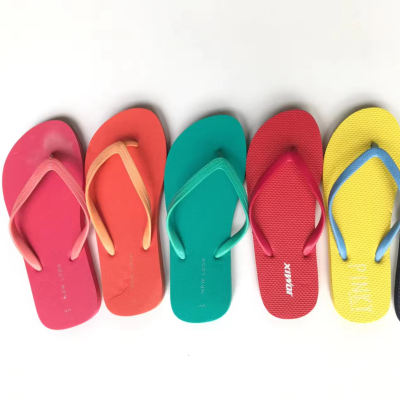


Slippers Solid Color Design Cheap Flip Flops Women Slippers Beach Flip Flops
$0.30 - $1.30
MOQ: 3000 Pairs

Wholesale PVC PE Outdoor Cheap Flip Flops Printed Shark Flip Flops for Women Men
$0.30 - $1.30
MOQ: 3000 Pairs

Promotional High Quality Cheap Price PVC PE Flip Flops Comfortable Flip Flops Women
$0.30 - $1.30
MOQ: 3000 Pairs


2023 Outdoor Popular Style Summer PVC Flip Flops Beach Men Non-Slip Flip Flops
$0.30 - $1.30
MOQ: 3000 Pairs


Comprehensive Sourcing Guide
Strategic Sourcing Guide for Quick Dry Rubber Flip Flops
Understanding Product Attributes and Material Composition
When sourcing Quick Dry Rubber Flip Flops, buyers must first navigate the complex landscape of material definitions and construction methods. The core keyword suggests a specific combination of durability and rapid moisture management, yet the actual market data reveals a diverse array of construction types that may or may not align with this specific description. The observed product attributes indicate that while some listings explicitly mention "Rubber" for the midsole material, others utilize "EVA" (Ethylene-Vinyl Acetate) or "Fabric" for the upper components. This distinction is critical because EVA and rubber possess different density, buoyancy, and drying characteristics.
The supply chain data highlights that the upper material can vary significantly between "PVC," "EVA," and "Fabric." For a buyer specifically seeking "quick dry" performance, the material choice dictates the drying time. PVC and EVA are inherently hydrophobic and non-absorbent, allowing them to dry almost instantly after exposure to water. Conversely, listings that specify "Fabric" as the upper material or "Woven Grass" for the outsole present a different profile. While these materials offer aesthetic appeal and breathability, they may retain moisture longer than synthetic polymers, potentially contradicting the "quick dry" expectation unless treated with specific coatings.
Furthermore, the heel height is consistently observed as "Flat" or "Flat (0-1cm)," which is standard for flip-flop styles designed for beach and casual use. The toe cap is predominantly "Open Toe," a design feature that facilitates water drainage and rapid drying. Buyers should verify if the specific supplier's "Rubber" component refers to the midsole or the entire sole structure, as some products combine rubber midsoles with PVC or EVA uppers. The presence of "Totems" as a pop element suggests a design trend that may influence the molding process and material usage, potentially creating crevices where water could linger if not designed with drainage channels.
Technical Specifications and Performance Verification
To ensure the product meets the functional requirements of a quick-drying footwear item, buyers must scrutinize the technical specifications provided in the product data. The observed size ranges, such as "35-36 37-38 39-40 41-42 43-44," indicate a broad sizing strategy, but the specific US shoe size mapping is often tied to the "Toe Type: Open Toe" specification. A critical technical aspect is the "Hand Made" versus "Not Handmade" distinction. Listings show a split between "Hand Made" and "Not Handmade" products. Hand-made items, particularly those with "Woven Grass" outsoles, may have natural variations in density that affect water absorption rates. In contrast, machine-made items with "PVC" or "EVA" uppers typically offer more consistent material properties and faster drying times due to uniform molding.
The "Waterproof" attribute presents a notable divergence in the data. While some entries explicitly state "Waterproof" and "Anti-slip," others list "Not Waterproof." This is a crucial verification point for buyers. A "quick dry" flip-flop does not necessarily need to be fully waterproof in the sense of a sealed boot, but it must resist water absorption in the upper material. If a product is labeled "Not Waterproof," it may imply that the upper material (likely fabric or woven grass) will become saturated, even if the sole is rubber. Buyers should prioritize products where the upper material is explicitly synthetic (PVC, EVA) to ensure the "quick dry" claim holds true.
Additionally, the "Season" attribute lists "Autumn, Spring, Summer," yet specific product models are tagged solely with "Summer." This suggests that while the general category covers multiple seasons, the specific quick-dry rubber variants are optimized for high-moisture environments like beaches and pools. The "Use" category consistently points to "Beach" and "Seabeach," reinforcing the environmental context for these products. The "Anti-slip" feature is a standard requirement for beach footwear to prevent accidents on wet surfaces, and this should be verified through the "prod_standard" field, which mentions "SGS" for some models.
Compliance, Certification, and Safety Standards
Navigating the compliance landscape for footwear sourced from China requires a careful review of the standards mentioned in the product data. The observed data includes references to "SGS" as a product standard, which is a reputable third-party inspection and certification body. However, the data also lists background standards such as "ASTM F2913," "EN 13287," and "ISO 105" with a low-confidence tag. Buyers must not assume these standards apply to every listing unless explicitly confirmed by the supplier.
For quick-dry rubber flip flops, the primary safety concern is the "Anti-slip" performance on wet surfaces. The "SGS" standard mentioned in the data likely pertains to general product quality or material safety, but specific slip-resistance ratings (such as the coefficient of friction) should be requested. The "prod_standard" field also contains numerical size conversions like "36/37 24.6 CM 38/39 26CM 40/41 27.3CM," which serves as a sizing standard but does not inherently guarantee safety compliance.
Buyers should verify if the "Rubber" midsole material meets specific chemical safety standards, particularly regarding phthalates or heavy metals, which are common concerns in rubber and PVC products. While the data mentions "OEM" as the brand name and "Customized" logo availability, it does not provide specific certification documents for chemical compliance. Therefore, the procurement strategy must include a request for current test reports from the supplier that align with the destination market's regulations, rather than relying on the generic "SGS" mention. The "Disposable" attribute is listed as "Non-Disposable," indicating that the products are intended for repeated use, which necessitates higher durability standards and potentially more rigorous material testing.
Cost Drivers and Pricing Dynamics
The pricing landscape for quick-dry rubber flip flops is influenced by several factors visible in the supply data. The observed price range spans from $0.30 to $7.89 USD, a significant variance that reflects differences in material quality, manufacturing complexity, and order volume. The Minimum Order Quantity (MOQ) ranges from 2 to 3,600 units, suggesting that buyers can access both small-batch custom orders and large-scale production runs.
The primary cost driver is the material composition. Products with "PVC" or "EVA" uppers and "Rubber" midsoles generally fall within the mid-to-higher end of the price spectrum due to the cost of synthetic polymers and the molding processes involved. In contrast, items with "Fabric" or "Woven Grass" uppers may be priced lower but could incur higher costs if they are "Hand Made." The "Hand Made" attribute often correlates with higher labor costs, which can push the unit price upward despite potentially cheaper raw materials.
Packaging specifications also impact the final landed cost. The data shows varying packing densities, such as "80PCS/CTN" with dimensions "62X50X48cm" and a gross weight of "17kgs," versus "100pairs/CTN" with dimensions "55x58x45cm" and a weight of "14kgs." These differences affect shipping efficiency and freight costs. Buyers should calculate the cost per cubic meter to determine the most economical shipping method. Additionally, the "Customized" attribute, which includes logo printing and color variations (Black, Orange, Green, Blue), adds a layer of complexity and cost. Custom molds for specific models like "BW-120409" or "SS15-8S021" will incur tooling fees that are amortized over the order quantity, making larger orders more cost-effective per unit.
Typical Applications and Market Segmentation
The application of quick-dry rubber flip flops is heavily concentrated in leisure and recreational sectors. The "Use" attribute explicitly lists "Beach" and "Seabeach," indicating that the primary market is coastal tourism and summer vacation activities. The "Suitable for: Seabeach" specification reinforces this, suggesting these products are designed to withstand saltwater exposure and sandy environments. The "Summer" season tag further narrows the target market to warm-weather regions.
Beyond the beach, the "Comfortable" style and "Flat" heel height make these flip-flops suitable for poolside use, resort wear, and casual summer outings. The "Totems" pop element suggests a design appeal to younger demographics or those seeking a unique aesthetic, which could be leveraged in marketing campaigns targeting fashion-conscious beachgoers. The "Women" and "Unisex" gender attributes indicate that the product line is versatile, catering to a broad consumer base.
However, the presence of "Fabric" and "Woven Grass" materials introduces a niche application. These natural or semi-natural materials may be preferred for eco-conscious consumers or for use in dry, sandy environments where water resistance is less critical. Buyers should segment their procurement strategy based on the end-user's environment. If the target market is high-humidity, saltwater-heavy regions, the "PVC" and "EVA" variants with "Waterproof" claims are the superior choice. For dry, sunny climates, the "Fabric" options may offer better breathability and aesthetic variety.
Supplier Evaluation and Quality Control Protocols
Evaluating suppliers for quick-dry rubber flip flops requires a multi-faceted approach that goes beyond the basic product listings. The "Place of Origin" is listed as "Fujian, China" and "Wenzhou China," two regions known for footwear manufacturing. While these locations indicate established supply chains, buyers must verify the specific factory's capability to produce "Rubber" midsoles with "PVC" or "EVA" uppers. The "OEM" brand name suggests that many suppliers are contract manufacturers, meaning the buyer will be responsible for defining the quality standards.
Quality control should focus on the consistency of the "Anti-slip" feature and the durability of the "Quick Dry" materials. Since the data shows a mix of "Hand Made" and "Not Handmade" products, buyers must establish clear specifications regarding the manufacturing process. For machine-made items, the focus should be on mold precision and material homogeneity. For hand-made items, the inspection should target the tightness of the weave and the adhesion of the sole to the upper.
The "prod_packing" details, such as "Carton" or "Box or Customized," are also indicators of supplier professionalism. A supplier that offers standardized, robust packaging (e.g., specific carton dimensions and weight limits) is likely more experienced in logistics and quality assurance. Buyers should request pre-shipment inspections that specifically test the drying time of the upper material and the slip resistance of the sole under wet conditions. The "SGS" standard mentioned in the data provides a baseline, but buyers should consider third-party inspections that are tailored to the specific performance claims of the product.
Long-Term Procurement and Supply Chain Resilience
Sourcing quick-dry rubber flip flops for the long term requires a strategy that accounts for supply chain resilience and product evolution. The "Customization: Available" and "Customized: Yes" attributes indicate that the market is flexible, allowing buyers to adapt designs to changing trends. However, reliance on "OEM" suppliers means that intellectual property and design ownership must be clearly defined in contracts.
The "Season" attribute, which includes "Autumn, Spring, Summer," suggests that buyers can maintain a year-round product line by adjusting the material thickness or color palette. However, the core "Summer" and "Beach" focus means that inventory planning must align with seasonal demand peaks. Buyers should consider the "Disposable: Non-Disposable" attribute to ensure that the products are built for longevity, reducing the frequency of repurchasing and fostering customer loyalty.
Finally, the "Color" options (Black, Orange, Green, Blue) and "Totems" design elements offer opportunities for brand differentiation. As the market evolves, buyers should monitor the shift between synthetic and natural materials. The current data shows a strong presence of PVC and EVA, but the inclusion of "Fabric" and "Woven Grass" suggests a growing interest in sustainable or natural alternatives. A resilient procurement strategy will balance the cost-effectiveness of synthetic materials with the growing demand for eco-friendly options, ensuring the supply chain can pivot as consumer preferences shift.
FAQs
What materials are used for the uppers of these flip flops?
The uppers are made from PVC, EVA, or Fabric depending on the specific model. Some listings specify PVC or EVA for water resistance, while others use Fabric or Woven Grass for breathability, so buyers must verify the exact material before ordering.
Can I customize the logo and color of the flip flops?
Yes, customization is available for logos and colors such as Black, Orange, Green, and Blue. Buyers can request OEM branding and specific color requirements, though tooling fees may apply for custom molds depending on the order quantity.
Which certification standards apply to these rubber flip flops?
Some products list SGS as a product standard, but other standards like ASTM or EN are not confirmed for all listings. Buyers should request specific test reports from the supplier to ensure compliance with destination market safety regulations before purchasing.
How does the heel height affect the comfort of the footwear?
The heel height is consistently flat or flat between 0-1cm, providing a stable and comfortable profile for beach use. This design facilitates easy water drainage and is suitable for casual summer activities without compromising stability on wet surfaces.
What is the typical packaging specification for bulk orders?
Packaging varies by model, with options like 80 pieces per carton or 100 pairs per carton in standard dimensions. Buyers should confirm the exact carton size and gross weight to calculate shipping costs accurately for their specific order volume.
Are these flip flops suitable for both men and women?
Yes, the product attributes list both Women and Unisex gender options, making them suitable for a broad audience. The sizing ranges from 35 to 44, covering various foot sizes for different demographics in the summer and beach markets.