Source Quick-Drying Polyester Bike Jersey for Racing Cycling and Bicycle Wear
Find 30 options for a Quick-Drying Polyester Bike Jersey suitable for racing, cycling, and bicycle wear. Buyers can compare customization, materials like polyester and spandex, and features such as moisture-wicking and anti-UV protection across various models.
Key considerations
Products List


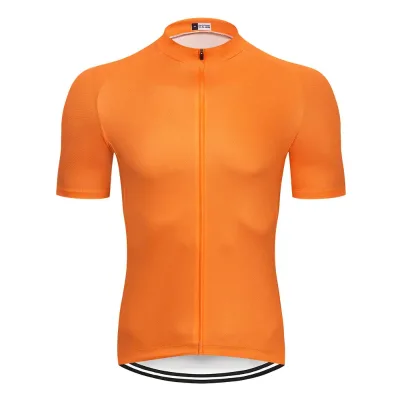


Custom Sublimation Quick-Drying Men Cycling Jersey with Suspender Trousers
$20.00 - $30.00
MOQ: 10 Pieces


Custom High Quality Short Sleeve Cycling Jersey Breathable Quick Dry Front
$15.00 - $25.00
MOQ: 600 Pieces
Comprehensive Sourcing Guide
Strategic Sourcing Guide for Quick-Drying Polyester Bike Jerseys
The global demand for high-performance cycling apparel has driven a significant evolution in material science and manufacturing capabilities, particularly within the Asian supply chain. For procurement professionals seeking "quick-drying polyester bike jerseys," the market presents a complex landscape of technical specifications, customization options, and supply chain variables. This guide provides a disciplined, evidence-based framework for evaluating suppliers and products, relying strictly on observed market data and verified product attributes. The objective is to equip buyers with the knowledge to navigate the nuances of sourcing athletic wear that balances performance, cost, and logistical reliability.
Technical Specifications and Material Composition
The foundational element of any high-performance cycling jersey is its material composition. Market observations confirm that the dominant material for this category is polyester, often blended with spandex to achieve the necessary elasticity. The specific attribute of "Quick-Drying" is frequently paired with "Moisture-Wicking" and "Breathable" characteristics, forming a triad of essential performance features. These attributes are not merely marketing terms but functional requirements for athletes engaged in high-intensity activities like racing and cycling.
The fabric construction often utilizes a "Mesh fabric" design, which enhances airflow and accelerates evaporation rates. This is critical for maintaining thermal regulation during prolonged exertion. Furthermore, the manufacturing technique known as "Sublimation Printed" is a standard observation in this sector. This process allows for vibrant, full-color graphics that do not crack or fade, integrating the design directly into the fiber rather than sitting on top of it. This method supports the "Patterned" and "Logo" customization options observed in the product data, enabling teams to create unique visual identities without compromising the fabric's structural integrity.
| Feature Category | Observed Attributes | Functional Implication |
|---|---|---|
| Primary Material | Polyester, Polyester/Spandex, Nylon | Durability, stretch, and moisture management |
| Key Performance | Quick-Drying, Moisture-Wicking, Breathable | Thermal regulation and comfort during exertion |
| Additional Features | Anti-UV, Anti-Static | Protection from environmental elements and static buildup |
| Manufacturing | Sublimation Printed | High-fidelity, durable graphic application |
| Fabric Structure | Mesh fabric | Enhanced ventilation and rapid drying |
Customization Capabilities and Product Variants
One of the most significant advantages of sourcing from the current market is the high degree of customization available. The "OEM Service" supply type indicates that suppliers are equipped to handle Original Equipment Manufacturing requests, allowing buyers to tailor products to specific brand or team requirements. The "Customized" standard further reinforces this flexibility. Buyers can request specific model numbers, such as the observed NSCY series (e.g., NSCY43, NSCY50, NSCY35), or generic "custom team" designations.
The customization extends beyond mere aesthetics. The data indicates that "Personalized name" services are available, allowing for individual rider identification on team kits. Additionally, the "Team" attribute confirms that suppliers can create cohesive uniforms for cycling teams. This level of personalization is crucial for professional teams, corporate sponsors, and club organizations looking to establish a unified brand image. The "Style" is explicitly noted as "cycling jersey," but the "Type" attribute also lists "Suit" and "T-shirt," suggesting that the supply chain can accommodate various garment constructions depending on the specific cycling discipline, whether it be road racing, mountain biking, or casual cycling wear.
Size ranges are equally flexible, spanning from "Kids-Youths-Adults" to specific sizing standards like "S, M, L, XL, XXL" and numerical sizing systems (2, 4, 6, 8, 10, 12, 14, 16). This variability ensures that buyers can source inventory for diverse demographics, from youth development programs to adult professional squads. The "Gender" attribute confirms that products are available as "Unisex" or specifically for "Men, Women, Boys, Girls," facilitating inclusive procurement strategies.
Cost Drivers and Minimum Order Quantities
Understanding the economic structure of the supply chain is vital for effective budgeting. The observed price range for these products is between 4.9 and 43 USD. This wide variance is driven by several factors, including the complexity of the sublimation design, the quality of the fabric blend (e.g., standard polyester versus high-performance blends), and the level of customization required. A basic single-color jersey will likely sit at the lower end of this spectrum, while a fully custom-designed suit with anti-static and anti-UV features will command a higher price point.
The Minimum Order Quantity (MOQ) is another critical cost driver. The data reveals an MOQ range from 1 piece to 600 pieces. This flexibility is a significant advantage for different types of buyers. A startup cycling team or a small club may benefit from the "1 pc" or low-unit MOQs, allowing them to test designs without significant capital commitment. Conversely, large-scale distributors or national teams may leverage the higher volume tiers to negotiate better unit economics. The "Selling Units" are typically listed as "Single item," but bulk packaging options like "100set/CTN" or "200set/CTN" are available for efficient logistics.
Typical Applications and Usage Scenarios
The versatility of quick-drying polyester bike jerseys makes them suitable for a broad spectrum of athletic activities. While the primary "Usage" is identified as "Racing, Cycling, Bicycle Wear," the data indicates applicability in "Ball Sports, Soccer, Rugby/Football, Basketball, Hockey," and general "Soccer" and "Rugby/Football" contexts. This suggests that the fabric technology is transferable across various high-movement sports where moisture management is essential.
The "Character" of the product is described as "Quick dry, comfortable, slim." The "slim" fit is particularly important for cycling, where aerodynamics and freedom of movement are paramount. A loose fit can create drag and discomfort, whereas a slim, form-fitting jersey ensures that the fabric stays close to the body, maximizing the efficiency of the moisture-wicking properties. The "Age" specification of "Adults" alongside "Kids-Youths" indicates that these garments are designed for the full lifecycle of an athlete, from youth academies to professional retirement.
Supplier Evaluation and Origin Verification
When evaluating potential suppliers, buyers must prioritize transparency regarding the "Place of Origin." The supplied data points to "China" as the primary manufacturing hub, with specific regions like "Guangdong, China" and "Guangxi" mentioned. Guangdong is a well-established textile manufacturing center, known for its advanced sublimation printing capabilities and supply chain efficiency. However, buyers should verify the specific factory location to ensure it aligns with their ethical sourcing policies and logistical preferences.
The "Supply Type" of "OEM Service" implies that the supplier has the infrastructure to handle custom orders. Buyers should verify the supplier's capacity to manage the "Customized" standard, ensuring they have the necessary design tools and production lines for sublimation printing. The "prod_packing" methods, such as "DHL, FedEx" for individual shipments or "1set/OPP" for bulk, indicate a mature logistics network. It is essential to confirm that the supplier can handle the specific packaging requirements of the buyer, whether it is individual poly bags for retail or bulk cartons for distribution.
Quality Control and Compliance Checks
While the product attributes list features like "Anti-UV" and "Anti-Static," buyers must treat these as observations rather than guaranteed performance claims for every listed product. In the absence of specific test results or certification data in the provided context, buyers must implement a rigorous quality control (QC) protocol. This involves requesting third-party test reports for the claimed features, particularly the "Quick-Drying" and "Moisture-Wicking" capabilities.
Compliance checks should focus on the "prod_standard," which is listed as "Customized." This means there is no single universal standard applicable to all items; instead, the standard is defined by the buyer's requirements. Buyers should establish clear technical specifications for fabric weight, colorfastness, and seam strength before production begins. The "Model Number" variations (e.g., J052, W2026) suggest that different production batches may have distinct quality profiles. Therefore, sampling is a non-negotiable step in the procurement process. Buyers should order samples of different models to verify the "Slim" fit, the durability of the "Sublimation Printed" graphics, and the actual performance of the "Mesh fabric" under real-world conditions.
Long-Term Procurement Considerations
Sourcing cycling jerseys is not a one-time transaction but a strategic partnership that requires long-term planning. The "Lead time" and "MOQ" values can fluctuate based on seasonal demand and raw material availability. Buyers should establish clear communication channels with suppliers to monitor these variables. The ability to add "personal names" and customize "team" logos suggests a need for a flexible supply chain that can handle rapid changes in roster sizes or branding updates.
Logistics and packaging are also critical for long-term success. The availability of "DHL, FedEx" shipping options indicates that suppliers are capable of international delivery, but buyers must factor in shipping costs and lead times into their total landed cost calculations. The "100set/CTN" and "200set/CTN" packaging options are designed for efficiency, but buyers must ensure that the carton dimensions and weight align with their warehouse and distribution capabilities.
Finally, the "Character" of the product, described as "comfortable," must be validated over time. Repeated washing and wear can degrade the "Quick-Drying" properties if the fabric quality is subpar. Buyers should inquire about the durability of the sublimation print and the resilience of the spandex blend to ensure the jerseys maintain their performance characteristics over the intended lifespan of the product. By focusing on these long-term factors, buyers can secure a reliable supply of high-quality cycling apparel that meets the rigorous demands of the sport.
FAQs
What materials are used for quick drying polyester bike jerseys?
The primary materials observed are polyester, often blended with spandex or nylon to ensure elasticity. Some products utilize mesh fabric construction to enhance airflow and accelerate evaporation rates during high-intensity cycling activities.
Can I customize the design and team names on these jerseys?
Yes, OEM services are available for full customization including team logos and personalized names. Suppliers offer sublimation printing to integrate vibrant graphics directly into the fiber without compromising the fabric's structural integrity.
What is the minimum order quantity for these cycling jerseys?
The minimum order quantity ranges from 1 piece to 600 pieces depending on the supplier and customization level. This flexibility allows small clubs to test designs while large distributors can negotiate better unit economics for bulk orders.
Where are these quick drying jerseys typically manufactured?
Manufacturing primarily occurs in China, with specific production hubs located in Guangdong and Guangxi regions. These areas are established textile centers known for advanced sublimation printing capabilities and efficient supply chain logistics.
What performance features do these jerseys offer for athletes?
Key features include quick-drying, moisture-wicking, breathable, anti-UV, and anti-static properties. The slim fit design ensures aerodynamics while mesh fabrics provide enhanced ventilation for thermal regulation during racing and cycling.
How are the products packaged for shipping and delivery?
Packaging options include individual OPP bags for single items or bulk cartons containing 100 or 200 sets. Shipping methods such as DHL and FedEx are available for international delivery to ensure secure and timely arrival.