Source Quick-Drying Nylon Yoga Top for Gym, Cycling, and Fitness
Explore 30 listings for the quick-drying nylon yoga top suitable for gym workouts, cycling sessions, and yoga practice. Buyers can compare models like Y-117 and BL-168, noting features such as 4-way stretch and custom logo options.
Key considerations
Products List


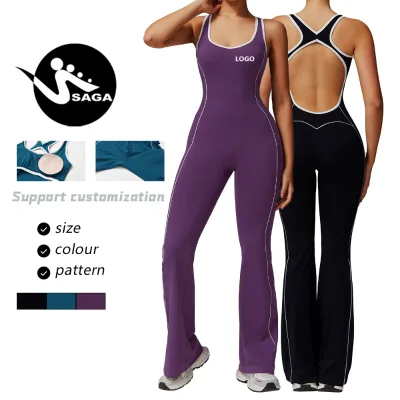
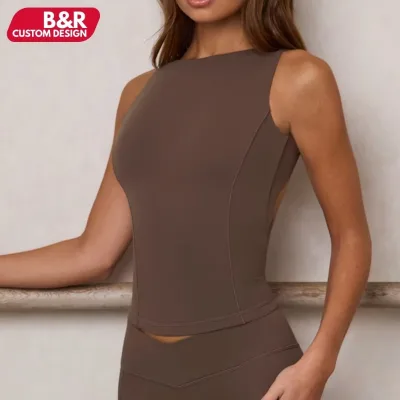
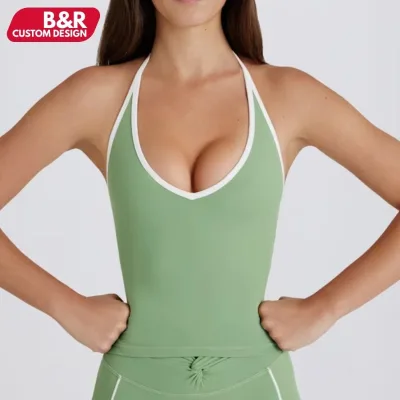
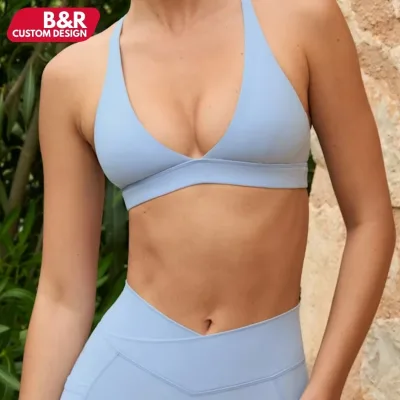


Comprehensive Sourcing Guide
Strategic Sourcing Guide for Quick-Drying Nylon Yoga Tops
The global market for athletic apparel has seen a significant shift toward high-performance, moisture-wicking garments designed for diverse physical activities. Among these, the quick-drying nylon yoga top has emerged as a critical category for retailers and brands seeking to balance functionality with comfort. Sourcing this specific item requires a nuanced understanding of material composition, manufacturing capabilities, and supply chain logistics. This guide provides a comprehensive framework for buyers to navigate the procurement process, ensuring that the selected products meet rigorous quality standards and operational requirements without relying on unverified claims.
Understanding Material Composition and Technical Specifications
The foundation of a high-quality yoga top lies in its fabric composition. For the specific keyword of "quick-drying nylon yoga top," the primary material must be nylon, often blended with spandex to provide the necessary elasticity for yoga movements. Based on observed product attributes in the current market, a common and effective blend involves nylon combined with approximately 20% spandex. This ratio is critical as it ensures the garment offers four-way stretch, allowing the fabric to move freely with the body during complex poses without losing its shape or restricting movement.
When evaluating potential suppliers, buyers should verify the specific fabric blend rather than accepting generic descriptions. The presence of spandex is non-negotiable for yoga applications, as the fabric must recover its form after stretching. Furthermore, the "quick-drying" attribute is a functional characteristic derived from the hydrophobic nature of nylon fibers. While the supplied data confirms the availability of nylon-spandex blends, buyers must request specific technical data sheets to confirm the weight of the fabric and the specific weave pattern that facilitates rapid moisture evaporation. The absence of detailed test results in general listings means that the buyer must independently verify the drying time and moisture-wicking efficiency through sample testing before placing large orders.
Compliance, Certification, and Quality Verification
In the B2B apparel sector, compliance and certification are often the differentiators between a commodity product and a premium offering. While some background information may reference standards such as OEKO-TEX, it is important to note that this specific certification is not confirmed in the provided product facts. Therefore, buyers should not assume that any listed product automatically meets OEKO-TEX or similar chemical safety standards. Instead, the procurement strategy must involve a proactive verification process.
Buyers should explicitly request certification documents from suppliers to confirm that the nylon and spandex blends are free from harmful substances. The "Quality" attribute observed in the market ranges from "Middle and High," indicating a variance in production standards that necessitates strict quality control. To mitigate risk, procurement teams should implement a sampling protocol where random units from a production batch are sent to third-party laboratories for testing. These tests should focus on colorfastness, shrinkage rates, and the integrity of the fabric after repeated washing cycles.
Additionally, the "Quality" designation of "Middle and High" suggests that not all products in the category will perform equally. Buyers must define their internal quality thresholds clearly. For instance, a "High" quality top might require reinforced stitching at stress points and a higher GSM (grams per square meter) for opacity, whereas a "Middle" quality item might suffice for casual use. The absence of standardized test results in the general market data underscores the need for buyers to establish their own acceptance criteria based on their target market's expectations.
Cost Drivers and Pricing Dynamics
The pricing of quick-drying nylon yoga tops is influenced by several variable factors, including fabric quality, customization requirements, and order volume. The observed price range in the current market spans from $4.00 to $16.41 USD. This wide disparity indicates that the base cost of the garment is highly sensitive to the specific attributes selected by the buyer. Lower-priced items typically correspond to standard designs with minimal customization and lower fabric weights, while higher-priced items often feature advanced fabric technologies, complex construction, or premium branding services.
A significant cost driver is the customization of the logo. The market data confirms that "Customized Logo Printing" and "Accept Customized Logo" are standard services. However, the method of printing (e.g., screen printing, heat transfer, or embroidery) and the complexity of the design can significantly impact the unit cost. Furthermore, the "Service" attribute of "Custom ODM & OEM" implies that buyers can request unique designs, which adds to the development and tooling costs.
The Minimum Order Quantity (MOQ) also plays a crucial role in pricing. The observed MOQ range is extensive, from as low as 1 piece to as high as 1000 pieces. Buyers must balance the desire for lower unit costs with the financial risk of holding inventory. While high-volume orders often secure better per-unit pricing, the initial investment is substantial. Conversely, low MOQ options allow for testing the market with minimal risk but come at a higher unit price. Buyers should analyze their sales forecasts carefully to determine the optimal order size that aligns with their cash flow and inventory turnover goals.
Supplier Evaluation and Operational Capabilities
Selecting the right supplier is a critical step in the sourcing process. The market data indicates that suppliers offer a range of services, including "Custom ODM & OEM," "Sample Available," and "Customized Logo Printing." These capabilities suggest that many suppliers are flexible and willing to collaborate on product development. However, buyers must look beyond these surface-level attributes to assess the supplier's operational reliability.
Key evaluation criteria should include the supplier's production capacity, lead times, and logistics capabilities. The observed delivery time of "3-5 Working Days" for samples is a positive indicator of responsiveness, but buyers must distinguish between sample lead times and bulk production lead times. The bulk production timeline is not explicitly stated in the provided facts, so buyers must negotiate and confirm these timelines in their contracts. Additionally, the shipping options listed—EMS, DHL, FedEx, TNT, and Sea Ship—offer flexibility for different urgency levels and budget constraints. Buyers should evaluate which shipping methods align with their distribution strategy and whether the supplier has established relationships with reliable freight forwarders.
The "Product Origin" is listed as China, which is a major hub for textile manufacturing. While this offers access to a vast supply chain, buyers must ensure that the supplier has robust quality control systems in place to maintain consistency. The variety of product models, such as Y-117, ASY1012, and various YPS and BL series, suggests a diverse inventory. Buyers should verify that the supplier can consistently produce the specific models they require, rather than relying on a limited selection.
Quality Control and Inspection Protocols
Implementing a rigorous quality control (QC) protocol is essential to ensure that the final products meet the buyer's standards. Given the "Middle and High" quality variance observed in the market, a one-size-fits-all approach to QC is insufficient. Buyers should develop a detailed inspection checklist that covers fabric integrity, stitching quality, and finish.
The inspection process should begin with the raw materials. Suppliers should provide mill certificates for the nylon and spandex to verify the fiber content and quality. During production, in-line inspections can catch defects early, such as uneven dyeing or stitching errors. For the final product, a pre-shipment inspection is crucial. This should involve a random sampling of the finished goods to check for defects in the "Chest Pad" (if applicable), the "Stretch" capability, and the overall fit.
The "Packing" methods observed, including "1 Set/OPP," "Polybag," and "Carton," must be verified to ensure they protect the product during transit. Improper packaging can lead to damage, especially for items with "Detachable Chest Pads" or specific shapes. Buyers should specify their packaging requirements in the purchase order to prevent discrepancies. Additionally, the "Standard" dimensions provided, such as "30253" or "24*30cm," likely refer to packaging or product dimensions. Buyers must confirm these measurements to ensure compatibility with their storage and display requirements.
Long-Term Procurement and Market Adaptability
Sourcing quick-drying nylon yoga tops is not just a one-time transaction but a long-term strategic partnership. The market trends indicate a demand for versatility, with products suitable for "Ball Sports, Cycling, Fitness, Gym, Yoga, Tennis." This multi-sport applicability suggests that buyers should look for suppliers who can adapt their designs to meet evolving consumer preferences. The "Style" attributes, including "Fitness, Sports, Yoga, Workout, Gym," highlight the need for designs that are both functional and fashionable.
Buyers should consider the scalability of their supply chain. As demand grows, the supplier must be able to increase production without compromising quality. The "Service" attribute of "Custom ODM & OEM" is particularly valuable for long-term growth, as it allows buyers to differentiate their products in a crowded market. However, this requires a deep level of collaboration and clear communication regarding design specifications and timelines.
Furthermore, buyers should monitor the "Age" demographic, which is listed as "Adults." While this is the primary target, there may be opportunities to expand into youth or senior markets. A flexible supplier can assist in adapting the fit and style to accommodate these different demographics. Finally, buyers should maintain open lines of communication regarding any changes in regulations or standards that may affect the import or sale of their products. Proactive engagement with suppliers ensures that the supply chain remains resilient and responsive to market changes.
Conclusion
Sourcing quick-drying nylon yoga tops requires a meticulous approach that balances technical specifications, cost considerations, and supplier reliability. By focusing on the verified attributes of nylon-spandex blends, four-way stretch, and customization capabilities, buyers can make informed decisions that align with their business goals. The wide range of prices and MOQs observed in the market offers flexibility, but it also demands careful planning to manage costs and risks. Through rigorous quality control, clear communication, and strategic supplier evaluation, buyers can secure a steady supply of high-quality athletic wear that meets the demands of the modern fitness enthusiast. The key to success lies in treating product attributes as observations to be verified rather than guaranteed claims, ensuring that every procurement decision is grounded in evidence and due diligence.
FAQs
What fabric blend is used for these quick-drying yoga tops?
The tops typically use a nylon and spandex blend, often with 20% spandex for elasticity. This composition ensures four-way stretch, allowing the fabric to move freely with the body during yoga and other sports without losing its shape.
Can I get a customized logo printed on these yoga tops?
Yes, customized logo printing is a standard service available for these products. Suppliers offer options for custom designs, allowing buyers to brand the apparel with their own logos for retail or team use.
What is the minimum order quantity for purchasing these tops?
The minimum order quantity varies significantly, ranging from as low as one piece to as high as 1000 pieces depending on the supplier. Buyers should check specific listings to find options that match their inventory needs.
How long does it take to receive samples of these yoga tops?
Sample delivery typically takes between 3 to 5 working days for these items. This quick turnaround allows buyers to verify quality and fit before committing to larger bulk orders.
Which shipping methods are available for these fitness wear products?
Multiple shipping methods are available, including EMS, DHL, FedEx, TNT, and sea ship. Buyers can select the method that best fits their urgency and budget requirements for international delivery.
What is the price range for quick-drying nylon yoga tops?
The observed price range for these tops spans from 4 to 16.41 USD per unit. Costs vary based on fabric quality, customization levels, and the specific model selected by the buyer.
Can these tops be used for sports other than yoga?
Yes, these tops are designed for multiple activities including cycling, fitness, gym workouts, tennis, and ball sports. The versatile style makes them suitable for various athletic applications beyond just yoga.